The Pinedale Elk Herd Feedground Plan Explained
If you've spent any time at all looking into elk hunting in Wyoming, you've probably heard the buzz, and sometimes outright frustration, around the topic of feedgrounds. It’s a complex issue, full of history, biology, and very strong opinions, and it directly impacts where and how these magnificent animals live. For hunters especially, understanding the long-term management goals for herds that rely on these winter feeding operations is crucial. Today, we're going to dive deep into one specific, yet highly significant, example: the Pinedale Elk Herd Feedground Plan, explaining what it entails and what it means for the future of Wyoming elk and those of us who pursue them.
The Long History of Wyoming's Elk Feedgrounds
Let's be honest, the idea of intentionally feeding wild elk through the winter can seem a bit…unnatural. But the story behind Wyoming's feedgrounds is far from simple, rooted in a different era of wildlife management and human expansion.
Why Feedgrounds Were Established in the First Place
Imagine the harsh Wyoming winters of a century or more ago. Deep snow, brutal temperatures, and a landscape rapidly changing due to human settlement. Elk, once free to migrate vast distances, found their traditional winter ranges cut off by fences, ranches, and towns. They were squeezed, often starving, and inevitably began to depredate private haystacks, leading to understandable conflicts with ranchers trying to feed their own livestock. This wasn't just a nuisance; it was a matter of survival for both the elk and the people trying to make a living off the land.
So, in an effort to mitigate these conflicts, prevent widespread elk starvation, and ultimately preserve elk populations, wildlife managers, often driven by early conservationists, began supplemental feeding. The idea was to keep elk off private lands by providing an alternative food source, ensuring they survived the leanest months. It was seen as a necessary compromise, a way to coexist with burgeoning human populations while still maintaining healthy numbers of these iconic animals. It truly was a different time, with different pressures and different understanding of disease dynamics.
The Current Landscape of Wyoming's Elk Feedgrounds
Fast forward to today, and the legacy of those early decisions still defines much of elk management in certain parts of Wyoming. We still operate numerous feedgrounds, though the exact number and operations fluctuate based on winter severity and ongoing management plans. Many of these feedgrounds are concentrated in western Wyoming, particularly around the Jackson and Pinedale areas, where heavy snowfall often makes natural forage scarce for extended periods.
The most famous, of course, is the National Elk Refuge near Jackson, which feeds thousands of elk each winter. But beyond the refuge, the Wyoming Game and Fish Department (WGFD) manages a network of smaller, state-run feedgrounds. These operations are critical for understanding where and how elk spend their winters, influencing everything from herd distribution to gene flow. You can even find specifics on How Many Elk Feedgrounds Wyoming Still Runs if you want to dive into the numbers across the state. These sites, while offering winter sustenance, have inadvertently shaped elk behavior, making them accustomed to congregating in predictable locations.
Challenges and Controversies They Present
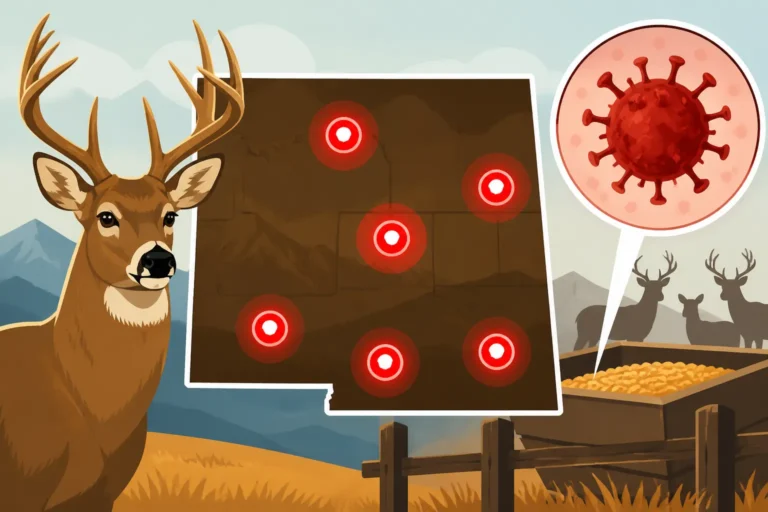
While feedgrounds solved some immediate problems, they've introduced a whole new set of complex challenges that wildlife managers are grappling with today. The most pressing issue revolves around disease transmission. When thousands of elk gather in a relatively small area, the chances of diseases spreading rapidly skyrocket. We've seen this play out tragically with Chronic Wasting Disease (CWD) and Brucellosis, both of which pose significant threats to elk health and even to other wildlife and livestock.
For hunters, the presence of CWD in a herd is a serious concern, not just for the ethical implications of harvesting a sick animal, but also for personal safety. Understanding What CWD on the Feedgrounds Means for Hunters is paramount, as it directly impacts decisions about meat consumption and testing. Similarly, Brucellosis, which can cause abortions in elk and can be transmitted to cattle, creates tension with the agricultural community. You can find more details on the concerns around Brucellosis, Cattle and Wyoming Elk in other resources. These disease risks, coupled with the artificial dependence feedgrounds create, have pushed WGFD to re-evaluate the long-term sustainability of these operations.
Unpacking The Pinedale Elk Herd Feedground Plan
Against this backdrop of historical necessity and contemporary challenges, the Wyoming Game and Fish Department has been working on specific strategies to address the complexities of managing elk feedgrounds. The Pinedale Elk Herd Feedground Plan is a prime example of their efforts to adapt.
Specific Objectives and Strategies of the Pinedale Plan
The Pinedale Elk Herd Feedground Plan isn't about outright eliminating feedgrounds overnight; that would be a logistical and ecological nightmare. Instead, its core objectives are far more nuanced and strategic. The main goal is to reduce the long-term reliance of the Pinedale elk herd on supplemental feeding, allowing them to revert to more natural migration and foraging patterns. This isn't just a feel-good, "let nature take its course" initiative; it's a science-backed approach aimed at improving herd health and reducing disease risk.
One key strategy involves slowly reducing the amount of feed provided at certain feedgrounds or even closing some entirely over time, especially during milder winters. This gradual reduction encourages elk to seek out natural forage. Furthermore, the plan emphasizes habitat improvement projects on crucial winter ranges away from the feedgrounds. This includes things like prescribed burns, noxious weed control, and reseeding native plants to make natural winter range more attractive and productive for elk. Hunters who use tools like GoHunt for their e-scouting can start looking at these improved habitat areas, identifying potential new wintering grounds or migration corridors where elk might eventually shift their patterns. It's a forward-thinking approach that requires patience and continuous adaptation.
Phased Approaches and Management Actions
Implementing a plan of this magnitude for a major herd like Pinedale requires a careful, phased approach. You can't just flip a switch and expect elk to instantly change centuries of ingrained behavior. Instead, WGFD biologists are taking incremental steps, monitoring the elk's response closely. This includes adjusting feeding schedules, altering the composition of the feed, and even strategically rotating feeding sites to prevent massive, long-term congregations in one spot.
A big part of the management action also involves adjusting hunting seasons and quotas in specific Wyoming Elk Herd Units and Winter Range that overlap with the Pinedale herd's traditional areas. For instance, if the goal is to reduce elk numbers on a feedground or encourage them to move, managers might issue more cow tags or extend seasons in certain zones to exert additional hunting pressure where needed. This requires hunters to be more vigilant than ever, checking the regulations annually, as hunt area boundaries and dates can shift based on these evolving management strategies. It’s a dynamic system, and what worked last year might not apply this season as the plan progresses.
Public Input and Stakeholder Involvement
When you're dealing with something as foundational as how elk herds are managed, especially when it touches on historical practices, it absolutely demands robust public input. The Pinedale plan, like many significant wildlife management initiatives, has gone through extensive periods of public review and comment. This involves numerous community meetings in towns like Pinedale and Big Piney, where local residents, ranchers, outfitters, and hunters can voice their concerns, ask questions, and offer suggestions.
Conservation groups, local businesses, and even non-resident hunters who invest time and money in these areas all have a stake, and WGFD actively solicits their feedback. Platforms like GoHunt and other hunting intelligence services often provide forums or aggregate information where hunters can stay informed and engage. This isn't just a bureaucratic formality; it's a vital part of building a plan that considers the diverse perspectives and needs of everyone affected, balancing wildlife conservation with social and economic realities.
The Impact on Elk Health and Hunting Opportunities
So, what does all this mean for the Pinedale elk herd themselves, and more importantly for those of us who cherish the opportunity to hunt them? The changes brought about by this plan have profound implications for both.
Disease Mitigation and Herd Resiliency
The most direct and hopeful outcome of reducing feedground reliance is a healthier, more resilient elk herd. Spreading elk out over larger winter ranges naturally reduces the density, which is the primary driver for disease transmission. Less nose-to-nose contact means CWD has fewer opportunities to jump from one animal to another. Similarly, a more dispersed herd lowers the risk of Brucellosis outbreaks, benefiting both elk and nearby livestock. This is a massive step towards ensuring the long-term viability of the herd, protecting them from the devastating impacts of widespread illness.
For hunters, this increased herd health translates into greater confidence. While CWD testing remains a crucial step after harvesting an animal, especially in affected areas—and you should absolutely know Is Elk Meat Safe If the Animal Had CWD?—a healthier overall herd reduces the chances of encountering a diseased animal. This proactive management offers a glimmer of hope that we can turn the tide against some of these relentless diseases by letting elk behave more like truly wild animals.
Changes to Elk Behavior and Distribution
As elk begin to rely less on feedgrounds, we're going to see shifts in their behavior and distribution. Animals that once gathered predictably in certain valleys might start migrating further, utilizing historical winter ranges that have been dormant for decades. This could mean finding elk in areas where they haven't been consistently observed in a long time, potentially opening up new hunting opportunities in less pressured areas. However, it also means that what used to be a "sure bet" area near a feedground might become less reliable.
This necessitates a real change in strategy for hunters. Relying on past seasons' knowledge alone won't cut it. Instead, tools like GoHunt, with its mapping overlays and historical data, become invaluable for e-scouting and identifying potential new patterns or migration corridors. Hunters will need to embrace more extensive E-Scouting a Unit Before the Season Opens to identify these changing distributions and adapt their plans accordingly. The elk are likely to become more "wild," more challenging to locate, but ultimately, a more rewarding quarry.
Adjustments for Elk Hunters
For those of us who live for elk season, these changes mean adaptability is key. The days of simply driving to a known feedground area might be numbered, at least in some units. Hunters will need to be prepared to cover more ground, potentially delving into more remote areas, and becoming more proficient at finding elk that are truly scattered. This might involve honing skills like Realistic Archery Practice Distance for Big Game for bowhunters, or improving rifle marksmanship for longer shots in open country.
It's also crucial to stay incredibly informed about annual regulation changes. The Wyoming Elk Population Estimate Explained and herd objectives will be constantly evaluated, and hunting seasons, particularly in areas near feedgrounds, might be adjusted to encourage elk dispersion or manage numbers effectively. Being a successful elk hunter in this evolving landscape means being a student of the game, not just physically, but mentally. It’s a challenge, but one that promises a more authentic and wild hunting experience.
Beyond Pinedale: Broader Implications and Future Outlook
The Pinedale plan isn't an isolated incident; it's a case study that offers valuable insights for other feedground areas and paints a picture of the future for Wyoming's iconic elk herds.
Lessons Learned for Other Feedground Areas
What we learn from the Pinedale experiment will undoubtedly inform decisions for other feedground operations across the state. Every feedground has its unique set of challenges—different habitat, varying herd sizes, and distinct local pressures. However, the core principles of reducing reliance, improving natural winter range, and mitigating disease risk are universal. For instance, understanding Which Feedgrounds Have Tested Positive for CWD in other regions can help managers prioritize and tailor their own reduction strategies.
The success (or even the unforeseen challenges) encountered in Pinedale will provide a critical blueprint, allowing WGFD to refine strategies and apply best practices elsewhere. It's a testament to adaptive management, acknowledging that past solutions aren't always suitable for present-day problems, especially when those problems involve complex biological and social factors. The entire discussion around Wyoming Elk, the Feedgrounds and the Disease Question is an ongoing one, and Pinedale is at the forefront of this evolution.
The Long-Term Vision for Wyoming's Elk Herds
The ultimate long-term vision for Wyoming's elk herds, and indeed for many of its big game species, is to foster populations that are as wild and self-sustaining as possible. This means reducing human intervention where feasible, allowing natural processes like migration and dispersal to dictate herd distribution and health. It’s about building more resilient elk populations that are less susceptible to density-dependent diseases and better able to cope with the natural fluctuations of winter.
For hunters, this translates into a future where success might be harder earned, but the reward of connecting with a truly wild animal, following its natural patterns, becomes even more profound. Utilizing advanced hunting tools like GoHunt that provide trend analysis and population data will be crucial for understanding these shifts and planning hunts that align with a more natural, dynamic elk population. This isn't just about Pinedale; it’s about the very essence of what makes hunting in Wyoming so special—the pursuit of truly wild game in expansive, untamed landscapes. Even the iconic How Big the Jackson Elk Herd Has Grown and its management will be influenced by these broader statewide initiatives.
Hunter's Role in a Changing Landscape
As hunters, our role in this changing landscape is more important than ever. It's not just about drawing a tag; it's about being informed, adaptable, and a vocal advocate for sound wildlife management. Understanding the rationale behind plans like Pinedale, even if they present new challenges for our personal hunting strategies, allows us to be part of the solution rather than just reacting to change. Supporting habitat improvement projects, adhering to regulations, and practicing ethical hunting are all critical components.
This shift might also mean a greater emphasis on hunting strategies that account for more mobile elk, potentially reducing predator concentrations around feedgrounds. For example, if elk disperse, predators like mountain lions might also follow, making hunting them more challenging. For those interested in Hunting a Wyoming Mountain Lion Quota That Can Close Early, these changes could even influence where and when lion populations might be found. We must adapt our expectations and embrace the commitment to learning and evolving alongside the wildlife we cherish. It’s a dynamic partnership between humans and the natural world, and as hunters, we stand at the nexus of that relationship.
| Feature | Traditional Feedground Approach | Pinedale Plan (Long-Term Vision) |
|---|---|---|
| Primary Goal | Prevent starvation, mitigate agricultural depredation. | Promote natural behavior, enhance herd health & resiliency. |
| Elk Distribution | High concentration in localized areas during winter. | Wider dispersion, utilization of diverse natural winter range. |
| Disease Risk | Elevated (e.g., CWD, Brucellosis) due to high density. | Reduced due to lower density and natural dispersion. |
| Elk Behavior | Reliant on supplemental feed, less natural migration. | Independent, natural migration, reliance on forage. |
| Hunter Impact | Predictable elk location, potential for overcrowding. | More challenging, less predictable elk, new opportunities in dispersed areas. |
| Habitat Focus | Secondary to feeding operations. | Primary focus on improving natural winter range capacity. |
| Management Tools | Supplemental feeding, localized harvest. | Feed reduction/closure, habitat restoration, adjusted harvest. |
Disclaimer
The information provided in this article is for educational and informational purposes only and is not intended as legal advice or a substitute for official regulations. Hunting regulations in Wyoming can change frequently. Always consult the most current Wyoming Game and Fish Department regulations, official hunt planners, and local authorities before planning any hunting activity.