Shiras Moose in Wyoming
There are few experiences in the hunting world quite like the pursuit of a Shiras moose in Wyoming. These majestic giants, often found tucked away in the high country, represent a true challenge for even the most seasoned hunters, and securing a tag often feels like winning the lottery, given the incredible demand and limited supply. This guide is dedicated to pulling back the curtain on what it truly takes to hunt these magnificent creatures, from understanding their habitat to navigating the complex draw system and what to expect when you finally get that coveted tag.
The Allure of Wyoming's Shiras Moose: A Mountain Monarch
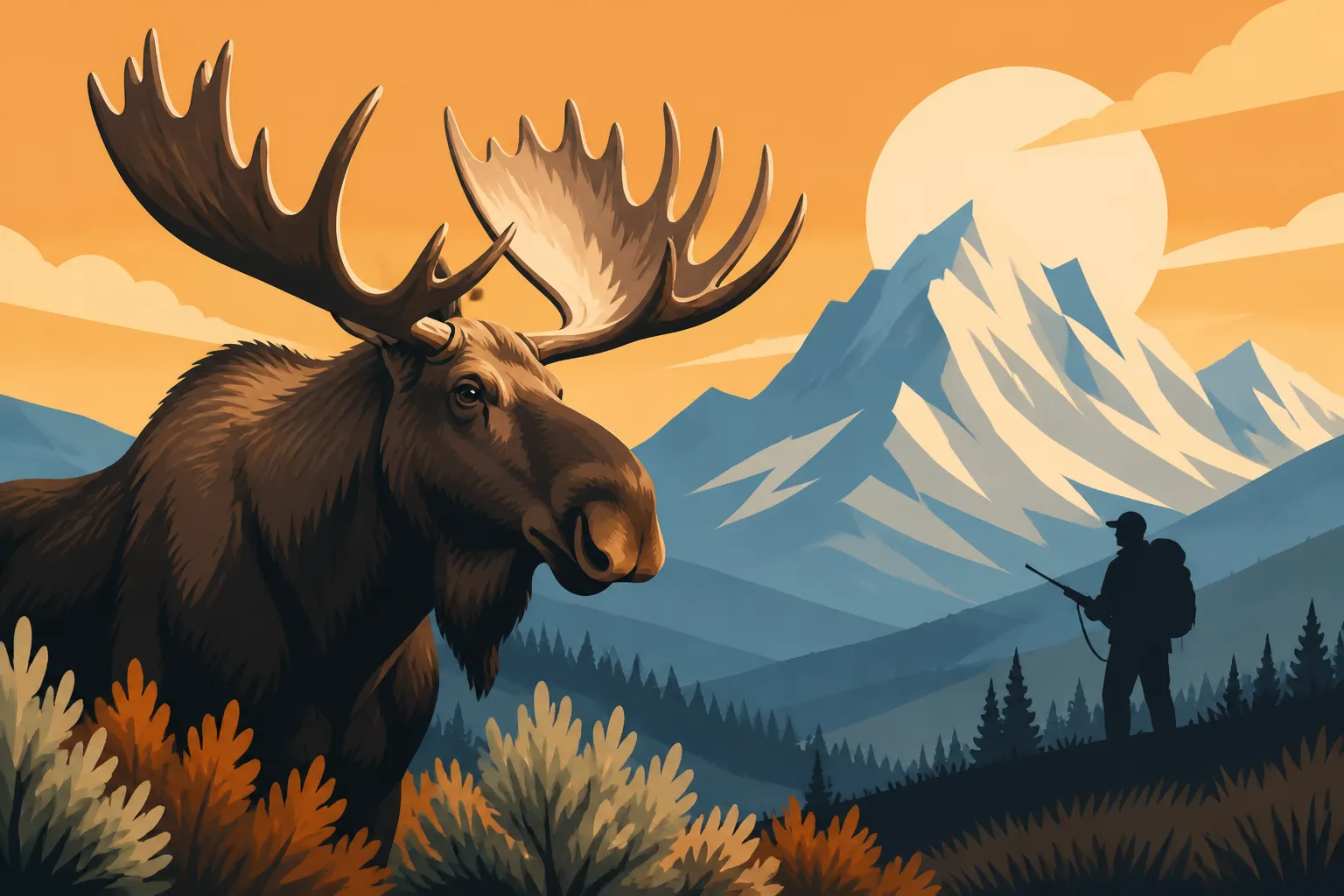
When you envision a moose, most people think of the massive Canada moose or Alaskan moose. But the Shiras moose, Alces alces shirasi, native to the Rocky Mountains, holds a distinct allure. They're often seen as the ultimate symbol of western wilderness, an animal that commands respect and embodies the rugged beauty of Wyoming's high country. Hunting a Shiras moose isn't just about the trophy; it's about the deep dive into remote landscapes, the quiet determination of the stalk, and the immense satisfaction of earning such a rare opportunity.
Unique Physical Traits and Ecological Niche
Shiras moose are the smallest subspecies of moose in North America, but don't let "smallest" fool you; these animals are still massive. A mature bull can stand over six feet tall at the shoulder and weigh upwards of 1,000 pounds, with impressive antlers that are broad and palmate, often spanning over 40 inches. Their dark, shaggy coats provide excellent camouflage and insulation in the dense timber and willow thickets they call home. Unlike deer or elk, moose are specialized browsers, thriving on willows, aquatic vegetation, and various shrubs, which significantly dictates their habitat preferences and, by extension, where hunters need to focus their efforts. They're often solitary creatures, especially the bulls, making them incredibly challenging to locate and hunt compared to herd animals.
From an ecological standpoint, Shiras moose play a vital role in their ecosystems. Their browsing habits help shape plant communities, and they are a significant food source for large predators like grizzly bears and wolves in certain areas. Their presence is an indicator of healthy riparian zones and high-elevation forests, reminding us how critical these pristine habitats are for the overall balance of the landscape. The opportunity to hunt one is, for many, a deeply spiritual connection to this wild balance.
The Challenge and Reward of the Hunt
The difficulty of a Shiras moose hunt is legendary. Their preferred habitats are often steep, thick, and remote, demanding exceptional physical fitness, perseverance, and woodcraft. Imagine navigating dense willow swamps, wading through boggy areas, and climbing lung-busting inclines, all while trying to remain silent and scent-free. The weather in Wyoming's high country can change in an instant, throwing everything from snow to blazing sun at you within a single day. This isn't a hunt for the faint of heart, or for those who aren't prepared for true wilderness challenges.
However, the reward is immeasurable. Beyond the physical challenge, there's the mental game: the patience required to pick apart thick cover with your binoculars, the discipline to pass on a marginal shot, and the sheer thrill of spotting those distinctive antlers against a backdrop of golden aspen. When you finally connect, the feeling of accomplishment is profound, knowing you've earned one of the most coveted tags in North America through sheer dedication and respect for the animal and its environment. It's a hunt that truly tests your limits and leaves an indelible mark on your soul.
Where to Find Shiras Moose in Wyoming
Wyoming's Shiras moose population, while not as abundant as its elk or deer herds, is healthy and concentrated in specific areas that offer the ideal blend of habitat. These animals are particular about their environment, favoring cool, moist areas with abundant willow and aspen stands, often near water sources. If you're looking for moose sign, you'll want to focus your attention on these types of landscapes.
Preferred Habitats and Key Mountain Ranges
Moose are creatures of the wetlands, willow bottoms, and timbered slopes, especially in high-elevation drainages. They thrive where water is plentiful, which is why you'll often find them along rivers, streams, and around high-mountain lakes. These areas provide not only their preferred browse but also the cover and coolness they need, particularly during the warmer months and into the early fall. They're not like elk that migrate extensively across open country; moose tend to stick to their home ranges, moving vertically with the seasons more than horizontally.
Some of Wyoming's most iconic mountain ranges are prime Shiras moose country. The Wind River Range, the Teton Range, and the Gros Ventre Mountains in the western part of the state are particularly well-known for their moose populations. You'll also find them in good numbers in portions of the Bighorn Mountains to the north, and even extending into the Medicine Bow and Snowy Range in the south-central part of Wyoming. These areas are characterized by robust willow growth, thick conifer forests, and countless small drainages that provide ideal moose cover. When planning your hunt, pinpointing these types of features on a map is crucial. A great tool for this is using resources like GoHunt, which can help you identify public land, water sources, and vegetation types that align with moose habitat.
Reading Moose Sign in the Field
Being able to read moose sign is absolutely essential. Unlike elk or deer, whose tracks are more common, moose sign is distinctive. Look for very large, cloven tracks – much bigger and rounder than an elk's. Their droppings are also unique: large, oblong pellets, often in significant piles, sometimes clumped together depending on their diet. Perhaps the most telling sign, however, is their browsing patterns. Moose are heavy browsers, and you'll see evidence of this on willows and young aspen. They will strip bark and break branches, often much higher than deer or elk can reach, leaving ragged ends on broken branches.
Rub marks on trees, especially during the rut (which typically peaks in late September and early October), are another key indicator. Bulls will rub their antlers on saplings and small trees to mark their territory and shed velvet. Look for rubs higher up on trees than you'd expect from an elk. Bedding areas will often be in thick, wet cover, providing shade and protection. You'll also be searching for well-worn trails leading to water sources or between feeding and bedding areas. Understanding these signs helps you track and narrow down potential moose locations, increasing your chances of success once you've drawn that coveted tag.
The Reality of Drawing a Shiras Moose Tag
Let's be blunt: drawing a Shiras moose tag in Wyoming is incredibly difficult. It's a once-in-a-lifetime opportunity for residents, and for nonresidents, it truly is the pinnacle of patience and persistence. This isn't a draw you apply for expecting success in your first few years; it's often a decade-long (or multi-decade-long) endeavor that requires strategic planning and a good dose of luck.
Wyoming's 90/10 Split for Once-in-a-Lifetime Species
Wyoming operates a specific draw system for its "once-in-a-lifetime" species, which include bighorn sheep, mountain goat, and Shiras moose. The rule is a 90/10 split, meaning 90% of the available tags for these species go to resident hunters, and only 10% are allocated to nonresidents. This dramatically reduces the already scarce nonresident tag pool, making success rates incredibly low. For instance, if a specific hunt area has only 10 moose tags, a nonresident might only be competing for one single tag. This disparity highlights the challenge and why it's so important for nonresidents to have a long-term strategy, sometimes involving accumulating points for many, many years. The limited number of tags is a testament to the Wyoming Game and Fish Department's conservative management to ensure healthy, sustainable populations of these magnificent animals. You can learn more about this system in depth by checking out our guide on The 90/10 Split That Reshaped Wyoming's Sheep and Moose Draws.
Average Wait Times and Point Strategies
Because of the extreme demand and limited tag availability, the average wait time for a nonresident Shiras moose tag in Wyoming can easily stretch into 20-30 years, if not longer, even with maximum preference points. Residents, while having better odds, still face significant wait times. Wyoming's draw system is primarily a preference point system, but there's a nuance. For moose, a significant portion of tags are still awarded through a random lottery, even within the point system. This means that while points increase your odds, they don't guarantee a tag, and there's always a chance for a lucky zero-point draw, however slim.
Many hunters choose to simply buy a preference point each year for moose without applying for a tag, slowly building up their points over time. This is a sound strategy, ensuring you don't burn points on a unit you have no chance of drawing. It also allows you to save money on application fees while you wait. You'll want to carefully research Moose Draw Odds by Hunt District and determine which units might be slightly more attainable, though "attainable" is a relative term for Shiras moose. Resources like GoHunt provide excellent data analysis to help you understand the historical draw odds and plan your long-term point strategy. It’s a marathon, not a sprint, and managing expectations is key.
Applying for a Wyoming Moose Tag
The application process for Wyoming moose tags aligns with other big game species, though it carries its own specific deadlines. Nonresident elk applications close in early February, and then the critical deadline for sheep, goat, moose, and bison applications is April 30th. It’s vital to mark this date on your calendar, as missing it means losing a year of point accumulation or the chance at a tag.
The application itself is done online through the Wyoming Game and Fish Department's Electronic Licensing System (ELS). You'll need to create an account, navigate to the correct application, and submit your choices for hunt areas. Remember, you can apply for a first and second choice. It's crucial to understand that if you draw your first choice, your application process ends there. If you don't draw your first choice, you're then entered into the draw for your second choice, but with significantly lower odds. You can also opt for a "point only" application if you're solely focused on building points for the future. The results for moose typically come out in May. Keep an eye on our guide to Wyoming's Four Application Deadlines, February Through June for all the crucial dates you'll need.
Here's a simplified look at the draw odds and point accumulation for Shiras moose for nonresidents, using general averages. Remember, specific hunt areas will vary widely.
| Application Type | Average Draw Odds (Nonresident) | Estimated Point Accumulation for Success | Annual Preference Point Cost |
|---|---|---|---|
| Full Price Bull Tag | < 1% | 20+ Years | $52 |
| Cow Moose Tag | 1-3% | 15+ Years | $52 |
| Random Draw (0 points) | Extremely Low (Lottery) | N/A (Pure Luck) | N/A |
Note: This table provides general estimates. Actual draw odds depend heavily on the specific hunt area, annual tag quotas, and applicant pool size. Always check the official Wyoming Game and Fish Department draw statistics for the most current and accurate information.
Strategies for a Successful Shiras Moose Hunt
Once you've beaten the odds and drawn that coveted Shiras moose tag, the real work begins. This isn't a hunt you just "wing." It requires meticulous planning, physical conditioning, and a deep understanding of moose behavior. Your success will hinge on your preparation long before you ever step foot in the unit.
Optics, Scouting, and Physical Demands
Successful moose hunting starts with excellent optics. A quality pair of 10x binoculars is a must, and for serious glassing in open country or across vast basins, a good spotting scope (20-60x or 15-45x) is invaluable. Moose often blend into their environment surprisingly well, especially in timber and willows, so you'll be spending a lot of time picking apart cover. Start your search by glassing large areas from advantageous viewpoints, focusing on willow-choked draws, beaver ponds, and timber edges. Once you spot a potential animal, use your binoculars to confirm it's a legal bull and to assess its size.
Scouting, both in person and electronically, is paramount. E-scouting with tools like onX Hunt or GoHunt allows you to identify potential habitat, access points, and terrain features from your home. Look for north-facing slopes with dense timber adjacent to willow bottoms or high-elevation meadows. Pay attention to water sources and potential bedding areas. However, nothing beats boots on the ground. If possible, scout your unit in the off-season to learn the terrain, find historical sign, and understand animal movement.
The physical demands cannot be overstated. Moose live in rugged, steep, and often boggy terrain. You'll be climbing, wading, and pushing through thick brush, often at high altitudes. Start a rigorous physical training regimen months in advance, focusing on cardio, strength, and endurance. Practice hiking with your loaded pack, ideally on uneven terrain. Being in peak physical condition will not only increase your success rate but also significantly enhance your enjoyment and safety in the backcountry.
Hunting Techniques: Spot and Stalk, Calling, and Tracking
Spot and Stalk: This is perhaps the most effective method for Shiras moose. It involves finding moose from a distance, typically by glassing, and then carefully planning an approach to get within shooting range. This requires meticulous attention to wind direction, thermals, and available cover. Moose have excellent hearing and a keen sense of smell, so staying downwind and moving slowly and quietly is critical. Use the terrain to your advantage, utilizing ridges, draws, and timber to conceal your approach. Once you're within range, set up for a stable shot, remembering the thick hide and bone structure of a moose means you need excellent shot placement.
Calling: Moose calling, especially during the rut, can be incredibly effective. Bulls are actively searching for cows and will respond to realistic cow calls and even bull grunts. A long, drawn-out cow moan can often pique their interest. If a bull responds, you might try a challenge grunt or rake a tree to simulate a rival. Be prepared for them to come in silently or charge in aggressively. Setting up with a partner, where one person calls and the other is ready to shoot, can be very beneficial, especially when dealing with a bull that might hang up in thick cover. However, always exercise caution; a bull moose can be incredibly dangerous when agitated. Our guide on Bugle and Cow Call Timing Through the Rut offers valuable insights that can also be applied to moose.
Tracking: If you hit an animal, tracking is crucial. Moose can be incredibly tough, and even a well-placed shot might not drop them immediately. Look for blood, broken branches, and displaced leaves or rocks. Pay attention to the angle of the shot and how the animal reacted. If possible, wait for at least an hour before pursuing, giving the animal time to bed down. Follow the trail slowly and methodically, marking it as you go, and always be prepared for a follow-up shot. Recovering such a large animal can also be a significant undertaking, often requiring multiple trips or a pack out plan.
Essential Gear and Ethical Shot Placement
Beyond your rifle or bow and optics, a few other gear essentials will make your Shiras moose hunt safer and more successful. Quality waterproof boots are non-negotiable for the wet, boggy terrain. Layered clothing is key, as temperatures can swing wildly. A sturdy backpack capable of hauling heavy loads is essential, as you'll be carrying survival gear, and hopefully, meat. A GPS device or a reliable mapping app like onX Hunt is crucial for navigation in remote areas, especially if you venture off-trail. Satellite communication devices like a Garmin inReach or a Zoleo are highly recommended for safety in areas without cell service.
When it comes to ethical shot placement, remember a moose's anatomy. Their vitals are large but positioned differently than a deer or elk. Aim for the classic "pocket" behind the front shoulder, slightly lower and further forward than you might for a deer, to hit the lungs and heart. If the animal is quartering away, aim to exit through the opposite front shoulder. For head-on shots, aim for the base of the neck, but generally, broadside or quartering-away shots are preferred for maximum ethical impact. Understanding these nuances will ensure a quick, humane harvest of such an incredible animal.
Protecting Wyoming's Shiras Moose Population
Wyoming's Shiras moose are a precious resource, and their long-term health is a priority for both wildlife managers and ethical hunters. While the populations are generally stable, they face challenges that require ongoing monitoring and conservation efforts. Hunters, through their license fees and adherence to regulations, play a crucial role in these efforts.
Habitat Conservation and Management Challenges
The primary factor influencing moose populations is habitat. Shiras moose rely heavily on healthy riparian zones, lush willow thickets, and aspen stands. As human populations expand and land use changes, maintaining these critical habitats becomes more complex. Droughts, wildfires, and changes in water flow can all impact the availability and quality of moose forage. The Wyoming Game and Fish Department, along with other conservation organizations, works tirelessly on habitat restoration projects, such as planting willows, managing timber stands to promote aspen regeneration, and protecting critical winter range.
One of the ongoing challenges is understanding the complex interplay between moose and other ungulates, particularly elk. In some areas, high elk populations can compete with moose for forage, especially in shared winter ranges. Balancing these populations through management strategies, including specific hunting quotas, is a continuous effort to ensure all species have the resources they need to thrive.
Disease Concerns and Predator Management
Like all wildlife, Shiras moose are susceptible to various diseases. Chronic Wasting Disease (CWD), a neurological disease found in deer, elk, and moose, is a significant concern. While CWD prevalence in moose is generally lower than in deer and elk, it is present in Wyoming. Hunters are encouraged to submit samples for CWD testing, particularly in affected areas, to help wildlife managers track the disease's spread and impact. Knowing if Is Elk Meat Safe If the Animal Had CWD? is a common question, and the same considerations often apply to moose.
Parasites, particularly winter tick infestations, can also take a toll on moose, especially calves and stressed adults. Severe tick loads can lead to hair loss, anemia, and ultimately, mortality. Predator management, particularly for wolves and grizzly bears in areas like the Greater Yellowstone Ecosystem, also plays a role. While predators are a natural part of the ecosystem, their impact on vulnerable moose calves is monitored to ensure it doesn't destabilize local populations. These are all complex issues that require careful scientific study and adaptive management approaches.
The Hunter's Role in Conservation
As hunters, we are critical stewards of wildlife. The money generated from hunting licenses and excise taxes on firearms and archery equipment directly funds wildlife research, habitat improvements, and law enforcement efforts through the Pittman-Robertson Act. By purchasing your Wyoming Nonresident Elk License Price or other big game licenses, you're contributing directly to conservation. Adhering to all regulations, including bag limits, season dates, and reporting requirements, is not just about legality; it's about ethical responsibility.
Beyond compliance, ethical hunters contribute by practicing responsible harvest, minimizing waste, and respecting the land and other users. Reporting poaching or suspicious activity is vital. By engaging responsibly, we ensure that the privilege of hunting Shiras moose—and all of Wyoming's wildlife—remains for future generations. The journey to a Shiras moose tag is long and arduous, but it is deeply intertwined with the health of these magnificent animals and the wild places they call home.
Disclaimer
The information provided in this guide is for general informational purposes only and does not constitute legal advice. Hunting regulations in Wyoming are subject to change, and it is the hunter's responsibility to consult the official Wyoming Game and Fish Department regulations for the current season before planning any hunt. Always verify season dates, license requirements, hunt area boundaries, and any other relevant rules and regulations.