Identifying a Cinnamon Bear in the Field
Hunting bears in Wyoming can be an incredibly rewarding experience, but it also comes with a unique set of challenges, especially when it comes to identifying your quarry. One common frustration hunters face is distinguishing between the beautiful cinnamon phase of a black bear and a grizzly bear, particularly in areas where both might roam. This isn't just a matter of curiosity; misidentification can have serious legal consequences, especially when grizzlies are off-limits or have strict quotas. This guide is here to walk you through the distinct characteristics and field cues you need to master to confidently identify a cinnamon bear in the vast landscapes of Wyoming, ensuring a responsible and successful hunt.
What Exactly is a "Cinnamon Bear"? Understanding the Color Phase
When we talk about a "cinnamon bear," it's crucial to understand something right from the start: it's not a separate species of bear. Many new hunters, and even some seasoned folks who haven't encountered one before, might assume it's a distinct type of bear. But in reality, a cinnamon bear is simply a color phase of the American black bear (Ursus americanus). Just like humans have different hair colors, black bears can exhibit a range of coats, from jet black to dark brown, chocolate, blonde, and yes, that beautiful reddish-brown or "cinnamon" hue.
Think of it like this: You wouldn't call a blonde Labrador a different species from a black Labrador. They're all the same dog, just different colors. The same principle applies here. These bears are genetically black bears, with all the behaviors, physical characteristics (minus color), and habitats typically associated with the species. This understanding is the absolute first step in proper identification, because your primary challenge won't be distinguishing a cinnamon bear from a black bear, but rather from a grizzly.
The Spectrum of Black Bear Colors
It might surprise you just how varied black bear coats can be. In the eastern United States, black bears are almost exclusively black. But as you move west, particularly into states like Wyoming, the color palette expands dramatically. You'll encounter bears that are very dark brown, almost appearing black, alongside those with lighter chocolate coats. Then there are the cinnamon-colored bears, which can range from a light, reddish-orange to a deeper, rich red-brown. Sometimes you even see blonde or grizzled grey black bears.
This variation is largely due to genetics and environmental factors that are not fully understood. What is important for us as hunters is to recognize that "black bear" is a species, and "cinnamon" is a description of its fur color. So, when you're scouting or hunting, remember that any of these color variations could be the legal "black bear" you're after, provided it meets all other regulatory requirements. The presence of a brown or cinnamon coat does not automatically mean it's a grizzly, which is often the initial, incorrect assumption many hunters make. For more on the bear population in the state, consider reading The Black Bear Population Estimate Explained.
Why the Name "Cinnamon"?
The term "cinnamon bear" likely comes from the resemblance of their fur to the reddish-brown spice. It’s a descriptive term that has become common parlance among hunters and wildlife enthusiasts. These bears are particularly common in the western states, especially in mountainous and forested regions like those found across Wyoming. Their striking color can be quite beautiful, but it also presents a real challenge in the field, as this reddish-brown can sometimes be confused with the lighter brown or blonde phases of grizzly bears, or even with a younger, smaller grizzly. It’s a color that screams caution and requires a keen eye and disciplined identification process before ever considering raising your rifle or drawing your bow.
Key Features to Distinguish Cinnamon Bears from Grizzlies
The real difficulty in identifying a cinnamon bear isn't telling it apart from a black-phase black bear, but rather from a grizzly bear (Ursus arctos horribilis). Grizzly bears are protected in much of Wyoming, and accidentally taking one carries severe penalties. There are several key physical characteristics that, when observed together, will help you make a positive identification.
The Shoulder Hump: A Grizzly Tell-Tale
Perhaps the most defining characteristic of a grizzly bear is the prominent muscular hump over its shoulders. This isn't just a bit of fat; it's a distinct mass of muscle and tissue that powers their incredibly strong forelimbs, which they use for digging and fighting. Black bears, including the cinnamon phase, do not have this hump. Their back typically forms a relatively straight or slightly sloped line from the neck to the hindquarters.
When you're glassing a bear in the distance, especially if it's broadside, look for this silhouette. A grizzly's profile will often appear higher at the shoulders than at the rump, creating that characteristic hump. A black bear, even a large one, will generally have its highest point at its rump or its back will be fairly level. This is often the first visual cue I look for when trying to tell the difference.
Facial Profile: Dish vs. Straight
Another critical feature lies in their facial structure. Grizzly bears generally have a more "dished" or concave facial profile, meaning their snout often appears slightly concave from the forehead to the nose. Their forehead also tends to be broad and rounded. Black bears, on the other hand, usually have a more straight or even slightly convex (roman-nosed) profile from their forehead to the tip of their nose.
Imagine drawing a line from the top of the bear's head to its nose. For a grizzly, that line might dip in the middle. For a black bear, it's typically straighter. This can be harder to judge on a young bear or one facing directly at you, but when viewed from the side, it's a very reliable indicator. Their ears also play a role; black bears typically have larger, more prominent ears relative to their head size, often appearing somewhat pointy. Grizzly ears tend to be smaller and rounder, almost blending into the fur of their broad head.
Claw Length and Color: Ground Level Clues
While you might not always get a close enough look to see their claws in the field, if you do, they offer another clear distinction. Grizzly bears have very long, relatively straight claws, often two to four inches in length. These claws are typically lighter in color, sometimes yellowish or bone-white, and are primarily used for digging up roots and small mammals. Black bear claws are shorter, more curved, and usually dark, designed more for climbing trees.
You might even see this distinction in their tracks. A grizzly track will often show claw marks well ahead of the toe pads due to their longer claws, whereas a black bear's claw marks will be much closer to the toe pads, or sometimes not visible at all. This becomes particularly useful when you're scouting or following a fresh track. While it's great to have these details, always default to the larger, more obvious cues first. The article Telling a Grizzly From a Black Bear goes into even more detail on these distinctions.
Size and Build: Not Always Reliable Alone
It's tempting to rely on size, thinking grizzlies are always huge and black bears are always smaller. While adult grizzlies do tend to be larger and more powerfully built than adult black bears on average, size alone is a notoriously unreliable indicator for field identification. A large, mature cinnamon black bear can be significantly bigger than a young grizzly. Plus, judging size accurately in the field, especially across varying terrain or distances, is incredibly difficult.
A bear's coat can also make it look larger or smaller than it actually is. Focus on the proportion and structure rather than just the overall perceived mass. A grizzly will often appear stockier and more robust in its frame, even if it's not a giant. Black bears, while muscular, tend to have a leaner build. Never make a shoot-no-shoot decision based solely on how big you think the bear is.
Field Cues and Behavioral Differences
Beyond the physical characteristics, observing a bear's behavior and environment can provide crucial clues for identification. These cues often work in conjunction with the physical traits, giving you a more complete picture of the animal you're looking at.
Habitat Preferences and Overlap
While both black bears and grizzlies can inhabit similar areas in Wyoming, there are some general tendencies. Black bears are often found in denser forests, riparian areas, and around lower elevations where food sources like berries and acorns are plentiful. They are excellent tree climbers and will often use trees for escape or to find food. Grizzly bears, while also utilizing forests, are more commonly associated with open sagebrush flats, high-alpine meadows, and areas with good visibility, where they can dig for roots and rodents. That being said, these are generalizations. In many parts of western Wyoming, especially in the national forests like the Bridger-Teton or Shoshone, their habitats can and do overlap significantly. This is why strict visual identification is so paramount. For hunters seeking black bear, understanding preferred habitats can be critical; sites like GoHunt can be invaluable for e-scouting, helping you pinpoint areas with high black bear densities while being aware of potential grizzly range overlaps.
Behavior in the Field
Observing a bear's demeanor can sometimes offer hints, though this is also not a foolproof method. Black bears are generally more timid and reclusive. If startled, they are more likely to flee, often by climbing a tree. While they can be aggressive, especially a sow with cubs, they typically avoid confrontation with humans. Grizzly bears, on the other hand, are known for their more assertive and sometimes unpredictable behavior. They are less likely to flee and may stand their ground or even bluff charge if they feel threatened.
However, never rely solely on behavior for identification. A curious black bear might approach, and a cautious grizzly might retreat. Always prioritize the physical characteristics. A sow with cubs of any species demands the utmost respect and distance, regardless of identification.
Tracks and Scat: Reading the Ground
If you're lucky enough to find fresh tracks, they can further aid your identification. As mentioned, grizzly tracks often show long claw marks distinctly separated from the toe pads. Black bear tracks will have shorter, more curved claw marks, often closer to the toe pads or not visible at all in the print. Grizzly tracks also tend to be wider and more blocky, while black bear tracks are typically more elongated.
Scat can also give you clues, though less definitive for species identification. Grizzly scat often contains remnants of roots, grasses, and bone fragments, reflecting their more omnivorous and digging-intensive diet. Black bear scat often shows more berries, nuts, and insect parts. But again, a bear's diet can change seasonally, so this isn't a hard and fast rule.
Here’s a quick comparison table to help you keep these distinctions straight:
| Feature | Cinnamon Black Bear | Grizzly Bear (Brown Bear) |
|---|---|---|
| Species | Ursus americanus (Color phase of Black Bear) | Ursus arctos horribilis |
| Shoulder Hump | Absent; back usually straight or slightly humped at rump | Present; distinct muscular hump over shoulders |
| Facial Profile | Straight or slightly convex (roman nose); prominent snout | "Dished" or concave profile; broad, rounded forehead |
| Ears | Relatively larger, more pointed, distinct | Smaller, rounder, often appear to blend in |
| Claws | Shorter, more curved, usually dark; designed for climbing | Longer (2-4 inches), straighter, often lighter colored; designed for digging |
| Track Claws | Claw marks close to toe pads, or not visible | Claw marks well ahead of toe pads |
| Size | Generally smaller, leaner build (but can be large) | Generally larger, more robust/stocky build (but can be small) |
| Habitat (General) | Denser forests, riparian areas, lower elevations | More open country, high-alpine, sagebrush; but overlaps with black bears |
| Behavior (General) | More timid, likely to flee/climb trees if startled | More assertive, may stand ground/bluff charge if threatened |
| Color | Wide range of colors, including black, brown, blonde, cinnamon | Highly variable, from dark brown to blonde; often grizzled fur |
Why Proper Identification Matters So Much for Wyoming Hunters
The importance of correctly identifying a cinnamon bear from a grizzly cannot be overstated. This isn't just about following regulations; it's about ethical hunting, wildlife conservation, and avoiding severe personal consequences.
Legal Ramifications of Misidentification
In Wyoming, grizzly bears are a federally protected species in many areas, particularly within the designated grizzly bear management units. Hunting a grizzly bear without a specific, rare, limited-quota license (which is usually subject to intense regulations and extremely limited draws) is illegal and carries significant penalties. These penalties can include:
- Hefty Fines: Monetary fines can be tens of thousands of dollars.
- Jail Time: Misdemeanor or felony charges can lead to significant incarceration.
- Loss of Hunting Privileges: You can lose your hunting privileges for many years, or even for life, across multiple states due to interstate compacts.
- Confiscation of Equipment: Your firearms, bows, vehicles, and other hunting gear can be seized.
Imagine planning for years, spending money on tags, gear, and travel, only to have it all stripped away because of a momentary lapse in judgment or insufficient identification skills. This is a very real risk, particularly in prime bear country. Sites like GoHunt provide valuable resources and unit breakdowns that can help you understand specific regulations and areas where grizzlies might be present, allowing you to prepare thoroughly.
Ethical Hunting and Conservation
Beyond the legal aspect, there's the ethical responsibility we bear as hunters. We are stewards of wildlife. Accidentally killing a grizzly bear undermines conservation efforts and can negatively impact public perception of hunting. Responsible hunting demands that we are absolutely certain of our target before we pull the trigger or release an arrow. This is particularly true for black bear hunters in areas where grizzlies exist.
It's a testament to our commitment to conservation that we take the time to learn these distinctions. It ensures that we are harvesting the correct species, managing populations as intended, and respecting the complex ecosystems we hunt in. When planning your hunt, whether it's When Wyoming's Spring Bear Season Falls or When the Fall Bear Season Opens in Wyoming, always prioritize identification skills.
Practice and Preparation Are Key
To be confident in the field, practice your identification skills. Before your hunt, spend time looking at photos and videos of both black bears (various color phases, including cinnamon) and grizzly bears. Pay close attention to the features discussed: the shoulder hump, facial profile, and ear shape.
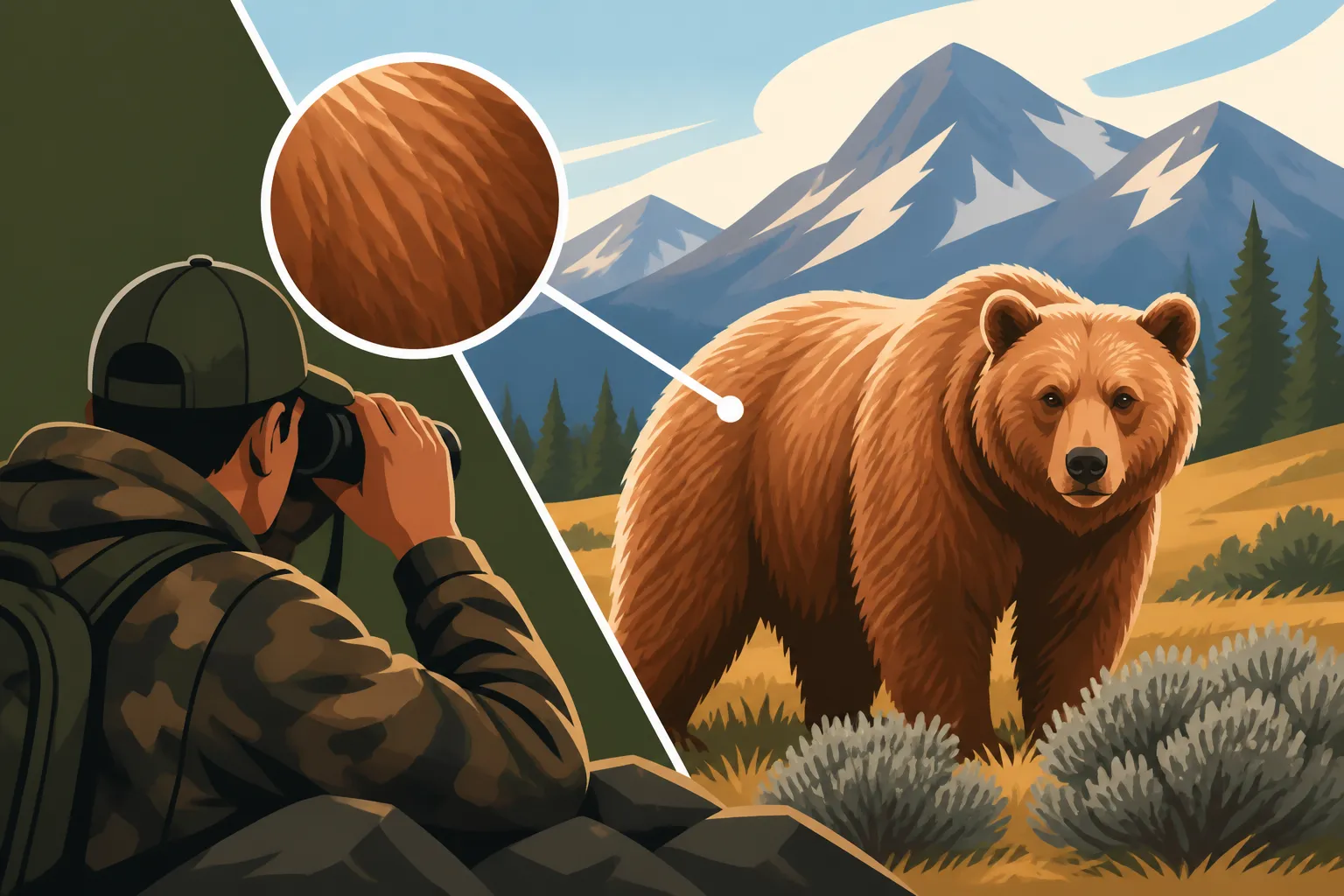
During your hunt, always use your optics – binoculars or a spotting scope – to thoroughly evaluate any bear you see. Never make a snap decision. Give yourself time to observe the animal, its movements, and its environment. If there is any doubt, err on the side of caution. It is far better to pass on a cinnamon black bear than to mistakenly harvest a grizzly. This level of diligence is part of the true hunting experience, demanding respect for the animal and the law. Reviewing resources on Bear Safety Practices in an Outfitter Camp and Food Storage Rules in Grizzly Country can also help reinforce the importance of understanding the animals you share the woods with.
Disclaimer
This article is for general informational purposes only and does not constitute professional advice. Laws, prices and regulations vary by location and change over time. Consult a qualified professional for guidance on your specific situation.