The Spike Elk Restrictions Wyoming Applies
It's incredibly frustrating when you spend months planning a Wyoming elk hunt, dreaming of a big bull, only to realize too late that your chosen hunt area has specific antler restrictions you completely overlooked. You might find yourself in prime elk country, seeing plenty of animals, but none of them are legal for you to harvest because you're in a "spike only" unit, or you misidentified a legal spike. This guide will help you thoroughly understand Wyoming's spike elk restrictions, how to properly identify a legal spike in the field, and the best ways to navigate these regulations to ensure a successful and lawful hunt.
Understanding Wyoming's Spike Elk Regulations
Hunting in Wyoming offers some incredible opportunities, but it also comes with a nuanced set of regulations designed to manage the herds effectively. One common regulation that often trips up both new and experienced hunters alike, especially nonresidents, is the "spike elk" restriction. It's not just a suggestion; it's a critical rule that can mean the difference between a successful hunt and a hefty fine.
Defining a Spike Elk for Wyoming Hunters
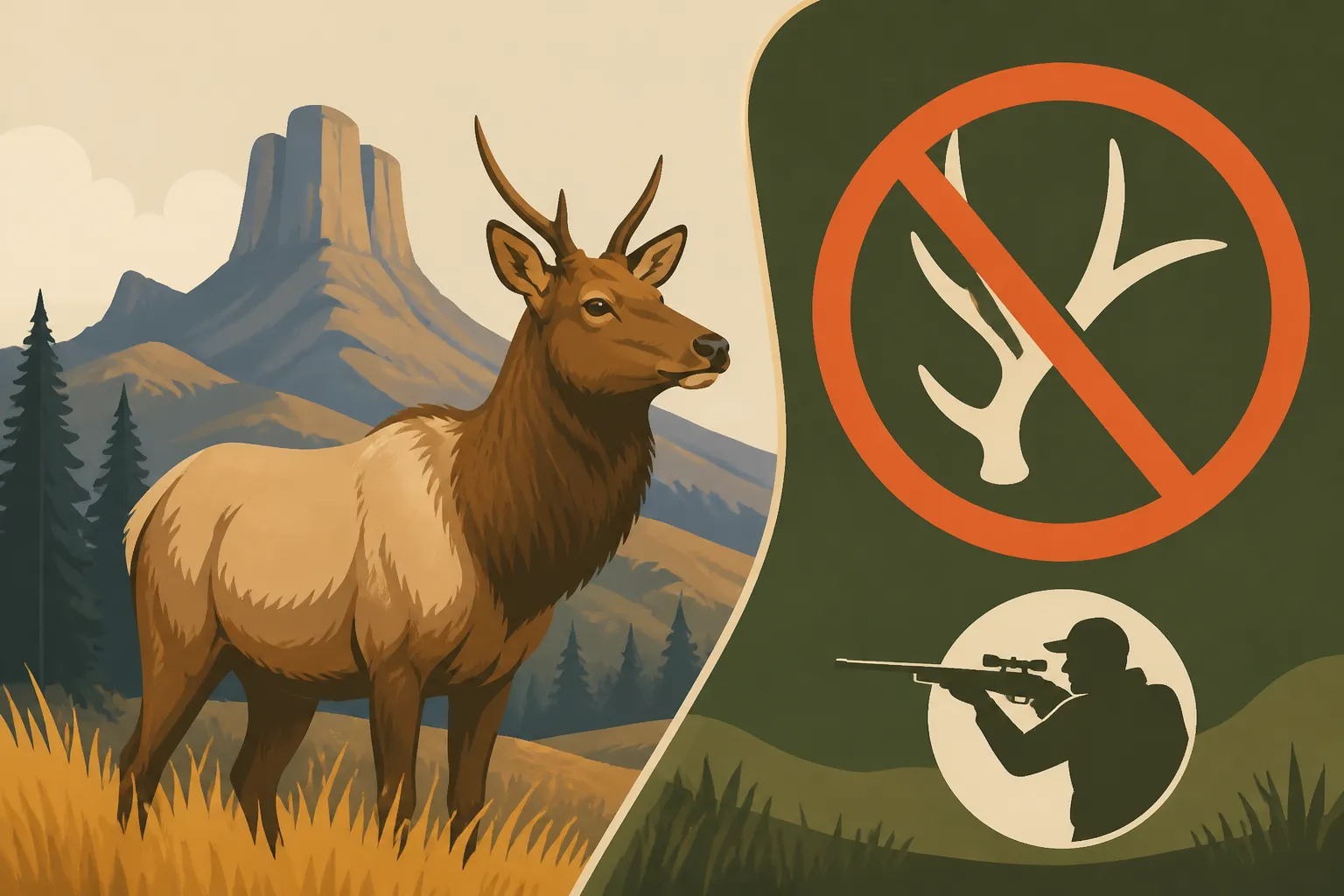
First things first: what exactly is a spike elk in the eyes of Wyoming Game and Fish? A spike elk is defined as an antlered elk having no more than one point on each antler. This means that each main beam, rising from the elk's head, can only have a single, unbranched point. It doesn't matter how long or short that point is; as long as it doesn't fork or branch into multiple tines, it's considered a spike. If there's even a tiny, visible branch or brow tine coming off that main beam, it's no longer a legal spike under these regulations. This is a very precise definition that requires careful observation in the field.
This distinction is crucial because mistakenly harvesting a branched-antlered bull in a spike-only unit is a serious violation. Many hunters, especially those new to western elk hunting, might think a small 2×2 bull is a spike, but if it has two distinct points on each side, it’s not. The rule specifically states "no more than one point on each antler." This simple phrasing has significant implications for how you approach your hunt.
Why Spike Restrictions Matter for Herd Management
So, why do these specific restrictions exist in the first place? It all comes down to robust herd management. Wyoming Game and Fish employs these regulations to achieve specific population goals within various hunt areas. Often, spike-only units are implemented in areas where biologists want to protect older, more mature bulls, allowing them to continue contributing to the gene pool and growing larger antlers. By directing harvest pressure towards younger, less mature males (spikes), the overall bull-to-cow ratio can be managed, and the age structure of the bull population can improve over time.
These regulations are a vital tool for ensuring the long-term health and sustainability of Wyoming's magnificent elk herds. They help prevent over-harvesting of trophy-class animals and maintain a healthy reproductive balance. While it might feel restrictive as a hunter, understanding this management philosophy can help you appreciate the science behind the rules. It's about ensuring there are healthy elk populations for future generations to enjoy, and hunters play a direct role in that by adhering to these guidelines.
The Role of Antler Point Restrictions in Elk Management
Spike elk restrictions are a prime example of Antler Point Restrictions (APRs), a common management strategy across North America. APRs are designed to manipulate the age structure of a big game population by protecting younger animals from harvest, allowing them to reach older age classes. In the case of elk, this means more bulls surviving past their first few years, theoretically leading to more mature, larger-antlered bulls in the herd in subsequent seasons.
The idea is that if you remove only the youngest bulls, the genetics of older, more dominant bulls can continue to propagate, potentially leading to better antler growth across the herd in the long run. It's a balance, though, as too many restrictions can lead to an overpopulation of bulls in certain age classes, potentially competing for resources. Wyoming's game managers continually assess herd health and adjust these regulations, so it's always critical to consult the most current regulations for your specific hunt area each year. You can often find this information by utilizing tools like GoHunt, which compiles and interprets these complex rules for easier consumption.
Identifying a Legal Spike Elk in the Field
Spotting an elk in the vast landscapes of Wyoming is exciting, but correctly identifying it as a legal spike before taking a shot requires patience, a good optic, and a solid understanding of the rules. The pressure of the moment, coupled with varying light conditions and distances, can make this task surprisingly challenging.
Visual Cues for Spike Elk Identification
When you spot an elk through your binoculars or spotting scope, the first thing you need to focus on is its antlers. A true spike elk will have distinct, single points on each side. Imagine a solitary spear or dagger rising from its head. There should be no "fork" or additional tines coming off the main beam. Look for smooth, unbranched antlers. Even a small, developing brow tine or a hint of a second point means it is no longer a legal spike. This can be tricky with young bulls, as sometimes they have what's called a "button" on their antler base that could be confused for a developing point.
Practice is key here. Spend time looking at photos of different elk antler configurations, and if possible, observe actual elk before your hunt. Train your eye to quickly differentiate between a clean spike and a bull with even minimal branching. When you're in the field, don't rush the shot. Take a deep breath, settle your optics, and make absolutely certain of what you're seeing. Remember, if you're hunting in an area with a Wyoming Sets Bow Draw Weight at 40 Pounds, 50 for Elk, you'll already be close enough for clear identification.
Distinguishing Spikes from Branch-Antlered Bulls
This is where many hunters make mistakes. A common scenario is a small-bodied, young bull with thin antlers that look like spikes but actually have a tiny fork or brow tine. These are often referred to as "raghorns" or young 2-points, but they are not legal spikes under Wyoming's definition. The rule is about the antler configuration, not the size of the elk. You could have a very large-bodied spike elk or a small-bodied 2-point.
Focus specifically on the tip of the main beam and the area just above the pedicle (where the antler meets the skull). Any deviation, any small projection, any hint of a second point, means it's not a spike. In low light, at long distances, or if the elk is moving, these small details can be incredibly hard to discern. Using a high-quality spotting scope with good magnification can be invaluable for making these critical distinctions before you even consider drawing a bow or shouldering a rifle. When in doubt, always err on the side of caution.
When in Doubt, Let it Grow
This piece of advice cannot be stressed enough, especially when hunting in spike-only units. If you're looking at an elk and there is any hesitation or uncertainty in your mind about whether it's a legal spike, do not shoot. The consequences of harvesting an illegal animal far outweigh the disappointment of letting a potential elk walk. Not only could you face significant fines and license revocations, but it also reflects poorly on the hunting community as a whole.
It's better to be absolutely sure and pass on an animal than to risk breaking the law. There will always be other opportunities. Trust your gut. If your optics aren't clear enough, the light is fading, or the animal is too far away or obscured, wait for a better chance or choose a different animal. This principle applies universally, whether you're debating Fixed and Expandable Heads Under Wyoming Rules or simply trying to count points. GoHunt provides excellent resources and maps that often highlight specific unit regulations, helping you pre-scout and understand the nuances before you even hit the dirt.
Navigating Hunt Area Specifics and Exceptions
Wyoming's elk regulations are not uniform across the entire state. Each hunt area has its own set of rules, and these rules are meticulously crafted based on local herd conditions, public land access, and management objectives. Assuming that "spike only" applies everywhere, or that it doesn't apply anywhere, is a recipe for disaster.
Locating Spike-Only Units
The first step in navigating spike elk restrictions is knowing whether your chosen hunt area has them. This information is clearly outlined in the annual Wyoming Game and Fish Department hunting regulations. These regulations are typically broken down by species and then by individual hunt area numbers. For instance, some areas might be designated "Any Elk," meaning any antlered or antlerless elk is fair game. Other areas might be "Antlered Elk," which means any bull with at least one visible antler, regardless of points, is legal. And then you have the "Spike Elk Only" units, where only bulls with no more than one point on each antler can be harvested.
Before you apply for a license or even start scouting, you need to pore over the current year's regulations for your specific hunt area. Websites like GoHunt often integrate this regulatory data into their mapping systems, allowing you to easily click on a unit and see the harvest restrictions at a glance. It's a powerful tool for planning your hunt and avoiding costly mistakes. Remember, what was legal last year might have changed this year, so always check the most current information.
The "Any Antlered Elk" Distinction
It’s easy to get confused by the different terminology used in hunting regulations. An "Antlered Elk" tag or designation is not the same as a "Spike Elk Only" tag. If a unit is listed as "Antlered Elk," it means any bull with at least one visible antler is legal. This often includes spike bulls, but it also includes 2-points, 3-points, 4-points, and so on. In these units, you don't have to worry about counting points beyond confirming it's a bull. This is a far less restrictive regulation than a "Spike Elk Only" area.
However, understanding this difference is paramount. Many hunters dream of harvesting a large, mature bull, and therefore target "Any Antlered Elk" units. But if you accidentally apply for or hunt in a "Spike Elk Only" unit with a dream of a 6×6, you'll be gravely disappointed and limited in your options. Always double-check the specific regulation for the exact hunt area and license type you possess. Don't assume anything. The regulations also specify Which Big Game Species Require a Fifty-Pound Bow or if Wyoming Hunt Areas That Limit Your Weapon Choice are in effect, adding more layers to your hunt plan.
Resources for Checking Unit Regulations
The Wyoming Game and Fish Department website is your primary source for official regulations. They publish a detailed brochure each year, usually available digitally as a PDF, that outlines all species, hunt areas, dates, and antler restrictions. Take the time to download and thoroughly read the section pertaining to elk in your desired hunt area. Pay close attention to the specific wording for "Type 1" or "Type 9" licenses, as these also denote what kind of animal you can harvest. For example, understanding Reading Wyoming's Type 1 Through Type 9 License Numbers is key to decoding your tag's permissions.
Beyond the official state resources, third-party platforms can be incredibly helpful. Online services like GoHunt offer detailed breakdowns of hunt units, historical draw odds, and the exact regulations for each area. Many serious Western hunters use these platforms to cross-reference information and gain a deeper understanding of a unit's specific nuances, including where spike-only rules apply. Always compare information from multiple sources to ensure accuracy, but start with the official Game and Fish regulations. A thorough A Walkthrough of the Wyoming Hunt Planner can also guide you.
Practical Strategies for Spike Elk Hunting
Hunting for spike elk, while potentially less focused on antler size, still requires all the skill, patience, and strategy of any elk hunt. In fact, it can sometimes be more challenging due to the specific identification requirements. However, with the right approach, targeting spikes can offer a rewarding experience, especially for those looking to fill their freezer with quality elk meat.
Scouting for Spike Bulls
Effective scouting is paramount, regardless of what kind of elk you're pursuing. When targeting spike bulls, you're often looking for younger animals, which tend to be found in slightly different patterns than mature, dominant bulls. They might still be with cow-calf groups, or in bachelor herds of younger bulls, often on the fringes of prime bull habitat. Look for areas with good forage and water sources, especially during the early archery or rifle seasons. Early season elk often haven't been pressured much, and young bulls can be a bit less wary.
E-scouting tools are invaluable here. You can use satellite imagery and topographic maps to identify potential bedding areas, feeding grounds, and water sources within your chosen spike-only unit. Services like GoHunt allow you to layer public and private land boundaries, historical burn areas, and even animal migration patterns, which can give you a massive advantage. Don't forget to look for Reading Fresh Elk Sign in Dark Timber or along migration corridors. Knowing where elk are likely to be, even before you set foot on the ground, greatly increases your chances of encountering spikes.
Calling Young Bulls
Calling strategies for spike bulls can differ slightly from those used for mature herd bulls. Younger bulls are often more curious and less wary of calls, and sometimes they're more willing to respond to a lone cow call or even a modest bugle. They haven't had years of hunting pressure teaching them caution. A subtle cow call can often bring in a curious spike looking for companionship. During the rut, a more aggressive bugle might attract a smaller bull hoping to challenge a perceived intruder or steal a cow from a larger bull's harem.
Experiment with different calls. Sometimes a soft chuckle or a series of mews can be very effective. Be patient and listen intently for responses. Remember that elk can pinpoint sounds very well, so try to make your calls sound natural and from a position that offers good cover and a clear shooting lane if an animal commits. If you're hunting with a partner, try a Two-Hunter Calling Setups That Actually Work on Bulls to increase your odds. Knowing How to Bugle a Wyoming Bull Into Bow Range is still a critical skill, even for spikes.
Ethical Hunting in Spike-Only Areas
Hunting spikes responsibly and ethically means applying the same principles you would to any big game animal. This includes ensuring a clean, humane shot, respecting fair chase principles, and diligently tracking any animal you shoot. Just because an elk is a spike doesn't mean it's any less deserving of your utmost respect. Take your time, get a stable rest, and wait for a broadside shot presenting maximum opportunity for a clean kill.
Furthermore, always know your legal shooting hours and vehicle rules in Wyoming. Adhering to these regulations is crucial for public perception and the future of hunting. Proper field dressing and carcass transport are also vital, especially considering Wyoming's meat salvage requirements and chronic wasting disease (CWD) protocols. Even if you're targeting a spike, being a responsible hunter encompasses the entire process, from pre-hunt planning and identification to post-harvest care.
| Elk License Type | Antler Restriction | Typical Goal | Primary Benefit |
|---|---|---|---|
| Spike Elk Only | No more than one point on each antler | Herd management, protecting mature bulls | Higher draw odds in some units; good for meat |
| Any Antlered Elk | At least one visible antler | Harvesting any legal bull | More flexibility in target animal; broader unit choices |
| Any Elk | Antlered or Antlerless (bull or cow) | Maximizing opportunity, general harvest | Easiest to draw in many units; high success rate |
| Antlerless Elk | Cow or calf elk | Population control, meat harvest | Very high draw odds; focused on population reduction |
Disclaimer
This article is for general informational purposes only and does not constitute professional advice. Laws, prices and regulations vary by location and change over time. Consult a qualified professional for guidance on your specific situation.