Are Expandable Broadheads Legal in Wyoming?
One of the most common questions that comes up when bowhunters start looking at Wyoming’s regulations is about broadheads, especially those newfangled mechanical or expandable ones. It's a valid concern, honestly, because rules vary so much from state to state, and nobody wants to show up for a hunt of a lifetime only to find their equipment isn't legal. This guide is here to cut through the confusion and give you a crystal-clear understanding of what Wyoming says about expandable broadheads, so you can confidently prepare for your next archery adventure.
Understanding Wyoming's Broadhead Regulations
When you’re preparing for a bow hunt in Wyoming, whether you're chasing high-country elk or prairie antelope, the broadhead on the end of your arrow is a critical piece of equipment. Unlike some states that might ban certain types outright, Wyoming's regulations are pretty specific and, once you understand them, quite straightforward. It’s all about ensuring a clean, ethical kill, and the rules are designed with that in mind.
The Core Legal Requirement: Cutting Width
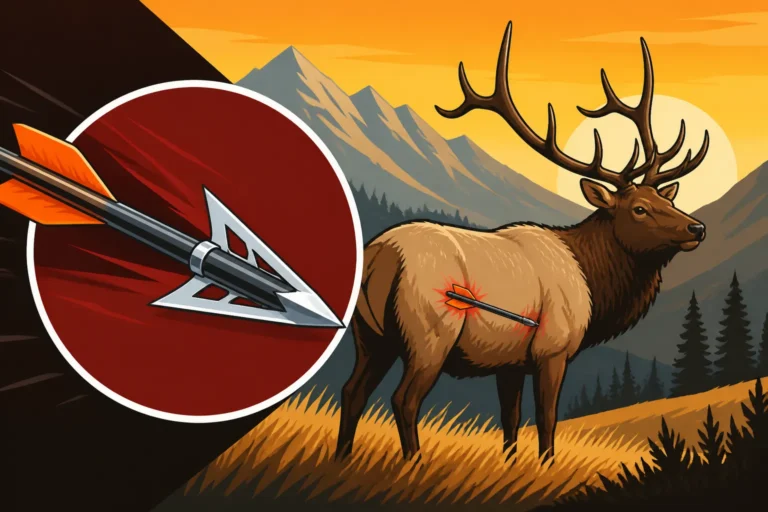
Wyoming law states that for hunting big game, your broadhead must have at least two cutting edges and a minimum cutting width of 7/8 of an inch. This is often referred to as the "7/8-inch ring test" among hunters. The idea behind this rule is simple: to ensure that your broadhead creates a large enough wound channel to lead to a quick, humane harvest. A broadhead that's too small in diameter might not cause sufficient hemorrhaging, leading to a prolonged and painful end for the animal, which is precisely what ethical hunters want to avoid.
Think about it this way: imagine sliding your broadhead through a ring that's 7/8 of an inch in diameter. If it slides through without catching, it's too small. If it doesn't pass through or barely makes it, you're good to go. This measurement needs to be the actual cutting diameter at its widest point. This is a crucial distinction, especially when we start talking about expandable broadheads. Understanding how this critical measurement works is key to ensuring your gear is legal. You can delve deeper into the specifics of How the Seven-Eighths Inch Ring Test Works to really nail down the details.
Expandable Broadheads: The Verdict
So, the big question: are expandable broadheads legal in Wyoming? The answer is a resounding yes, they are, provided they meet that crucial 7/8-inch minimum cutting width when fully deployed. This is where a lot of the confusion often comes in, because an expandable broadhead might look very narrow in its un-deployed, "closed" position. However, Wyoming focuses on the deployed cutting diameter. If your mechanical broadhead, once it opens up, creates a cutting diameter of 7/8 of an inch or more, it’s perfectly legal.
Many hunters worry about the reliability of expandables, or if they'll be scrutinized in the field. Rest assured, as long as your specific broadhead model is designed to achieve that minimum cutting width when it functions as intended, you’re within the law. Brands like Rage, NAP, and G5, which produce many popular expandable broadheads, have models that easily clear this bar. When researching different models, online resources like GoHunt can be invaluable for checking specifications and reading reviews from other hunters. Just make sure you always check the manufacturer's stated cutting diameter for the deployed blades. The law cares about what happens when that arrow hits its mark and the blades spring open, not how narrow it is in your quiver.
Fixed Blade vs. Expandable Broadheads in Wyoming
The debate between fixed blade and expandable broadheads is as old as the mechanical broadhead itself. Both have their fervent supporters and their detractors, and for good reason – each type offers distinct advantages and disadvantages. In Wyoming, since both are legal (assuming they meet the cutting width minimum), the choice often comes down to personal preference, hunting style, and the species you're pursuing.
Advantages and Disadvantages of Fixed Blades
Fixed blade broadheads are, in many ways, the traditional choice. They consist of a solid ferrule with blades that are permanently attached and do not move. This simplicity is often cited as their greatest strength.
Advantages:
- Reliability: There are no moving parts to fail. What you see is what you get, meaning the blades are always in their deployed position, ready to cut. This gives many hunters a strong sense of confidence, especially when facing tough shots or challenging conditions.
- Durability: Generally, fixed blades are built robustly. They can often withstand impacts with bone or dense tissue without deforming or breaking, making them a favorite for large, tough-skinned animals like elk.
- Penetration: Their often smaller profile and rigid design can lead to excellent penetration, particularly on quartering-away shots or when encountering bone. This is a huge factor when you need to drive an arrow deep into a big game animal.
- Easy to Sharpen: Many fixed blades can be resharpened at home, extending their lifespan and ensuring a razor-sharp edge for every hunt.
Disadvantages:
- Flight Characteristics: This is often the biggest hurdle for fixed blade users. Their larger surface area can act like a tiny wing, causing the arrow to "steer" in flight, especially at higher speeds or in windy conditions. This often requires more precise bow tuning to achieve consistent accuracy, which can be a source of frustration for some archers.
- Tuning Demands: Getting a fixed blade broadhead to fly exactly like a field point can be a tedious process of micro-adjustments to your bow's rest, nocking point, and limb timing.
- Wind Drift: In the wide-open spaces of Wyoming, wind is a constant factor. Fixed blades, with their larger profile, can be more susceptible to wind drift than the sleeker profile of an expandable broadhead.
- Want to dive deeper into the specifics for bigger game? Check out Fixed Blade Against Mechanical Broadheads on Elk for a detailed comparison.
Advantages and Disadvantages of Expandable Broadheads
Expandable, or mechanical, broadheads feature blades that retract during flight and then deploy upon impact, usually by a spring mechanism or kinetic energy. They’ve gained immense popularity over the last few decades.
Advantages:
- Field-Point Accuracy: Because their blades are tucked away during flight, expandables often have a much smaller profile, making them fly more like a field point. This can be a huge confidence booster for hunters, as it simplifies bow tuning and reduces the need for extensive broadhead-specific practice.
- Larger Cutting Diameter: Once deployed, many expandable broadheads offer a significantly larger cutting diameter than most fixed blades. This creates a wider wound channel, which can lead to more rapid blood loss and a quicker recovery.
- Less Wind Sensitivity: Their sleek, in-flight profile makes them less susceptible to wind drift, which is a significant advantage when shooting across open country in Wyoming.
Disadvantages:
- Mechanical Failure Risk: While modern expandables are incredibly reliable, there's always a slight chance of mechanical failure. Blades might not deploy fully, or they could deploy prematurely if bumped. This is a rare occurrence with quality broadheads, but it's a concern for some.
- Reduced Penetration: The act of deploying the blades and the larger cutting surface can require more energy upon impact, potentially reducing penetration, especially on animals with thick hides or dense bone structures. They may also be less forgiving on poor shot angles.
- Blade Retention: Some older or cheaper models might have issues with blades coming loose or breaking off after impact, though newer designs have largely addressed this.
- Cost: Expandable broadheads can sometimes be more expensive than their fixed blade counterparts.
Making Your Choice: Matching Broadhead to Hunt and Animal
Ultimately, the best broadhead for you in Wyoming is one that you can shoot accurately and that consistently performs ethically. When making your choice, consider these factors:
- Species: Are you hunting smaller game like antelope or mule deer, or bigger, tougher animals like elk or moose? For elk, maximum penetration is often a priority, leading many to favor fixed blades or robust expandables known for deep penetration. For antelope or deer, the larger cutting diameter of an expandable can be devastating. When considering something like an elk, it’s vital to ensure your full arrow setup, including broadhead, delivers sufficient kinetic energy and momentum. Understanding Arrow Weight That Gets Through an Elk is a crucial part of this equation.
- Bow Setup: Is your bow perfectly tuned? If you struggle with tuning, an expandable might simplify things. If your bow is impeccably tuned, a fixed blade might offer a slight edge in penetration.
- Shot Distance: For shorter, timber-style shots, the flight characteristics of a fixed blade might be less of a concern. For long-range, open-country shots (where ethical shooting distances are still paramount), the field-point accuracy of an expandable can be very appealing.
- Personal Confidence: This is perhaps the most important factor. If you trust your broadhead choice and shoot it well, you'll be more confident in the field, which translates to better shots and more ethical harvests.
Here's a quick comparison table to help visualize the differences:
| Feature | Fixed Blade Broadhead | Expandable Broadhead |
|---|---|---|
| Legality in Wyoming | Yes (if > 7/8" cut) | Yes (if > 7/8" cut deployed) |
| Flight Accuracy | Can be tricky, requires precise tuning | Often flies like a field point, easier tuning |
| Cutting Diameter | Typically smaller (1"-1.25") | Can be larger (1.5"-2" or more) when deployed |
| Penetration | Generally excellent, good on bone | Good, but can be reduced by deployment or large cut |
| Reliability | Very high, no moving parts | High, but slight risk of mechanical failure |
| Wind Sensitivity | More susceptible to wind drift | Less susceptible to wind drift |
| Durability | Generally very robust | Good, but blades can sometimes bend/break on hard impact |
| Best For | Tough game (elk, moose), deep penetration, windy conditions (if tuned well) | Broadside shots, easier tuning, quick kills on smaller game |
Ensuring Your Archery Setup is Wyoming Legal
Beyond just your broadhead, Wyoming has other regulations for archery equipment that you need to be aware of. It's a comprehensive approach to ensuring that all hunters are using gear that provides the best chance for a clean, ethical harvest. Don't just focus on the broadhead; your entire setup needs to meet the legal criteria.
Minimum Draw Weight Requirements
It's not just about the broadhead; the power behind that arrow also matters. Wyoming sets minimum draw weights for bows, depending on the species you're hunting. For example, if you're chasing deer, antelope, or bighorn sheep, your bow needs a minimum draw weight of 40 pounds. If you're going after the bigger game like elk or moose, that minimum jumps to 50 pounds. This ensures that the arrow has enough force to penetrate deeply and inflict a lethal wound.
Many hunters overlook this detail, thinking only of their broadhead, but an underpowered bow, even with the sharpest broadhead, can lead to a wounded animal. Always check your bow's draw weight to confirm it meets the requirements for your target species. You can find more specific information on these regulations by looking into Wyoming Minimum Draw Weight for Deer Hunting or details on Which Big Game Species Require a Fifty-Pound Bow.
Other Legal Archery Equipment Considerations
Wyoming is relatively progressive with its archery equipment rules, allowing for several innovations that make hunting more accessible and effective.
- Lighted Nocks: Yes, lighted nocks are absolutely legal for bowhunting in Wyoming. These little glowing nocks can be incredibly helpful for tracking your arrow's flight path and, more importantly, locating your arrow after the shot, which aids in finding blood trails and understanding shot placement. This can be a game-changer during low light conditions at dawn or dusk. So, feel free to use them to your advantage; Whether Lighted Nocks Are Legal for Bowhunters is a question with a clear positive answer.
- Release Aids: If you use a mechanical release aid for shooting your compound bow, you’re in the clear. Release aids are perfectly legal in Wyoming. They help many archers achieve greater accuracy and consistency, especially those who struggle with finger release. Many hunters find that a good release aid drastically improves their grouping and confidence. To verify this, you can always check Are Release Aids Allowed for Archery Hunting?.
- Crossbows: While the core of this article focuses on vertical bows, it's worth a quick mention that crossbows have their own distinct set of regulations in Wyoming, including different draw weight and bolt length requirements. They are generally legal, but often with specific seasons or conditions, especially for non-disabled hunters. If you're considering a crossbow, make sure to read up on Is a Crossbow Legal in Wyoming Archery Season? as their rules differ significantly from traditional bows.
The Importance of Practice and Ethical Hunting
Beyond simply being legal, your equipment needs to be something you're proficient with. Owning the best, legal broadhead means nothing if you can't place it accurately. Ethical hunting demands that we, as archers, are as skilled as possible with our chosen setup.
This means putting in the time at the practice range. Don't just shoot field points; practice with your actual broadheads to ensure they fly true with your setup. Understand the trajectory of your arrow and your effective shooting range. For many, that might be 40 yards, for others, it might be less. The open country of Wyoming can tempt longer shots, but resist the urge if you haven't practiced extensively at those distances. Knowing your limits is paramount. Serious hunters understand that Realistic Archery Practice Distance for Big Game is often shorter than what we might see on hunting shows. Focus on precision, not distance, especially when an animal's life is on the line.
Planning Your Wyoming Archery Hunt
Preparing for a Wyoming archery hunt involves more than just selecting the right broadhead and tuning your bow. It requires thorough research, understanding the local landscape, and ensuring you’re ready for the unique challenges of hunting in the Cowboy State. This proactive planning will boost your confidence and greatly increase your chances of a successful and ethical hunt.
Researching Hunt Areas and Regulations
Wyoming’s hunt areas are diverse, ranging from dense timber mountains to vast, open sagebrush plains. Each area has specific regulations, season dates, and sometimes, even weapon restrictions. Before you even think about buying a tag, dive deep into the Wyoming Game and Fish Department website. They provide regulation booklets, hunt area maps, and draw odds that are essential for planning.
Don't just look at a map for an area; study it. Identify public land access points, potential bedding areas, water sources, and escape routes for game. Utilizing tools like GoHunt can provide detailed filtering options for hunt areas, draw odds, and species information, helping you narrow down your choices based on your preferences and the number of preference points you might have. It's a fantastic resource for visualizing the terrain and understanding the lay of the land from your living room. Knowing How to Read a Wyoming Hunt Area Number is your first step to unlocking this information.
Preparing for the Rigors of Western Hunting
Wyoming hunting, especially in the mountains, is physically demanding. You'll likely be covering significant mileage on foot, often at high altitudes, and sometimes carrying heavy loads of meat. Physical conditioning is not just a recommendation; it’s a necessity. Start a fitness regimen months before your hunt that includes cardio, strength training, and hiking with a weighted pack.
Altitude sickness is a real concern for hunters coming from lower elevations. Plan to arrive a few days early if possible to acclimatize. Drink plenty of water, avoid excessive alcohol, and take it easy the first day or two. Being prepared for Preparing for Altitude on a Wyoming Hunt can make or break your trip, ensuring you can perform when it counts. Also, research the typical weather for your hunt dates and pack appropriate layers for everything from warm sun to sudden snowstorms. The weather in Wyoming can change drastically in a matter of hours.
By paying attention to these details, from the cutting edge of your broadhead to the condition of your lungs, you'll be well-prepared for an incredible and responsible archery hunting experience in Wyoming.
Disclaimer
The information provided in this article is intended for general guidance and informational purposes only. Hunting regulations, including those pertaining to broadheads and other equipment, can change. It is the responsibility of every hunter to consult the most current Wyoming Game and Fish Department regulations directly before heading afield. Always verify all rules and requirements to ensure legal compliance.