How Pronghorn Shed and Regrow Their Horns
It’s a common sight for anyone new to hunting out West: you see a majestic pronghorn buck, its distinct "horns" catching the sun, and you think, "Wow, those are some impressive antlers!" But here’s the thing that often catches people off guard – those aren't antlers at all. Pronghorn possess a truly unique headgear system that sheds and regrows annually, a process that is fascinatingly different from what we see in deer and elk, and understanding it is key to truly appreciating these speed demons of the prairie. This guide is going to peel back the layers on this amazing biological phenomenon, explaining exactly how Wyoming pronghorn shed and regrow their horns each year.
The Pronghorn's Peculiar Headgear: More Than Just Horns
When you first encounter a pronghorn, especially a mature buck with impressive headgear, your mind naturally goes to deer or elk. We're so conditioned to see members of the deer family (Cervidae) with their bony, deciduous antlers that we mistakenly lump pronghorn into the same category. This common misconception often leads to surprise when hunters learn the truth about these animals, which are actually the sole surviving members of the family Antilocapridae, a lineage distinct from both true deer and true antelope. They're a completely unique species, and their headgear is one of their most defining features.
Not Antlers: Distinguishing Pronghorn from Deer and Elk
The fundamental difference lies in their very composition and growth cycle. Deer, elk, and moose grow antlers, which are solid bone structures that sprout from pedicles on their skulls. These bony antlers are shed completely each year, leaving the pedicles bare until the next growth cycle begins. They start as velvet-covered bone, harden through the summer, and are then cast off, usually in late winter or early spring. It's a marvel of bone regeneration, but it’s a temporary bony extension, not a permanent part of the skull. This is a critical distinction, both biologically and for hunting regulations, as you wouldn't typically find shed "antlers" from a pronghorn.
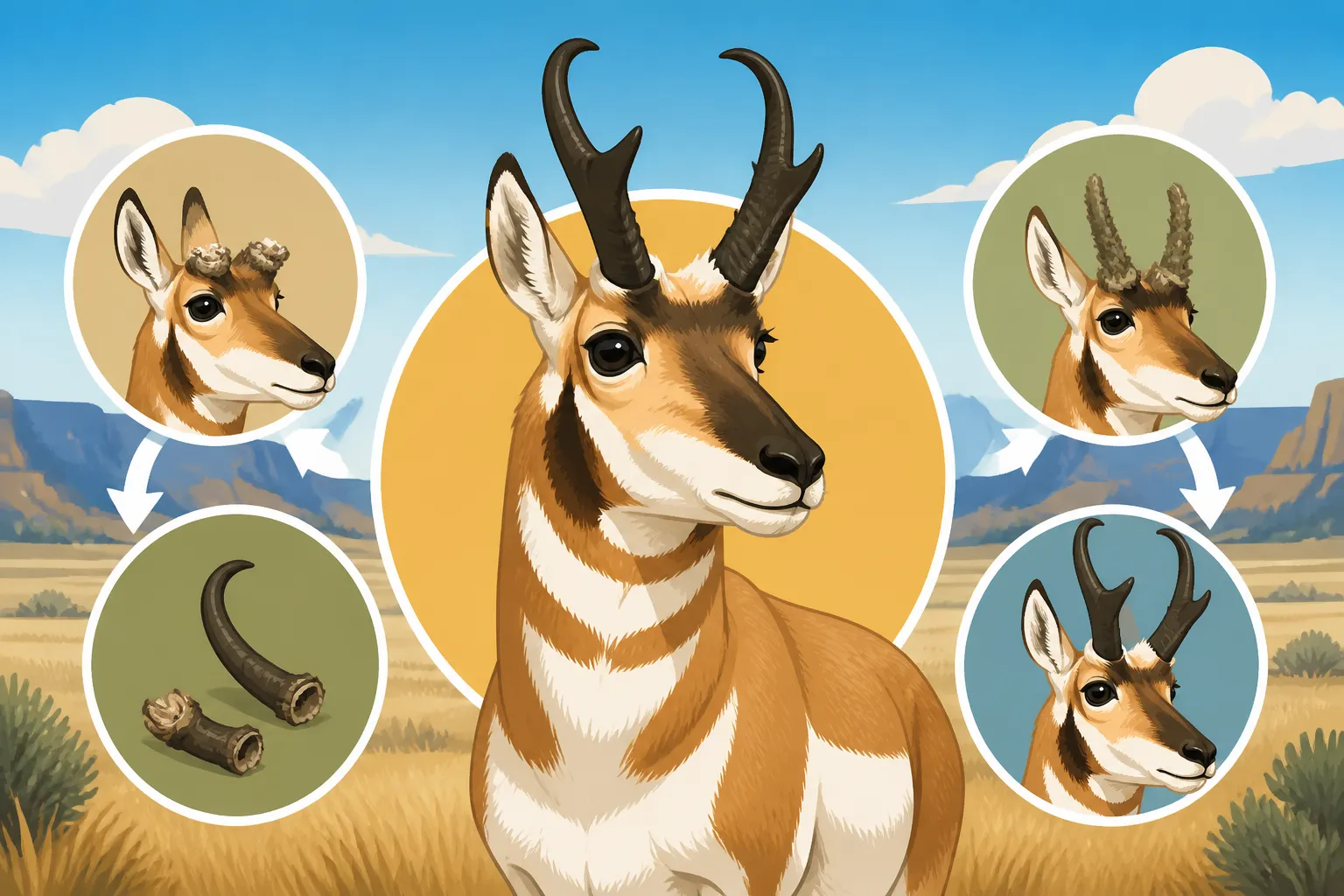
Pronghorn, on the other hand, sport true horns, but with a twist. While true horns, like those on cattle or bighorn sheep, are permanent bony cores covered by a keratinous sheath that grows continuously and is never shed, pronghorn do something different. Their horns have a permanent, bony core that remains attached to the skull for life, similar to a bighorn. However, unlike a bighorn, the outer keratinous sheath that covers this bony core is shed annually. This makes them truly one-of-a-kind in the animal kingdom; they are the only animals that possess branching horns that are shed yearly.
This distinction isn't just a biological footnote; it has real implications for understanding pronghorn behavior, health, and even how we view them as game animals. Knowing they're not simply "antelopes" (which are typically found in Africa and Asia) but a unique North American species helps us appreciate their adaptations to the harsh, open country of places like Wyoming. When you're trying to figure out Telling a Whitetail From a Mule Deer it's about antler shape and body size, but with pronghorn, you're looking at an entirely different biological system.
Anatomy of a Pronghorn Horn: Bone Core and Keratin Sheath
Let’s get into the nitty-gritty of what makes a pronghorn horn. Imagine a permanent bony pedestal, firmly attached to the buck’s skull. This is the core, and it's a living part of the animal, supplying blood and nutrients. It’s what gives the horn its underlying structure and is present year-round, never leaving the animal's head. If you were to examine a shed pronghorn horn sheath, you would see the hollow space where this bone core once resided.
Over this permanent bony core, a sheath of keratin grows. Keratin is the same fibrous protein that makes up our fingernails, hair, and the outer layer of a bighorn sheep's horn. This keratinous material forms the visible part of the pronghorn’s horn, giving it its dark coloration and distinctive shape. It's a strong, resilient material, designed to withstand the rigors of sparring, foraging, and defending territory. The growth of this sheath starts at the base of the horn, pushing old material upwards and outwards, much like how a bighorn's horn grows, but with a crucial difference—it's designed to detach.
The interplay between the permanent bone core and the growing keratin sheath is what facilitates the annual shedding. Cells at the base of the horn regulate the growth of new keratin and eventually signal the detachment of the old sheath. This allows for a continuous cycle of renewal, ensuring the buck always has fresh, sharp horns for the breeding season. The bony core is also what dictates the general shape and size of the horn, year after year, so a buck that consistently grows large, heavy horns likely has a robust bony core.
The characteristic "prong" that gives the animal its name is actually an outgrowth of this keratinous sheath. Unlike a deer's antler points, which are extensions of the bone itself, the prong is formed by the specific growth pattern of the keratin. It typically juts forward and slightly inward, providing an additional weapon for sparring. This distinctive feature helps hunters with Field Judging a Pronghorn Buck From Distance, as the length and definition of the prong are key indicators of maturity and trophy quality.
The Annual Rite: When and How Pronghorn Shed
The shedding of a pronghorn's horn sheath is one of nature's subtle marvels, often going unnoticed by all but the most observant individuals. It's not the dramatic, easily observed event of an elk dropping an antler in a snowy field. Instead, it's a quiet, relatively quick process that takes place at a specific time of year, influenced by the animal's life cycle and environmental conditions. Understanding this timing is crucial for anyone studying or hunting pronghorn.
The Timing of the Shed: Fall and Early Winter's Secret
For many hunters, the image of a pronghorn is one of a sleek, alert animal dashing across the sagebrush flats in late summer or early fall, its dark horns prominent against the sky. What they often don't realize is that these very horns are living on borrowed time. The vast majority of pronghorn bucks will shed their horn sheaths in the late fall to early winter. We're generally talking about the period from late October through December, sometimes even into January, depending on the individual animal and local conditions. This timing contrasts sharply with When Pronghorn Bucks Go Into Rut, which typically peaks in September, meaning bucks use their fully developed horns for breeding and sparring before they're shed.
The exact timing can vary subtly from one buck to another, and even within the same herd. Younger bucks might shed a bit earlier, and older, more dominant bucks might hold onto theirs longer. Environmental factors also play a role; a particularly harsh winter or a period of nutritional stress could trigger shedding slightly sooner, as the body prioritizes conserving energy. However, the consistent pattern remains: after the intensity of the rut and as winter approaches, the signal is given for the old sheath to detach.
This annual shedding is a testament to the pronghorn's incredible adaptability and unique evolutionary path. While other horned animals like bighorn sheep retain their horns for life, the pronghorn's ability to renew its headgear annually ensures that it always has a fresh, strong set for the next breeding cycle. It's a strategy that provides advantages in durability and perhaps even energy conservation compared to growing entirely new bone structures like antlers.
Comparing this to other big game, it's a completely different ballgame. Deer and elk shed their antlers typically from late winter into early spring, a period of rest before new growth begins in earnest. For pronghorn, the shedding happens as winter sets in, and regrowth begins almost immediately, highlighting a faster, more continuous cycle of horn development. This difference is why finding pronghorn sheds is much less common than finding deer or elk antlers; the keratinous sheath is smaller, less durable, and often blends into the landscape more easily.
The Process of Shedding the Sheath
The actual process of the horn sheath shedding from the bony core is relatively quick once it begins. Hormonal changes, likely triggered by the end of the breeding season and decreasing daylight, play a significant role in initiating the process. At the base of the bony core, below the keratin sheath, specialized cells begin to resorb bone and tissue, creating a weakened interface between the permanent core and the outer sheath. This creates a "seam" where the old sheath can detach.
As this interface weakens, the keratinous sheath becomes loose. A buck might feel the looseness and start to rub its horns against brush, sagebrush, or even its own legs and flanks to help dislodge them. You might see a buck with one horn sheath partially hanging, or just one horn completely gone, giving them a rather comical, asymmetrical appearance for a short period. It’s not necessarily a painful process, but likely a relief as the old, worn sheath gives way to the sensitive new growth underneath.
Once detached, the old keratin sheath falls off, leaving the bony pedicle underneath temporarily exposed. This exposed core is sensitive and vascular, quickly beginning to grow the new sheath. Because the shed sheath is keratin and not bone, it's not a prized find for shed hunters in the same way an elk antler is. These sheaths will eventually break down and return to the soil, often unnoticed by human observers, unlike the durable bone antlers that can persist for years.
Observing a pronghorn during this period can give you a unique insight into their annual cycle. It’s a testament to the efficient biological processes at play in these animals. While many hunters might be focused on obtaining a Wyoming Nonresident Antelope Tag Price Explained and preparing for the next hunt season, understanding these biological intricacies enriches the overall hunting experience, offering a deeper connection to the wildlife we pursue.
From Bare Pedicle to Full Horn: The Regrowth Marvel
Just as remarkable as the shedding process is the incredible speed and efficiency with which pronghorn regrow their horn sheaths. It's a rapid biological feat, essential for the bucks to be ready for the next rutting season. This quick turnaround from bare bone to full, functional horns is another aspect that sets pronghorn apart and contributes to their survival in the challenging Wyoming landscape.
The Rapid Growth Phase: A Race Against Time
The moment the old horn sheath falls away, the race to grow a new one begins. The underlying bony core is immediately active, with a rich blood supply delivering the necessary nutrients for rapid keratin production. Unlike deer or elk that have a significant period with no antlers, pronghorn bucks are almost continuously in a state of horn growth for much of the year. The sensitive, living tissue at the base of the pedicle quickly starts producing new keratin, forming a soft, developing horn sheath.
This growth is truly astonishing in its speed. Within a matter of weeks, a noticeable new sheath will begin to form over the bony core. Throughout the winter and spring, this growth continues at a rapid pace, fueled by the animal's nutrition and overall health. The speed of growth is crucial because bucks need fully developed, hardened horns by late summer and early fall when the breeding season approaches. It's an efficient use of energy, as the bony core is already established, simply requiring the keratinous layer to be rebuilt.
Factors influencing this rapid growth include the buck’s age, genetics, and critically, its nutritional intake. A healthy buck with access to good forage and water will typically grow a larger, denser, and more impressive set of horns than one that is stressed or poorly nourished. This is why areas with rich habitat often produce larger-horned animals. Hunters often use resources like GoHunt to research Where Wyoming Raised Its Antelope Quotas and to understand herd health and potential for trophy animals in various units, which is often directly correlated to horn development.
The rapid growth also means that by the time spring gives way to summer, the new horns are well on their way to maturity. This continuous growth, while the outside world might simply see "horns," is a constant internal process of renewal and hardening. It showcases the pronghorn's incredible metabolic capabilities and its unique evolutionary strategy for maintaining its defensive and display structures.
Developing the Characteristic Prong
One of the most distinctive features of a pronghorn’s headgear is, of course, the prong itself. This forward-pointing fork is not a separate piece but rather an integral part of the keratinous sheath, developing as the horn grows. As the new sheath elongates and takes shape over the bony core, the specific genetic programming of the pronghorn directs the keratin growth to form this unique appendage. It’s not something that’s added on; it emerges as part of the overall horn structure.
Throughout late spring and summer, the new horns continue to harden and solidify. The soft, developing keratin matures, becoming dense and dark. By the time August rolls around, the horns are typically fully grown and hardened, ready for the upcoming rut and any territorial disputes that may arise. This hardening process gives the horns their formidable strength, allowing bucks to spar with vigor without damaging their primary weaponry.
This is a stark contrast to how antlers develop and harden. Antlers grow as bone, covered in velvet, and once fully formed, the velvet sheds, revealing the hard, vascular bone. Pronghorn horns, being keratin, don't "shed velvet" in the same way. Instead, the entire sheath hardens and darkens, often with a slight sheen. The growth and hardening of the pronghorn horn is a testament to the efficiency of keratin production and shaping, demonstrating a completely different physiological mechanism than what's seen in antlered animals.
By understanding this process, we gain a deeper appreciation for the pronghorn’s unique biology. It highlights why they are not true antelope, despite their common nickname, and reinforces their status as a truly remarkable North American native species. This insight also helps us understand the timing of horn development throughout the year, which is valuable information for planning a hunt or simply observing these incredible animals.
Why This Matters for the Wyoming Hunter
For anyone planning a hunting trip to Wyoming for pronghorn, understanding their unique horn growth cycle is more than just trivia; it's practical knowledge that can significantly impact your scouting, field judging, and overall hunting strategy. Wyoming's vast open spaces, which you might research with tools like GoHunt, are prime Wyoming Pronghorn Population Estimate Explained territory, and knowing what you're looking at can make all the difference between a successful hunt and a missed opportunity.
Field Judging and Ageing Pronghorn by Horn Development
One of the biggest challenges for hunters, particularly in the vast, open terrain where Pronghorn Eyesight and the Stalking Distance It Forces means long-range glassing is common, is accurately field judging a buck. Knowing how pronghorn horns grow and develop is absolutely essential for this. A buck’s horn length, mass (circumference at the base), and the development of its prong are key indicators of its age and trophy potential. A young buck might have thin, short horns with underdeveloped prongs, while a mature buck will display impressive length, good mass that carries up the horn, and a distinct, well-defined prong.
The unique shedding cycle means that you're always looking at the current year's growth. There's no carrying over "hard-antlered" bucks from previous seasons like with deer. This simplifies some aspects of judging but emphasizes the importance of understanding the growth progression within a single season. An early-season buck's horns might look slightly less massive or developed than they will a few weeks later in the rut. This means that if you're trying to gauge How Many Years It Takes to Draw Wyoming Moose for a bighorn, you're looking at horn rings for age; for a pronghorn, you're assessing the overall development of a single year's growth.
Tools and resources like those offered by GoHunt often include detailed statistics and success rates for various Wyoming Antelope Unit Density areas, which can give you an idea of the potential for mature bucks. However, the final judgment in the field comes down to your eye and your understanding of what constitutes a mature pronghorn horn. Paying attention to details like the length of the horn compared to the ear, the overall mass, and the shape and size of the prong will help you make an informed decision when that moment of truth arrives.
Avoiding mistakes due to a lack of understanding of horn biology is also critical. Sometimes, a buck might have a unique horn configuration that looks impressive but isn't actually a measure of age or trophy quality. Understanding that the prong is a keratinous extension, not a bony tine, helps you interpret what you're seeing accurately. This biological knowledge empowers you to make ethical and informed decisions in the field.
Seasonal Observation and Scouting for Next Year's Hunt
Pronghorn shedding and regrowth also offers valuable insights for year-round observation and future hunt planning. If you spend time in pronghorn country outside of hunting season, keeping an eye out for shed sheaths in late fall and early winter can offer clues about herd health. While not as durable or easy to spot as deer or elk antlers, finding sheds indicates that mature bucks are in the area and have successfully completed their rut and entered the winter phase. This adds to the puzzle of How Far the Pronghorn Migration Route Runs and where these animals are spending various parts of the year.
Scouting during the late spring and summer months allows you to observe bucks as their horns are actively growing and hardening. This is an excellent time to identify promising bucks for the upcoming season without any hunting pressure. You can monitor specific animals, assess their growth progression, and note their preferred habitat. This kind of detailed E-Scouting, often done from Scouting a Wyoming Unit From Your Kitchen Table with maps and online resources, becomes even more effective when you understand the annual cycle of horn development.
Leveraging platforms like GoHunt that provide draw odds (such as Wyoming Antelope Odds With Zero Preference Points or Wyoming's 75/25 Draw Split Explained) and application deadlines (Wyoming Antelope Application Deadline in June) is crucial for planning your hunt. But overlaying that data with your own observations of horn development and herd dynamics throughout the year can give you a significant edge. Knowing that a buck's horns will be fully developed by August and ready for the rut means you can target your scouting efforts to identify prime specimens during this critical pre-season period.
Ultimately, appreciating how pronghorn shed and regrow their horns annually is about understanding the animal itself. It's a reminder of the unique adaptations that allow them to thrive in the high plains and sagebrush steppe of Wyoming. For the hunter, it provides deeper insights into their behavior, helps with accurate field judging, and enhances the overall connection to these incredible animals that roam our Western landscapes.
| Feature | Pronghorn Horns | Deer Antlers |
|---|---|---|
| Composition | Permanent bony core, annual keratinous sheath | Solid bone, no permanent core |
| Shedding | Keratin sheath shed annually (Oct-Jan) | Entire bony antler shed annually (Late Winter-Spring) |
| Regrowth | Rapid keratin growth over bony core (winter-summer) | New bony antler grows from pedicle (spring-summer) |
| Prongs/Tines | Distinct forward-pointing prong (keratin) | Bony tines (points) branch off main beam |
| Velvet | No velvet phase; keratin grows and hardens | Grows in velvet, sheds velvet to expose hard bone |
| Permanence | Bony core is permanent | Antler is entirely temporary |
Disclaimer
This article is for general informational purposes only and does not constitute professional advice. Laws, prices and regulations vary by location and change over time. Consult a qualified professional for guidance on your specific situation.