When Pronghorn Bucks Go Into Rut
Every pronghorn hunter in Wyoming knows the thrill of seeing those magnificent animals ghosting across the sagebrush. But when it comes to predicting when those bucks will truly become active, chasing does and challenging rivals, it can feel like a guessing game. This guide is going to strip away the mystery surrounding the pronghorn rut in Wyoming, helping you understand the typical timing, what influences it, and how you can use that knowledge to your advantage in the field.
Understanding the Wyoming Pronghorn Rut Cycle
Pronghorn, often called antelope, have one of the most visible and exciting ruts of any big game animal. Unlike elk or deer that might hide in timber, the pronghorn rut plays out in wide-open country, making it a spectacular show and a prime time for hunters. Many hunters get frustrated trying to pin down the exact week, and honestly, it's never an exact science. But we can certainly talk about the patterns that emerge year after year, offering a reliable framework for your hunt planning.
General Timing for Wyoming Pronghorn
Generally, the pronghorn rut in Wyoming kicks into gear in late August and extends through much of September, often peaking in the first two or three weeks of September. This window aligns perfectly with many of the archery and early rifle seasons, which is a huge bonus for hunters looking to capitalize on this heightened activity. It's that sweet spot when the weather starts to hint at autumn, the mornings are crisp, and the bucks are feeling their oats. You'll start to see early signs in August, with bucks becoming more territorial, pushing does around, and generally being less tolerant of other bucks. You might notice them rubbing their horns on sagebrush or pawing at the ground, marking their territory. This initial push is like the opening act, building anticipation for the main event.
The full-blown chaos, however, usually waits until September. It's a noticeable shift – suddenly, those bachelor groups of bucks from August are a thing of the past, replaced by individual bucks frantically trying to gather and hold onto a harem of does. They'll run tirelessly, circling their does, chasing off any interloping bucks, and constantly scanning for threats. This intense period doesn't last indefinitely, though. By late September, while some activity persists, the frantic pace begins to slow as bucks become exhausted and does are bred. The energy levels simply aren't sustainable, and their bodies begin to demand recovery.
Factors Influencing the Rut's Start and Intensity
While we can give you a general calendar window, the precise timing and intensity of the pronghorn rut aren't etched in stone. Several factors play a significant role in when the action truly ignites across the Wyoming plains. One of the biggest underlying drivers is photoperiod, or the changing length of daylight. As the days shorten in late summer, it triggers hormonal changes in both bucks and does, setting the biological stage for the breeding season. This is the ingrained clock that keeps the rut generally consistent year after year, ensuring the young are born at the optimal time in spring.
However, weather conditions can certainly fine-tune the timing and influence how active the bucks are on a day-to-day basis. A sudden cold snap in late August or early September, especially if accompanied by some precipitation or even an early dusting of snow, can often kick things into high gear. Cooler temperatures mean bucks can exert more energy chasing does and fighting rivals without overheating, leading to more visible activity during daylight hours. Conversely, a prolonged heat wave can suppress daytime rutting activity, pushing the peak action into the cooler hours of dawn, dusk, and even overnight. Another factor is the doe's estrus cycle. While the bucks are perpetually ready, the does have to be receptive. The presence of does coming into estrus is the ultimate trigger for the most intense buck activity, as the bucks sense their readiness and become even more frantic in their efforts. The overall health of the herd, influenced by previous winters and forage quality, can also play a subtle role, impacting the physical condition of the animals and their readiness to breed. Understanding these nuances can help you predict daily behavior, even if the general timing is consistent.
Behavioral Shifts and What to Expect During the Rut
The pronghorn rut isn't just about timing; it's about a complete transformation in behavior. What you see in July or August is a far cry from the antics of a pronghorn buck in mid-September. It's a high-energy, high-stakes game for them, driven by instinct and testosterone, and understanding these shifts is key to anticipating their movements and reactions. This is where your scouting, whether on the ground or through resources like GoHunt, really pays off, allowing you to identify traditional rutting areas and prime spots for observation.
Dominance Displays and Fighting
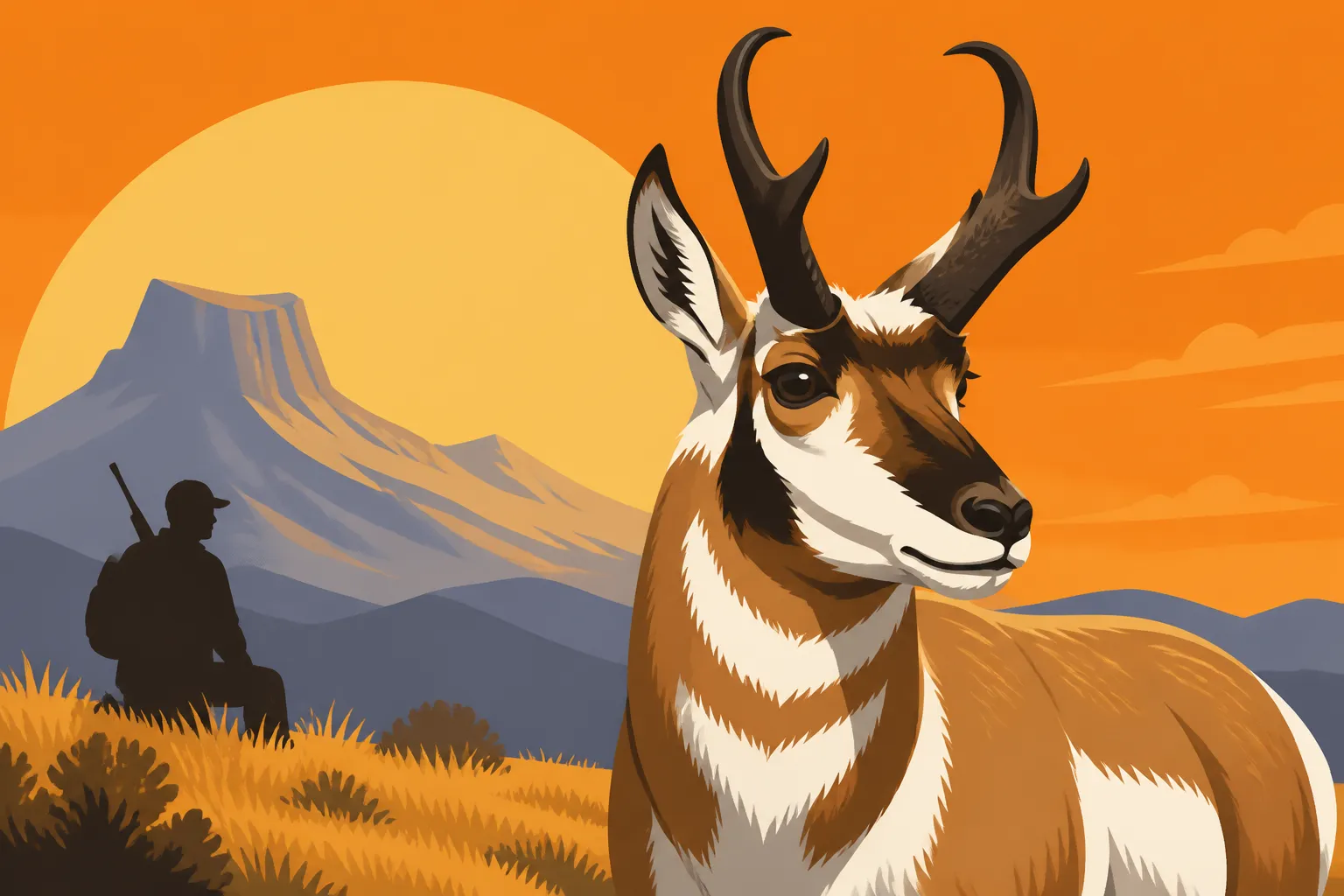
During the rut, pronghorn bucks are driven by a singular goal: breeding. This means establishing dominance and defending a harem of does from rival bucks. You'll see an incredible array of dominance displays. Bucks will often posture, walking stiff-legged with their necks arched, showing off their impressive horns and dark cheek patches. These dark patches, located on their neck and jaw, become more prominent and serve as visual signals to other pronghorn. They'll urinate and defecate in specific spots, sometimes pawing the ground vigorously, creating scent markers to signal their presence and status. They use glands on their face to mark vegetation, another subtle way of broadcasting their claim to territory and does. These displays are usually enough to deter smaller or less dominant bucks, sending them packing without a full-blown confrontation.
However, when two evenly matched bucks meet, or when a subordinate buck gets too bold and tries to cut out a doe, actual fighting will break out. These fights are intense, using their unique horns—bony core covered by a keratinous sheath that is shed annually—to spar and push each other. They'll lock horns and shove, trying to gain an advantage, often digging their front feet into the dirt for leverage. These battles can be quite violent, sometimes resulting in injury, but they're typically short-lived. The victor earns the right to the does, at least until the next challenge emerges. For hunters, these confrontations can be exciting to watch and can also distract bucks, making them less aware of their surroundings. Catching a buck preoccupied with a rival is a golden opportunity to close the distance unnoticed.
The Role of Does in Triggering Action
While the bucks initiate much of the visible rutting behavior, the does are the true drivers of the peak activity. Bucks are perpetually ready, their hormones surging, but it's the does entering estrus that truly ignites the most intense chasing and territorial defense. A buck will spend his days diligently herding a small group of does, often 5-10 animals, attempting to keep them within his chosen territory. He'll constantly be on the move, chasing off any doe that tries to wander too far, pushing them back into the fold with nudges and short bursts of speed. This can be an exhausting job for a single buck, especially when multiple does in his harem come into estrus at different times, demanding his attention simultaneously.
When a doe becomes receptive, she will often try to "escape" the buck's constant herding, leading to high-speed chases across the open plains. These chases can cover significant ground and are often what catch a hunter's eye, as they are dynamic and visually striking. Other bucks in the vicinity, seeing or hearing this commotion, will immediately be drawn to the area, hoping to steal a receptive doe or challenge the resident buck. This creates a constant state of flux and high energy within the herd. If you're observing a group of pronghorn and see a buck constantly on the move, pushing does, and other bucks lurking nearby, you know you're right in the thick of it. This frenetic activity is precisely why The Decoy Distance That Actually Pulls Antelope Bucks can be so effective; a buck seeing what he perceives as a rival or a new doe is likely to investigate, sometimes with reckless abandon.
Hunting Strategies Adapted to the Rut
Hunting pronghorn during the rut presents both unique challenges and incredible opportunities. The animals are more active and often less cautious than usual, driven by their breeding instincts, but they're also constantly on the move, making long stalks difficult. Success often comes down to adapting your tactics to their rut-driven behaviors, utilizing their heightened aggression and curiosity to your advantage.
Decoying and Calling Tactics
The rut is arguably the best time to employ decoying and calling tactics for pronghorn. Bucks are filled with testosterone, territorial, and incredibly curious about anything that looks like a rival buck or a lone doe. A well-placed decoy, such as a full-size buck or doe silhouette, can draw a dominant buck across hundreds of yards of open country. The key here is presenting it realistically and reading the wind correctly, as pronghorn have incredible eyesight and a keen sense of smell. I've seen bucks come charging in, snorting and stomping, utterly convinced they're about to run off an intruder. They can become so focused on the perceived threat or opportunity that they ignore other dangers. For more specific guidance on this, check out our piece on Decoy Setups That Pull Pronghorn Bucks.
Coupled with decoying, calling can be incredibly effective. While not as vocal as elk, pronghorn do make sounds during the rut. A snort-wheeze, mimicking a challenging buck, or a soft bleat, imitating a lost or receptive doe, can get a buck's attention from a surprising distance. Combining a visual decoy with a vocal challenge can be a deadly combination, appealing to both their sight and hearing. It's about convincing that buck that there's a rival to be run off or an opportunity to be seized that he can't ignore. Remember, patience is crucial. Set up your decoy, get hidden, and be ready, because when they commit, they often come in fast and direct. Using a quality hunting app like GoHunt to mark potential decoy setups based on terrain features can really streamline your approach, helping you use the land to your advantage.
Stalking Considerations During Peak Rut
While decoying is fantastic, stalking is still a primary method for pronghorn, and the rut changes the game significantly. During peak rut, bucks are often so focused on their does and rivals that they can sometimes be slightly less wary of human presence, but their constant movement can make closing the distance a nightmare. You might spot a buck and his harem, start your stalk, and by the time you've covered a quarter-mile, they've moved another half-mile or changed direction completely. This is where understanding How Far to Stalk a Bedded Pronghorn becomes particularly vital, as a resting animal is a much easier target to approach effectively.
The key to successful rut-time stalking is to anticipate their movements. Look for terrain features like small rises, dry creek beds, or even scattered sagebrush that can offer concealment. Pay obsessive attention to the wind, as a pronghorn's nose is legendary; our article on Playing Wind Direction on an Open-Country Stalk has some great tips here. Sometimes, rather than directly stalking a moving buck, you can identify where he's going to go, especially if he's herding does towards a water source or a specific bedding area, and set up an ambush. Another technique is to use the commotion of other bucks. If two bucks are fighting or chasing, they might be momentarily distracted enough for you to close the distance for a shot. Utilizing tools like GoHunt to identify small cuts and draws for concealment, as discussed in Using Cutbanks and Draws to Close on Antelope, becomes even more critical when bucks are on the move.
Understanding Pronghorn Eyesight in the Open
It's impossible to talk about hunting pronghorn, especially during the rut, without hammering home the point about their incredible eyesight. Often cited as possessing vision equivalent to 8x binoculars, their eyes are disproportionately large for their head, giving them an unparalleled ability to spot movement across vast distances. This means that even when a buck is distracted by rutting behavior, he's still likely to pick up on anything out of place in his extensive field of view. He may be focused on a doe, but his peripheral vision is still working overtime.
This phenomenal vision dictates everything about your approach. Slow, deliberate movements are critical. Avoid standing upright on skylines or silhouetting yourself against the horizon. Utilize every bit of available cover, no matter how small it seems. A small clump of sagebrush, a subtle dip in the terrain, or even a lone yucca plant can be enough to break up your silhouette and give you those precious extra yards. Remember, they are constantly scanning their surroundings, even when focused on a doe. Their peripheral vision is also exceptional, allowing them to see a huge arc without turning their head. This makes getting close a true test of patience and field craft. For more depth on this particular challenge, you might find our article on Pronghorn Eyesight and the Stalking Distance It Forces particularly helpful. Don't underestimate it – even the most rut-crazed buck still has those incredible optics working for him.
Post-Rut Behavior and Late Season Opportunities
As intense as the pronghorn rut is, it eventually winds down. Bucks become exhausted from the constant chasing, fighting, and lack of consistent feeding. Their focus shifts, and new hunting strategies become necessary for the late season hunter who might still have a tag in their pocket. This transition marks a noticeable change in how these animals can be found and approached.
Bucks Recovering and Dispersion
By late September and into October, the frantic pace of the rut noticeably diminishes. Most of the does have been bred, and the bucks, having lost significant body weight from their strenuous efforts, begin the process of recovery. You'll often see them disperse from their rutting territories, sometimes forming small bachelor groups again, or simply becoming more solitary. Their primary focus shifts from breeding to replenishing their energy reserves and putting on fat for the coming winter. This means they'll be spending more time feeding in open country and less time actively chasing and displaying.
Their behavior becomes much more cautious as well. The testosterone haze clears, and their innate wariness returns to full alert. They're no longer as easily drawn to decoys or calls, having been fooled by rivals or hunters once too often. They'll be more aware of their surroundings, and any approach will need to be executed with extreme stealth and precision, often requiring longer stalks and more careful planning. You might find them in different areas than during the rut, often seeking out prime feeding grounds where they can recover efficiently without constant harassment. Understanding this shift is crucial; trying to hunt a post-rut buck with rut-era tactics will likely lead to frustration and empty hands.
Late Season Opportunities
Despite the decreased rutting activity, the late season (October through November, depending on the specific hunt area) still offers excellent opportunities for pronghorn hunters. The animals are still out there, and with some changes in strategy, you can find success. The biggest advantage of the late season is that the animals are often concentrated on winter range, making them easier to locate, especially after a fresh snowfall. Snow cover can also make animals stand out against the white backdrop, aiding in spotting. This is where having access to data and maps from services like GoHunt can pinpoint key wintering areas that might be less accessible or populated during the early season.
Instead of relying on their aggression, late-season hunting becomes more about classic spot-and-stalk or even glassing and waiting near known feeding areas or water sources. Your optics become even more critical here. Long-range glassing from a high vantage point, allowing you to pick apart vast expanses of sagebrush, is often the most effective way to locate animals that are now spread out and focused on survival. Once spotted, a patient, deliberate stalk, using every ripple and fold in the landscape, is your best bet for getting within range. Because they are less active and more focused on feeding, they can often be patterned, offering consistent opportunities if you put in the time to observe them for a day or two. Remember, by this time of year, most of the rifle seasons are open, and if you haven't filled your tag, those late-season animals can be quite wary, having been pressured by earlier hunters.
Here's a quick look at how the rut stages impact hunting tactics:
| Rut Stage | Typical Timing | Buck Behavior | Hunting Strategy Emphasis |
|---|---|---|---|
| Early Rut | Late August – Early Sept. | Establishing dominance, pushing does, sparring, less wary | Aggressive decoying, challenging calls, patient observation |
| Peak Rut | Mid-September | Intense chasing, frequent fights, constant herding | Decoying, calling, capitalizing on distractions, high-speed stalks |
| Post-Rut | Late Sept. – End of Season | Recovering, feeding, dispersing, increased wariness | Spot-and-stalk, long-range glassing, ambush near food/water |
Ultimately, understanding the pronghorn rut in Wyoming is about appreciating the full spectrum of their behavior and adapting your approach accordingly. Whether you're drawing a tag for early archery or a late rifle season, knowing when those bucks go into rut and what that means for their behavior will significantly increase your odds of a successful hunt. The prairie is waiting, and with the right knowledge, you'll be ready for it.
Disclaimer
This article is for general informational purposes only and does not constitute professional advice. Laws, prices and regulations vary by location and change over time. Consult a qualified professional for guidance on your specific situation.