Hunting Coyotes in Wyoming Year Round
Coyotes in Wyoming can be a real headache, right? Whether you're a rancher trying to protect your calves or a deer hunter frustrated by declining fawn recruitment, these clever canids have a way of making their presence felt. The good news for anyone looking to help manage their numbers and enjoy some fast-paced hunting action is that Wyoming offers a unique, year-round opportunity to pursue coyotes, helping you hone your predator hunting skills while also contributing to local wildlife and livestock management. This guide will walk you through everything you need to know to successfully hunt coyotes throughout the seasons in the Cowboy State.
Understanding Wyoming's Predator Status for Coyotes
One of the most appealing aspects of coyote hunting in Wyoming is their official classification: they are considered a "predator" species. This isn't just a label; it comes with significant implications for hunters, namely the ability to hunt them continuously, without specific seasons or bag limits in most areas. It's a stark contrast to big game hunting, where every detail is meticulously regulated.
Coyotes as Unprotected Wildlife
In Wyoming, coyotes fall into a category of wildlife that doesn't receive the same management as deer, elk, or even black bears. They are not designated as "trophy game" or "game animals," which means the Wyoming Game and Fish Department doesn't set specific hunting seasons, draw odds, or tag requirements for them in the same way. This frees up hunters immensely, allowing for spontaneous hunts or dedicated predator management efforts whenever the opportunity arises. It's a pragmatic approach to a species that can quickly expand its population and impact other wildlife.
Impact on Livestock and Game Species
The reason for this "predator" designation isn't arbitrary. Coyotes are incredibly adaptable and opportunistic hunters, and while they play a natural role in ecosystems, their impact can be significant, especially on vulnerable populations. For ranchers, the frustration is real. Losing a calf or a lamb to coyotes isn't just an emotional blow; it's a financial one that hits hard. Farmers also deal with coyotes preying on poultry or smaller livestock. From a big game perspective, coyotes are efficient predators of fawns and calves, particularly during the spring birthing season. When mule deer or pronghorn populations are struggling, a high coyote density can certainly hinder recovery efforts. Hunters often witness the aftermath of coyote predation, finding evidence of kills or seeing coyotes actively hunting in areas they expect to see young game animals. It’s a natural cycle, but one that sometimes needs human intervention to balance.
Why Year-Round Hunting Is Permitted
Because coyotes are not managed with traditional hunting seasons, the door is open for continuous pursuit. This year-round access empowers hunters to respond to localized issues or simply enjoy the challenge of hunting one of the West's most intelligent animals at any time. It means that whether you've filled your big game tags early, are waiting for a specific season to open, or just want to get out into the field, coyotes are always an option. This flexibility is a huge draw for both residents and nonresidents, making Wyoming a prime destination for predator hunting. It also means you need to be mindful of other regulations in play, especially if you're out during an open big game season where different rules apply to those hunting other species.
Effective Strategies for Year-Round Coyote Hunting
Hunting coyotes year-round means you'll need a versatile toolkit of strategies. What works in a snowy January might not be effective in a green August. Adaptability is key when pursuing these wily creatures.
Calling Them In: Techniques and Gear
Calling is arguably the most popular and effective method for hunting coyotes, and it's a skill that can be honed throughout the year. The basic premise is to mimic sounds that draw a coyote into range, whether it's the distress cry of a rabbit, the howl of another coyote, or the sound of a bird in trouble.
- Mouth Calls vs. Electronic Calls: You've got options here. Mouth calls require practice and skill, but they offer an incredibly authentic sound and the ability to change pitch and volume on the fly with very little movement. Electronic calls, on the other hand, offer a vast library of sounds, consistent volume, and the ability to place the sound source away from your position, drawing the coyote's attention there instead of directly to you. Brands like Foxpro or Lucky Duck are popular choices for electronic callers, offering a huge array of sounds. If you're using an electronic call, remember that Wyoming does permit their use for predator and varmint hunting. This is a significant advantage, allowing you to cycle through various distress calls, barks, and howls to elicit a response. For a deeper dive into the legality and effectiveness, you might want to check out Electronic Calls for Predators and Varmint Hunting.
- Reading the Response: A coyote's response to your call can tell you a lot. A hesitant trot might mean a cautious approach, while a full-bore charge suggests aggression or intense curiosity. Sometimes, they'll circle downwind, trying to get your scent. Always be ready for this, and position yourself to cover multiple approach angles. Often, the best strategy is to set up with the wind blowing across your face or quartering into you, so your scent doesn't carry directly to where you expect them to approach.
Spotting and Stalking the Prairie Ghost
Calling isn't always the answer, especially if you're hunting heavily pressured coyotes or in terrain that favors stealth over sound. Spotting and stalking is another incredibly effective method, especially in Wyoming's vast, open landscapes. This is where good optics and a keen eye truly shine.
- Glassing for Opportunity: In areas like the Red Desert or the wide-open sagebrush flats of eastern Wyoming, coyotes often move in daylight, especially early mornings and late evenings. Use your binoculars and spotting scope to systematically Grid Glassing a Basin Without Missing Bucks or hillsides, looking for any movement or a tell-tale silhouette. Once you spot a coyote, the real challenge begins. For extended glassing sessions in such wide-open spaces, consider investing in quality optics with good light-gathering capabilities. The right optics power for Wyoming's long sightlines can make all the difference, helping you pick out a distant coyote from a rock or a sagebrush bush.
- The Art of the Stalk: Stalking a coyote across open ground is a true test of patience and understanding of terrain. You need to use every piece of cover available—dry washes, rolling hills, even larger sagebrush bushes—to break up your outline. Pay meticulous attention to the wind direction. Coyotes have an incredible sense of smell, and if they catch your scent, the game is over. Understanding how to play the wind on an open-country stalk is paramount; a shift in breeze can ruin hours of careful movement. Approach slowly, deliberately, and be prepared to freeze in place if the coyote looks your way.
Ambush Points and Patience
Sometimes, the best strategy isn't to actively pursue but to let the coyotes come to you, or at least to intercept them along predictable travel routes. This often requires a good understanding of the local landscape and coyote behavior.
- Identifying Travel Corridors: Coyotes are creatures of habit. They'll often use the path of least resistance: old two-track roads, game trails, the bottoms of draws, or fence lines. Scouting these areas, perhaps even with a good mapping tool like GoHunt, can help you identify prime ambush locations. Look for pinch points or areas where multiple draws converge.
- The Power of Still Hunting: This involves moving very slowly and deliberately through an area, pausing frequently to scan and listen. It's less about calling and more about covering ground quietly, hoping to surprise a coyote or intercept one on the move. This can be especially effective in timbered edges or broken country where visibility is limited, but coyotes might be less wary. Setting up on a vantage point overlooking these corridors, especially during times of increased activity like dawn and dusk, can yield excellent results.
Key Considerations for Hunting Coyotes Across Wyoming
While coyote hunting is less regulated than big game, it's not a free-for-all. There are still crucial aspects you need to understand to ensure a legal, ethical, and successful hunt.
Navigating Land Access: Public, Private, and Permission
Wyoming offers a tremendous amount of public land, but knowing where you can hunt and how to access it is vital.
- Public Land Opportunities: Much of Wyoming is public land, including vast tracts managed by the Bureau of Land Management (BLM) and National Forests. BLM Holds 27,860 Square Miles of Wyoming is a staggering amount of land, much of which is open to hunting. However, access isn't always straightforward. Some public parcels might be "landlocked" by private land, requiring specific permission to cross. Always confirm your access before heading out. Using mapping applications, especially those that highlight public and private land boundaries, is invaluable. A tool like GoHunt can show you land ownership layers, helping you pinpoint public access points. For general rules, understanding Four Legal Ways Onto Wyoming Public Land will be incredibly helpful.
- The Importance of Permission on Private Land: A significant portion of Wyoming is private land, often consisting of large ranches. Hunting on private land always requires permission from the landowner. This isn't just a courtesy; it's the law. Trespassing can lead to severe penalties. Many successful coyote hunters build relationships with ranchers, offering to help control predators in exchange for access. If you are using mapping tools, be sure to use those that accurately depict land ownership. Using onX Public Land Layers in Wyoming can be an indispensable tool for this, but always double-check with local signage or the landowner directly if there's any doubt.
- Hunter Management Areas and Walk-In Areas: The Wyoming Game and Fish Department also manages certain private lands for public access through programs like Access Yes. These can include Hunter Management Areas (HMAs) and Walk-In Areas (WIAs). Always check the specific rules for these areas, as some may require a permission slip from the Game and Fish Department before hunting.
Weapon Choices and Effective Ranges
Coyote hunting typically involves small-caliber, high-velocity firearms, but options abound depending on your preference and the hunting scenario.
- Rifles: The most common choice for coyote hunting. Calibers like .223 Remington, .204 Ruger, .22-250 Remington, or even a .22 ARC are popular for their flat trajectory and minimal recoil. These calibers are very effective at distances typically encountered in Wyoming's open country. When considering a rifle, ensure it's on the Wyoming Legal Firearm List for Big Game if you plan to carry it during a big game season, though for predators, the rules are less stringent. However, it's always good practice to be familiar with general firearm safety and legality. For those looking for a versatile option, perhaps even one that could double for other small game or varmints, thinking about the Best All-Around Caliber for a Western Hunt can be useful, although dedicated predator calibers often offer an edge.
- Shotguns: A shotgun can be a highly effective tool for close-range calling setups, especially in brushy terrain where shots might be quick and under 50 yards. #4 buckshot or even heavier turkey loads can be devastating on coyotes at appropriate distances.
- Handguns and Archery: While less common for dedicated coyote hunting, some hunters enjoy the challenge of pursuing coyotes with a handgun or even a bow. This often requires exceptional stealth and calling skills to get animals into very close range. Regardless of your weapon, practice makes perfect. Know your effective range and stick to ethical shots that ensure a clean kill.
Rules of Engagement: Ethical Practices and Safety
Even though coyotes are predators, ethical hunting practices are paramount.
- Responsible Hunting: This means making clean, quick kills, knowing your limits, and avoiding reckless shots. It also means showing respect for the animals you hunt, even if they are a nuisance species. Do not target coyotes near homes or where other non-target animals might be present.
- Safety First: Always follow the fundamental rules of firearm safety. Be aware of your surroundings, especially if you're hunting during open big game seasons where other hunters might be present. Wear blaze orange if required or if it enhances your visibility to other hunters, even if not strictly mandated for predator hunting. Consider the implications of The Rules on Hunting From a Vehicle – while coyotes are predators, there are still rules about shooting from or across roads.
- Respecting Other Hunters: Wyoming's vast public lands are shared by many. Be courteous to other hunters, hikers, campers, and recreational users. If you see another hunter, give them a wide berth. Public land etiquette ensures everyone can enjoy their time outdoors.
Adapting Your Approach Through Wyoming's Seasons
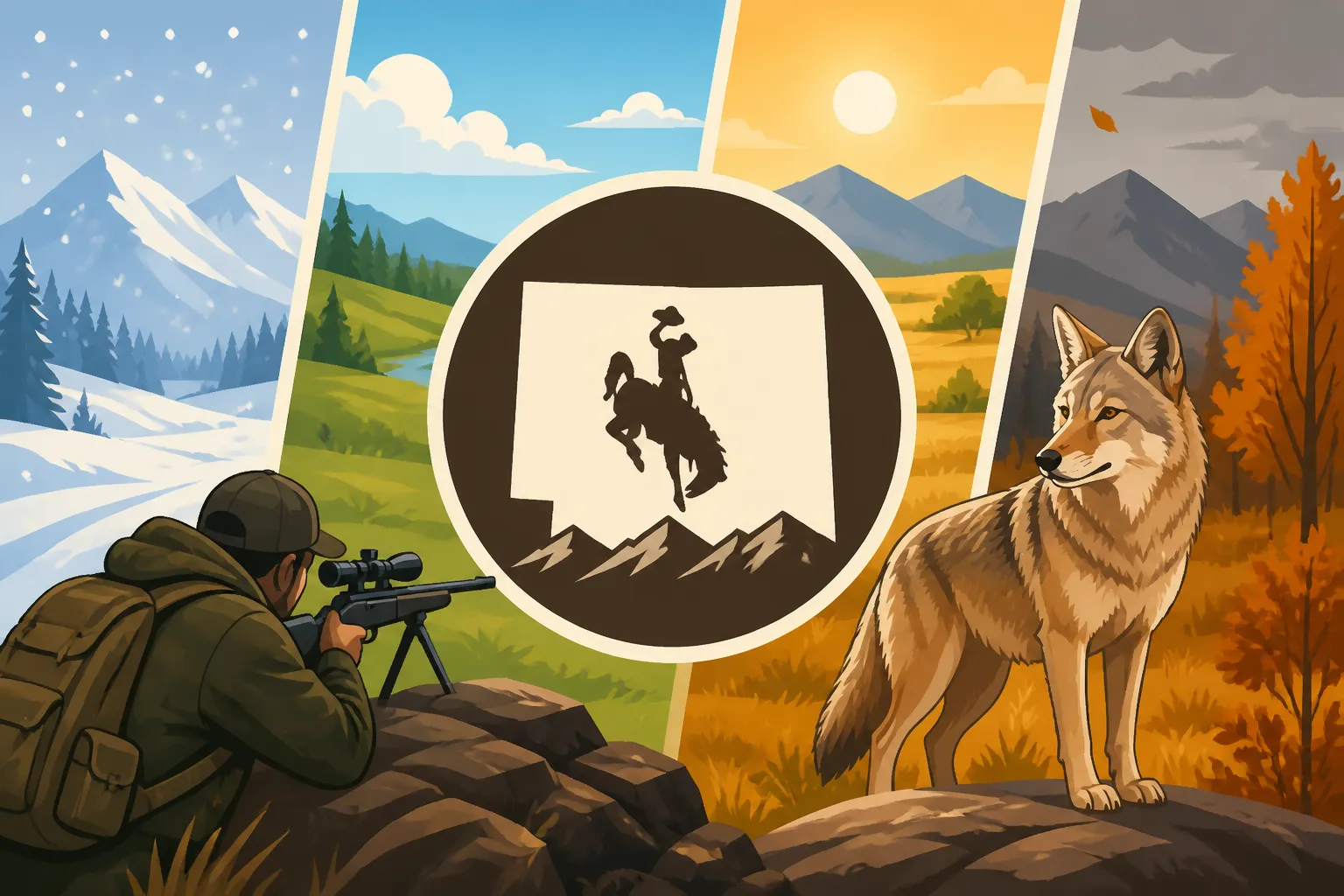
The beauty of year-round coyote hunting is the constant change and the need to adapt. Each season presents unique challenges and opportunities.
Spring and Summer: Pups, Pairs, and Pressure
As winter recedes and new life emerges, coyote behavior shifts dramatically.
- Denning and Pups: Spring is all about denning and raising pups. Coyotes become incredibly protective of their dens, and distress calls mimicking a pup or an injured rabbit can often draw in an aggressive male or female. During this time, you might encounter pairs working together. Targeting specific breeding pairs can be an effective way to manage local populations. Remember that locating and disturbing dens is generally frowned upon, and ethical hunting focuses on calling animals away from their immediate den sites.
- Increased Vegetation and Heat: Summer brings thick vegetation, which can make spotting and stalking more challenging. Hunters often focus on earlier mornings and late evenings when temperatures are cooler, and coyotes are more active. Water sources can become focal points for activity. The heat also means you need to be mindful of quick recovery of any harvested animals.
- Young and Inexperienced Coyotes: As pups grow into juveniles, they become more independent and, often, less wary. Late summer can be a good time to call in these younger, more naive coyotes, especially with less aggressive calls.
Fall: Dispersion and Increased Mobility
Fall is a transition period, and coyote behavior reflects the changing landscape and dwindling food sources.
- Pup Dispersion: Young coyotes, now nearly full-grown, begin to disperse from their birth territories to find new ranges. This means more coyotes are on the move, increasing your chances of encountering them. They're exploring, learning, and often more responsive to calls as they search for food or establish their own territories.
- Increased Activity: As other game species like deer and elk enter their rut, coyotes often become more active, preying on stressed animals or even scavenging gut piles left by successful hunters. This makes them more visible and responsive to calls.
- Preparing for Winter: Coyotes are actively feeding and trying to put on weight for the colder months. Calls that mimic easy meals can be highly effective. The landscape also starts to open up as leaves drop, improving visibility for spotting.
Winter: Pelts, Visibility, and Snow Tracking
Winter is often considered prime time for coyote hunting, and for good reason.
- Prime Pelting Season: Coyote furs are at their thickest and most beautiful in winter, making it an attractive time for hunters interested in trapping or selling pelts. The cold weather also encourages coyotes to be more active during daylight hours in search of food.
- Visibility Against Snow: A blanket of snow can dramatically improve visibility. Coyotes stand out against the white backdrop, making them easier to spot from a distance. Their tracks are also clearly visible, offering opportunities for tracking them down or understanding their travel patterns.
- Harder Conditions for Coyotes: Food can be scarcer in winter, making coyotes more willing to respond to distress calls, as they are often looking for any potential meal. However, the cold also means you need to be adequately dressed and prepared for harsh Wyoming weather.
Here's a quick comparison of seasonal advantages:
| Season | Primary Advantage | Key Tactics | Considerations |
|---|---|---|---|
| Spring/Early Summer | Protective parents, pups are naive | Pup distress calls, territory howls, light calls | Dense vegetation, heat, ethical distance from dens |
| Late Summer/Fall | Young coyotes dispersing, increased activity | Variety of calls, subtle distress, spot & stalk | Other hunting seasons, increased hunter presence |
| Winter | Prime pelts, high visibility, food scarcity | Distress calls, bold howls, tracking in snow | Harsh weather, deep snow, extreme cold |
No matter the season, hunting coyotes in Wyoming offers an exhilarating challenge and a chance to contribute to wildlife management. With the right preparation, adaptable strategies, and a respect for the land, you'll find year-round success pursuing these intelligent predators.
Disclaimer
This article is for general informational purposes only and does not constitute professional advice. Laws, prices and regulations vary by location and change over time. Consult a qualified professional for guidance on your specific situation.