Decoy Setups That Pull Pronghorn Bucks
Hunting pronghorn in Wyoming's vast, open country can be incredibly frustrating. Their legendary eyesight makes getting within range for an ethical shot feel almost impossible, especially if you're trying a spot-and-stalk without any cover. But what if you could turn that incredible vision against them, drawing them right into your shooting lane? This comprehensive guide will walk you through the art and science of using decoy setups to effectively pull in those wary pronghorn bucks, transforming your next hunt.
Understanding Pronghorn Behavior and Eyesight
Before you even think about unpacking a decoy, it's crucial to understand the creature you're trying to outsmart. Pronghorn aren't like deer; they live in a world of open plains, and their survival depends almost entirely on their incredible senses, particularly their vision. Ignoring these fundamental aspects will lead to nothing but frustration and spooked animals.
The Pronghorn's Incredible Vision
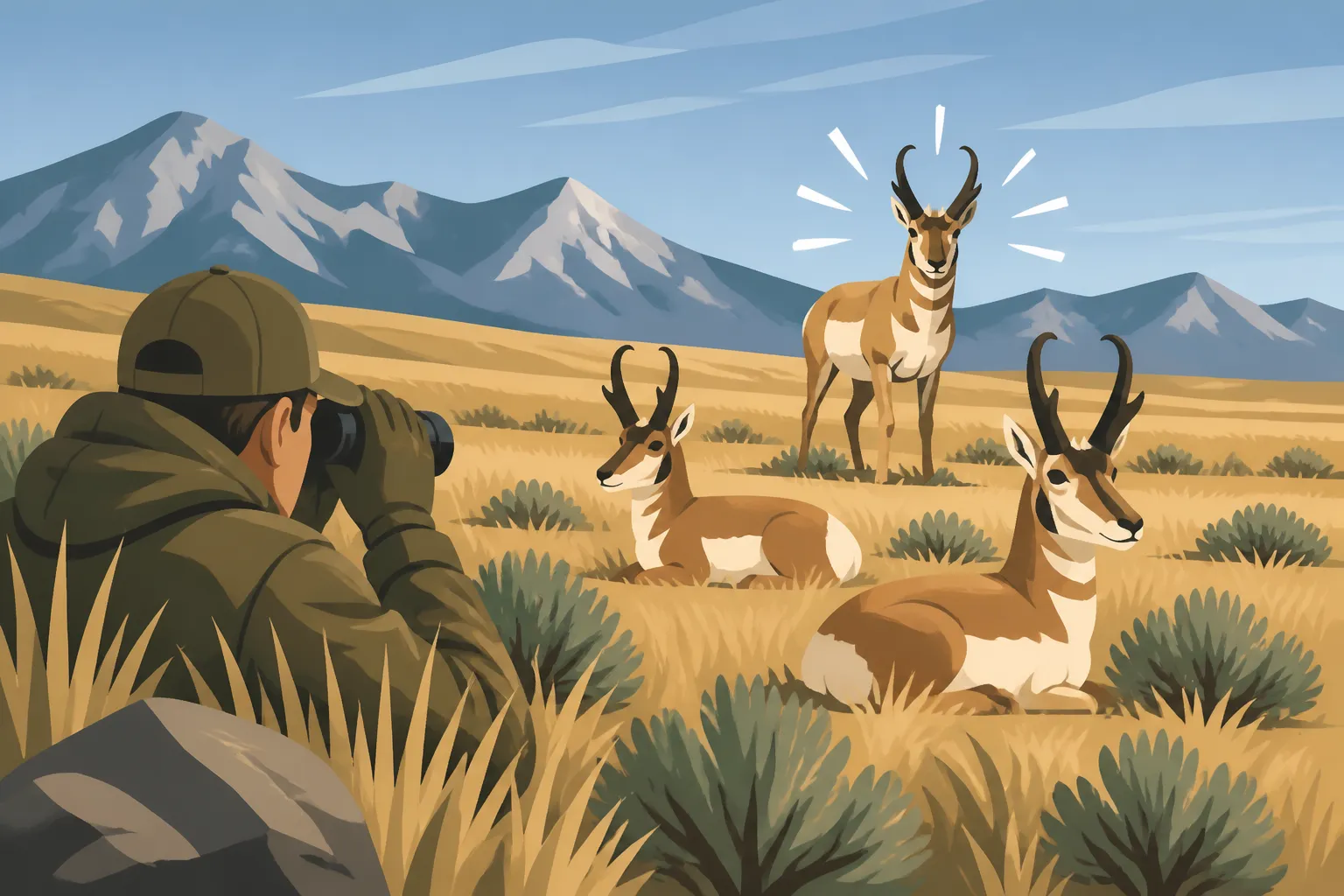
You've heard the stories, and they're true: pronghorn have some of the best eyesight in the animal kingdom. It's often compared to an 8x binocular, allowing them to spot movement and details from astonishing distances. This means that a buck can see you, your vehicle, and your decoy from over a mile away, sometimes even further if the light is right. Their eyes are large, set on the sides of their heads for a wide field of view, and they're acutely tuned to detect even the slightest anomaly in their environment. This is why a traditional spot-and-stalk in wide-open country often ends with a wave of white rumps bounding away. It's not that you're bad at stalking; it's just that they're that good at seeing. Trying to get to within 200 yards, let alone bow range, without being seen is a monumental task. The article, Pronghorn Eyesight and the Stalking Distance It Forces, really highlights the challenges this presents to hunters.
Because of this phenomenal vision, any decoy setup needs to leverage this strength rather than fight against it. The goal isn't to hide your decoy, but to make it appear as a natural, non-threatening, or even challenging presence that draws the buck in. They'll see it from a long way off, and that's precisely what you want. The challenge then becomes making sure what they see is compelling enough to overcome their natural wariness. You're counting on their curiosity and territorial instincts to override their inherent caution, and that's a delicate balance.
Rutting Behavior and Territoriality
Pronghorn bucks in Wyoming, especially during the peak rut, are highly territorial. They establish harems of does and will aggressively defend their breeding grounds from rival bucks. This is the prime window for decoy success. A buck that sees what he perceives as an intruder on his territory, or a new buck trying to steal his does, is far more likely to approach with aggression or curiosity. He wants to investigate, challenge, or run off the perceived threat. This aggressive nature is what we exploit with a decoy.
Understanding When Pronghorn Bucks Go Into Rut is key to timing your decoy efforts. Generally, this intense period kicks off in late August and runs through September, sometimes into early October. Outside of this window, bucks are less territorial and more wary, making decoying much harder, if not impossible. An early season buck might be curious, but less inclined to commit to a charge. A post-rut buck is often exhausted and simply wants to avoid conflict. So, when you're planning your hunt, try to align it with this peak territorial phase.
Wind and Open Country Considerations
Wyoming is known for its wind, and open country only amplifies it. This factor is critical for two main reasons: scent and decoy stability. Pronghorn have a good sense of smell, though not as legendary as their eyesight. Still, if a buck catches your scent while approaching the decoy, the game is over. Always, and I mean always, plan your approach and decoy setup so your scent cone is blowing away from where you expect the buck to come from, and ideally, away from his current location. This means moving into position with the wind in your face or quartering. You can find more detail on this tactical aspect in Playing Wind Direction on an Open Sagebrush Stalk.
Beyond scent, wind can make a mess of your decoy. A cheap, flimsy silhouette flopping around in a stiff breeze not only looks unnatural but can also make a lot of noise, easily spooking an alert buck. Invest in a decoy that's built to withstand the elements, with sturdy stakes or legs that hold it steady. A well-placed decoy that's also stable makes all the difference, especially when you consider that a buck will be scrutinizing it from hundreds of yards away.
Choosing the Right Decoy
The market is flooded with different types of decoys, and for pronghorn, making the right choice can significantly impact your success. It's not just about what looks pretty in the store; it's about what effectively triggers a response from a wary buck in the field.
Buck vs. Doe Decoys
This is often the first decision you'll face.
- Buck Decoys: A buck decoy is generally used to challenge a dominant buck or attract a curious subordinate buck. When a dominant buck sees another buck in his territory, especially one that looks like a challenger, his territorial instincts often kick in, and he'll march right in to investigate or fight. This can be incredibly exciting and lead to some aggressive encounters. However, a buck decoy can also deter smaller, less dominant bucks who want no part of a confrontation. If you're targeting a big, mature buck during the rut, a buck decoy is a strong choice.
- Doe Decoys: A doe decoy works on a different principle. It appeals to a buck's desire to breed. A dominant buck might approach a lone doe decoy to add her to his harem, while a subordinate buck might approach hoping to slip in and breed unnoticed. Doe decoys tend to be less intimidating than buck decoys, which can make them effective for attracting a wider range of bucks, including those that might be hesitant to challenge another male. They often draw bucks in a slightly less aggressive, more cautious manner. Sometimes, using a combination of a buck and a doe decoy can be extremely effective, creating a "love triangle" scenario that is irresistible to a rut-crazed buck.
When considering which to use, think about the specific behavior you want to elicit and the time of year. During the peak of the rut, a buck decoy can bring them running. Outside of the most intense rutting phase, a doe decoy might offer a safer bet for drawing in more bucks. GoHunt's scouting tools can sometimes provide insights into local herd dynamics, helping you decide.
Full Body vs. Silhouette Decoys
The next big decision is the style of decoy.
-
Full Body Decoys: These are designed to be three-dimensional and as realistic as possible. They present a more complete image to the pronghorn, especially important given their incredible eyesight. The realism can be a huge advantage, as a buck might be less likely to become suspicious if the decoy looks completely natural from all angles as he circles it. However, full-body decoys are often heavier, bulkier, and more difficult to pack into remote areas, especially if you're hiking a long distance. They also tend to be more expensive. Brands like Ultimate Decoys or Montana Decoy offer excellent full-body options that balance realism with some level of portability.
-
Silhouette Decoys: These are two-dimensional, flat cutouts that mimic the shape of a pronghorn. While not as realistic as full-body options, their main advantages are portability, weight, and ease of setup. Many silhouette decoys fold down into a compact package, making them ideal for hunters who need to cover a lot of ground on foot. The key to success with a silhouette is understanding how to position it relative to the approaching buck. A buck might approach cautiously if the decoy looks flat from certain angles, but if you can keep him focused on the broadside profile, they can be highly effective. The critical factor is getting The Decoy Distance That Actually Pulls Antelope Bucks right, ensuring the buck commits before he realizes it's a flat image.
Many hunters will lean towards silhouette decoys for their practicality on large, open landscapes where mobility is paramount. They work by triggering an initial visual response, and if positioned correctly, the buck's curiosity or aggression will draw him in before he can fully discern the lack of depth.
Packability and Portability
Given the vastness of Wyoming's pronghorn country, the ability to carry your decoy easily is a huge factor. You might hike miles across sagebrush flats, traverse draws, or climb small rises to get into the perfect decoying position.
-
Weight and Foldability: A lightweight, foldable decoy is a blessing when you're covering ground. Most popular silhouette decoys are designed to fold up into a backpack-friendly size and weigh only a couple of pounds. This means you can carry it comfortably alongside your bow, binoculars, rangefinder, and other essentials. Look for decoys that can be deployed quickly and silently once you're in position, as precious seconds can mean the difference between getting a shot and having a buck bolt.
-
Ease of Setup: A decoy that's complex to set up or requires multiple pieces can be frustrating in the field, especially with adrenaline pumping or if you're trying to be discreet. Simple, intuitive designs that pop up or unfold with minimal effort are always preferred. The stakes or poles should be robust enough to handle rocky ground and windy conditions without bending or breaking. Some decoys even allow you to clip them to your bow, making you "mobile" with the decoy, which can be a game-changer for those last crucial yards of an approach or even when trying to lure a buck from a distance.
Remember, the best decoy is the one you actually use because it's convenient and effective. A heavy, cumbersome decoy might stay in your truck more often than it gets deployed.
| Decoy Type | Advantages | Disadvantages | Best Use |
|---|---|---|---|
| Buck Decoy | Aggressively pulls territorial bucks | Can intimidate smaller bucks, heavier | Peak rut, targeting dominant bucks |
| Doe Decoy | Attracts wider range of bucks, less aggressive | May not trigger strong territorial response | Early rut, post-rut, attracting cautious bucks |
| Full Body | Highly realistic, works from all angles | Heavy, bulky, expensive, harder to transport | Static setups, where realism is paramount |
| Silhouette | Lightweight, portable, quick setup, affordable | Less realistic from all angles, can look "flat" | Spot-and-stalk, mobile hunting, covering ground |
Strategic Decoy Placement: The Art of the Approach
Once you've chosen your decoy, the real strategy begins with placement. This isn't just about sticking it in the ground; it's about creating a scene that tells a compelling story to the buck, manipulates his approach, and ultimately, puts him in your kill zone.
Setting Up for the Shot Angle
This is arguably the most critical aspect of decoying. You need to anticipate where the buck will approach from and how he will position himself relative to your decoy and your hiding spot. Most hunters prefer a broadside or slightly quartering-away shot.
- The Decoy as a Shield: Position your decoy so that the buck focuses his attention on it, not on you. Your goal is for the buck to approach the decoy, ideally presenting a shot opportunity before he notices your presence. If you're using a silhouette, place it perpendicular to the buck's anticipated line of approach. This way, he sees a full profile as he comes in.
- Camouflage and Cover: You need to be completely hidden, directly behind or very close to the decoy, using any available terrain or sagebrush. When the buck commits and starts his approach, he'll likely be fixated on the "intruder" (your decoy). This gives you a brief window to draw your bow or shoulder your rifle without being detected. The closer you are to the decoy, the easier it is to get a clean shot when the buck focuses on it. Imagine you're the predator lurking just behind the unsuspecting prey. The article How Close a Bowhunter Really Needs to Get emphasizes this critical aspect of getting within range.
It's common for a buck to circle downwind to get a sniff of the "intruder." You must factor this in and place your decoy (and yourself) so that if he circles, he still offers a shot, and your scent doesn't blow back to him prematurely.
Using Terrain to Your Advantage
Wyoming's open landscape might seem featureless, but there are always subtle undulations, dry creek beds, and clumps of sagebrush that can be used to your benefit.
- Hidden Approaches: Use draws, swales, or the backside of a small hill to make your initial approach to the setup location undetected. You need to get the decoy set without the target buck seeing you. This might involve a long crawl or a careful walk that keeps terrain between you and the pronghorn. Once the decoy is up, you then use the same terrain features to hide yourself. Terrain That Hides an Approach offers great insights into reading the landscape for these opportunities.
- Funnels and Bottlenecks: Look for natural funnels or subtle terrain features that might direct a buck's approach. A low ridge, a dry wash, or even a denser patch of sage can subtly guide a buck into the position you want him to be in. If you can anticipate his path, you can set your decoy (and yourself) to intercept him perfectly. Sometimes, this means setting up the decoy on a slight rise so it's visible from a distance, but you are tucked just below the crest, out of sight. Remember that pronghorn often prefer to move on higher ground to maintain their visual advantage, so placing a decoy in a prominent spot can be very effective.
Consider the sun's position. Setting up with the sun at your back can make it harder for the buck to see you, while also illuminating the decoy brightly. Avoid setting up directly into the sun, as it will make it harder for you to see the buck, and glare can reveal your position.
The Critical Distance for Success
How far away should your decoy be from you? How far from the buck should you initially deploy it? These are crucial questions.
- Decoy to Hunter Distance: For bowhunters, the decoy is typically placed 10-20 yards in front of you. This allows the buck to focus on the decoy, drawing him close enough for a high-percentage shot. If the decoy is too far, the buck might commit to it but still be out of your effective bow range. If it's too close, he might spot you as he approaches. For rifle hunters, the distance can be greater, but the principle remains the same: the decoy draws the attention, you take the shot.
- Initial Decoy Deployment Distance: You want the buck to see the decoy from a distance that gives him time to process it and make the decision to approach, but not so far that he loses interest or has too much time to scrutinize it. Often, 300-600 yards is a good starting point, depending on the terrain and the buck's current location. Once he spots it, his initial reaction will tell you a lot. He might stop, stare, or even begin a cautious walk toward it. This is where patience is key. Using a mapping tool like GoHunt can help you estimate distances accurately before you even step foot in the field, helping with planning The Decoy Distance That Actually Pulls Antelope Bucks.
It’s often a balancing act. You don't want the buck to see you setting up the decoy, so a stealthy approach to your deployment location is essential. This might involve a long, low crawl with the decoy strapped to your back, then quickly deploying it once you’re hidden.
Timing Your Decoy Setup for Maximum Effect
Decoying isn't a year-round strategy for pronghorn. Success hinges heavily on understanding their seasonal behavior, particularly during the rut, and adhering to local regulations.
Peak Rut Strategies
The most productive time for decoying pronghorn is during the peak of their breeding season, typically from late August through September in Wyoming. During this intense period, bucks are highly focused on defending their harems and breeding, making them far more susceptible to a decoy's allure.
- Aggression and Curiosity: A buck seeing another buck (your decoy) in his territory, or a lone doe, will likely trigger an immediate, aggressive response. They often come running, sometimes even grunting or snorting. This aggressive commitment is what makes peak rut decoying so thrilling and effective. They're less wary and more driven by instinct.
- Multiple Decoys: Sometimes, deploying two decoys—a buck and a doe—can create a compelling scenario. The buck decoy challenges a dominant male, while the doe decoy adds to the illusion of a rival attempting to steal his breeding opportunities. This double whammy can be irresistible. Consider using a smaller, subordinate buck decoy if you're trying to attract younger, less dominant bucks who might shy away from a trophy-sized challenger. The key is to match your decoy strategy to the observed behavior of the bucks in your specific Wyoming Pronghorn Population Estimate Explained unit.
This is when you’ll see the most dramatic charges and committed approaches. Bucks will often circle to get downwind, giving you the opportunity to prepare for the shot as they focus on the decoy.
Early Season and Post-Rut Adaptations
Outside the peak rut, decoying pronghorn becomes much more challenging, but not entirely impossible if you adapt your strategy.
- Early Season (August): In the early archery season, before the rut fully kicks in, bucks are often less territorial. They might still be curious, especially younger bucks, but their aggressive instincts aren't as strong. A doe decoy might be more effective here, appealing to their inherent desire to find mates, rather than challenge rivals. Approaching bucks might be slower and more cautious, requiring more patience and a rock-solid hide. You'll need to be more mindful of their acute senses and be prepared for them to hang up at a distance. Wyoming Antelope Archery Opens Before Rifle means there's a window before the rut peaks, requiring this adapted strategy.
- Post-Rut (October): After the rut, bucks are often exhausted, having spent weeks fighting and breeding. They've lost significant body mass and are more interested in feeding and recovering than engaging in confrontations. Decoying at this time is generally less effective. Any buck that approaches will likely be highly wary and less committed, possibly only stopping for a quick look before moving on. If you attempt it, a doe decoy might still pique some interest, but don't expect the same aggressive charges you'd see in September. Your best bet in the post-rut might be a classic Sitting a Waterhole Blind for Pronghorn Antelope or a precise long-range stalk.
It's vital to observe the current behavior of the pronghorn herd you are hunting. Are bucks actively chasing does? Are they fighting? Or are they spread out, feeding peacefully? Your observations should dictate your timing and decoy choice.
Blaze Orange Rules While Decoying
Safety should always be your top priority, and understanding Wyoming's blaze orange regulations is critical, especially when you're dealing with decoys that might attract other hunters.
- Wyoming Regulations: In Wyoming, hunters are generally required to wear at least one piece of visible fluorescent orange clothing during rifle seasons for big game. While archery seasons often have different rules, if you're decoying during a period that overlaps with rifle hunting (which often happens with pronghorn), you must comply. This isn't just about avoiding a ticket; it's about preventing a tragic accident. Other hunters might see your decoy, mistake it for a live animal, and if you're not visible, that's a dangerous situation. You can learn more about Blaze Orange Rules While Decoying in Wyoming in the official regulations.
- Visibility and Safety: Even if not legally required, it's a good practice to wear blaze orange when using a decoy, especially in areas with other hunters. Consider putting a blaze orange cap or vest on your decoy after the buck has committed to approaching, or using a blaze orange flagging nearby to alert other hunters to your presence. Some hunters even carry a blaze orange panel to quickly display once a shot is taken or if they detect another hunter in the area. Your life is not worth a pronghorn buck. Always prioritize safety over secrecy, especially in popular hunting areas.
Reading the Reaction and Making the Shot
Once you have your decoy in place and a buck spots it, the real game of cat and mouse begins. Interpreting his reaction, knowing when to draw, and executing an ethical shot are the final pieces of the puzzle.
Interpreting Pronghorn Body Language
A buck's approach to a decoy isn't always a straight charge. You need to be a keen observer of his body language to anticipate his next move and know when to prepare for your shot.
- Committed Approach: If a buck drops his head, lowers his body, and starts a fast walk or trot directly towards the decoy, often grunting or snorting, he's committed. His focus is entirely on the perceived rival or mate. This is your cue to get ready. He might also display a stiff-legged walk, which is a sign of aggression.
- Cautious Approach: Sometimes, a buck will approach slowly, stopping frequently to stare, often circling to get downwind. He might raise his head high, ears swiveling, trying to pick up scent or confirm what he's seeing. This buck is wary. You need to remain absolutely still and silent. If he circles too wide and gets your scent, he'll likely bolt. This is a good time to remember the lessons from Playing Wind Direction on an Open Sagebrush Stalk. If he starts to move away, sometimes a slight wiggle of the decoy (if it's designed for it) or a soft vocalization (like a doe bleat) can re-engage him, but be careful not to overdo it.
- Hanging Up: A buck "hanging up" means he stops his approach at a distance where he's still out of your effective range, seemingly unsure. This is frustrating, but it happens. If he's at 80 yards with a bow and clearly not coming closer, forcing a shot isn't ethical. Sometimes, waiting him out works, or if you're hidden well, slowly reducing the distance by crawling might pay off.
The best way to learn these nuances is through experience, but watching videos of pronghorn behavior, especially during the rut, can be incredibly helpful. Use your binoculars and spotting scope, perhaps a quality Kowa or Vortex model recommended for Optics Power for Wyoming's Long Sightlines, to observe the buck's reaction from your hide.
The Fast Approach and Anticipation
When a buck commits, he often comes in quickly. This means you need to be ready to act fast.
- Pre-Draw/Pre-Aim: For bowhunters, if you see a buck making a hard charge and closing the distance rapidly, consider coming to a partial draw or getting to full draw before he hits your optimal shooting range. The moment he focuses intensely on the decoy, providing a brief moment of distraction, is your window. For rifle hunters, having your rifle shouldered and safety off, ready to aim, is paramount. You won't have time to fumble with gear once he's in your zone.
- Anticipate the Stop: Pronghorn often stop abruptly right at the decoy or slightly beyond it, especially if they're coming in aggressively. Anticipate this stop and be ready to release your arrow or squeeze the trigger as soon as he pauses. Many hunters miss because they're caught off guard by the sudden stop. Focus on a clear shot at the vitals.
This rapid sequence of events is why practicing quick target acquisition and holding steady under pressure is so important. When that buck is running full tilt towards your decoy, your heart will be pounding, but your execution needs to be flawless.
Shot Opportunities and Ethical Considerations
Your primary goal is an ethical, clean kill. Don't let buck fever or the excitement of the decoy situation override good judgment.
- Range Assessment: Always range the decoy and any natural landmarks around it before the buck approaches. When he comes in, you'll know your exact distances. If he hangs up outside your ethical range, do not take the shot.
- Clear Shot: Ensure you have a clear shot at the vital organs. Sagebrush or even the decoy itself can obscure your target. Wait for the buck to present a clean, broadside or quartering-away shot. Patience is often the hardest part of decoying.
- Post-Shot: After the shot, remain hidden and observe the buck's reaction. Note his direction of travel and where you last saw him. Give him plenty of time before you begin tracking, especially if it's a bow shot. Your decoy might even keep him distracted briefly if he doesn't immediately realize what happened.
Remember, the thrill of the hunt should never overshadow your responsibility to the animal. A quick, humane kill is always the objective. You can learn more about carcass handling in How Soon You Must Tag a Downed Animal.
Dealing with Challenges and Troubleshooting Decoys
Decoying isn't always perfect. You'll face challenges from wary bucks, the unpredictable Wyoming wind, and sometimes even other hunters. Knowing how to troubleshoot these situations can turn a potential failure into a successful hunt.
Dealing with Wary Bucks
Some bucks, especially older, more experienced ones, will be incredibly difficult to fool. They might hang up at 300 yards, or circle endlessly, trying to get a sniff.
- Patience is Key: The first and most important tool is patience. Don't give up after the first hesitant approach. Remain perfectly still. Sometimes, a buck needs time to overcome his natural caution. A GoHunt app for e-scouting can sometimes help identify areas where specific bucks might be more or less pressured.
- Subtle Movement: If you're using a decoy with movable parts, a slight twitch of an ear or tail can sometimes re-engage a hanging buck. However, too much movement will immediately blow your cover. For flat silhouettes, sometimes slightly raising or lowering the decoy, or even rocking it slightly with string, can add a hint of realism from a distance.
- Calling: Soft doe bleats or subtle buck grunts can sometimes draw a wary buck in. Be careful not to overdo it, as unnatural sounds will send him packing. Combine calling with your decoy to create a multi-sensory illusion. A locator bugle, for example, is more for elk, but a soft pronghorn vocalization can be deadly.
- Repositioning: If a buck consistently hangs up at the same spot, or always circles to your downwind side out of range, consider whether your decoy placement needs adjustment for future attempts. Perhaps the terrain is forcing his approach, and you need to move to a different location altogether.
Remember that you might not fool every buck. The goal is to maximize your chances, and sometimes a particular animal is just too smart or too wary.
Windy Conditions and Stability
Wyoming wind can wreak havoc on decoy setups, making a realistic presentation nearly impossible.
- Sturdy Stakes: Invest in a decoy with strong, reliable stakes or a base that can be firmly anchored into the ground. Flimsy aluminum stakes will bend or snap in a stiff breeze. Many decoys come with bungee cords to tie them down, which is a good idea in gusty conditions.
- Natural Movement: Some decoys are designed with a hinge or pivot point that allows the decoy to sway naturally in the wind, mimicking a live animal's movement. This can be a huge advantage, adding realism when conditions are breezy.
- Angle to the Wind: Position your decoy to minimize its surface area catching the wind if stability is an issue. A broadside presentation to the buck is important, but if the wind is directly hitting that broadside, it might wobble excessively. Experiment with slight angles.
- Alternative Setups: In extremely high winds, decoying might not be feasible or safe. Consider changing tactics to a blind over a waterhole or a longer, more deliberate spot-and-stalk that uses extreme caution and terrain features.
Don't force a decoy setup in conditions that make it unnatural or unsafe. A decoy that's thrashing wildly in the wind will look suspicious and likely scare off any approaching buck.
Other Hunters and Safety Concerns
Wyoming's public lands are popular, and you're likely to encounter other hunters, especially during the general seasons. This poses unique challenges and safety considerations for decoying.
- Hunter Identification: As mentioned earlier, wear blaze orange, especially during rifle season. This helps other hunters identify you as a human, not a target. Consider adding a blaze orange strip or hat to your decoy after the buck has committed to an approach, or using it to mark your position once the shot is taken.
- Awareness: Always be aware of your surroundings. Before deploying a decoy, scan the area thoroughly with binoculars for any other vehicles or hunters. You don't want to set up in another hunter's line of sight or draw a buck into an area where another hunter is already stalking.
- Communication: If you're hunting with a partner, establish clear communication signals before you split up or set up a decoy. Hand signals, whispers, or even quiet two-way radios can be effective.
- Ethical Distance: Maintain a respectful distance from other hunters. If you see someone else working an area, move on. Crowding another hunter's space is poor etiquette and can be dangerous. The thrill of getting a buck with a decoy isn't worth putting yourself or others at risk.
Decoying can be a highly effective and exciting way to hunt pronghorn in Wyoming. By understanding their behavior, choosing the right gear, and executing a thoughtful strategy, you can turn those frustrating long-distance observations into close-range encounters. Just remember to prioritize safety, ethics, and respect for the animal and the landscape.
Disclaimer
Please note that hunting regulations, seasons, and access can change. Always consult the most current Wyoming Game and Fish Department regulations and official land management agency guidelines before planning any hunting trip. This guide is for informational purposes only and does not supersede official regulations.