Reading Fresh Elk Sign in Dark Timber
There's a unique frustration that settles in when you're standing at the edge of a vast expanse of dark timber, knowing that elk are in there, probably watching you, but you can't see hide nor hair of them. It's like trying to find a needle in a haystack, but the haystack is alive and breathing, and it smells like pine. This guide is all about peeling back the layers of that dense forest, teaching you how to read the subtle, often overlooked clues that fresh elk sign leaves behind, transforming that frustrating guesswork into confident, calculated hunting.
Why Dark Timber Holds Elk and Why It's So Tough to Hunt
Dark timber isn't just a random patch of trees; it's a strategically chosen sanctuary for elk, especially once hunting pressure starts. These dense conifer stands, common throughout Wyoming's mountain ranges like the Shoshone National Forest or the Bighorn National Forest, offer everything an elk needs: security, thermal cover, and often, hidden sustenance. But what makes it so appealing to them also makes it incredibly challenging for us hunters.
The Sanctuary Effect: Security and Escape Routes
Imagine being an elk. You're a big animal, and you want to avoid predators, be they two-legged or four. Dark timber provides an unparalleled sense of security. The thick canopy blocks out not just sunlight but also line of sight, making it nearly impossible for a predator to spot an elk from a distance. Within these dense stands of lodgepole pine, spruce, and fir, elk can move almost silently, using the natural labyrinth of trees to evade detection.
These areas are often riddled with game trails that act as intricate escape routes. An elk, especially a mature bull, knows these trails like the back of its hoof. If spooked, they can quickly disappear into the depths of the timber, leaving you standing there wondering what happened. The sheer density also makes human movement slow and noisy. Every snapped twig, every rustle of your clothes, echoes through the still air, giving elk ample warning of your approach. This is why a methodical, silent approach, often referred to as "Still Hunting Timber for Bedded Mule Deer," is so crucial, as the principles apply equally to elk.
Food, Water, and Bedding in the Shadows
While it might seem barren from the outside, dark timber often holds a surprising amount of forage, particularly forbs, mushrooms, and various types of browse that thrive in the shaded, cooler conditions. Beneath the canopy, where the ground stays moist, you'll often find springs, seeps, or small trickles of water that provide essential hydration. Elk don't want to travel far for their basic needs, and dark timber can often provide all three within a relatively small footprint.
Crucially, these dense stands are prime bedding areas. Elk will seek out thick patches for security, especially on north-facing slopes where the shade provides relief from the sun and insulation from the wind. These beds are strategically chosen for thermal regulation, helping elk conserve energy in colder temperatures and stay cool when the sun beats down. Finding "beds" often means finding the elk, but it requires a careful eye for disturbed duff, pressed-down vegetation, and often, fresh droppings nearby. It’s a completely different game than trying to spot them on wide-open sagebrush country or during the "Best Time of Day to Glass Mule Deer".
Decoding Fresh Elk Sign: What to Look For Beyond Tracks
When you step into dark timber, you're entering the elk's living room. Every detail, no matter how small, can tell a story. Learning to read these stories, especially the "fresh" ones, is the key to finding success. It’s not just about seeing a track; it’s about understanding what that track, and everything around it, signifies.
Tracks and Trails: More Than Just Hoofprints
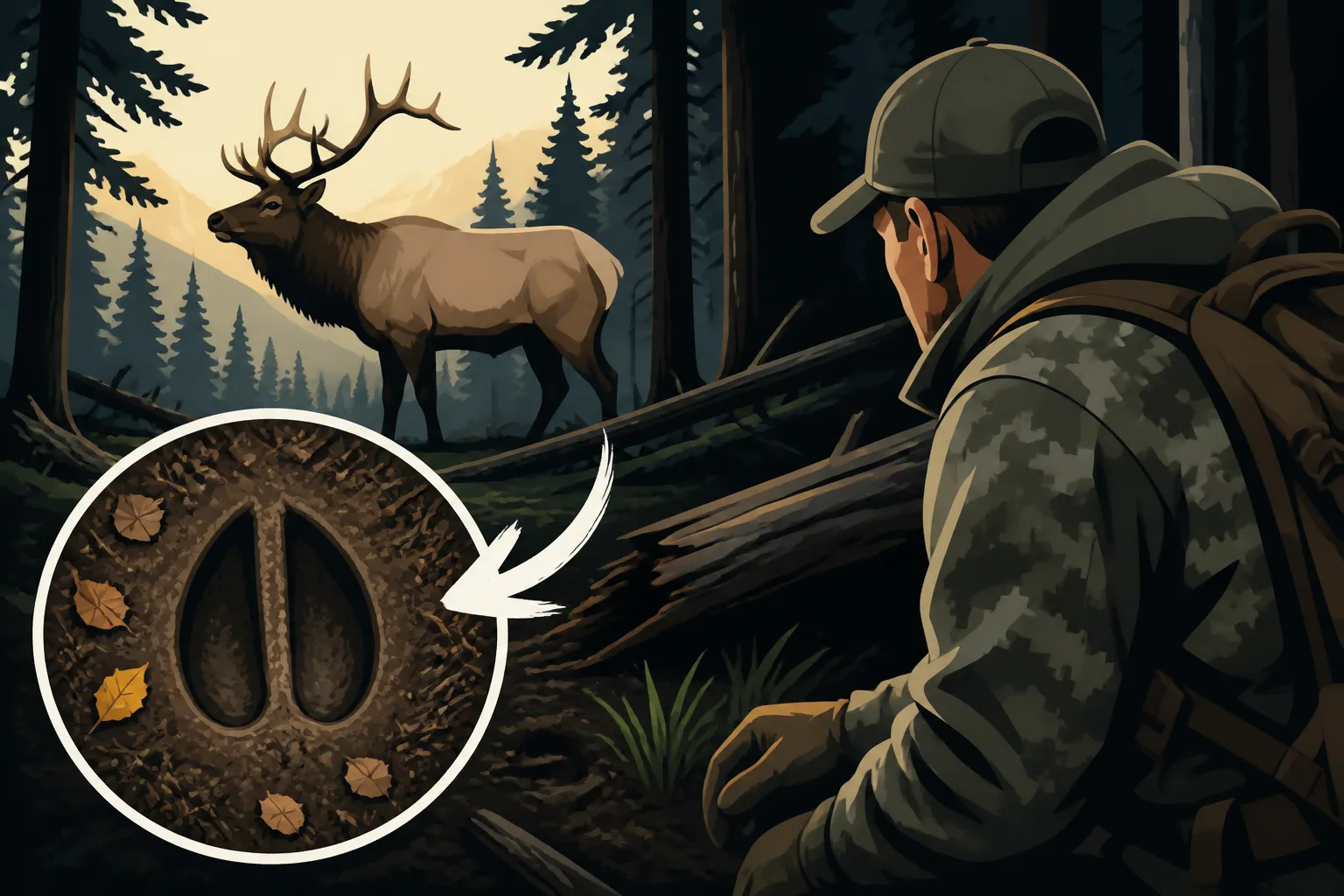
Finding tracks is often the first obvious sign, but discerning fresh from old is critical. Fresh tracks in soft dirt or mud will have sharp, distinct edges, often with a slight sheen of moisture if it's damp. Older tracks will have rounded, weathered edges, and any moisture will have long since evaporated. If it's rained recently, look for tracks on top of the disturbed soil from the rain. In dry, dusty areas, fresh tracks might kick up a faint puff of dust.
Beyond freshness, look at the type of trail. Are they distinct travel corridors, beaten down from years of use, suggesting a common path between bedding and feeding areas? Or are they fainter, more meandering paths, indicative of an elk browsing casually? You might even spot smaller, less-defined "escape routes" where an elk has veered sharply off a main trail. Large, splayed tracks with dewclaws showing often indicate an elk moving quickly, perhaps running. A single set of large tracks might be a lone bull, while numerous smaller tracks suggest cows and calves. Understanding "The Wyoming Elk Population Estimate Explained" gives you context for how many elk might be using an area, but ground sign shows you exactly where.
Droppings and Urination: The Freshest Indicators
This might sound a little gross, but droppings are arguably one of the most reliable indicators of recent elk presence. Fresh elk droppings, often called pellets, will appear dark, shiny, and moist, sometimes even still steaming slightly on a cold morning. They'll hold their shape firmly. As they age, they become duller, drier, and will crumble easily when poked. If you see fresh droppings, you know an elk was very recently in that exact spot, likely within the last few hours.
The shape and consistency of droppings can also tell you about an elk's diet. Pellets that are more distinct and firm usually indicate a diet of drier forage like grasses or woody browse, while softer, "cow pie" like droppings suggest a diet rich in green forbs or a higher moisture content. Look for urine spots too. Fresh urine will be dark and will have soaked into the ground, leaving a distinct, pungent odor. Over time, it fades, leaving a lighter stain. Combining fresh tracks with fresh droppings is a strong signal that elk are actively using the area right now.
Rubs, Wallows, and Scrapes: Rutting Season Clues
While scrapes are more commonly associated with deer, elk leave behind plenty of evidence, especially during the rut. Fresh rubs on trees are unmistakable: bark will be stripped clean, revealing lighter wood underneath, often with sap still oozing. The edges of the rub will be sharp, and sometimes even fresh wood shavings will be scattered at the base of the tree. Rubs are typically made by bulls as they shed velvet or challenge other bulls. A cluster of fresh rubs indicates high bull activity.
Wallows are another huge indicator, particularly if you're hunting during the "Bugle and Cow Call Timing Through the Rut". These muddy depressions, often found near water sources or seeps, are where bulls roll to coat themselves in mud and scent. A fresh wallow will be wet and muddy, with fresh tracks leading in and out, and perhaps even strands of elk hair caught in the mud or on nearby vegetation. The most telling sign? The powerful, musky odor of bull elk that hangs heavily in the air around a fresh wallow. This scent is incredibly potent and can be detected from a surprising distance if the wind is right.
Advanced Tactics for Interpreting Timber Sign
Getting good at reading elk sign isn't just about looking down at the ground. It's about engaging all your senses and understanding the full story the environment is telling you. This means going beyond the visual and tapping into the subtle nuances that only experience, and careful observation, can teach.
The "Smell Test" and Auditory Clues
Seriously, learn to use your nose. Elk have a very distinct, musky odor, particularly mature bulls during the rut. This smell is often amplified in the still, damp air of dark timber. If you're moving slowly and quietly, occasionally stopping to test the wind, you might catch a faint whiff. That's your cue to slow down even more, check the wind again, and start looking for more definitive signs. It's a smell that, once you learn it, you'll never forget. It’s part of the "Reading Wind on an Open-Country Stalk" strategy, just applied to a different environment.
Beyond smell, listen. Dark timber can be surprisingly quiet, which makes any sound stand out. Listen for the crunch of hooves on frosty ground or dry leaves, the snapping of a branch, the gentle chirp or mew of a cow, or the distant, guttural bugle of a bull. Elk are masters of silence, but they aren't completely noiseless. A sudden rustle that isn't the wind, a dislodged rock tumbling downhill, or even the distinct sound of chewing can be a dead giveaway. Sometimes, you'll hear the soft "thump, thump" of their hooves as they walk, a sound often drowned out by other noises in open country but surprisingly clear in still timber.
Reading the Vegetation: Browsing, Rips, and Beds
Elk are browsers as well as grazers, and their feeding habits leave distinct marks. Unlike deer, which tend to nip off twigs cleanly, elk have a different jaw structure and will often rip and tear vegetation, leaving a ragged, broken end. Look for fresh feeding activity on preferred browse species like aspen, willow, or various conifers. Check the height of the browse lines – mature elk browse higher than calves.
Also, keep an eye out for fresh bark peeling on trees, usually from bulls rubbing their antlers or body. This is distinct from rubs made during the rut; it's more about removing old bark. Finally, the subtle disturbance of vegetation from bedding areas is key. An elk bed is essentially a depression in the duff or snow where an elk has lain down. Fresh beds will still show the impression of the elk's body, possibly with fresh hair, droppings, or urine nearby. The vegetation around the bed might be recently flattened or disturbed. These aren't just random spots; elk pick their beds carefully, often with good visibility downwind and security to their backs.
Integrating Tools: Optics and Mapping
While your big, powerful spotting scope might be useless in dark timber, a good pair of binoculars, like a high-quality 8x or 10x, is still invaluable. Use them not just for spotting animals, but for picking apart patches of timber at a slight distance. You might catch a subtle color difference that indicates an elk's hide, a slight movement, or the tell-tale glint of an antler. They help you scrutinize what your naked eye might miss in the dim light.
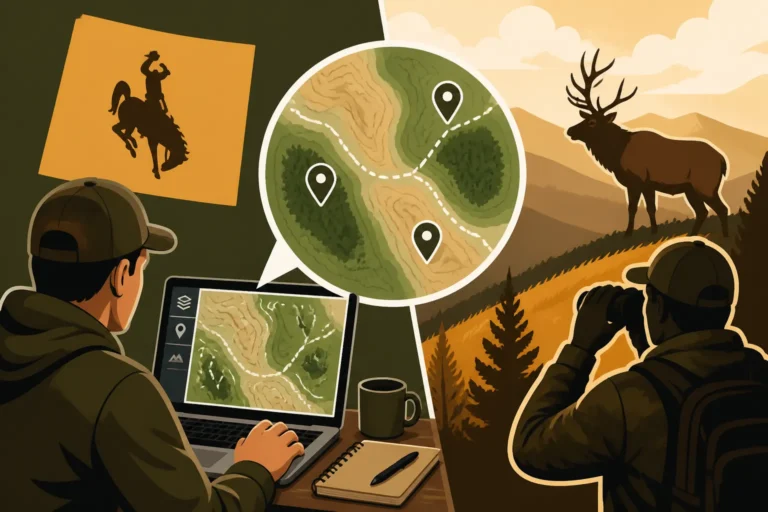
Digital mapping tools, such as the GoHunt app, are a game-changer for hunting dark timber. Before you even step foot in the woods, you can use these tools to identify areas of dense cover, analyze terrain features like benches, saddles, and drainages that elk might use for travel, and pinpoint potential water sources or bedding thickets. You can use satellite imagery to identify the darkest, densest timber blocks—the kind of places elk will retreat to under pressure. Using GoHunt, you can mark potential travel corridors, hidden springs, and even historical harvest locations that might suggest perennial elk use. This strategic planning can drastically narrow down your search and maximize your efforts, giving you a serious edge in complex terrain.
Putting It All Together: From Sign to Stalk
Finding fresh elk sign is one thing; using it to effectively hunt those animals is another. It requires patience, a deep understanding of elk behavior, and the ability to adapt your strategy to the specific conditions of dark timber.
The Art of the Slow Still Hunt
Once you start finding promising sign, your approach needs to shift into an even higher gear of stealth and patience. This is where the "still hunt" truly shines. It's not about covering ground quickly; it's about covering ground effectively. Take one or two steps, then pause. Scan your surroundings meticulously, not just for elk, but for anything out of place: a horizontal line in a vertical forest, an ear flick, a patch of hide. Use your binoculars. Listen intently for several minutes. Feel the wind on your face and constantly re-evaluate its direction.
Your movement should be deliberate and quiet. Pick up your feet; don't shuffle. Place your foot down slowly, heel first, testing for crunchy leaves or twigs before putting your full weight down. "How Close a Bowhunter Really Needs to Get" emphasizes stealth and proximity, and this applies tenfold in timber. This slow, methodical progress allows you to detect elk before they detect you, giving you the advantage in a habitat where they normally hold all the cards. This might mean moving only a few hundred yards in an hour, but those few hundred yards are packed with opportunity.
Targeting Bedding Areas vs. Feeding Zones
The type of fresh sign you find will often dictate your next move. If you're finding mostly fresh browse and scattered droppings, you might be in a feeding zone. Elk typically feed heavily in the early morning and late afternoon/evening, often moving from a secure bedding area to more open, nutritious feeding grounds. If you find fresh feeding sign, you know they were there recently. Your strategy might be to wait for them to return, or to follow the sign back towards potential bedding areas.
Conversely, if you're finding fresh beds, concentrated droppings, and perhaps a strong musky smell, you're likely right in a bedding area. Elk will often bed down during the middle of the day, seeking security and thermal cover. This is a prime opportunity for a slow, silent stalk. The challenge is that elk in bedding areas are often on high alert, relying on their senses to detect threats. Your approach needs to be flawless, using terrain features and wind direction to mask your presence. Understanding where elk find "Finding Water Sources in Dry Hunting Country" can also help you pinpoint these critical bedding areas, as they often aren't far from a water source.
| Sign Type | Fresh Appearance | Old Appearance | Implication |
|---|---|---|---|
| Tracks | Sharp, distinct edges; moist in mud; fine dust. | Rounded, weathered edges; dry, crumbly. | Fresh: Elk recently passed through. Old: Elk were here, but not currently. |
| Droppings | Dark, shiny, moist; firm shape; possibly warm. | Dull, dry, crumbly; losing shape; bleached out. | Fresh: Elk very recently in the immediate area. Old: Elk were here, but could be gone for hours or days. |
| Rubs | Freshly stripped bark; sap visible; sharp edges. | Weathered wood; no sap; rounded edges. | Fresh: Bull activity, especially during rut. Old: Past rut activity. |
| Wallows | Wet mud; strong musky odor; fresh hair. | Dry, cracked mud; faint/no odor; no fresh hair. | Fresh: Bull recently wallowed, active rut behavior. Old: Past wallowing activity. |
| Beds | Clear impression; pressed vegetation; fresh droppings/hair. | Faded impression; overgrown vegetation; no fresh associated sign. | Fresh: Elk recently bedded here, likely still nearby. Old: Past bedding site. |
| Browsing | Ragged, ripped ends on twigs; fresh bark peeling. | Clean breaks; weathered ends; older bark damage. | Fresh: Recent feeding activity. Old: Past feeding activity. |
| Smell | Strong, musky odor, especially in still air. | Faint or no discernible odor. | Fresh: Elk are very close by. Old: No recent presence. |
Disclaimer
Hunting is an inherently dangerous activity. Always prioritize safety, understand and follow all local and state regulations, and ensure you have the necessary skills and physical conditioning for your chosen hunt. The information provided here is for educational purposes and should not replace proper hunter education and in-field experience. Conditions in the backcountry can change rapidly, and responsible hunting requires constant awareness and preparation.