Wyoming’s Bighorn National Forest Elk and Deer
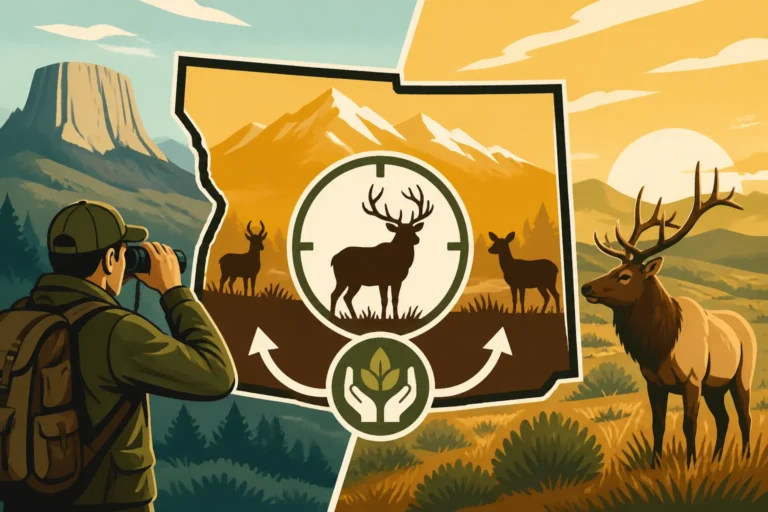
The Bighorn National Forest in Wyoming calls to many hunters, but the sheer scale and diverse terrain can feel overwhelming when you're trying to figure out where the elk and deer actually live. Navigating dense timber, open parks, and steep canyons to find these elusive animals is a challenge that requires careful planning and a deep understanding of the landscape, and this guide aims to help you unravel the secrets of hunting success in this magnificent region.
Understanding the Bighorn National Forest for Big Game
When you cast your gaze upon a map of Wyoming, the Bighorn National Forest stands out as a sprawling green expanse in the north-central part of the state, a true gem of the Rocky Mountains. It encompasses the entirety of the Bighorn Mountain range, covering over 1.1 million acres of stunning, rugged landscape. From the moment you begin to plan your hunt, whether you're staring at topo maps on your computer screen or actually driving through the foothills, you’ll quickly grasp that this isn't just one type of terrain. Instead, you'll encounter a remarkable patchwork of environments, from high alpine tundra and jagged peaks that scrape the sky, to dense conifer forests clinging to steep slopes, and sweeping sagebrush-dotted plateaus at lower elevations. This incredible diversity is precisely what makes the Bighorns such a compelling destination for big game hunters.
This vast area truly offers something for every type of hunting scenario you might imagine throughout the season. Early in the archery season, the high country beckons, with its cooler temperatures and animals still relatively unpressured, scattered across remote basins and timber pockets. As the season progresses and conditions shift, you'll find game moving into the timbered mid-elevations and eventually down to the more sheltered lower country, especially once the snow begins to fly. This dynamic movement means that a successful hunter in the Bighorns needs to be adaptable, ready to adjust their strategy based on elevation, weather, and time of year. It’s a place where perseverance often pays off, revealing hidden opportunities in every changing landscape.
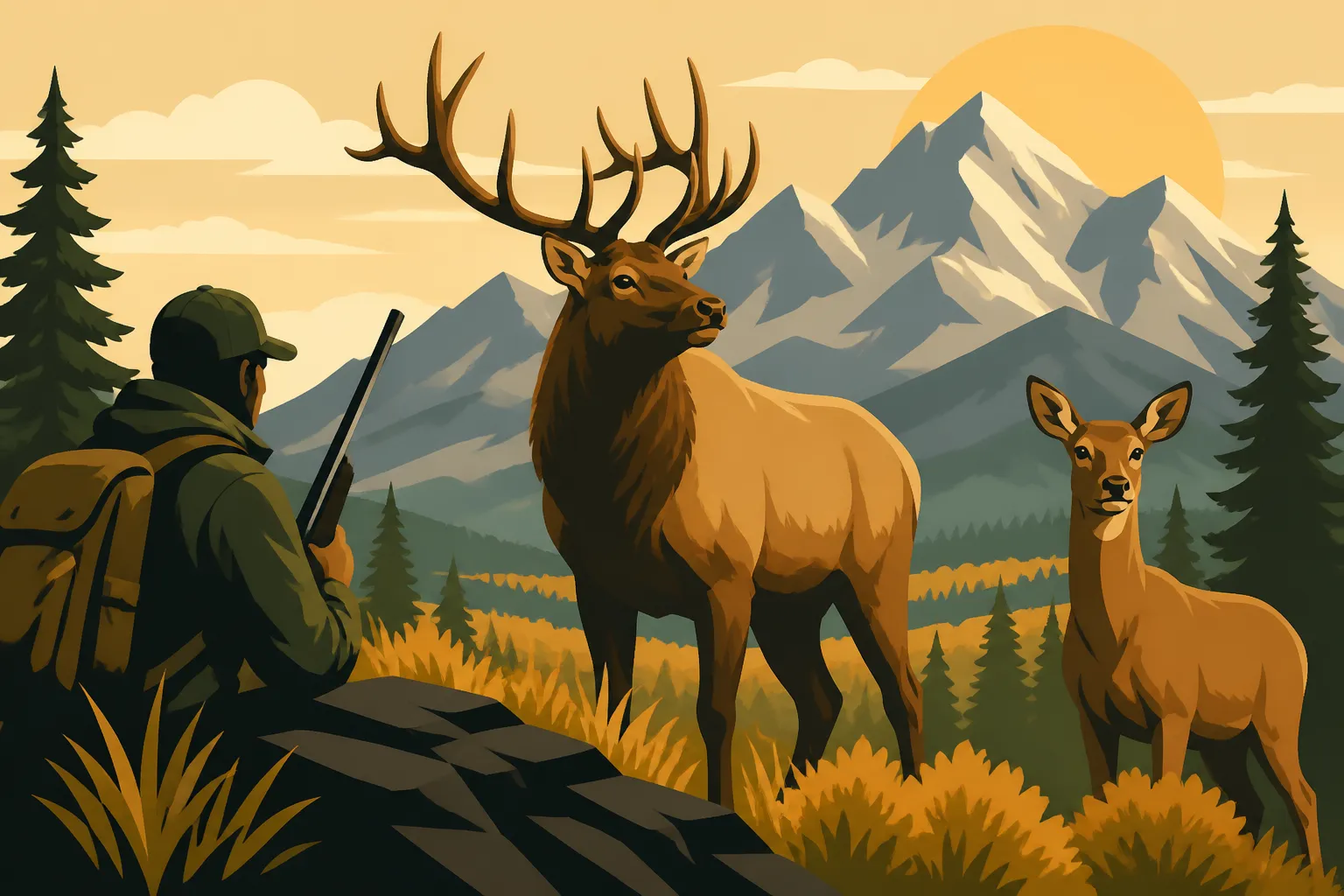
Indeed, the Bighorn National Forest has earned a well-deserved reputation as a prime location for both elk and mule deer hunting. It’s a place where you can genuinely pursue both species, often in adjacent or overlapping habitats, offering the possibility of a combined tag experience if you’re lucky enough to draw the licenses. For those seeking a truly immersive Western hunting experience, the Bighorns present that quintessential blend of challenge and reward, with vast tracts of public land, abundant wildlife, and endless opportunities for exploration. While some areas are more easily accessible with established roads and trails, the forest also holds significant stretches of rugged, remote wilderness for those willing to venture deeper, seeking out less pressured animals and a more solitary hunt.
Decoding Elk and Deer Habitat in the Bighorns
Understanding the lifeblood of the Bighorns means getting a handle on its primary vegetation types, which dramatically shape where elk and deer will be found. The forest is a mosaic of stately lodgepole pine, dense stands of Douglas fir, vibrant groves of quaking aspen, and expansive open meadows. As you climb in elevation, the tree species change, giving way to more resilient conifers higher up, while aspen groves often flourish on more moderate slopes, offering crucial forage and cover. Down low, especially on the fringes, you’ll find pockets of juniper, sagebrush, and bitterbrush, providing important winter range and transition areas for both species.
Each of these habitat types plays a distinct role in the lives of the Bighorns' elk and deer. Elk, being primarily grazers, are often found utilizing the lush open meadows for feeding, particularly at dawn and dusk. However, they are also highly dependent on the mature timber for security, bedding down on cool, north-facing slopes during the heat of the day. They need the dense cover of the pines and firs to feel safe from predators and hunters alike. Mule deer, on the other hand, are browsers. While they'll certainly use meadows, they thrive in broken country, preferring thickets, aspens, and areas rich in browse species like mountain mahogany and bitterbrush. They often prefer areas with a mix of cover and open spaces, allowing them to survey their surroundings.
Water sources are another critical component, acting like magnets for game animals, especially in the drier parts of the season. Small springs, seeps, and creeks wind their way through the Bighorns, creating riparian zones that are often highly productive for forage and provide essential drinking water. Understanding how animals utilize these different areas for food, cover, and water will directly influence their daily movements and seasonal migrations. For instance, in the early season, elk and deer might be spread across higher elevations near abundant water, but as conditions change, they’ll consolidate their patterns around reliable sources or shift to lower, snow-free feeding grounds. These predictable patterns are your best bet for finding animals.
Ultimately, grasping these intricate habitat preferences and seasonal shifts is the foundational knowledge you need to consistently find success in the Bighorns. It’s not just about hiking aimlessly; it’s about reading the landscape, identifying key features, and anticipating where the animals will be based on their needs. This deep dive into their ecology will transform your hunt from a hopeful hike into a strategic pursuit.
Planning Your Elk Hunt in the Bighorns
Hunting elk in the Bighorn National Forest is no small undertaking; it requires a blend of physical stamina, mental grit, and a solid understanding of the terrain. The forest is so vast that it actually covers multiple elk hunt units, each with its own specific regulations, season dates, and license types. This means that before you even think about lacing up your boots, you absolutely must spend time researching the specific unit you plan to hunt. What works for one unit might not apply to another, even if they share a border. It's crucial to consult the current year's Wyoming Game and Fish regulations to confirm all details. You'll want to pay close attention to the unit numbers and their specific rules, which can vary widely. For example, some areas might be general licenses, while others are limited quota. Wyoming's Elk Hunt Areas and Wyoming General Elk Licenses and Where They Work are great starting points to understand the different approaches.
The terrain itself presents significant challenges that hunters must be prepared for. The Bighorns are known for their steep climbs, deep canyons, and dense timber, all of which can make movement difficult and game retrieval even harder. This is where modern e-scouting tools become absolutely indispensable. Before you ever set foot on the mountain, spend hours on an app like onX Hunt, poring over satellite imagery and topo maps. Identify potential bedding areas on north-facing slopes, locate water sources, mark pinch points, and plot out possible travel corridors. Understanding the topography from your couch can save you days of unproductive hiking and help you pinpoint key features like saddles, benches, and thickets that elk frequent. This pre-hunt preparation is just as important as your physical training.
Let's not sugarcoat it: elk hunting in the Bighorns is physically demanding. You’ll be covering significant ground, often at high elevations and off-trail, ascending and descending steep grades. If you're not in good shape, you're not only going to be miserable, but you're also significantly reducing your chances of success. Training should begin months in advance, focusing on cardio, strength, and endurance, preferably with a weighted pack on uneven ground. Physical Conditioning for a Mountain Hunt is a good resource to consider. Beyond the climb, consider the pack out. A mature bull elk can weigh upwards of 700 pounds, and getting that meat off the mountain requires multiple trips with heavy loads. Having a solid plan for game retrieval, whether it’s with pack animals or multiple strong backs, is critical.
Effective navigation is another cornerstone of a successful Bighorns elk hunt. While cell service is spotty at best, relying on a GPS unit or a downloaded map on your phone through an app like GoHunt or onX Hunt is crucial. These tools allow you to track your movements, mark important locations like elk sign or water, and ensure you stay on public land. It’s also wise to carry a physical map and compass as a backup, and know how to use them. The Bighorns, like many Western ranges, can have a complex mosaic of public and private land. Without good mapping, you risk inadvertently trespassing, which can end your hunt and lead to fines. Paying attention to these boundary lines is a non-negotiable part of ethical hunting.
Elk Strategies: From Bugles to Timber Stalking
When it comes to elk strategies in the Bighorns, your approach will largely depend on the season. During the early archery season, especially in September, the rut is often in full swing. This is when calling can be incredibly effective. Focusing on high-country basins, thick timbered draws, and areas near reliable water sources can yield results. Locator bugles at dawn and dusk can help you pinpoint the location of bulls, and then a strategic approach with cow calls and aggressive bugles can often pull a bull into bow range. However, remember that elk get wise quickly, so timing your calls and understanding herd dynamics is key. Bugle and Cow Call Timing Through the Rut offers excellent insights into this.
As the season progresses into rifle hunts, especially after the initial opening week, elk in the Bighorns can become notoriously wary and pressured. They'll often abandon open meadows and lower, more accessible areas, retreating deep into the thickest, darkest timber on steep, north-facing slopes. This shift requires a different strategy: patient still-hunting. This involves moving incredibly slowly, stopping frequently, and scanning for the smallest detail that indicates an elk—a flick of an ear, a patch of hide, or the vertical line of a leg in the dense trees. Pay meticulous attention to wind direction; elk rely heavily on their noses, and a swirling wind can bust your hunt in an instant.
Glassing is still a valuable tactic, even in timbered country. Focus your efforts at dawn and dusk on any openings, clear-cuts, or natural parks within the forest where elk might feed before retreating to cover. However, during the main part of the day, you'll need to be in the timber. Elk often bed down by midday, and while they might seem invisible, they are there. Look for areas with dense thermal cover, broken topography, and proximity to water. Finding fresh tracks, rubs, and droppings are excellent indicators that you’re in the right neighborhood.
Ultimately, hunting Bighorn elk demands a high level of stealth and awareness. These animals, especially after experiencing hunting pressure, are incredibly alert. Scent control is paramount, as is minimizing noise from your gear or movement. Patience is your greatest ally. Often, the most successful hunters are those willing to spend hours meticulously navigating dense timber, slowly and deliberately, anticipating the elk's next move. It’s a chess match with an animal that has a distinct home-field advantage.
Strategies for Mule Deer in the Bighorn National Forest
Mule deer hunting in the Bighorn National Forest offers a different, yet equally rewarding, set of challenges and opportunities compared to elk. These iconic Western deer prefer broken, rugged terrain that provides a mosaic of sagebrush, bitterbrush, and scattered timber. You’ll often find them thriving in the transition zones where different habitats meet—the edges of dense timber where it gives way to open parks, or the steep draws dotted with brush that descend into more open foothills. These varied landscapes provide both the browse they prefer and the necessary cover to evade predators.
Within the Bighorns, mule deer can be found at various elevations, with their distribution heavily influenced by the season and hunter pressure. During the early archery season, or in years with mild weather, bucks might still be found higher up in the subalpine zones, seeking cooler temperatures and less disturbance. As colder weather sets in and snow begins to accumulate, they'll typically start their migration to lower elevations, utilizing south-facing slopes and more sheltered drainages. Understanding these vertical movements is critical for planning your hunt, as the deer will follow reliable patterns based on forage availability and snow depth.
It's also important to acknowledge that mule deer populations in many Western states, including Wyoming, have faced significant challenges in recent years. Severe winters, such as the one in 2022-23, can have a profound impact on herd numbers, particularly on fawn recruitment and older deer. Therefore, before embarking on your Bighorns mule deer hunt, it's highly advisable to research the current status of the specific hunt unit you're targeting. Checking local Wyoming Game and Fish Department reports or reputable hunting forums can provide valuable insight into how What the 2022-23 Winter Did to Wyoming Mule Deer might affect your chances. This current information can help you set realistic expectations and focus your efforts on areas where populations are healthier.
When the weather turns cold, especially late in the season, those south-facing slopes become absolute hotspots for mule deer. These slopes catch the sun, melting snow faster and exposing valuable forage, while also providing a warmer bedding environment. Deer will often gravitate to these sun-drenched hillsides to feed and rest. Conversely, north-facing slopes, while often holding more timber, can serve as excellent escape cover once spooked. Successful mule deer hunting in the Bighorns often involves systematically glassing these preferred slopes and transition areas, anticipating where the deer will be seeking warmth, food, and security during different times of day.
Tactics for Success on Bighorn Mule Deer
For mule deer in the Bighorn National Forest, the spot-and-stalk method is often king. This strategy involves finding an elevated vantage point—a prominent ridge, a knob, or a high plateau—and systematically scanning distant hillsides, draws, and timber pockets with high-quality optics. A good pair of binoculars (10x or 12x) and a spotting scope are indispensable. You're not just looking for a whole deer; you're looking for a flicker of an ear, the horizontal line of a back, the glint of an antler, or anything that looks "out of place." This patient, methodical approach can reveal deer that are completely invisible to the naked eye. Glassing Wyoming Basins Before You Take a Step is a technique that applies perfectly here.
Once a buck is spotted, the real work begins: the stalk. This is an art form that requires meticulous planning and execution. You need to use every available piece of terrain for cover—ridges, draws, rock outcroppings, and patches of timber. The goal is to close the distance without being seen, heard, or smelled by the deer. Wind direction is absolutely critical; always approach from downwind, or at least crosswind, to prevent your scent from carrying to the animal. A successful stalk might take hours, involving crawling, waiting, and adjusting your route based on the deer's movements. This process of using terrain features to conceal your approach is similar to Terrain That Hides an Approach, even if the specific game animal is different.
While spot-and-stalk dominates, don't discount still-hunting, especially in denser timber or during midday when deer are bedded. This involves moving incredibly slowly through likely bedding areas, taking a few steps, then pausing for several minutes to scan and listen intently. Look for horizontal lines, patches of color, or the subtle outline of an antler. Patience is key here; you're trying to outwit an animal that blends seamlessly into its surroundings. Many a big buck has been walked past by an impatient hunter.
Finally, understanding mule deer movement patterns, particularly as the season progresses, can be a game-changer. As November approaches, the mule deer rut often kicks in, making bucks significantly more active and less cautious as they seek out does. This is a prime time for targeting mature bucks, as they may be moving more openly and covering greater distances. Knowing when the rut typically peaks in your specific hunt unit can allow you to time your hunt for maximum opportunity. Combining this knowledge with diligent glassing and a precise stalking approach will give you the best chance for success in the Bighorns.
Access, Regulations, and Essential Gear for the Bighorns
Getting into and around the vast Bighorn National Forest requires a solid understanding of its access points and internal navigation. The forest is crisscrossed by a network of U.S. Forest Service roads, some well-maintained and others requiring high-clearance, four-wheel-drive vehicles. However, many of these roads are seasonal, meaning they close during certain times of the year due to snow, mud, or to protect wintering wildlife. Relying solely on a general map can lead to frustrating dead ends.
This is where Motor Vehicle Use Maps (MVUMs) become your absolute best friend. These specialized maps, available from the Forest Service or digitally through apps like onX Hunt, clearly delineate which roads are open, which are closed, and whether they are open to full-sized vehicles, ATVs, or are foot-traffic only. Reading a Motor Vehicle Use Map before your trip is non-negotiable to avoid getting stuck or breaking regulations. Furthermore, beyond the roads, numerous trailheads offer opportunities to hike or pack into more remote areas, often leading to less pressured animals. Be aware that designated wilderness areas within the Bighorns have strict rules against motorized travel, so plan accordingly if venturing into those regions.
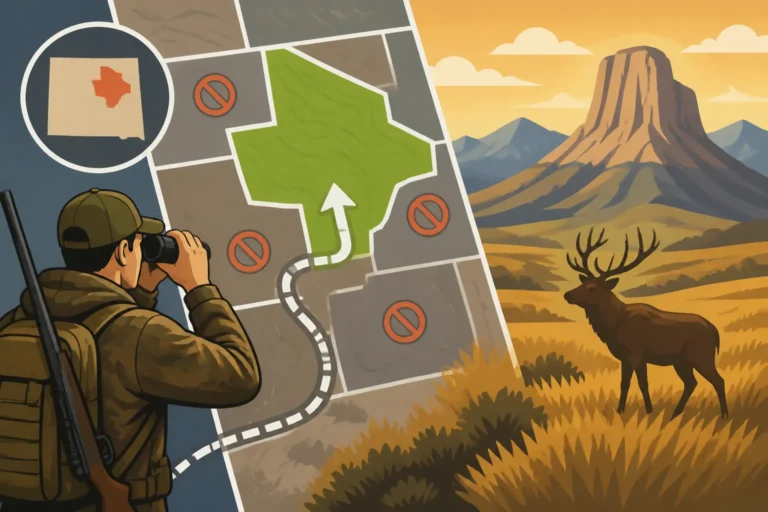
One of the biggest challenges for hunters in many Western states, and certainly within the Bighorns, is the "checkerboard" land ownership pattern. This refers to the historical grants that left public lands (like the National Forest) interspersed with private parcels. Without proper mapping and diligence, it's easy to inadvertently cross onto private property, leading to potential trespassing issues. Using mapping applications with public/private land overlays, such as onX Hunt, is absolutely critical. While these tools are excellent, remember that they are aids, not the final word. Always be aware of your surroundings and any posted signs. Can You Rely on onX for a Boundary? offers a good perspective on this. This constant awareness is part of the challenge and responsibility of hunting public land.
Decoding Wyoming's Regulations
Hunting the Bighorns demands a thorough and up-to-date understanding of Wyoming's hunting regulations. These laws are dynamic and can change annually, so relying on last year's regulations or hearsay is a recipe for disaster. The Wyoming Game and Fish Department publishes detailed regulation booklets for each species, which are your official source of truth. You need to consult these meticulously for your specific hunt unit and target species.
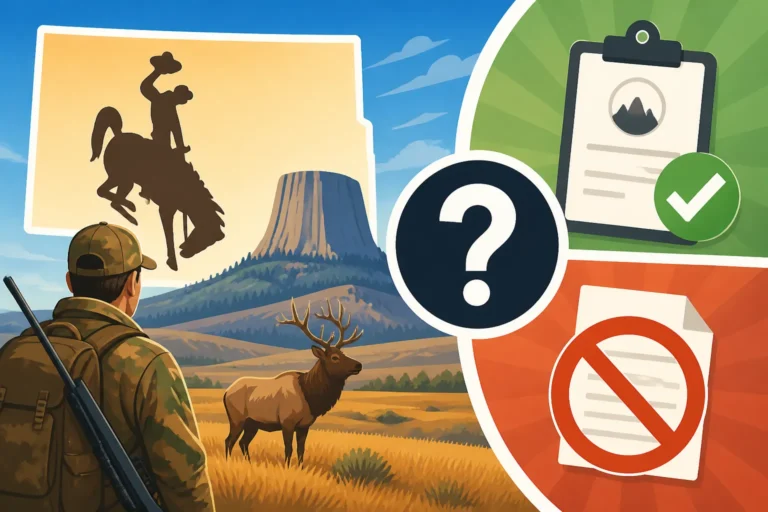
Wyoming operates on a system of general and limited quota licenses, which impacts where and how you can hunt. General licenses, if you're lucky enough to draw one, often allow for hunting across larger, specified regions, including parts of the Bighorns. However, many prime areas, particularly for trophy animals, fall under limited quota licenses, which are much harder to draw. Understanding the difference between Wyoming General Elk Licenses and Where They Work and Wyoming Limited Quota Elk Areas Closed to General Licenses in Wyoming is paramount to your application strategy. This distinction will define where you can apply and what your odds of drawing a tag actually are.
For many hunters, particularly those born after a specific date (currently January 1, 1966), completing Anyone Born After 1965 Needs Wyoming Hunter Education is a mandatory prerequisite to purchasing a hunting license. This certification ensures hunters understand safety, ethics, and regulations, contributing to responsible hunting practices. Furthermore, every hunter in Wyoming, regardless of residency or license type, is required to purchase a Conservation Stamp. The Wyoming Conservation Stamp and Who Needs One is not just a fee; it's a vital contribution to wildlife management and habitat conservation efforts across the state.
Beyond these general requirements, always verify the specific regulations for your hunt area. This includes season dates, which vary widely by unit, species, and weapon type (archery, rifle, muzzleloader). Pay close attention to weapon restrictions, legal shooting hours, and any specific harvest limits (e.g., antler point restrictions for bucks or bulls). These details are often listed in the area-specific sections of the regulation booklet and are critical for a legal and successful hunt. Failing to understand these specifics can lead to serious legal consequences.
Preparing for a Self-Sufficient Backcountry Hunt
A hunt in the Bighorn National Forest, particularly if you're venturing into the backcountry, demands a high degree of self-sufficiency and meticulous gear preparation. Your boots are perhaps the most critical piece of equipment; invest in high-quality, broken-in waterproof boots that provide excellent ankle support, as you'll be navigating steep, uneven terrain. Layered clothing is also essential, allowing you to adapt to the wildly fluctuating mountain weather, which can range from warm sunshine to driving snow in a single day. Think moisture-wicking base layers, insulating mid-layers, and a waterproof/windproof outer shell.
When it comes to sustenance, planning for food and water is crucial. High-elevation hunting burns a tremendous amount of calories, so pack nutrient-dense, lightweight foods. For water, don't rely on finding streams everywhere you go. Carry enough for a full day and invest in a reliable water purification system, such as a filter or chemical tablets, to safely replenish from natural sources. Staying hydrated is absolutely key to preventing altitude sickness and maintaining energy levels throughout your hunt.
Safety items should never be overlooked. A comprehensive first-aid kit, tailored for backcountry use, is essential. Given that the Bighorns are bear country, carrying bear spray and knowing how to use it properly is a must. Bear Safety Practices in an Outfitter Camp can provide further insights. Additionally, a fire starter, emergency shelter (like a bivy sack), and sufficient lighting (headlamp with extra batteries) are critical for unexpected overnight stays or emergencies. Always tell someone your detailed hunting plans, including your route and expected return date.
Finally, while modern cell service is notoriously unreliable in the Bighorns, a satellite communication device (like an inReach or Zoleo) can be a lifesaver. These devices allow you to send and receive text messages and, most importantly, send an SOS signal in an emergency, even when out of cell range. Being able to communicate for help when you're deep in the wilderness is invaluable, providing peace of mind for both you and your loved ones back home. A backcountry hunt is an incredible experience, but it requires preparation for every contingency.
Elk vs. Mule Deer in the Bighorns: A Hunter's Comparison
To summarize some of the key differences and considerations for hunting elk and mule deer in the Bighorn National Forest, here's a helpful comparison:
| Feature | Elk Hunting in the Bighorns | Mule Deer Hunting in the Bighorns |
|---|---|---|
| Typical Habitat | Dense timber, north-facing slopes, high country basins, open meadows for feeding. | Broken country, sagebrush draws, aspens, transition zones, rocky ridges, south-facing slopes. |
| Seasonal Movement | High country in early season, timbered mid-elevations as pressure increases, lower with snow. | Higher elevations early, moving to lower, sunnier slopes with colder weather/snow. |
| Primary Tactics | Calling (rut), still-hunting timber, glassing edges/parks, scent control, wind awareness. | Spot-and-stalk from vantage points, meticulous glassing, patience on the stalk, wind awareness. |
| Physical Demand | Very high; long, steep climbs; heavy pack-outs. | High; often involves glassing for long periods, then deliberate, often difficult stalks. |
| Hunter Pressure | Can be significant, especially accessible areas, pushing elk deep into timber. | Varies; can find pressured deer, but also remote, unpressured areas with effort. |
| Gear Emphasis | Optics, bugle/calls, robust pack system, excellent boots, layered clothing. | High-quality binoculars/spotting scope, rangefinder, quiet clothing, sturdy tripod. |
| Retrieval | Extremely challenging due to size and terrain; often requires multiple trips or pack animals. | Challenging but generally less demanding than elk; often requires multiple trips. |
Hunting the Bighorn National Forest for elk or mule deer is truly an experience that embodies the spirit of Western hunting. It's a land of breathtaking beauty and formidable challenges, demanding respect, preparation, and perseverance from every hunter who ventures into its depths. Whether you're drawn by the screaming bugle of a bull elk or the ghost-like presence of a mature mule deer buck, the Bighorns offer a profound connection to the wild. Embrace the learning curve, put in the hard work, and you might just find yourself with a memory that lasts a lifetime, and maybe even a freezer full of prime wild game.
Disclaimer
This article is for general informational purposes only and does not constitute professional advice. Laws, prices and regulations vary by location and change over time. Consult a qualified professional for guidance on your specific situation.