Anyone Born After 1965 Needs Wyoming Hunter Education
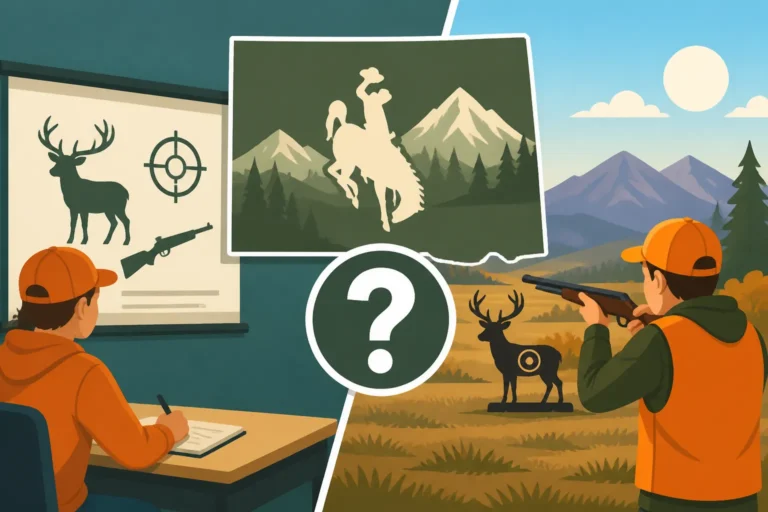
The realization that you need hunter education, especially when you’ve been hunting in other states for years, can feel like a frustrating bureaucratic hurdle. It often catches people off guard, but understanding Wyoming's specific requirements is crucial for anyone planning to hunt the Equality State's incredible big game. This comprehensive guide will walk you through everything you need to know about Wyoming's hunter education mandate, especially for those born after the cutoff year of 1965.
Understanding Wyoming's Hunter Education Mandate
Wyoming is renowned for its vast public lands and incredible hunting opportunities, from towering elk in the mountains to speedy pronghorn on the plains. But like any state, it has its own set of rules designed to promote safety, ethical hunting practices, and responsible wildlife stewardship. One of the most fundamental of these is the hunter education requirement. It's not just a hoop to jump through; it's about ensuring every hunter, especially newer generations, understands the critical responsibilities that come with carrying a weapon into the field.
The core of this mandate is straightforward: if you were born on or after January 1, 1965, you must complete a hunter education course certified by any state or Canadian province to legally hunt in Wyoming. This isn't just for residents; it applies equally to non-residents coming to enjoy a Wyoming hunt. Many states have a similar cutoff date, often in the early to mid-1960s, which usually aligns with the national push to standardize hunter safety education. The idea behind these cutoff dates was to "grandfather in" older hunters who likely learned from previous generations and had extensive field experience before formal education became widespread. For everyone else, it’s a non-negotiable step to ensuring a safe and ethical hunting experience for all.
The purpose extends beyond just handling firearms safely. It delves into wildlife identification, game laws, conservation principles, survival skills, and even landowner relations. These courses aim to instill a deep respect for wildlife and the land, fostering a culture of responsible hunting that benefits everyone. For a state like Wyoming, with its vast and wild landscapes, having hunters who understand these principles is paramount for both public safety and the long-term health of its wildlife populations.
The Rationale Behind the 1965 Cutoff
When you look at hunter education requirements across the country, you'll notice that many states, including Wyoming, have settled on a birth year cutoff around the mid-1960s. For Wyoming, it’s specifically January 1, 1965. This date isn't arbitrary; it generally marks a period when hunter safety courses began to become more formalized and widely available across North America. Before this time, formal hunter education was less common, and many seasoned hunters learned their craft through apprenticeships with family or friends in the field.
The logic here is quite simple: individuals born before 1965 were presumed to have had ample opportunity to gain practical hunting experience before formalized hunter education became the norm. They grew up in a different era of hunting culture where knowledge was often passed down informally. Mandating a course for them might have been seen as redundant or even insulting to their lifetime of experience. However, for anyone born after that date, the expectation is that they would have had access to, or benefited from, formal instruction in safe firearm handling, ethical hunting practices, and conservation principles.
This birth year cutoff essentially creates two groups: those "grandfathered in" by their age and assumed experience, and those who need to demonstrate their competency through a certified course. It’s a pragmatic approach to integrate modern safety standards without alienating a significant portion of the hunting population. It also ensures that newer generations are brought up with a consistent, standardized understanding of responsible hunting, which is vital for the sport's future, especially in a state with as much hunting heritage as Wyoming.
Why Certification Matters for Every Hunter
Even if you’ve been hunting for decades in other states, if you fall on the wrong side of that 1965 cutoff, Wyoming won't budge on its hunter education requirement. And honestly, there's a good reason for it beyond just compliance. These courses cover far more than just "don't point your gun at yourself or others." They delve deep into local regulations, species identification, and the unique challenges of hunting specific terrains and wildlife.
For example, a hunter education course might cover the proper methods for field dressing an elk in a remote wilderness setting, or how to identify a legal bull versus a spike if you're hunting in an antler point restriction area. It reinforces the critical role of conservation and how hunting license fees directly fund wildlife management efforts, something every hunter should understand. Beyond just safety, it touches on ethical considerations like fair chase, shot placement, and minimizing suffering.
Furthermore, these courses provide a refresher on current best practices. Hunting technologies, wildlife management strategies, and even public land access rules can evolve. A certified course ensures that hunters are up-to-date with the latest information, fostering a more informed and responsible hunting community. It's about upholding the integrity of the sport and making sure everyone on public or private land in Wyoming is operating with a shared foundational knowledge base. It's an investment in your safety, the safety of others, and the future of hunting in a state that prides itself on its outdoor traditions.
Who Exactly Needs Hunter Education
The core rule is clear: if you were born on or after January 1, 1965, you need proof of hunter education. This applies across the board, whether you're a long-time Wyoming resident or an out-of-state hunter planning your dream elk hunt. There's no escaping this date, so it's one of the first things you need to confirm when planning your trip. It’s also important to note that this requirement applies to hunting any species that requires a hunting license, which includes all big game and many small game species. If you're going after upland birds or waterfowl, the same rule applies.
However, as with most regulations, there are a few nuances and exceptions worth understanding. While the 1965 cutoff is paramount, Wyoming also offers a "mentor hunting" program, which provides a pathway for those who haven't completed their hunter education yet, or for young hunters who are still too young for formal certification. This program allows uncertified individuals to hunt under the direct supervision of a qualified adult, acting as a crucial bridge to independent hunting. It's designed to introduce new hunters to the field in a safe, controlled environment, ensuring they learn from experienced individuals while working towards their own certification.
It’s easy to assume your experience elsewhere will cover you, but when it comes to Wyoming, the birthdate is the final word. Make sure you dig out that old hunter education card if you need to, or be prepared to take a course. There's nothing worse than having your license denied or facing a citation because of a forgotten requirement that could have easily been met before your hunt. Always double-check your personal situation against the Wyoming Game and Fish Department's current regulations.
Clarifying the 1965 Cutoff
Let's really drill down on that January 1, 1965, cutoff date because it's the lynchpin of Wyoming's hunter education policy. If your birthday is December 31, 1964, or earlier, you are exempt. Congratulations, you're "grandfathered in" and typically don't need to show proof of hunter education. However, if your birthday falls on January 1, 1965, or any date thereafter, then you absolutely need that certification. This isn't a suggestion; it's a legal requirement to purchase a hunting license in Wyoming.
This specific date is common across many state wildlife agencies for the reasons we discussed: it’s when formalized hunter education programs really started to gain traction and become widely available. So, while you might have hunted your entire life and be an incredibly safe and ethical hunter, if your ID shows a birthdate of, say, March 15, 1968, you must provide proof of hunter education. There's no amount of field experience or anecdotal evidence that will substitute for that official certification.
This also means that if you're a non-resident, your hunter education certification from your home state or another U.S. state or Canadian province is typically recognized by Wyoming. This is due to a reciprocity agreement that most states adhere to, acknowledging that the core curriculum for hunter education is largely consistent nationwide. So, if you took a certified course in Montana, Colorado, or even Ontario, that certificate should suffice. Just be sure to bring your physical card or a verifiable record with you, as wardens may ask for proof in the field. This brings us to the importance of checking "Who Wyoming's 1966 Cutoff Actually Covers" (adjusting to 1965 as per the prompt) to truly understand the specifics.
Age-Based Exemptions and Mentor Programs
While the 1965 cutoff is the primary driver for adults, there are also considerations for younger hunters. Wyoming does not have a minimum age for hunter education certification itself, but it does have rules around who can hunt and under what supervision. For instance, children as young as 10 years old can participate in a hunter education course, and getting certified early is often a great idea for aspiring hunters. However, there are age minimums for hunting certain species. For example, the Wyoming's Minimum Age for Big Game is 12 years old. This means a 10-year-old could take the course and get certified, but they couldn't legally hunt big game until they turn 12.
For young or uncertified hunters, Wyoming’s mentored hunting program is a fantastic opportunity. This program allows an unlicensed hunter (mentee) to hunt big game, trophy game, or turkeys provided they are accompanied by a licensed, certified adult hunter (mentor) at least 18 years old. The mentor must remain within sight and voice contact of the mentee at all times, ensuring direct supervision. This is a crucial distinction, as the mentor is ultimately responsible for the mentee's adherence to all hunting regulations.
The mentored hunting program is designed to be an apprenticeship. It’s a way for new hunters, regardless of age, to gain practical experience and learn ethical hunting practices firsthand before they are fully certified. It's a stepping stone, not a permanent substitute for hunter education for those born after 1965. The program also has specific rules regarding the number of mentees a mentor can supervise at one time, and even offers exceptions for families, which you can learn more about by looking into "Why Families Get an Exception to the Mentee Limit". The ultimate goal is to foster safe, knowledgeable, and responsible hunters who will eventually complete their own certification.
The Different Paths to Certification
Alright, so you’ve figured out you need hunter education. Now what? The good news is that Wyoming, like many states, offers flexible options to get certified. You're not stuck with just one method, which is a huge relief for folks with busy schedules or those who might live in areas without frequent in-person classes. The two main avenues are online courses and traditional in-person classroom courses, each with its own advantages and disadvantages. Which one is right for you often depends on your learning style, schedule, and access to resources.
Beyond the standard courses, there's also the vital concept of reciprocity. This means that if you’ve already completed a certified hunter education course in another state or Canadian province, Wyoming will generally accept that certification. This saves a lot of hassle for non-residents or new Wyoming residents who have previously hunted elsewhere. Just remember, "certification" means an official, state-recognized program, not just a casual safety lecture or a weekend with an experienced friend. It needs to be verifiable, usually with an official card or certificate number.
Choosing the right path means weighing convenience against a hands-on experience. An online course can be completed at your own pace from your living room, which is incredibly appealing for many. However, an in-person class offers direct interaction with instructors and often includes practical, hands-on components that an online course simply can't replicate. Both are valid, but understanding the differences will help you make the best choice for your situation.
Online Hunter Education Courses
For many busy individuals, the online hunter education course is a true godsend. The flexibility it offers is unparalleled: you can work through the material at your own pace, on your own schedule, from virtually anywhere with an internet connection. This means no scrambling to find a classroom course that fits your work schedule or driving hours to the nearest available class. Sites like Hunter-Ed.com or IHEA-USA certified courses are widely recognized and accessible.
The typical online course covers all the same foundational knowledge as a traditional classroom setting: firearm safety, ethical hunting, wildlife identification, game laws, conservation, and basic first aid or survival skills. You'll usually find interactive modules, quizzes, and a final exam to ensure you've absorbed the material. Many people find this self-paced learning environment very effective, as it allows them to spend more time on areas where they feel less confident and move quickly through familiar topics. Plus, you don't have to worry about travel costs or taking time off work.
However, a key thing to remember about online courses in Wyoming is that for many participants, they often require a follow-up field day. This critical hands-on component is where you actually demonstrate safe firearm handling, practical shooting skills, and other vital competencies under the supervision of certified instructors. Don't assume finishing the online portion is the end of it; make sure you understand if a field day is mandatory for your age group or specific circumstances. You can find out more by researching "How Long the Online Hunter Education Course Takes" and whether a field day is needed. Tools like GoHunt can also sometimes provide updates or links to state-approved courses, helping you navigate these options.
Traditional Classroom Courses
While online options have grown immensely in popularity, the traditional in-person hunter education classroom course still holds significant value and is preferred by many. These courses offer a structured learning environment, typically spread over a few days or evenings, led by experienced, certified instructors from the Wyoming Game and Fish Department or volunteer organizations. The biggest advantage here is the direct interaction: you can ask questions in real-time, engage in discussions with instructors and fellow students, and benefit from their firsthand knowledge and experiences.
Beyond the direct instruction, classroom courses often incorporate hands-on learning that goes beyond what an online module can provide. This can include practical demonstrations of safe firearm handling, muzzle control, proper carrying techniques, and even basic first aid scenarios. You might get to handle inert firearms, learn about tree stand safety in a practical setting, or practice compass and map reading. For many, this practical, tactile experience is invaluable, especially for newer hunters who might not have had much exposure to firearms or outdoor skills.
The social aspect is also a huge draw. You get to meet other aspiring hunters, share stories, and build a sense of community. This environment is particularly beneficial for younger hunters who thrive in a group setting and can learn from both instructors and peers. While scheduling can be a challenge compared to the flexibility of online options, the comprehensive nature and practical elements of an in-person course often make it a highly rewarding and effective way to gain your hunter education certification. For a detailed comparison, check out "Online and Classroom Hunter Education Compared".
Reciprocity with Other States and Provinces
One of the best aspects of hunter education across North America is the widespread acceptance of reciprocity. What this means in plain language is that if you've successfully completed a hunter education course in any other U.S. state or Canadian province that is recognized by the International Hunter Education Association (IHEA-USA), Wyoming will accept that certification. This is a massive relief for non-residents traveling to Wyoming or for new residents who have already obtained their certification elsewhere. You generally do not need to retake a Wyoming-specific course if you have valid proof from another jurisdiction.
This reciprocity is based on the standardized curriculum developed by IHEA-USA, which ensures that all certified courses cover a core set of safety, ethical, and conservation principles. Whether you took your course in Texas, Alaska, or British Columbia, the fundamentals of firearm safety, wildlife identification, and responsible hunting practices are largely the same. This system allows hunters to travel and pursue their passion without encountering unnecessary bureaucratic hurdles, promoting a unified approach to hunter safety across different regions.
To claim reciprocity, you'll need to provide verifiable proof of your certification. This usually means presenting your official hunter education card, a certificate with a unique identification number, or a record from a recognized state or provincial wildlife agency. Simply telling the Wyoming Game and Fish Department that you "took a course once" won't cut it. It needs to be documented. So, before you apply for that coveted Wyoming license, make sure you know exactly where your hunter education card is and have it ready. This is especially relevant if you are asking "Do Nonresidents Need Wyoming Hunter Education?".
What You'll Learn in Hunter Education
Hunter education is so much more than just a firearm safety class. While safe gun handling is undoubtedly a cornerstone, these courses are designed to create well-rounded, ethical, and responsible outdoorsmen and women. You'll delve into a wide array of topics that go far beyond what most people expect, preparing you not just for the moment of the shot, but for the entire experience of being a hunter in the field. It’s an immersion into the world of wildlife, conservation, and personal responsibility.
The curriculum covers everything from the basics of how different types of firearms work to the nuances of wildlife biology and habitat. You’ll learn about shot placement, tracking, and field care of game, ensuring that once an animal is taken, it's handled respectfully and efficiently. Beyond the practicalities, there’s a strong emphasis on ethics and fair chase, teaching hunters to appreciate the animals they pursue and the land they inhabit. It's about instilling a mindset that respects nature and upholds the proud traditions of hunting.
You’ll also gain critical knowledge about conservation and game laws, understanding your role in maintaining healthy wildlife populations and avoiding legal pitfalls. Survival skills, first aid, and navigation are often integrated, giving you a basic toolkit for handling unexpected situations in the backcountry. Essentially, hunter education aims to equip you with the knowledge and skills to be a safe, effective, and responsible participant in the outdoors, making you a valuable asset to the hunting community and the environment.
Core Principles of Firearm Safety
Without a doubt, firearm safety is at the very heart of any hunter education course, and for good reason. Accidents in the field are almost always preventable, and the vast majority stem from fundamental safety violations. The course will hammer home the "Four Rules of Firearm Safety" or similar principles, ensuring they become second nature to every hunter. These rules are: always treat every firearm as if it's loaded, always keep the muzzle pointed in a safe direction, always keep your finger off the trigger until ready to shoot, and always be sure of your target and what is beyond it. These are not just guidelines; they are commandments.
Beyond these core rules, you'll learn about specific types of firearms – rifles, shotguns, handguns, and even bows or crossbows in some curricula – and their safe operation. This includes loading and unloading procedures, understanding different ammunition types, safe storage at home and in the field, and how to safely transport firearms in vehicles. For instance, knowing how to safely cross a fence with a loaded or unloaded firearm is a critical skill demonstrated in many courses. You'll also learn about the importance of wearing appropriate eye and ear protection when shooting.
The emphasis on safe firearm handling extends to real-world hunting scenarios. This means understanding shooting zones when hunting with others, how to safely retrieve a downed animal, and navigating challenging terrain with a weapon. The goal is to develop habits that ensure firearms are always handled with the utmost respect and caution, minimizing risk to yourself, your hunting partners, and the public. This foundational knowledge is paramount for any hunter stepping into Wyoming's vast landscapes, where you might encounter other recreationists or challenging conditions.
Ethical Hunting and Conservation
Hunter education goes far beyond the mechanical aspects of hunting; it deeply imbeds the principles of ethical hunting and wildlife conservation. You'll learn that hunting is not just about taking an animal, but about participating in a deeply rooted tradition that carries significant responsibilities. This includes understanding and adhering to the "fair chase" ethic, which emphasizes giving the animal a reasonable chance and using methods that respect the animal’s wild nature. It means knowing appropriate shot distances, making humane shots, and diligently tracking wounded game to minimize suffering.
The course also delves into the critical role of hunters in conservation. You'll learn about the North American Model of Wildlife Conservation, a unique system largely funded by hunters and anglers through license fees and excise taxes on hunting equipment. These funds directly support wildlife management, habitat restoration, research, and law enforcement, ensuring healthy populations for future generations. Understanding this connection helps hunters see themselves as vital stewards of wildlife, not merely as consumers.
Topics like respectful field dressing, proper game care to prevent spoilage (especially crucial in Wyoming's remote areas), and utilizing as much of the animal as possible are also covered. This reinforces the idea that an animal's life is not taken lightly and that its sacrifice is honored through responsible processing and use. You’ll also learn about respecting private property, gaining permission, and being a good ambassador for the hunting community. This ethical framework is essential for maintaining public acceptance of hunting and ensuring its future.
Laws, Regulations, and Field Skills
Navigating the labyrinth of hunting laws and regulations can be daunting, but hunter education courses simplify this by providing a comprehensive overview of state-specific rules, including those of Wyoming. You'll learn about license types, tag requirements, legal shooting hours, blaze orange requirements (crucial during rifle seasons), and vehicle use rules. Understanding these regulations is not only about avoiding fines but also about ensuring a legal and ethical hunt that respects wildlife management efforts. A good example of this is understanding Wyoming's Legal Firearm List for Big Game, or the differences between general and limited quota licenses.
Beyond regulations, these courses equip you with essential field skills that are critical for safety and success in the backcountry. This often includes basic navigation using maps and compasses (and a nod to modern GPS and apps like GoHunt as supplementary tools), emergency preparedness, and basic first aid. Imagine getting lost in the vastness of the Bridger-Teton National Forest or facing an unexpected injury miles from the nearest road; these skills can literally be lifesavers.
You'll also touch on wildlife identification, distinguishing between legal and illegal animals, understanding animal behavior, and tracking techniques. Furthermore, environmental awareness, such as Leave No Trace principles and understanding specific terrain challenges, are integral parts of the curriculum. For instance, knowing how to approach a water source or navigate dense timber can make all the difference in a hunt. These practical skills, combined with legal knowledge, prepare you for the realities of hunting in diverse and sometimes challenging environments, making you a more confident and self-reliant outdoors person.
Proving Your Hunter Education in the Field
So, you’ve taken the course, passed the exam, and received your certification. Fantastic! But the journey doesn't end there. Now, you need to be prepared to prove it, especially when you're out in the wilds of Wyoming. It's a bit like having your driver's license – you need to carry it with you. Game wardens and other law enforcement officials have the authority to ask for proof of your hunter education, and not having it could lead to frustrating delays, or worse, citations.
It's a common mistake for hunters to assume that because they've successfully obtained their license, the hunter education check is implicitly done. While the Wyoming Game and Fish Department does verify your certification during the licensing process, carrying physical or easily accessible digital proof is still highly recommended. Think of it as an extra layer of protection, ensuring a smooth interaction if you're ever stopped for a check. After all, when you're miles into the backcountry, you want to be focused on your hunt, not scrambling to prove your compliance.
Keeping your documents safe, whether a physical card or a digital copy, is paramount. These cards are small and easily lost, and replacing them can sometimes take time. So, make it a habit to ensure your certification is tucked away with your hunting license and other essential documents before you even hit the trail.
Carrying Proof of Certification
The simplest and most reliable way to prove your hunter education in Wyoming is to carry your physical hunter education card or certificate. This small plastic card, much like a credit card, is your official proof that you've completed a recognized course. When a game warden asks, you can simply present it along with your hunting license and conservation stamp. This makes for a quick and seamless interaction, allowing you to get back to your hunt without delay.
It's vital to ensure this card is legitimate and clearly shows your name, the certifying agency (e.g., Wyoming Game and Fish Department, or the equivalent from another state), and usually a certification number. If you've taken an online course with a mandatory field day, ensure your card reflects completion of both parts. Sometimes, an online certificate might initially be provisional until the field day is finished.
Keep this card safe and protected. Many hunters laminate it or keep it in a protective sleeve in their wallet or hunting pack. The last thing you want is a torn, water-damaged, or illegible card that causes confusion. While game wardens can often look up your record, having the physical proof handy eliminates any potential for connectivity issues in remote areas or database delays. It’s always best practice to have the tangible evidence directly on your person. If you're wondering how to retrieve a lost card, you might want to look at "Replacing a Hunter Education Card You Lost". Also, for more information on specific rules for carrying proof, check out "Carrying Proof of Certification in the Field".
Digital and Online Verification Options
In this increasingly digital world, relying solely on a physical card might feel a bit old-fashioned to some. The good news is that many states, including Wyoming, are moving towards or already offer digital verification options. While a physical card is still the most universally accepted and recommended form of proof, having a digital backup or knowing how to access your records online can be a lifesaver if your physical card goes missing.
Many state wildlife agencies maintain online databases where you can look up your hunter education certification using your name and birthdate, or a unique ID number. Some states even offer digital copies of your card that can be stored on your smartphone. While a game warden might prefer a physical card, being able to quickly pull up an official digital record on your phone (especially if you have service) can often suffice or at least provide interim proof while more extensive verification is performed.
However, a word of caution: don't rely solely on a screenshot of your certification. Technology can fail, batteries die, and cell service is often non-existent in the vast wilderness areas where many hunters pursue game in Wyoming. Always treat digital proof as a convenient backup, not a primary replacement for your physical card. Before your hunt, check the Wyoming Game and Fish Department's official website for their specific guidelines on acceptable digital proof. Tools like GoHunt often help hunters stay organized with their documents and licensing information, making it easier to keep track of these details.
Mentored Hunting: An Alternative Path
Sometimes, a hunter education course just isn't feasible right away, or perhaps you have a young, eager hunter who's not quite old enough for their own license or formal certification. This is where Wyoming's mentored hunting program shines as an incredible alternative path to getting out in the field. It’s specifically designed to introduce new hunters of any age to the sport under the close guidance of an experienced, responsible adult. Think of it as a hands-on apprenticeship program, emphasizing safety, ethics, and field skills in a real-world setting.
The beauty of the mentored hunting program is that it allows individuals who haven't completed their hunter education (or are under the legal age for some licenses) to participate in hunts. This significantly lowers the barrier to entry, encouraging more people to try hunting and fostering a deeper connection to the outdoors from an early age. It’s a fantastic way for families and friends to share their passion for hunting and pass on traditions.
However, "mentored" does not mean "unsupervised." The program has very strict rules regarding the mentor's qualifications and their responsibilities in the field. This ensures that safety and ethical conduct remain paramount, even for uncertified participants. It's a privilege, not a loophole, and understanding these rules is critical for both mentor and mentee.
Requirements for Mentors and Mentees
The success and safety of Wyoming’s mentored hunting program hinge on clear requirements for both the mentor and the mentee. The mentor, as the experienced guide, carries a significant amount of responsibility. To qualify as a mentor in Wyoming, you must be at least 18 years old, possess a valid hunting license for the species being hunted, and, crucially, have completed an approved hunter education course yourself. Your certification is non-negotiable, ensuring that the person teaching the new hunter is fully compliant and knowledgeable.
The mentee, on the other hand, does not need to have completed hunter education, nor do they need their own hunting license for the species being hunted. They hunt under the mentor's license. There are also age guidelines for mentees, such as the Wyoming's Minimum Age for Big Game which is typically 12. However, a younger mentee might be able to hunt certain small game under the program. It's important to consult the current regulations for specific age restrictions by species.
Crucially, the mentor must provide direct supervision at all times. This is not a casual recommendation; it's a legal requirement. Direct supervision means the mentor must be within "sight and voice contact" of the mentee. You can't drop your mentee off at a stand and meet them later; you must be actively observing and communicating with them throughout the hunt. This ensures immediate intervention for safety, ethical decisions, and guidance when an animal is encountered. This stringent rule is designed to make mentored hunts as safe and educational as possible. More details on mentor qualifications can be found in "Mentor Requirements: Eighteen, Certified and Licensed".
The Scope of Direct Supervision
The concept of "direct supervision" in Wyoming’s mentored hunting program is extremely important and is often misunderstood. It's not enough for the mentor to simply be "nearby." The Wyoming Game and Fish Department defines it explicitly: the mentor must be within "sight and voice contact" of the mentee. This means you need to be close enough to verbally communicate without shouting and to visually observe everything your mentee is doing. This proximity is critical for ensuring safety and providing immediate guidance.
Imagine a scenario: your mentee is stalking a mule deer through rolling sagebrush country. If you're a quarter-mile behind, unable to see or clearly hear them, you are not providing direct supervision. This means if the mentee makes an unsafe move, struggles with a decision, or has an encounter with dangerous wildlife, you can't react quickly enough. The "sight and voice contact" rule prevents these situations by keeping the mentor intimately involved in every step of the hunt. This is more than just being in the same general area; it’s about active, immediate oversight. You can dive deeper into this specific definition by reading "Direct Supervision Means Sight and Voice Contact".
This level of supervision is paramount for several reasons. Firstly, it ensures the mentee's safety and the safety of others in the field. Secondly, it allows the mentor to teach and correct in real-time, making the learning experience much more effective. Third, it ensures ethical decisions are made, particularly during the moment of truth when an animal is shot. The mentor is legally responsible for the mentee’s actions and adherence to all game laws. Therefore, maintaining close proximity isn’t just a recommendation; it’s a legal and ethical imperative to the success and integrity of the program.
Transitioning from Mentored to Independent Hunting
The mentored hunting program is an excellent entry point, but it's fundamentally a temporary status for most. The ultimate goal, especially for anyone born after January 1, 1965, is to transition from being a mentee to an independent, certified hunter. The mentored experience provides invaluable real-world practice, allowing new hunters to apply what they've learned (or will learn) in a hunter education course under controlled conditions. It builds confidence, teaches field craft, and demonstrates the practical application of safety and ethics.
After gaining experience as a mentee, the next logical step is to complete a formal hunter education course. This formal certification solidifies their knowledge, confirms their understanding of all relevant laws and principles, and grants them the ability to hunt independently without direct supervision. For young hunters, this often aligns with reaching the minimum age for a big game license (12 years old in Wyoming) and the personal maturity needed to handle the responsibilities of independent hunting.
It’s crucial that new hunters don't view mentored hunting as a permanent substitute for certification if they fall under the 1965 cutoff. The program is a bridge, an opportunity to gain experience, but the state's requirement for formal hunter education remains for those born on or after that date. Successfully transitioning means embracing both the practical experience of mentored hunts and the comprehensive knowledge gained through a certified hunter education course, culminating in a fully qualified, responsible hunter.
Non-Resident Hunter Education Requirements
Planning a hunting trip to Wyoming as a non-resident is a dream for many, conjuring images of majestic elk in the mountains or antelope streaking across the plains. But before you start packing your bags and dreaming of that trophy, it's absolutely critical to understand Wyoming's non-resident hunter education requirements. Just because you hunt in your home state doesn't mean you automatically bypass Wyoming's rules. Ignorance of the law is never an excuse, and being caught without proper certification can quickly turn a dream hunt into a costly nightmare.
The good news, as we've touched on, is that Wyoming generally accepts hunter education certifications from other states and Canadian provinces. This reciprocity is a huge convenience, saving you the hassle of having to re-certify specifically for Wyoming. However, "generally accepts" comes with a caveat: you must be able to prove your certification. It needs to be an official, verifiable document from a recognized program.
Ultimately, the rule for non-residents mirrors that for residents: if you were born on or after January 1, 1965, you need hunter education. Period. There's no special carve-out for out-of-staters. So, before you apply for that coveted elk or deer tag, double-check your birthdate and locate your hunter education card. It's one of the most fundamental steps in ensuring a smooth and legal hunting adventure in the Cowboy State. You can dive deeper into this specific rule by reading "Do Nonresidents Need Wyoming Hunter Education?".
Reciprocity: Your Out-of-State Card is Key
For non-residents, the concept of reciprocity is your best friend when it comes to hunter education in Wyoming. If you’ve successfully completed a hunter education course in your home state or another U.S. state or Canadian province, that certification is almost always recognized and accepted by the Wyoming Game and Fish Department. This means you generally do not need to take a separate Wyoming-specific course. This is a tremendous benefit, simplifying the process for hunters who travel.
The key here is "recognized and accepted." This means your course must have been officially certified by a state or provincial wildlife agency and typically adheres to the International Hunter Education Association (IHEA-USA) standards. The vast majority of hunter education courses offered across North America meet this criteria. So, whether you learned hunter safety in Pennsylvania, California, or Alberta, as long as it was an official program, you should be good to go in Wyoming.
The most important takeaway for non-residents: bring your hunter education card or verifiable proof with you! Do not assume that because your license was issued, your education is automatically confirmed in the field. A Wyoming game warden may ask to see your physical hunter education card. Keep it with your hunting license and other identification. Losing it or forgetting it could lead to complications and unnecessary stress during your hunt. Make copies, keep a digital photo on your phone, and most importantly, know where the original is.
Ensuring Your Certification is Verifiable
While reciprocity is great, the onus is on you, the non-resident hunter, to ensure your certification is verifiable. Simply stating you took a course years ago in another state won't be sufficient. You need tangible proof that a Wyoming Game and Fish official can confirm. The most common and accepted form of verification is your physical hunter education card, issued by the state or province where you took the course. This card usually includes your name, date of birth, and a unique certification number.
If you've lost your original card, don't panic, but don't wait until the last minute either. Most state wildlife agencies offer services to replace lost cards or provide official verification letters. This process can sometimes take a few weeks, so plan ahead. Check your home state's game and fish website for instructions on how to obtain a replacement or a verification letter. Having a clear, official document is paramount.
When applying for your Wyoming hunting license, whether online through the Electronic Licensing System (ELS) or in person, you'll typically be asked to affirm your hunter education status and may need to provide details like your certification number and the state of issue. It’s always a good idea to cross-reference any information you submit with your actual documentation to avoid discrepancies. Using reliable hunting planning tools like GoHunt can help keep track of these details and link you to relevant state resources if you need to retrieve lost documentation. Ensuring verifiability is about proactive preparation, not reactive scrambling in the field.
Penalties for Non-Compliance
It cannot be stressed enough: do not attempt to hunt in Wyoming if you are required to have hunter education and do not possess valid, verifiable proof. The penalties for non-compliance can be significant and will quickly sour your hunting experience. Hunting without the proper certification is essentially hunting illegally, and game wardens in Wyoming take such violations very seriously.
Penalties can range from substantial fines to confiscation of your game and hunting equipment. You could also face suspension of your hunting privileges, not just in Wyoming, but potentially in your home state due to interstate wildlife compacts. Imagine spending thousands of dollars on licenses, travel, and gear for a Wyoming elk hunt, only to have it all invalidated because you failed to take a simple course or couldn't produce your card. It's a risk simply not worth taking.
Furthermore, being cited for a hunter education violation can leave a mark on your record, potentially impacting future license applications in Wyoming or other states. The Wyoming Game and Fish Department is dedicated to promoting safe and ethical hunting, and a foundational part of that is ensuring all hunters meet the education requirements. So, save yourself the headache, the legal trouble, and the financial cost: confirm your hunter education status well in advance of your hunt and always carry your proof.
Common Pitfalls and How to Avoid Them
Even with all the information out there, it's surprisingly easy to stumble when it comes to hunter education requirements. I've heard countless stories from hunters who were genuinely surprised or frustrated by a rule they simply overlooked. Whether it's the confusion over birth year cutoffs, misplaced cards, or misinterpretations of "direct supervision," these small errors can lead to big headaches. The key to avoiding these pitfalls is thorough preparation and a clear understanding of the rules before you ever step foot into Wyoming's hunting grounds.
One of the biggest mistakes hunters make is assuming that rules from their home state or general hunting knowledge will automatically apply in Wyoming. While many core principles are consistent, each state has its own nuances, and hunter education is a prime example. What might be an exemption in one state could be a mandatory requirement here. It's crucial to consult the Wyoming Game and Fish Department's official regulations directly, rather than relying on hearsay or outdated information.
Another common pitfall is procrastination. Waiting until the last minute to verify your hunter education status, locate your card, or enroll in a course is a recipe for disaster. Hunter education courses, especially field days, can fill up quickly, and replacing a lost card takes time. By being proactive, you can address any potential issues well in advance, ensuring your hunting trip proceeds without a hitch.
Misinterpreting the Birth Year Cutoff
This is, by far, the most common pitfall I encounter: hunters misinterpreting or simply forgetting about the birth year cutoff. The rule is absolute: born on or after January 1, 1965, means you need hunter education. There's no wiggle room. I've had conversations with seasoned hunters born in 1966 who were genuinely shocked they needed the certification, having hunted their entire lives in states with different cutoff dates or no dates at all.
The mistake often comes from assuming one's own extensive experience somehow exempts them, or that the rule only applies to brand-new, young hunters. This is simply not the case in Wyoming. The state has drawn a very clear line in the sand, and it applies to everyone, resident or non-resident, regardless of their perceived hunting prowess.
To avoid this, make it the very first thing you check. Pull out your driver's license, look at your birthdate, and confirm it against the January 1, 1965, requirement. If you fall on or after that date, immediately verify your certification status. Do not rely on memory or assumptions. This simple step can save you immense frustration and potential legal issues down the line. For further clarification, refer to "The Wyoming Hunter Education Birth Year Cutoff".
Lost or Expired Certification Cards
Another frequent headache arises from lost, damaged, or seemingly "expired" hunter education cards. Unlike a driver's license that needs regular renewal, hunter education certifications generally do not expire. Once you're certified, you're certified for life. However, this doesn't mean your physical card is indestructible or that you won't misplace it over the years.
Many hunters assume that since their license was issued, their hunter education is "in the system." While it's true the Wyoming Game and Fish Department likely has a record if you used your certification for a prior license, relying solely on that can be risky, especially in remote areas with no connectivity. A game warden might not have immediate access to the full database in the field, making your physical card invaluable.
If your card is lost or damaged, begin the replacement process immediately. Most states offer an online portal or a contact number to request a duplicate. This often involves a small fee and can take anywhere from a few days to several weeks for processing and mailing. Do not wait until a week before your hunt to realize you can't find your card. Proactive replacement ensures you have a valid document in hand when you need it. Remember that "Replacing a Hunter Education Card You Lost" is a common issue, so address it early.
Forgetting Mentored Hunt Specifics
While the mentored hunting program is a fantastic opportunity, forgetting its specific rules can lead to serious trouble. The most common oversight here is misunderstanding "direct supervision." Many mentors mistakenly believe that being in the same general area or within a certain proximity (e.g., a few hundred yards) is sufficient. As established, Wyoming requires "sight and voice contact," meaning you need to be actively engaged and able to immediately intervene.
Another common mistake for mentors is taking on too many mentees. Wyoming regulations often specify a mentor-to-mentee ratio, usually one-on-one for big game, although exceptions exist for family groups. Exceeding this ratio is a violation. Also, neglecting the mentor’s own requirement to be licensed and hunter education certified is a critical error. The mentor must be fully compliant themselves to supervise an uncertified hunter.
These oversights, while often unintentional, can still result in fines or other penalties. The mentored hunting program is a privilege designed for safety and education, and strict adherence to its rules is paramount. Before embarking on a mentored hunt, both mentor and mentee should thoroughly review the current Wyoming Game and Fish Department regulations concerning the program to ensure full compliance and a safe, legal experience for all involved.
TABLE: Wyoming Hunter Education at a Glance
| Requirement Aspect | Detail | Important Note |
|---|---|---|
| Birth Year Cutoff | Born on or after January 1, 1965 | Applies to all hunters (residents & non-residents) for any licensed species. |
| Certification Accepted | Any state or Canadian province certified by IHEA-USA | Reciprocity is standard. Bring your official card. |
| Certification Methods | Online courses (often with mandatory field day) or traditional classroom | Choose what best fits your learning style and schedule. Verify field day requirement for online courses. |
| Minimum Age to Certify | No minimum age to take the course | Youth can certify early but must meet age minimums for specific species (e.g., 12 for big game). |
| Mentored Hunting | Allows uncertified hunters (mentees) under direct supervision of a mentor | Mentor must be 18+, licensed, and hunter education certified. Direct supervision = sight and voice contact. |
| Proof in Field | Carry physical hunter education card or verifiable digital proof | Game wardens may request proof; immediate access avoids issues. Lost cards can be replaced. |
| Penalties | Fines, game/equipment confiscation, license suspension | Non-compliance is hunting illegally. Avoid unnecessary risks. |
Disclaimer
The information provided in this guide is for general informational purposes only and is not intended as legal advice. Hunting regulations in Wyoming are subject to change and interpretation. It is the responsibility of every individual hunter to review and understand the most current official regulations published by the Wyoming Game and Fish Department before participating in any hunting activity. Always confirm specific rules, dates, and requirements directly with the official sources to ensure compliance.