Broadheads That Fail the 7/8-Inch Ring Test
It's incredibly frustrating, isn't it? You spend countless hours preparing for a Wyoming archery hunt—scouting, practicing, tuning your bow—only to then stress over whether your broadheads are actually legal. It feels like there’s a new rule or interpretation every other season, and the last thing any of us wants is to be on the wrong side of the law, let alone compromise an ethical shot. This guide is all about breaking down Wyoming’s often-misunderstood broadhead regulations, specifically the critical 7/8-inch minimum cutting diameter rule, and helping you identify broadheads that might leave you in a bind in the field.
Decoding Wyoming's Broadhead Size Requirements
The state of Wyoming, like many others, has specific regulations designed to promote ethical hunting and ensure quick, humane harvests. For archers, this often boils down to the minimum cutting dimensions of your broadheads. It's a rule that can cause a lot of head-scratching, especially with the sheer variety of broadheads on the market today.
The Absolute Minimum: 7/8-Inch Cutting Diameter
Let's cut right to it: Wyoming Statute Title 23, Chapter 3, Article 2 specifies that for hunting big game, your broadhead must have a minimum cutting diameter of 7/8 of an inch. This isn't just an arbitrary number; it's rooted in the science of wound channels and hemorrhage. A broadhead that creates a sufficiently large cut is more likely to sever arteries, veins, and vital organs quickly, leading to a faster, more ethical kill. Anything smaller dramatically increases the risk of a slow, agonizing death for the animal and a heartbreaking, difficult tracking job for you.
The crucial part to understand here is "cutting diameter." For fixed-blade broadheads, this is usually pretty straightforward: it's the widest point of the blades. However, for mechanical or expandable broadheads, it refers to the cutting diameter when fully deployed. This distinction is absolutely vital because a mechanical head might measure smaller in its un-deployed state but is designed to open up to a larger diameter on impact. The challenge for hunters lies in the often-optimistic claims on broadhead packaging. A box might boast "1-inch cut," but if that broadhead doesn't reliably achieve that 1-inch cut in a real-world hunting scenario, or if its actual cutting width is less than 7/8 inch across any part of its deployed blades, it could be illegal. It’s not about what the box says; it’s about what the broadhead does when it hits its mark.
This strict rule underscores the importance of not just buying any broadhead off the shelf. Many smaller game heads, or even some older or specialty broadheads designed for specific, less robust animals, simply won't meet this minimum. It's easy to get caught up in the allure of speed or unique designs, but if that design sacrifices cutting width, you're putting yourself and the animal at risk. Always, always check the exact specifications and, even better, physically inspect your broadheads to confirm compliance.
The "Ring Test" Game Wardens Use
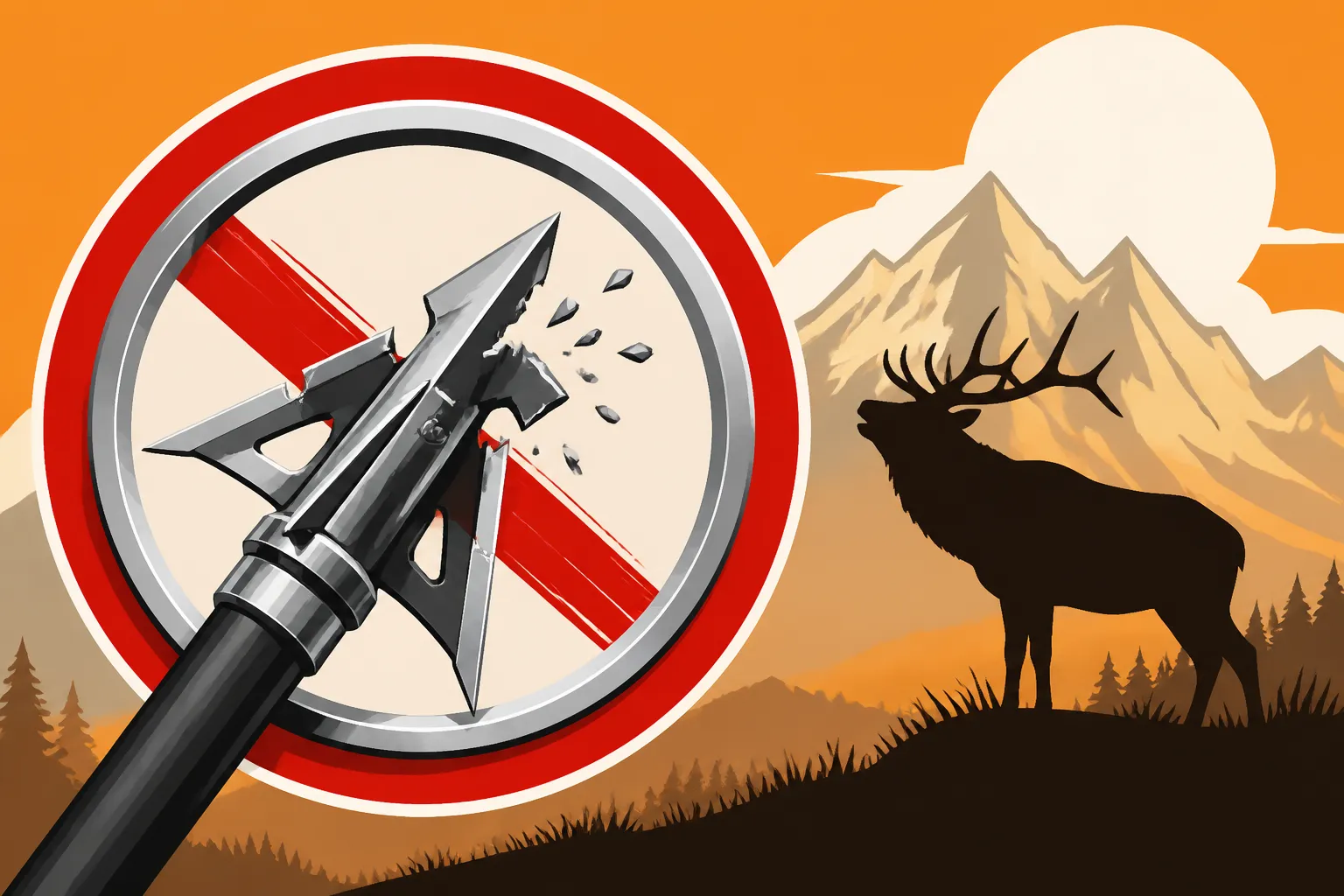
So, how does the Wyoming Game and Fish Department actually enforce this 7/8-inch rule in the field? While wardens aren't usually carrying calipers in their pockets, they often employ what's colloquially known as the "ring test." Imagine a small ring, precisely 7/8 of an inch in internal diameter. For a broadhead to be legal, its deployed cutting blades must pass through that ring, creating a cut that is clearly and consistently at least 7/8 of an inch wide. It’s not just about the ferrule (the body of the broadhead) fitting; it's about the sharp, cutting edges themselves projecting beyond the 7/8-inch mark.
This physical test highlights a critical point: it's not enough for a mechanical broadhead to eventually open to a large cutting diameter if the initial cutting surface is too small, or if one of its blades happens to fold back. The entire cutting apparatus needs to be capable of making a 7/8-inch wound channel consistently. Some broadhead designs, particularly older mechanicals with complex deployment mechanisms or very small initial cutting surfaces, could struggle with this. If the blades don't snap open reliably, or if they deform on impact in a way that reduces the effective cutting diameter below the minimum, you're in violation. It's a simple, undeniable visual assessment that leaves little room for argument.
The implications of a broadhead failing this test in the field are severe. Not only could you face fines and potential confiscation of your equipment or even your harvested game, but you'd also carry the knowledge that you potentially used an inadequate tool for a humane kill. Game wardens are primarily concerned with ethical hunting practices, and using an illegal broadhead design is a direct affront to that principle. This is why understanding How the Seven-Eighths Inch Ring Test Works is so important, even if you never physically perform it yourself. You need to know what standard your broadheads are being held to.
Fixed Blade Broadheads and Their Compliance Challenges
Fixed blade broadheads have been the workhorse of archery hunting for centuries, and for good reason. They are inherently simple, robust, and generally reliable. However, even with fixed blades, there are nuances when it comes to meeting Wyoming’s 7/8-inch cutting diameter rule.
Examining Traditional Fixed Blade Designs
Most traditional fixed-blade broadheads, by their very nature, already meet or exceed Wyoming's 7/8-inch minimum. Think about popular designs like the G5 Montec, Muzzy, or Wasp fixed blades—their cutting widths are typically well over the 7/8-inch mark, often ranging from 1 inch to 1 1/4 inches. Their blades are stationary, so what you see is what you get. There's no question of deployment or whether they'll open correctly on impact. This inherent simplicity and consistent cutting diameter is precisely why many experienced Western hunters, especially those pursuing larger, tougher animals like elk or moose, gravitate towards fixed blades. They prioritize penetration and reliability, and a good fixed blade offers both, along with a consistently legal cutting width.
However, it's a mistake to assume all fixed blades are compliant. There are specialized fixed-blade heads designed for small game, such as blunts or judo points, which clearly do not meet the big game requirements. More subtly, some older broadhead designs, or certain niche foreign-made heads, might have a narrower cutting width than you’d expect. Hunters might unknowingly use these if they inherited them, found a good deal, or simply didn't check the fine print. For example, some very slender two-blade designs, while excellent for penetration, might just barely clear (or even fall under) the 7/8-inch mark. It's always best to physically measure your fixed blades at their widest point with a ruler or calipers, just to be absolutely certain. Don't rely solely on visual estimation, especially after the broadhead has been sharpened multiple times.
The key advantage of fixed blades is their predictability. When you're making a quartering-away shot on a bull elk, you want absolute confidence that your broadhead will perform as expected, penetrating deeply and creating the necessary wound channel. The consistent cutting diameter of most fixed blades contributes significantly to that confidence. They are ready to go the moment they leave your bowstring, making them a straightforward choice for legal compliance.
Multi-Blade Fixed Heads and the Cutting Surface
When we talk about multi-blade fixed heads, the same 7/8-inch rule still applies, and it applies to the overall cutting diameter, not the sum of individual blade widths. So, a broadhead with three or four blades must still have a minimum cutting width of 7/8 of an inch from the widest point across its cutting edges. These designs are popular because they offer increased tissue damage and hemorrhage, theoretically leading to faster kills. The multiple blades create more cutting surface within the wound channel, which can be particularly effective on broadside shots.
Popular examples of multi-blade fixed heads that consistently meet Wyoming's criteria include many designs from companies like Muzzy, NAP HellRazor, or even some of the older Thunderhead models. These broadheads are designed to be robust and provide ample cutting diameter. The challenge with multi-blade heads isn't usually the minimum width, but rather ensuring that all blades are sharp, properly aligned, and that the ferrule is strong enough to withstand impact without bending or breaking. If a blade snaps off or gets severely bent, the effective cutting diameter can be compromised, though this is usually more a performance issue than a legality one, as the remaining blades would likely still achieve the minimum width.
Ultimately, the choice between two, three, or even four-blade fixed heads often comes down to personal preference, penetration concerns, and bow tuning. Some hunters find multi-blade heads more challenging to tune for perfect flight, especially at higher speeds or with traditional bows. Others embrace them for the significant wound channels they create. What matters most for legality is that the widest point across the cutting edges of your chosen fixed blade, regardless of the number of blades, measures at least 7/8 of an inch. When considering Fixed and Expandable Heads Under Wyoming Rules, fixed blades typically offer a more straightforward path to compliance.
Navigating Mechanical Broadheads and the Deployment Dilemma
Mechanical, or expandable, broadheads offer the promise of field-point accuracy combined with devastating cutting diameters upon impact. They’ve become incredibly popular, but they also introduce a unique set of challenges when it comes to meeting Wyoming’s stringent 7/8-inch minimum cutting diameter rule.
The Criticality of Full Deployment
The fundamental issue with mechanical broadheads in the context of the 7/8-inch rule is their reliance on deployment. Unlike fixed blades, their cutting diameter is only achieved once the blades open up. This means that for a mechanical broadhead to be legal in Wyoming, it must consistently achieve a fully deployed cutting diameter of at least 7/8 of an inch. This isn't just a hypothetical; it's a real-world performance requirement. If the blades don't open as intended, or only partially open, the broadhead might effectively act as an illegal, undersized projectile.
Several factors can influence the full and reliable deployment of a mechanical broadhead. First, and perhaps most critical, is kinetic energy (KE) from your bow. If your bow doesn't generate enough KE, especially if you're shooting a lower draw weight or a shorter draw length, some mechanicals might not have the force needed to reliably open their blades, particularly after punching through tough hide or heavy bone. For example, while Wyoming Sets Bow Draw Weight at 40 Pounds, 50 for Elk, a broadhead that barely deploys with 40 lbs might perform perfectly with a 70 lb draw. Second, the impact angle can play a role. A glancing blow or an extreme quartering shot might not engage the blades properly. Third, the animal's hide and musculature can sometimes impede deployment, especially on thicker-skinned game like elk or even mature mule deer.
It's a frustrating paradox: you buy a mechanical broadhead advertised with a 1.5-inch cutting diameter, but if it only opens to 0.75 inches on impact, it's not only illegal but also incredibly unethical. This is why mere advertising claims are insufficient. Hunters must be diligent in selecting mechanicals known for their robust and reliable deployment mechanisms. The margin for error is razor-thin when the minimum is 7/8 of an inch. If a broadhead is designed to deploy to, say, exactly 7/8 inch, any slight malfunction means it falls below the legal threshold.
Broadhead Malfunctions and Insufficient Cutting Width
Beyond simply not deploying, mechanical broadheads can suffer from other malfunctions that reduce their effective cutting width below the legal minimum. Blades can sometimes bend or break on impact, especially if they hit bone or encounter significant resistance. If a blade shears off, or if the remaining deployed blades don't span the required 7/8 of an inch, your broadhead is effectively illegal. Another concern is blade retention; some older or cheaper designs might allow blades to fold back or detach, again compromising the cutting diameter.
Think about scenarios like hitting a rib straight on with a mechanical that has thin, unsupported blades. The impact could deform or fold one blade, instantly reducing the effective cutting diameter below the legal 7/8-inch minimum. This isn't just a theoretical problem; it happens in the field. This is where meticulous research becomes your best friend. When researching new broadheads, resources like GoHunt can be invaluable for detailed specifications and user reviews, often providing insights into real-world deployment reliability and blade integrity that packaging alone won't reveal. Hunters need to scrutinize not just the advertised cutting width, but also the construction, blade thickness, and mechanism reliability.
The risk of insufficient cutting width due to malfunction is why many seasoned archers advise a healthy dose of skepticism with mechanicals, especially those that tout incredibly large cutting diameters at the expense of robust construction. A mechanical broadhead that boasts a massive 2-inch cut but is known for unreliable deployment or fragile blades is far riskier than a well-constructed 1-inch fixed blade or a mechanical that reliably opens to a solid 1.5 inches. For those exploring Are Expandable Broadheads Legal in Wyoming?, the answer is yes, if they consistently meet that 7/8-inch deployed cutting diameter, and that's a big "if" depending on the specific model and your bow setup.
Identifying Broadheads That Fall Short of Wyoming Standards
It's easy to assume that any broadhead sold for big game hunting must be legal everywhere, but that simply isn't the case. Regulations vary wildly from state to state, and what flies in Texas might land you a citation in Wyoming. Knowing which specific types of broadheads are prone to failing the 7/8-inch rule is crucial for any hunter headed to the Cowboy State.
Older or Specialized Fixed Blades That Don't Measure Up
While most modern fixed blades easily meet the 7/8-inch minimum, it’s the older, obscure, or highly specialized fixed blades that can cause problems. Hunters often accumulate gear over years, or might inherit old broadheads from a mentor or family member. While these vintage broadheads might hold sentimental value, their designs often predate modern regulatory standards. Some of these older models, particularly very sleek two-blade designs or those intended for smaller North American deer species, might have a cutting width of just 3/4 inch or even less. They were perfectly adequate and legal in their time, or in different jurisdictions, but they simply don't pass muster in Wyoming today.
Beyond antique broadheads, there are also specialized fixed blades that are explicitly not for big game. This includes broadheads like G5 SGH (Small Game Head) or various blunts, judo points, and small-diameter field points. These are fantastic for hunting rabbits, squirrels, or for target practice, but they are absolutely illegal and unethical for deer, elk, or antelope. The temptation to throw a smaller, lighter broadhead on an arrow for extra speed, or simply not realizing the difference, can lead to serious legal and ethical consequences. Always remember that Wyoming's regulations are designed for the ethical harvest of big game, which requires a substantial cutting diameter for sufficient hemorrhage.
The takeaway here is simple: never assume. Don't pull an old box of broadheads from the back of your archery drawer and expect them to be legal for a Wyoming big game hunt without thoroughly checking their specifications against the current regulations. A quick measurement with a ruler or a set of calipers will give you peace of mind, or alert you to the need for new, compliant broadheads.
Mechanicals That Have a History of Insufficient Deployment or Small Cut
This is where the waters get truly murky. While many modern mechanical broadheads are designed to deploy to well over 7/8 of an inch, there are categories of mechanicals, or even specific models, that can be problematic. Generally, broadheads that require an extremely high kinetic energy to deploy, or those with very small initial cutting surfaces that rely on a perfect, unimpeded opening, are riskier. If your bow setup is on the lower end of the kinetic energy spectrum (e.g., lower draw weight, shorter draw length), a mechanical that barely makes the 7/8-inch cut when fully open is a gamble you don't want to take.
Consider mechanicals with very thin, unsupported blades or complex pivot points. These designs, while potentially offering massive cuts, are more susceptible to blade deformation, incomplete deployment, or even blade loss upon impact, especially when encountering bone. Imagine a mechanical broadhead hitting a deer's shoulder blade or an elk's ribcage at a slightly off angle. If a blade folds back or snaps, and the remaining cutting width is less than 7/8 of an inch, it's not just a poor shot; it's a legal violation. The advertised cutting diameter becomes meaningless if it doesn't manifest consistently in the field. Many hunters rely on resources like GoHunt to compare notes and performance, seeking out models with proven track records of reliable deployment across various bow setups.
The real danger here is complacency. Just because a broadhead is popular, or marketed as a "big game" head, doesn't mean it's fail-safe for Wyoming's regulations. The best practice is to test your mechanicals. Shoot them into foam targets, or even a denser medium like a block of gel or a ballistic material. Observe how the blades deploy. Are they consistent? Do they open fully every time? If there's any doubt about reliable deployment to the minimum 7/8-inch cutting diameter, it's not worth the risk. Choose a broadhead with a robust design and a significant margin above the 7/8-inch threshold for absolute confidence.
| Broadhead Type | Compliance with 7/8" Rule | Pros | Cons | Considerations for Wyoming |
|---|---|---|---|---|
| Fixed Blade | Generally high | Simple, reliable, robust, excellent penetration | Can be harder to tune for perfect flight, smaller cutting diameters than some mechanicals | Most common types easily meet rule. Always measure to confirm. Great for big game like elk. |
| Mechanical/Expandable | Varies; must deploy fully | Field-point accuracy, larger cutting diameters possible, devastating wound channels | Deployment reliability can be an issue, requires sufficient kinetic energy, potential for malfunction | Crucial: Must consistently deploy to 7/8" or more. Verify with testing, not just packaging. Riskier if close to minimum. |
Legal Consequences and Proactive Broadhead Selection
Hunting in Wyoming is a privilege, and with that comes a serious responsibility to understand and abide by the regulations. Ignoring broadhead rules can lead to consequences that no hunter wants to face, both legally and ethically.
The Serious Ramifications of Non-Compliant Gear
Let's not sugarcoat it: using an illegal broadhead in Wyoming carries significant legal penalties. Depending on the discretion of the game warden and the specific circumstances, you could face substantial fines, typically hundreds of dollars. Beyond monetary penalties, wardens have the authority to confiscate your hunting equipment, including your bow and arrows, and even your harvested game. Imagine successfully harvesting a trophy bull elk after years of applying for a tag, only to have it confiscated because your broadhead was found to be non-compliant. The thought alone is enough to make any hunter meticulous about their gear. Furthermore, such violations can lead to the revocation of your hunting license and loss of hunting privileges, not just in Wyoming, but potentially across multiple states through interstate compacts.
But beyond the legal repercussions, there's an even deeper consequence: the ethical one. The 7/8-inch minimum cutting diameter rule isn't about arbitrary bureaucracy; it's about animal welfare. A broadhead that fails to meet this minimum is less likely to create the wide, hemorrhaging wound channel necessary for a quick, humane kill. This can lead to a prolonged and agonizing death for the animal, increased wounding loss, and a deeply upsetting experience for the hunter, if they ever even recover the animal. Every hunter has an inherent ethical responsibility to ensure they are using the most effective and legal tools for the job. Ignorance of the law is never an excuse, especially when an animal's life and welfare are at stake.
The long-term impact on your hunting career and reputation can also be significant. A violation on your record can affect future license applications, particularly for draw-based tags in states like Wyoming where competition is fierce. It sends a message that you might not be a responsible steward of wildlife resources, and that's a label no hunter wants. Therefore, treating broadhead compliance with the utmost seriousness is not just about avoiding a ticket; it's about upholding the integrity of the hunt and your personal ethics.
Ensuring Absolute Legality and Ethical Performance
So, how do you make absolutely sure your broadheads are legal and perform ethically in Wyoming? It starts with proactive diligence. First, measure, measure, measure. Don't just read the box; take a ruler or calipers to your broadheads, especially fixed blades, and confirm that the widest point of the cutting edges is at least 7/8 of an inch. For mechanicals, simulate deployment or consult reputable reviews that show actual deployed measurements. You should understand The Minimum Cutting Width a Broadhead Must Make.
Second, test your mechanicals. Shooting into a broadhead target might confirm flight, but to truly assess deployment, consider shooting a test broadhead into a denser medium like a layered foam block or even a wet cardboard stack. Observe how the blades open and if they consistently achieve the required cutting diameter. This kind of testing also helps ensure your bow is properly tuned for your chosen broadhead, which is crucial for accuracy and penetration. Bow Tuning Worth Doing Before a Mountain Hunt is an absolute must, as is practicing at realistic distances. Realistic Archery Practice Distance for Big Game will instill confidence in your shot and your gear's performance.
Third, consult official regulations. The Wyoming Game and Fish Department publishes comprehensive hunting regulations annually. Always refer to the most current version, as rules can occasionally change. While online resources and hunting forums can offer valuable insights, they should always be cross-referenced with official sources. Platforms like GoHunt, for instance, often provide excellent summaries and tools, but the WGFD rulebook is the ultimate authority. You can also contact a local game warden for clarification if you have any lingering doubts. They are there to help ensure legal and ethical hunting.
Finally, consider your entire bow setup. Your broadhead is only one component of a system. Ensure your draw weight meets the minimums – Wyoming Sets Bow Draw Weight at 40 Pounds, 50 for Elk is a good benchmark. Match your broadhead choice to the species you're hunting and your bow's kinetic energy output. While a 7/8-inch broadhead is legal for an antelope, a larger, more robust broadhead might be a more ethical choice for elk, provided your bow can drive it with adequate Arrow Weight That Gets Through an Elk. It’s about not just being legal, but being as effective and ethical as possible.
Selecting the Right Broadhead for Wyoming Big Game
Choosing the right broadhead for your Wyoming big game hunt is a critical decision, arguably as important as selecting the right bow or practicing your shot. It's a balance of legality, ethics, and performance that can make or break your hunt.
Matching Broadhead to Species and Bow Setup
Wyoming offers incredible hunting opportunities for a variety of big game animals, from pronghorn and mule deer to elk and moose. Each species presents its own unique challenges in terms of hide thickness, bone density, and vital anatomy. A broadhead that is perfectly adequate for a pronghorn might be severely underperforming for a mature bull elk. This is why a "one-size-fits-all" approach to broadheads rarely works in Western hunting.
For smaller, thinner-skinned animals like pronghorn or even whitetail deer (found in Wyoming's eastern river bottoms), a wider cutting mechanical broadhead that reliably deploys can be a great choice. These animals don't require extreme penetration, and the wider cut can create massive wound channels for quick kills. However, if you're pursuing a tough old mule deer buck or, especially, an elk or moose, penetration becomes paramount. These animals have thicker hides, heavier bone structures, and larger, deeper vitals. For them, many experienced hunters lean towards fixed-blade broadheads or mechanicals with a more compact, robust design that prioritizes penetration, even if it means a slightly smaller cutting diameter (as long as it still exceeds 7/8 inch). Remember, an arrow needs to get to the vitals to do its job, and a broadhead that creates an impressive entry wound but doesn't penetrate deep enough is useless.
Your bow setup also plays a crucial role. A bow with a lower draw weight or shorter draw length will generate less kinetic energy. For these setups, choosing a fixed-blade broadhead with a smaller profile or a mechanical broadhead known for easy, reliable deployment is essential to ensure adequate penetration and legal cutting diameter. Conversely, a high-poundage compound bow can drive almost any legal broadhead, giving the hunter more options. Many hunters consult detailed databases, like those found on GoHunt, to compare broadhead performance across different bow setups and for specific game animals. Consider your entire system—your bow's power, your arrow's weight, and your broadhead's design—to ensure maximum effectiveness.
The Balance of Penetration and Cutting Diameter
The ongoing debate among bowhunters often revolves around the trade-off between massive cutting diameters and raw penetration. For Wyoming's big game, you need a broadhead that delivers both effectively. The 7/8-inch minimum cutting diameter ensures that a sufficiently large wound channel is created to induce rapid hemorrhage. However, if that broadhead doesn't penetrate far enough to reach the vitals, the large cut is irrelevant.
This means you should look for broadheads that are not just wide, but also extremely sharp and structurally sound. Razor-sharp blades are critical for clean cuts and minimal resistance, enhancing penetration. A robust ferrule (the body of the broadhead) ensures that the broadhead maintains its integrity even after hitting bone, preventing it from bending or breaking off. For mechanicals, this means a reliable deployment mechanism and sturdy blades that won't fold back. The goal is to get two holes—an entry and an exit—through the vital organs, maximizing blood loss and creating a clear blood trail.
While the 7/8-inch rule is a legal minimum, many hunters opt for broadheads with slightly larger cutting diameters, such as 1 inch to 1 1/4 inches for fixed blades or 1.5 inches for mechanicals, to create an even more forgiving wound channel. This provides a greater margin of error for shot placement and ensures a quicker, more humane harvest. The key is to select a broadhead that reliably performs for your setup, on your target animal, and always, always exceeds that crucial 7/8-inch legal minimum. Ethical hunting demands nothing less.
Disclaimer
Please remember that hunting regulations can change. While this guide provides comprehensive information based on current Wyoming Game and Fish Department regulations, it is your responsibility as a hunter to consult the most up-to-date official regulations before heading into the field. This content is for informational purposes only and should not be considered legal advice.