Terrain That Hides an Approach
Hunting in Wyoming's vast, open landscapes can be incredibly frustrating when you spot that trophy animal only to realize there's seemingly nowhere to hide. The challenge isn't just seeing game, it's getting close enough for a shot without being detected in country that seems specifically designed to expose you. This guide will walk you through the nuanced art of using the terrain itself as your greatest ally, transforming seemingly barren ground into a labyrinth of cover.
Understanding Wyoming's Diverse Landscape
Wyoming is often caricatured as an endless, flat plain, but any hunter who has spent time here knows that's a wild exaggeration. The state boasts an incredible variety of terrain, each presenting its own unique challenges and opportunities for a stealthy approach. Understanding these subtle differences is the first step to becoming a more effective stalker. It's not about finding perfect cover, but about skillfully utilizing the available cover, no matter how sparse it might seem.
Sagebrush Flats and Rolling Hills
These are the landscapes most people picture when they think of Wyoming, and for good reason—they dominate vast stretches of the state, particularly in areas rich with antelope and mule deer. These areas can feel utterly exposed, like trying to sneak across a football field at high noon. However, even these seemingly featureless expanses have nuances. The rolling hills, though gentle, create subtle dips and rises that can momentarily hide a low-crawling hunter.
The sagebrush itself, while not dense enough to completely conceal an upright person, provides significant visual breakup. A hunter who moves slowly, staying low, and uses the clumps of sagebrush as intermittent shields can make surprising progress. It's often a game of inches, moving from one piece of cover to the next, pausing to evaluate, and ensuring your profile is always broken up against the horizon. The frustration comes when you misjudge the height of a sagebrush patch or the depth of a swale, only to have a curious pronghorn snap its head up.
Canyon Systems and River Bottoms
While not as widespread as the sagebrush, Wyoming is crisscrossed with incredible canyon systems and river bottoms, especially in areas like the Powder River Basin or along the North Platte. These areas offer stark contrasts to the open plains, providing deep, often unexpected cover. The steep sides of a canyon can shield your approach entirely, allowing you to move parallel to game without being seen. River bottoms, with their dense thickets of willows, cottonwoods, and often rugged, broken ground, are absolute goldmines for concealment.
The key here is understanding the wind currents that often swirl unpredictably within these features. A canyon can act like a funnel, channeling wind in unexpected directions, or creating eddies. You might find that the wind at the bottom of a canyon is entirely different from the wind on the rim. Likewise, the thick vegetation in a river bottom can make it difficult to get a clear line of sight, but it also means you can often get much closer to animals like whitetail deer or elk that seek refuge in these areas.
Timbered Ridges and Alpine Basins
As you move into Wyoming's mountain ranges—the Bighorns, Wind Rivers, Absarokas—the landscape shifts dramatically to timbered ridges and high alpine basins. Here, the challenge changes from finding any cover to navigating dense forests and incredibly steep, broken terrain. The timber provides excellent visual cover, but also presents its own difficulties with noise, fallen logs, and thick undergrowth. Animals often bed in these areas, making silent movement paramount.
Alpine basins, though often open at the very top, are characterized by rock fields, boulder chutes, and scattered timber pockets. These features offer natural blind spots and folds in the earth that can be exploited. The elevation also introduces different thermal winds; morning thermals typically rise, and evening thermals fall, which is crucial for planning your approach, especially when hunting species like elk or bighorn sheep. Mastering the art of still hunting through timber or using rock formations as natural barriers can be incredibly effective in these environments.
Leveraging Topography for Concealment
When the landscape seems to offer no hiding spots, the subtle undulations and structural elements of the earth itself become your most valuable assets. Think of the ground not as flat, but as a series of waves and troughs, each capable of hiding your movement. This means constantly assessing your surroundings, looking for every dip, rise, and natural depression that can shield you from watchful eyes.
Hugging Drainages and Coulees
Wyoming's plains and foothills are riddled with countless dry washes, drainages, and coulees – those shallow, often winding depressions carved by water flow. These are absolute lifelines for hunters trying to close the distance on game in open country. Even a drainage that's only a few feet deep can completely hide a crawling hunter. The trick is to stay as low as possible, often on hands and knees, or even belly crawling, maintaining a low profile within the deepest part of the cut.
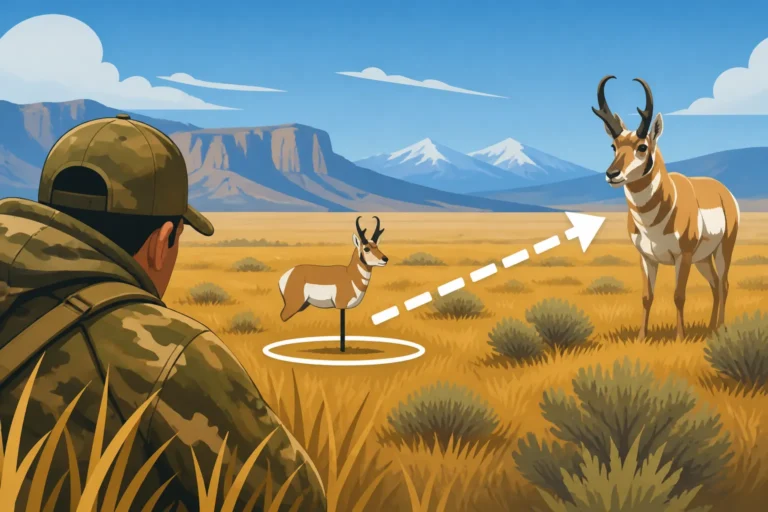
Moving within these features requires extreme patience and a keen awareness of your surroundings. You'll often find yourself moving in a serpentine fashion, following the curves of the drainage, which might not be the most direct route to your quarry. But the payoff is worth it: these natural trenches allow you to bypass hundreds of yards of open ground unseen. Always be mindful of the wind, as these channels can sometimes create swirling currents or funnel your scent directly to game if you're not careful. Consider how hunters use these features when they are Stalking Pronghorn Across Wyoming's Open Sagebrush.
Using Ridgelines and Benches
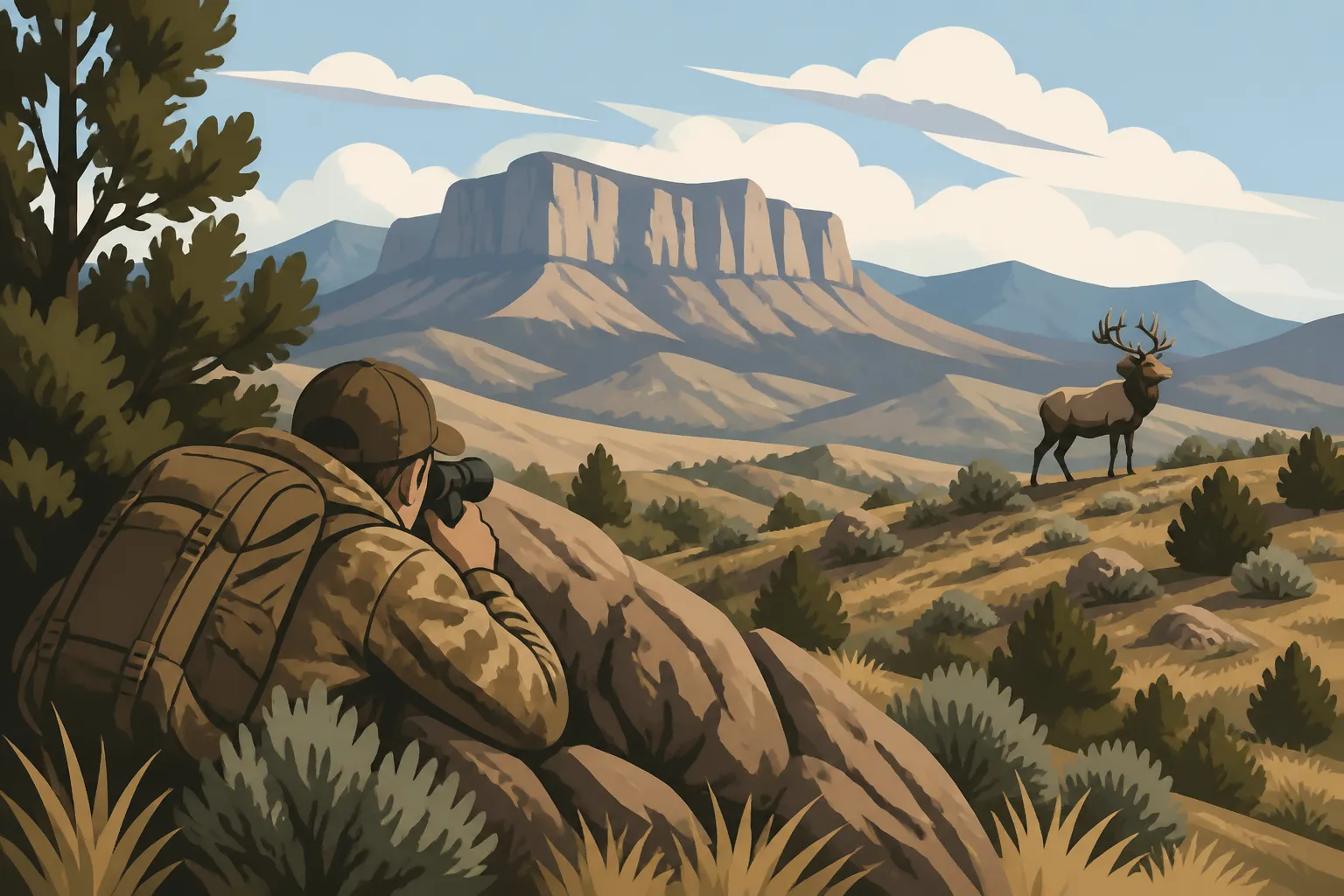
Ridgelines and benches are elevated strips of land that run along hillsides or mountain slopes, often providing natural travel corridors for game and excellent opportunities for hunters. When you're trying to gain elevation or traverse a hillside, staying just below the crest of a ridge or behind a bench is crucial. This keeps you out of sight of animals that might be on the opposite side or further down the slope. It's a constant game of "peeking and ducking," using the terrain to break your silhouette.
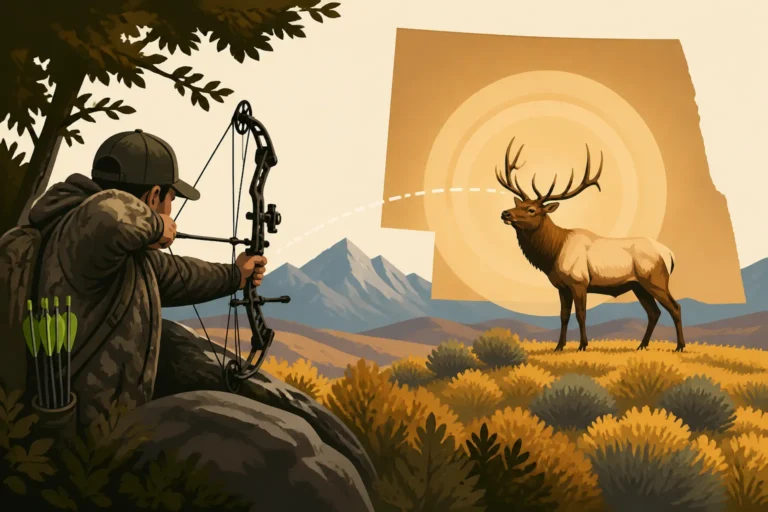
The edge of a ridgeline can also serve as a perfect observation point. By slowly cresting the ridge, staying low, and using a spotting scope or binoculars, you can scan vast areas without exposing yourself. Once you've located game, you can then retreat below the ridgeline and plan your approach using the same cover. Benches, those flatter sections on a steep slope, are particularly useful for moving laterally with less effort and more concealment than trying to traverse a sheer incline. These tactics are essential when contemplating How Close a Bowhunter Really Needs to Get.
The Art of "Skyline" Avoidance
One of the most common mistakes made by hunters in open country is skylining themselves – walking along the top of a ridge or hill, silhouetted against the sky. This immediately broadcasts your presence to every animal within miles. The basic rule of thumb for effective concealment is simple: never walk on the skyline. Instead, stay just below the crest, using the contour of the land to hide your profile.
This principle extends beyond just ridge tops. Anytime you are moving across any piece of undulating terrain, consider your backdrop. Are you walking up a slope where your head and shoulders will soon appear against the open sky? If so, adjust your route or your posture. Even a small rise can create a false skyline that exposes you. Sometimes, this means adding extra distance to your stalk, or taking a more circuitous route, but it’s always better to take more time and stay hidden than to rush and blow your chances. This awareness is paramount, especially when you are trying to minimize visibility while using Optics Power for Wyoming's Long Sightlines.
Using Natural Vegetation as Cover
Even sparse vegetation, when used correctly, can provide surprisingly effective cover in open environments. It's not about being completely invisible, but about breaking up your outline and blending into the natural patterns of the landscape. Every clump of grass, every bush, every tree can be a temporary shield if you understand how to use it.
The Low Profile of Sagebrush and Grasses
In the vast sagebrush flats and rolling grasslands of Wyoming, these seemingly small plants become critical components of your stalk. While a full-grown hunter can't simply stand behind a sagebrush plant, a low crawl or a well-timed crouch can make all the difference. The irregular shapes and muted colors of sagebrush help to break up the human form, making you look less like an animal and more like part of the landscape. It's about blending, not disappearing.
When moving through these areas, focus on utilizing the natural clumps and depressions. Move from one patch of cover to the next, always evaluating the next best spot. Remember that game animals are adept at spotting movement and unnatural shapes. Slow, deliberate movements are key. If you have to move, do it when the animal's head is down feeding, or when its attention is diverted. The more you can match the subtle undulations of the ground and the random patterns of the vegetation, the more success you'll have in closing the distance.
Aspen and Conifer Patches in Mountainous Areas
When hunting in Wyoming's mountains, you'll encounter extensive stands of aspen and conifer trees. These provide far more substantial cover than sagebrush and can be incredibly effective for still hunting or setting up ambushes. Aspen groves, with their dense, often straight trunks, create a maze-like environment where visibility is limited, allowing hunters to move stealthily. Conifer forests, such as those found in the Bridger-Teton or Shoshone National Forests, offer deep shade and thick cover, ideal for animals seeking bedding areas.
Navigating these timbered areas requires careful attention to noise. Every snapping twig, every shuffling boot, can alert game. Move slowly, lifting your feet rather than dragging them, and using soft-soled boots. Pay attention to wind direction, as thermals can shift rapidly in mountainous terrain. These timber patches are excellent for breaking line of sight, allowing you to move around animals and position yourself for a shot. They also offer great vantage points for glassing the open parks and meadows that often border them, as detailed in "Grid Glassing a Basin Without Missing Bucks."
River Bottom Willows and Cottonwoods
River and creek bottoms across Wyoming, particularly in the eastern part of the state and in the major river drainages, are often choked with dense stands of willows and towering cottonwood trees. These areas are magnets for whitetail deer, and often elk, providing food, water, and incredibly thick cover. For a hunter, these can be both a blessing and a curse. While they offer superb concealment, they can also make it very difficult to see game or get a clear shot.
The strategy here often involves slow, deliberate still hunting, moving into the wind and paying close attention to fresh tracks and rubs. You might not see an animal until it's very close, so being ready to shoot quickly is paramount. These dense thickets can also be used as a funnel, forcing animals to travel specific paths, allowing you to set up an ambush. However, be prepared for close-quarter encounters and understand that your visibility will be severely limited.
Reading the Wind and Sun for Stealth
Beyond just physical cover, understanding and utilizing environmental factors like wind and sun is crucial for a successful stalk. These elements, often overlooked by less experienced hunters, can either betray your presence or become powerful allies in your approach.
Anticipating Shifting Winds in Open Country
Wyoming is famous for its wind, and it's a factor you absolutely cannot ignore. In open sagebrush country, wind can be incredibly fickle, swirling and changing direction with subtle shifts in topography or temperature. Your scent, even if you are meticulously clean, will be carried on the wind, and if it reaches the animal's nose, your hunt is likely over. Learning to Read Wind on an Open-Country Stalk is a critical skill.
Always approach game from downwind. This sounds obvious, but executing it can be incredibly challenging. Use a wind checker – a small bottle of powder or milkweed seeds – frequently. Don't just check it once; constantly re-evaluate as you move, especially when crossing drainages, going over rises, or as the day warms up or cools down. Thermals, those rising and falling air currents, play a huge role, especially in hilly or mountainous terrain. In the morning, air typically rises, carrying your scent uphill. In the evening, air cools and falls, carrying scent downhill. Planning your stalk to align with these natural thermal shifts can give you a significant advantage.
Using Sun Angle to Your Advantage
The sun can be your friend or your enemy. Stalking with the sun directly in the animal's eyes can make it harder for them to see you, turning glare into a form of concealment. Conversely, having the sun directly at your back can cast a long, distinct shadow ahead of you, which can be easily spotted by game. Always try to keep the sun, if possible, either in the animal's face or to your side.
This also means paying attention to your shadow. As you approach, especially in the early morning or late evening, your shadow can stretch for dozens of yards. Avoid having your shadow lead your advance, as it can alert animals to your presence long before they see you. Similarly, bright, direct sunlight can highlight unnatural shapes and movements. Overcast days or periods of low light are often ideal for stalking, as they reduce shadows and make it harder for animals to pick out details.
Minimizing Shadow and Silhouette
This ties back into both skylining and sun angle. Your goal is to be as indistinct as possible. When moving, try to stay in the shadows cast by terrain features or vegetation. If you have to cross an open, sunlit area, do so quickly and efficiently, staying as low as possible. The more you can blend into the background clutter of the landscape, the less likely you are to be detected.
Consider your gear too. While blaze orange is required during rifle seasons, its bright color can be mitigated by staying in the shadows or by using it minimally for safety during the stalk, then donning full requirements once the shot is taken. For archery season where blaze orange isn't typically required, wearing camouflage that matches the predominant colors of the Wyoming landscape – tans, grays, and greens – further aids in minimizing your silhouette against the natural backdrop.
Advanced Stalking Tactics in Open Terrain
Once you understand the landscape and environmental factors, it's time to put it all together with refined stalking techniques. It's not just about moving; it's about moving smart, with purpose, and with an acute awareness of every sensory input.
The Crawl and Creep
When cover is minimal, the low crawl or creep becomes your primary mode of travel. This is where patience truly comes into play. A low crawl means getting down on your belly, using your elbows and knees to move forward, keeping your body as close to the ground as possible. This is physically demanding, especially over long distances or rough terrain, but it’s often the only way to navigate very open ground.
The creep is a slightly elevated version, moving on hands and knees, often behind a rise or through taller vegetation. Both methods require you to move slowly, deliberately, and with constant awareness of your surroundings. Stop frequently to glass, check the wind, and reassess the animal's position and demeanor. If the animal looks up, freeze completely, even if it's mid-movement. A motionless object is much harder to detect than one in motion. Many skilled hunters will tell you that the best advice for Playing Wind Direction on an Open Sagebrush Stalk involves mastering these low-profile movements.
Stop-and-Go Observation
This isn't just about moving; it's about observing. Every few steps, stop. Scan the area ahead, to the sides, and behind you. Look for movement, listen for sounds, and check the wind. This "stop-and-go" rhythm breaks up your movement pattern, making you less conspicuous, and gives you crucial time to detect any changes in the animal's behavior or location before you blunder into an unfavorable situation.
When you stop, try to do so behind a natural piece of cover – a rock, a sagebrush clump, a slight rise. Use this opportunity to quickly get into a comfortable glassing position, often lying prone, and carefully study the animal and its surroundings. Pay attention to its feeding patterns, head movements, and any signs that it might be getting nervous. This disciplined observation is crucial for successful stalking in Wyoming's expansive country. For serious e-scouting and in-field planning, many hunters utilize digital mapping tools and features offered by platforms like GoHunt, allowing them to pre-plan these observational stops against the terrain.
Paired Hunter Stalks
If you're hunting with a partner, a paired stalk can be incredibly effective, especially for mule deer or pronghorn in open country. One hunter acts as the "spotter" or "caller," remaining in an elevated position with good optics, guiding the "stalker" who is making the approach. The spotter can provide real-time updates on the animal's location, movement, and any potential obstacles or unseen game.
Alternatively, in situations where a call might be effective, like bugling for elk during the rut, one hunter can be the caller while the other moves into a shooting position. The caller can draw the animal's attention away from the stalker, creating a distraction that allows the latter to close the final distance. This coordinated effort requires excellent communication and trust between partners. Whether it's verbal communication (where legal) or hand signals, practicing this beforehand is crucial. This teamwork can greatly enhance your success, particularly when hunting specific species and using tactics like Calling Elk on Pressured Wyoming Public Land.
Tools and Technology for Planning Your Approach
In today's hunting world, traditional fieldcraft is powerfully augmented by modern technology. These tools don't replace your skills, but they enhance your ability to read the landscape and plan your movements with unprecedented precision.
Topographical Maps and Satellite Imagery
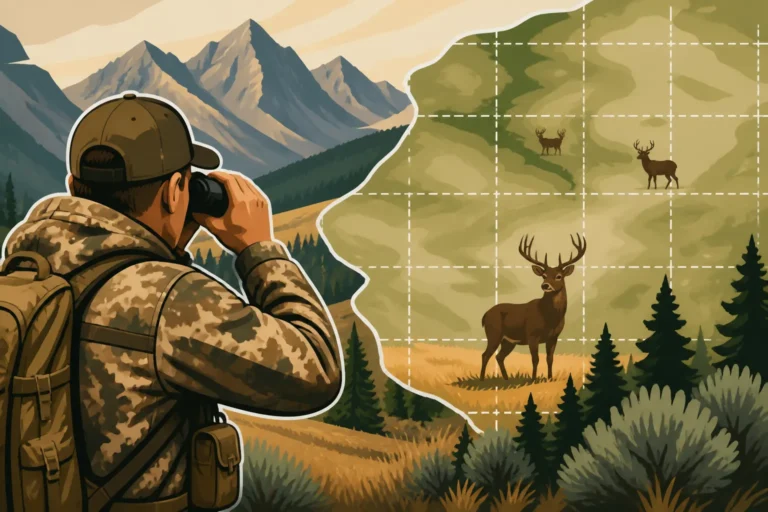
Before you even step foot in the field, topographical maps are your best friend. They reveal every contour, every drainage, every ridgeline, and every change in elevation. Studying a topo map allows you to identify potential cover, plan your route to stay out of sight, and anticipate challenges long before you encounter them. Look for hidden draws, benches, and saddles that can serve as natural pathways for your stalk.
Satellite imagery, often layered onto topographical maps in digital platforms, provides an even more detailed, real-world view. You can see vegetation types, individual trees, rock formations, and even game trails. By comparing topo lines with satellite images, you can pinpoint exactly where that dense patch of sagebrush is, or how deep that coulee truly runs. This kind of detailed E-Scouting a Unit Before the Season Opens is invaluable for planning multiple approach options.
Wind Checkers and Thermals
A simple wind checker is a non-negotiable piece of gear for any hunter attempting a stalk in open country. These small bottles filled with fine powder or milkweed seeds provide immediate, visual confirmation of wind direction. Don't rely solely on feeling the wind on your face, as subtle shifts can be missed. A visual check ensures you're always approaching downwind.
Understanding thermals goes hand-in-hand with wind checking. Thermals are predictable air currents driven by temperature changes. As mentioned before, warm air rises and cool air falls. In mountainous or hilly terrain, these thermals can be a dominant force, overriding prevailing winds. Planning your stalk to utilize these thermals – moving uphill in the morning and downhill in the evening – ensures your scent is carried away from game. While GoHunt might not have a "thermal detector," using its topo and weather overlays can help you anticipate how thermals might behave in a specific area.
Digital Mapping Apps like GoHunt
Modern digital mapping applications have revolutionized how hunters plan and execute their stalks. Apps such as GoHunt provide a wealth of information at your fingertips, combining topographical maps, satellite imagery, public/private land overlays, and even weather data. With these tools, you can mark potential bedding areas, identify optimal approach routes, and save waypoints for critical features like water sources or escape routes.
Many of these apps also allow you to create "distance rings" or measure distances precisely, which is crucial for bowhunters needing to know How Close a Bowhunter Really Needs to Get. By planning your stalk on a digital map, you can visualize the terrain in 3D, anticipate hidden dips, and identify where you might need to crawl or where you can walk upright. This foresight dramatically increases your chances of a successful, undetected approach, minimizing wasted effort and blown stalks in Wyoming's vast and often unforgiving landscapes.
| Terrain Feature | Cover Potential (1-5) | Best Use for Stalking | Primary Challenge |
|---|---|---|---|
| Sagebrush Flats | 2 | Low crawl between clumps, break silhouette | Extreme exposure, wind |
| Rolling Hills | 3 | Stay below crests, use swales for concealment | Skylining, long sightlines |
| Drainages/Coulees | 4 | Direct, concealed movement parallel to game | Swirling wind, route length |
| Ridgelines/Benches | 4 | Observation, lateral movement, stay below crest | Skylining, wind direction |
| River Bottom Thickets | 5 | Still hunting, ambush, close quarters | Limited visibility, noise |
| Aspen/Conifer Timber | 5 | Still hunting, break line of sight, noise control | Noise, dense undergrowth |
| Alpine Basins | 3 | Use rocks/boulders, thermals for approach | Extreme exposure, elevation |
Disclaimer
Hunting is an inherently risky activity. The information provided in this guide is for informational purposes only and should not be taken as legal advice. Always consult the official Wyoming Game and Fish Department regulations for the most current rules and guidelines before engaging in any hunting activities. Stay safe, be ethical, and respect the land and wildlife.