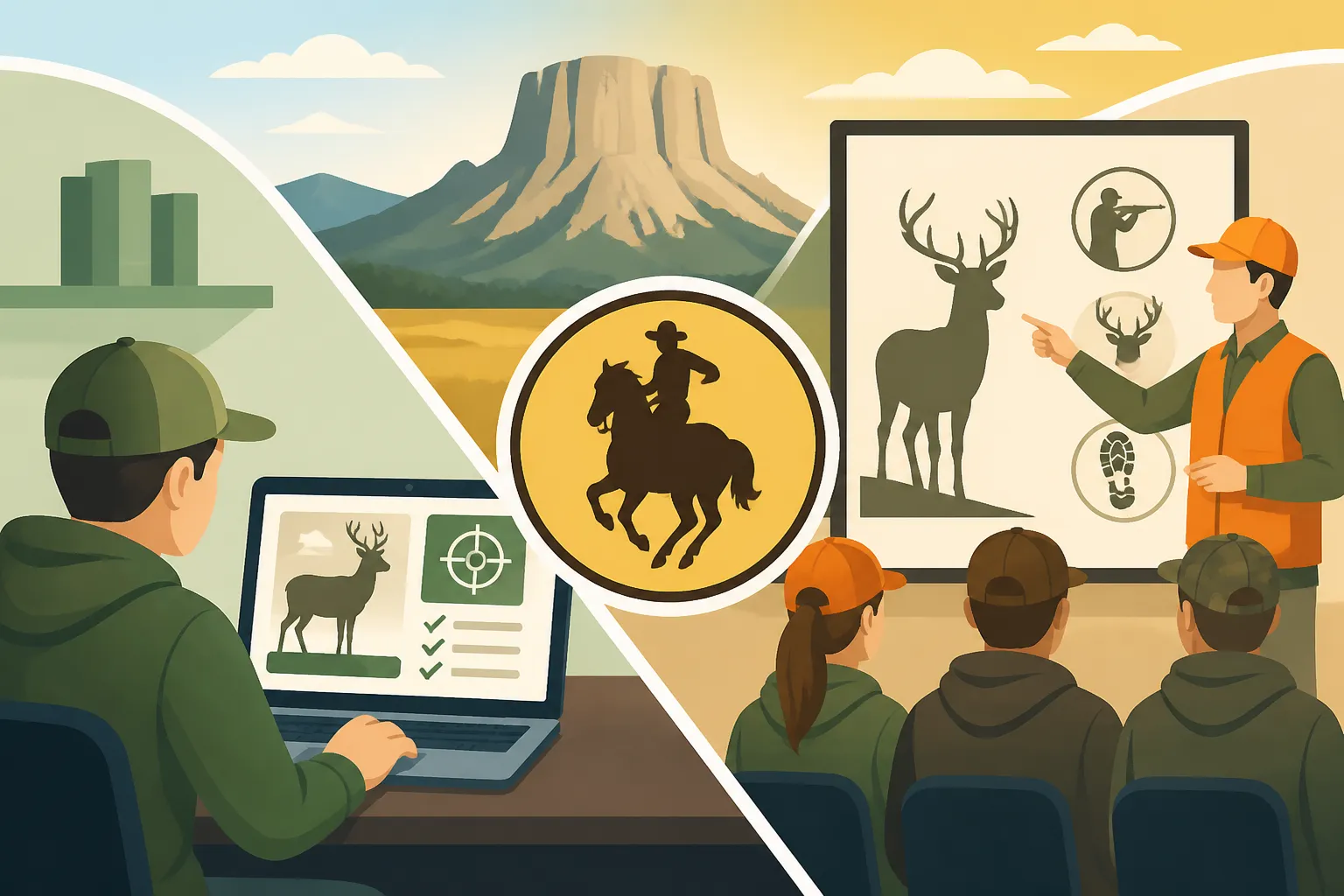
Online and Classroom Hunter Education Compared
Trying to figure out the path to becoming a certified hunter in Wyoming can feel like navigating a maze, especially with so many options and requirements thrown at you. It’s easy to get overwhelmed wondering if you should go the traditional route or embrace modern technology. This comprehensive guide is here to demystify hunter education in the Cowboy State, giving you a clear comparison of online courses versus classic classroom instruction so you can choose the best fit for your learning style and schedule.
The Absolute Necessity of Hunter Education in Wyoming
Before you even think about hitting the sagebrush or the timber, understanding Wyoming's hunter education requirements is absolutely crucial. This isn't just about ticking a box; it's about ensuring safety, promoting ethical practices, and preserving our hunting heritage for future generations. Ignoring these requirements can lead to serious legal trouble and, more importantly, put yourself and others at risk.
Legal Requirements for Hunters
First things first: who actually needs hunter education in Wyoming? The rule of thumb that catches most folks is simple: if you were born on or after January 1, 1966, you must complete an approved hunter education course before you can purchase a hunting license in Wyoming. This is a non-negotiable legal requirement. There's a lot of talk about the specific cutoff date, but it essentially means anyone younger than about 58 years old today falls under this mandate. It’s important to clarify Who Wyoming's 1966 Cutoff Actually Covers to make sure you're compliant. Even if you're a seasoned hunter from another state, unless you can prove prior certification or were born before that date, you'll need to get certified here. It's the state's way of ensuring everyone starts on the same page regarding safety and regulations specific to Wyoming's unique environment.
Beyond the Basics: Safety and Ethics
Hunter education goes far beyond just proving you can handle a firearm safely, although that's a huge part of it. These courses delve deep into the ethics of hunting, teaching you about fair chase, responsible game recovery, and respecting private land. You'll learn about wildlife identification, game laws, and even basic survival and first aid – all invaluable skills whether you're chasing mule deer in the high country or antelope across the plains. It instills a sense of responsibility toward the animals we pursue and the landscapes we traverse. This foundation ensures that every hunter contributes to a positive public image of hunting, which is increasingly important in our modern world. It helps foster a community of responsible outdoorsmen and women who uphold the highest standards in the field.
Embracing the Flexibility of Online Hunter Education
For many busy individuals, the thought of carving out multiple evenings or a full weekend for a traditional classroom course can be a major hurdle. That’s where online hunter education really shines, offering a convenient and accessible alternative that fits into almost any schedule. It’s been a game-changer for countless aspiring hunters, especially those with demanding jobs or family commitments.
Accessibility and Flexibility
One of the biggest advantages of online hunter education is the sheer accessibility. You can complete the coursework from your living room, a coffee shop, or even during your lunch break at work. As long as you have an internet connection and a device, you're good to go. This self-paced format allows you to tackle modules when it’s convenient for you, rather than being tied to a rigid schedule. For folks with irregular work hours, or parents juggling kids' activities, this flexibility is invaluable. You can take breaks as needed, review difficult sections multiple times, and truly absorb the material without feeling rushed. Some platforms, like those recommended by GoHunt, are designed with user-friendly interfaces that make navigating the course a breeze, focusing on interactive elements rather than just endless pages of text. This adaptability is key for modern learners.
Course Content and Structure
Don't let the "online" part fool you into thinking the content is watered down. Wyoming's approved online hunter education courses are comprehensive, covering all the same critical topics as their classroom counterparts. You’ll learn about firearm safety, archery equipment basics, wildlife conservation principles, proper field dressing techniques, and Wyoming-specific hunting regulations. The material is often presented through engaging videos, interactive quizzes, and simulations that reinforce learning. While the exact time commitment can vary based on individual learning speed, generally, How Long the Online Hunter Education Course Takes is comparable to the classroom version, usually around 8-12 hours of dedicated study, not including the mandatory field day. The goal is to ensure you possess the knowledge and understanding required to be a safe and ethical hunter, regardless of the delivery method.
Field Day Requirement
Here's an important distinction: even if you complete the academic portion of your hunter education online, Wyoming still requires a mandatory field day. This isn't just an optional add-on; it's a critical component that brings the online learning into the real world. During a field day, certified instructors provide hands-on training that simply can't be replicated on a screen. You'll participate in live-fire exercises, learn safe gun handling practices, demonstrate your ability to identify common Wyoming game species, and practice various hunting scenarios. It's where you get to apply the theoretical knowledge, ask direct questions, and receive personalized feedback. The field day is typically 4-6 hours long and focuses heavily on practical safety skills. So, while the initial course is flexible, you'll still need to schedule a specific date and time for this essential in-person component. Make sure you understand Does Hunter Education Include a Field Day? before you commit to an online course.
The Traditional Classroom Hunter Education Experience
For many, there's something to be said for the traditional learning environment. Classroom hunter education, with its face-to-face interaction and structured setting, remains a popular and highly effective way to learn the ropes of responsible hunting. It offers a unique dynamic that some learners simply prefer.
Instructor-Led Learning
In a classroom setting, you're guided by a certified instructor who is often a seasoned hunter themselves, bringing a wealth of real-world experience and stories to the table. These instructors can clarify complex regulations, answer questions on the spot, and share personal anecdotes that help illustrate ethical dilemmas or safety best practices. This direct interaction creates an engaging learning environment where you can participate in discussions, ask follow-up questions, and benefit from the collective wisdom of the group. The instructor's ability to gauge the class's understanding and adapt their teaching style can be incredibly beneficial, ensuring that no one is left behind. This direct mentorship, even in a group setting, is something you won't get from a computer screen.
Hands-On Practical Skills
One of the greatest strengths of a traditional classroom course is the immediate access to hands-on practical skills training. While online courses explain firearm components, in a classroom, you'll likely have dummy firearms or actual unloaded weapons (under strict supervision) to practice safe handling, loading, unloading, and carrying techniques. You might walk through simulated hunting scenarios, practice responsible shot placement, or learn how to properly care for and transport game. These practical exercises build muscle memory and confidence, which are absolutely vital in the field. Instructors can observe your technique and correct any unsafe habits immediately, which is invaluable for developing good habits from the start.
Community and Peer Interaction
Beyond the curriculum, classroom hunter education offers a unique opportunity for community building. You'll be in a room with other aspiring hunters, sharing the same journey. This can lead to discussions, friendships, and even future hunting partners. For newcomers to Wyoming, it’s a great way to connect with local hunters and learn about local hunting opportunities or specific challenges in different regions. This peer interaction can make the learning process more enjoyable and less isolating, especially for younger participants. The shared experience can be incredibly motivating and provide a support network as you embark on your hunting adventures. Even seasoned hunters who might be taking a refresher course appreciate the camaraderie and shared passion for the outdoors.
Key Differences and Similarities in Hunter Education
While both online and classroom hunter education lead to the same certification in Wyoming, their approaches to getting you there are quite distinct. Understanding these differences and recognizing their similarities will help you make an informed choice that suits your individual needs.
Pacing and Time Commitment
The most obvious difference lies in the pacing. Online courses offer unparalleled flexibility, allowing you to move through the material at your own speed. If you need more time on firearm safety or wildlife identification, you can pause, review, and re-watch sections. This self-direction can be a huge benefit for those who learn best independently or have unpredictable schedules. However, this also requires a high degree of self-discipline. It’s easy to procrastinate or get sidetracked.
In contrast, classroom courses adhere to a fixed schedule. You show up at a specific time, on specific days, and progress with the rest of the class. This structured environment can be excellent for learners who thrive on routine and accountability. The time commitment is predefined, usually spread over several evenings or a full weekend. While you can't pause an instructor mid-sentence, the consistent flow ensures steady progress. Both formats, however, ultimately demand a similar overall time investment when you factor in the online modules plus the mandatory field day, or the comprehensive classroom hours. The key difference is how that time is distributed.
Learning Environment and Engagement
The learning environment also provides a stark contrast. Online courses typically rely on multimedia content, quizzes, and digital simulations. While many modern platforms are highly interactive, like those often featured on GoHunt, they still require you to be a proactive learner, actively engaging with the material through a screen. You might miss the subtle cues of an instructor, or the dynamic questions that arise naturally in a group discussion.
Classroom settings, on the other hand, offer direct, in-person engagement. You can physically handle equipment, observe demonstrations, and participate in role-playing scenarios. The presence of an instructor and peers creates a more dynamic and responsive environment. Questions can be answered immediately, and discussions can deepen understanding in real-time. For visual learners or those who benefit from hands-on practice and social interaction, the classroom environment can be significantly more effective. However, it also means less anonymity and less control over the pace, which might not suit everyone.
Certification Process Nuances
Regardless of whether you choose online or classroom instruction, the end goal is the same: receiving your Wyoming Hunter Education Certificate. Both pathways culminate in a final exam, and for online participants, a mandatory field day. Once you successfully pass both, you'll be issued a permanent hunter education card. It's crucial to understand that without this certification, you cannot legally hunt big game in Wyoming if you fall under the 1966 birth year cutoff.
When it comes to getting your physical proof, the process is pretty streamlined either way. After completing an approved online course and field day, or a full classroom course, your information is typically submitted to the Wyoming Game and Fish Department. You might receive a temporary certificate, but a permanent card will eventually be mailed to you. Remember, Proving Your Hunter Education Out in the Field is vital, so always carry your card or a valid equivalent. The main nuance here is that the online route always has that separate field day booking, whereas the classroom course integrates all the practical elements directly into the scheduled sessions.
| Feature | Online Hunter Education | Traditional Classroom Hunter Education |
|---|---|---|
| Pacing | Self-paced, flexible | Fixed schedule, instructor-led pace |
| Location | Anywhere with internet access | Designated classroom location |
| Interaction | Digital, quizzes, simulations | Direct instructor & peer interaction |
| Hands-On | Requires separate mandatory field day | Integrated practical exercises |
| Community | Minimal, primarily individual | Strong, group discussions, peer bonding |
| Accountability | Self-discipline required | External, set schedule and instructor |
| Time Commitment | Flexible study hours + ~4-6 hr field day | Fixed multi-day/weekend sessions (typically 10-16 hours total) |
| Certification | Approved course + mandatory field day exam | Integrated course completion + exam |
Choosing the Right Path for You
Deciding between online and classroom hunter education isn't a one-size-fits-all situation. Your personal learning style, schedule, and even your age can significantly influence which option will be most effective and enjoyable for you. It’s about setting yourself up for success, not just meeting a requirement.
Assessing Your Learning Style
Consider how you learn best. Are you someone who thrives in a quiet, independent setting, absorbing information through reading, videos, and interactive quizzes at your own speed? If so, an online course might be your ideal fit. The ability to revisit complex topics without holding up a class can be a huge advantage. You might even find specific online resources, perhaps through platforms like GoHunt, that offer additional study materials or insights that complement your learning.
However, if you learn best through direct instruction, hands-on practice, and lively discussion, the traditional classroom setting is likely a better choice. Some people benefit greatly from being able to ask questions in real-time and have an instructor demonstrate proper techniques. The structure and accountability of a set class schedule can also be a strong motivator for those who struggle with self-paced learning. Think back to your school days or any other learning experience: what worked best for you?
Balancing Convenience with Depth
The convenience of online learning is undeniable. Being able to complete much of the coursework whenever you have a free moment, without commuting, is a huge draw for many. It truly respects your busy lifestyle. However, it’s vital to remember that convenience doesn't negate the need for depth. While the online material is comprehensive, the hands-on experience of a field day or a full classroom course provides a critical layer of practical application and safety training that simply cannot be learned solely from a screen.
For instance, learning about firearm stance and grip from a video is one thing, but actually holding an unloaded rifle and receiving immediate feedback from an instructor at a field day, or throughout a classroom course, is an entirely different and superior learning experience. It’s about finding the balance between fitting the education into your life and ensuring you gain the robust, practical knowledge needed to be a safe and responsible hunter in Wyoming's challenging terrain.
Considerations for Youth Hunters
For younger aspiring hunters, the decision often weighs more heavily toward the classroom. While children can technically take the online course, the structured environment, direct interaction with instructors, and peer engagement of a classroom often prove more beneficial for them. Younger learners, especially those under the age of 12, might find it challenging to stay engaged with online material for extended periods and may not fully grasp the gravity of safety concepts without direct supervision and demonstration.
Furthermore, Wyoming has specific Youth Hunter Education Requirements Before Age Twelve, often emphasizing direct supervision. A classroom course helps build a foundational understanding of responsibility and ethics that is critical for young hunters. It also allows parents or mentors to engage alongside them, creating a shared learning experience. For older teenagers, the online option combined with a field day can work well, offering a taste of independent study while still providing essential hands-on training. Regardless of the chosen path, involving a mentor, perhaps even an adult who has completed a Mentor Requirements: Eighteen, Certified and Licensed course, throughout the process can significantly enhance a youth's learning experience.
What Happens After You Get Certified
Okay, so you've put in the time, studied hard, passed your exams and field day, and now you have that coveted hunter education card. Congratulations! But what comes next? Certification is just the beginning of your journey as a responsible hunter in Wyoming. There are a few more things to know to ensure you're fully prepared for your adventures.
Carrying Proof in the Field
Having your hunter education card isn't enough; you need to have it with you whenever you're out hunting in Wyoming if you fall under the mandatory requirement. Think of it like your driver's license – you wouldn't drive without it. Game wardens can and will ask for proof of certification. Whether it's the physical card, a digital copy on your phone (check current regulations for what's acceptable, as physical is always safest), or another form of verifiable proof, make sure it's accessible. Losing your card can be a hassle, but replacing it is possible. You'll need to contact the Wyoming Game and Fish Department to inquire about Replacing a Hunter Education Card You Lost. Don't let a missing card ruin your hunt or lead to an unnecessary citation. Always make a copy and keep it somewhere safe at home, and perhaps even a clear photo on your phone.
Furthering Your Hunting Education
Your hunter education certificate is a baseline, a testament to your understanding of fundamental safety and ethical practices. But the learning doesn't stop there. Hunting, especially in a diverse and challenging state like Wyoming, is a continuous journey of education. Consider taking advanced courses in specific areas, such as bowhunting safety if you plan to pursue game with archery equipment, or a more in-depth first aid and wilderness survival course. Many organizations offer specialized workshops on topics like tracking, calling, field dressing, or even advanced mapping and e-scouting techniques using tools like those found on GoHunt.
Continuously educating yourself about Wyoming's Elk Herd Units and Winter Range, the nuances of big game behavior, or the ever-evolving regulations will make you a more effective, ethical, and successful hunter. Reading up on topics like Calling Elk on Pressured Wyoming Public Land or understanding Reading Wind on an Open-Country Stalk can give you a significant edge. The wild teaches us something new every time we step into it, and a truly responsible hunter embraces that lifelong learning process.
Disclaimer
This guide is intended for informational purposes only and does not constitute legal advice. While we strive to provide accurate and up-to-date information, hunting regulations in Wyoming can change. Always consult the official Wyoming Game and Fish Department regulations for the current year before planning any hunting activities.