Whether Lighted Nocks Are Legal for Bowhunters
The moment an arrow leaves your bowstring, there’s a swirl of emotions – the adrenaline, the focus, and then the immediate question: where did it go? For bowhunters, especially in a vast, rugged state like Wyoming, losing sight of an arrow can be incredibly frustrating, leaving you second-guessing shot placement and wondering about recovery efforts. It’s natural to seek every advantage, and modern gear often presents innovative solutions. This guide will clarify Wyoming's regulations on lighted nocks for bowhunters, ensuring you step into the field with confidence and compliance.
The Core Question: Are Lighted Nocks Legal in Wyoming?
It's a question that pops up in hunting forums and campfire discussions all the time: "Can I use lighted nocks in Wyoming?" The concern is valid, as many states have specific, sometimes archaic, rules about what constitutes a legal archery setup. You don't want to invest in new gear only to find it's prohibited, or worse, inadvertently violate a regulation in the heat of the moment during your hunt. Let's peel back the layers and get to the definitive answer.
Understanding Wyoming's General Archery Regulations
Before we zero in on lighted nocks, it's helpful to understand the general framework of Wyoming's archery regulations. The Wyoming Game and Fish Department (WGFD) is pretty clear about the equipment allowed for bowhunting big game. They specify minimum draw weights, broadhead requirements, and even what types of bows are considered legal. For instance, you’ll find explicit rules about Wyoming Sets Bow Draw Weight at 40 Pounds, 50 for Elk, ensuring your setup has enough kinetic energy to humanely harvest an animal. There are also specific rules about Wyoming's 40-Pound Minimum for Deer, Antelope and Sheep and The 50-Pound Bows Elk and Moose Require, outlining the power needed for different species. This meticulous approach to regulation often leads hunters to assume that anything not explicitly mentioned or "traditional" might be illegal. It’s a natural assumption given the complexity of hunting laws across different jurisdictions.
Many hunters, especially those new to Western states, come with experiences from areas where electronics on bows are heavily restricted or outright banned. They’ve heard stories of hunters getting into trouble for using illuminated reticles or rangefinding pins in certain seasons. This creates a cautious mindset, and rightly so. The last thing you want is for a hard-earned tag, especially a coveted Wyoming one, to be jeopardized by a misunderstanding of the rules. Luckily, when it comes to lighted nocks, Wyoming takes a fairly progressive stance that prioritizes ethical recovery.
The Specifics of Lighted Nocks in Wyoming
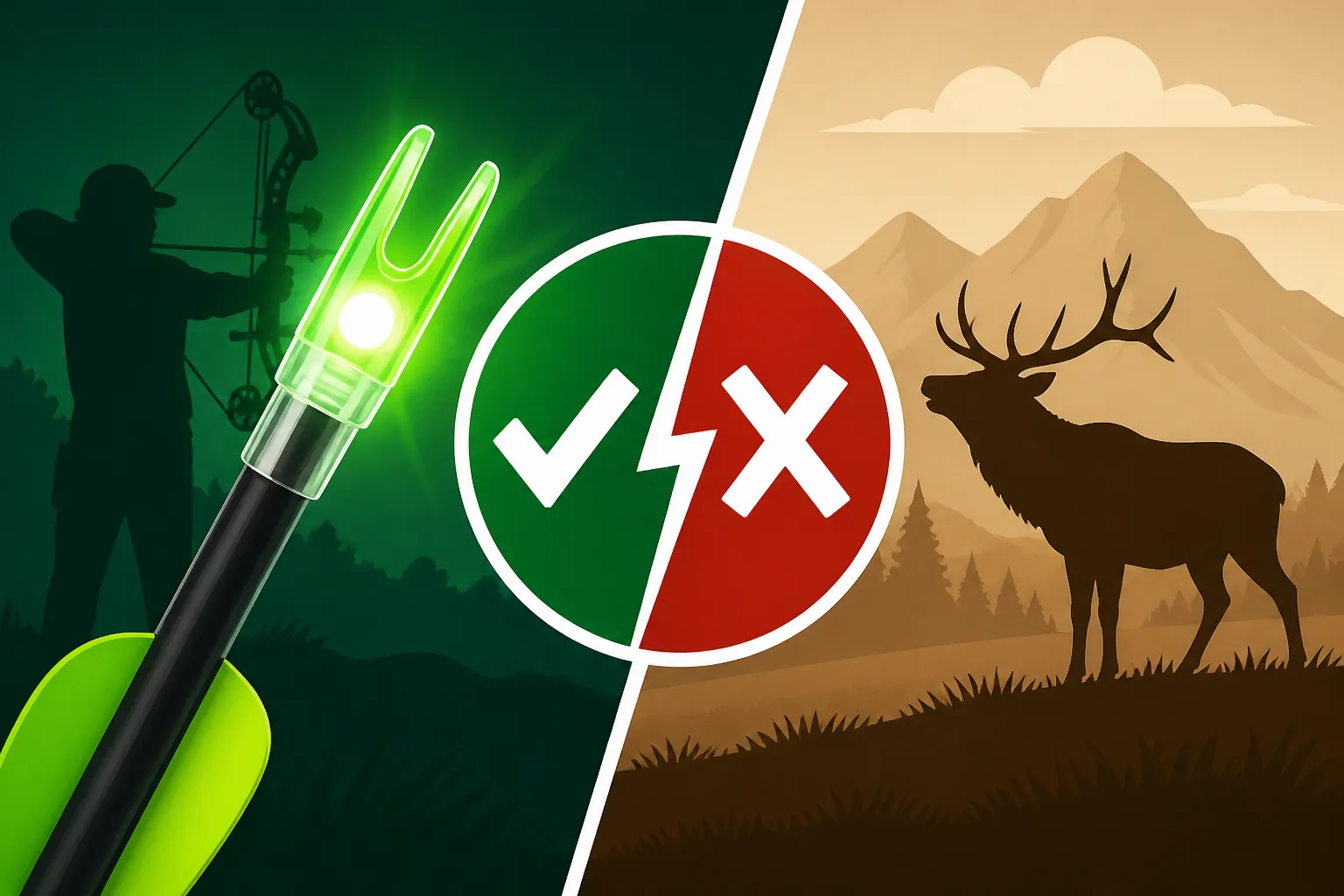
Here's the good news: Yes, lighted nocks are absolutely legal for bowhunting in Wyoming. The Wyoming Game and Fish Department permits the use of illuminated nocks as an aid for arrow recovery and tracking. Their regulations are focused on ensuring fair chase and humane harvesting, and lighted nocks, when used properly, contribute positively to both. They are not considered an electronic device that assists in locating game, but rather a simple illumination device attached to the arrow itself. This distinction is crucial.
The WGFD's regulations specify what is not allowed, and lighted nocks do not fall into any of those prohibited categories. You won't find them on a list of illegal equipment, unlike, for example, certain electronic calls for big game or specific types of broadheads that fail to meet minimum cutting diameter standards. This clarity provides a huge relief for bowhunters who want to leverage modern technology to increase their chances of a quick, clean recovery. When you're spending countless hours scouting, practicing, and finally drawing a tag, having every tool at your disposal that aids in ethical hunting is paramount. Tools like GoHunt's research platform can help you dive into specific unit regulations, but for general gear legality, the WGFD rules are generally straightforward.
Why Lighted Nocks Are a Game Changer for Bowhunters
For those who haven't tried them, lighted nocks might seem like a gadget, but veteran bowhunters often consider them an indispensable part of their setup. The benefits they offer, particularly in challenging hunting conditions, can be the difference between a successful recovery and a lost animal. It's not just about finding your arrow; it's about making more informed decisions immediately after the shot.
Enhancing Arrow Recovery and Tracking
Imagine this scenario: you've just made a perfect shot on a mule deer buck right at last light. The buck bounds away into the deep shadows of a ravine. Without a lighted nock, finding your arrow in that low light would be a painstaking, often fruitless, task. You’d be on your hands and knees, headlamp sweeping the ground, meticulously searching for any sign of a blood trail or the arrow itself. This can consume valuable time and energy, and in cold temperatures, a blood trail can quickly become difficult to follow.
With a lighted nock, that arrow becomes a beacon. As it flies, you see the trajectory, and if it passes through the animal, you often see it stick in the ground or a bush, glowing brightly. This instant visual feedback not only helps you pinpoint the impact area but also tells you exactly where the arrow ended up. If the shot was a pass-through, finding that arrow with its tell-tale light means you can immediately assess the blood on the shaft, providing critical information about the hit. Even if you don't find the arrow immediately, the bright light can often be spotted from a distance, guiding you to the general area where the animal was last seen or where the blood trail begins. This can save hours of agonizing searching and drastically improve the chances of recovering your hard-earned game, making the most of your investment into resources like GoHunt to find that elusive buck.
Confirming Shot Placement and Animal Reaction
One of the most nerve-wracking moments in bowhunting is the immediate aftermath of the shot. Did I hit where I was aiming? Was it a good shot? The answer to these questions dictates your next move, particularly how long you should wait before tracking. A lighted nock provides immediate, undeniable feedback. As the arrow penetrates, the glowing nock often allows you to see the exact point of impact on the animal. A nock disappearing into the vitals is a clear indicator of a good hit, giving you peace of mind. If it hits too far back or too far forward, you know immediately, allowing you to mentally prepare for a longer track or a different recovery strategy.
This visual confirmation also helps you observe the animal's reaction more clearly. A bright flash on the hide, followed by a quick exit, provides invaluable information for interpreting the shot. Knowing if it was a liver shot, a gut shot, or a clean pass-through through the lungs directly impacts your tracking strategy. For instance, a solid lung shot means you can often begin tracking within 30-60 minutes, while a gut shot demands a much longer wait, sometimes 6-8 hours or even overnight, to allow the animal to expire. Without this immediate visual aid, you might misinterpret the animal's reaction, leading to premature tracking and potentially pushing a wounded animal further, complicating recovery significantly.
Choosing the Right Lighted Nock for Your Hunt
With the legality confirmed and the benefits clear, the next step is selecting the right lighted nock for your specific needs. Not all lighted nocks are created equal, and a little bit of research and testing can go a long way in ensuring they perform when it counts.
Key Features to Look For in a Lighted Nock
When you’re looking at lighted nocks, there are a few features that really stand out. First and foremost, brightness is key. You want a nock that emits a powerful, consistent light visible in low light, dense cover, and even from a distance. Different brands offer varying levels of brightness, and often, the color of the light (green, red, or sometimes blue) can affect visibility in different environments. Many hunters find green to be particularly easy to spot against foliage.
Battery life is another critical factor. You don't want your nock dying on you mid-hunt or, worse, after the shot. Look for nocks with advertised long battery life, and consider carrying spare batteries if they're replaceable. Some nocks are designed for easy battery swaps in the field, which can be a real lifesaver. Next, consider the activation type. Some lighted nocks are string-activated, meaning they turn on automatically when the arrow is shot. Others are push-button activated, requiring you to manually turn them on before shooting. The string-activated versions are generally preferred by hunters for their simplicity and reliability in high-pressure situations.
Finally, durability and fit are paramount. Your nock needs to withstand the forces of being shot from a powerful bow, as well as potential impacts with obstacles or the ground. Ensure the nocks you choose are specifically designed to fit your arrow shaft diameter perfectly. A loose-fitting nock can affect arrow flight, and a poor-quality one could fail when you need it most. Popular brands like Nockturnal and Lumenok offer various options to match different arrow sizes and hunter preferences.
Maintaining and Practicing with Lighted Nocks
Just like any other piece of your hunting gear, lighted nocks require a bit of care and practice to ensure optimal performance. For nocks with replaceable batteries, always check them before a hunt and carry spares. Consider performing a quick function check before each outing by activating them and ensuring they light up consistently. Waterproofing is also a significant consideration, especially in Wyoming's unpredictable weather. Many quality lighted nocks are designed to be water-resistant, but it's always wise to store your arrows in a way that protects the nocks from excessive moisture.
Beyond maintenance, practice is crucial. While lighted nocks typically add only a small amount of weight to the rear of your arrow, this can subtly affect your arrow's flight characteristics and FOC (Front of Center). It's essential to shoot practice arrows equipped with your chosen lighted nocks to verify that your bow is still sighted in accurately and that your arrow flight remains consistent. This is not a piece of gear you want to "test out" on a live animal. Shooting at various distances, just as you would with your regular hunting arrows, will build confidence in your setup. Remember, your ultimate goal is a humane kill, and proper tuning and practice contribute significantly to that outcome.
Ethical Considerations and Best Practices
While lighted nocks offer undeniable advantages, it's important to approach their use with an ethical mindset. They are an aid, not a crutch. They enhance your ability to recover game, but they don't compensate for poor shot placement or a lack of hunting skill. Always strive to make the most ethical shot possible within your effective range. A lighted nock will show you exactly where your arrow went, but it won't fix a bad shot.
It’s also crucial to remember that while lighted nocks are permitted, other electronic devices used to locate game are generally not. This means no rangefinding binoculars or scopes that transmit data to your bow, and definitely no electronic calls for big game in Wyoming. The spirit of fair chase is still paramount. Use your lighted nock to help confirm a hit and aid in recovery, not as a tool to push the boundaries of your ethical hunting practices. When you're using excellent scouting resources like GoHunt to pinpoint game, the last thing you want to do is undermine your efforts with unethical gear use.
Broader Wyoming Archery Rules and Gear
Lighted nocks are just one component of a successful and legal archery setup in Wyoming. To ensure a compliant and effective hunt, it’s important to understand the broader context of the state's archery regulations, touching on everything from your bow to when you can legally hunt.
Essential Archery Equipment Beyond Nocks
Beyond your illuminated nocks, Wyoming has specific rules for other critical pieces of archery equipment. For instance, the regulations clearly outline what constitutes a legal bow for big game. Whether you prefer a Recurve, Longbow or Compound for Western Elk, each type must meet certain draw weight minimums. As we mentioned earlier, these minimums are designed to ensure sufficient kinetic energy for a quick, ethical kill. For most big game, the minimum is 40 pounds, but for larger animals like elk and moose, it jumps to 50 pounds. It's vital to check your bow's draw weight to ensure it meets these requirements.
Then there are broadheads – arguably the most important part of your arrow. Wyoming has stringent rules for broadheads. They must have at least two cutting edges, and fixed-blade broadheads must have a minimum cutting width of 7/8 inches. Expandable (mechanical) broadheads are also legal, provided they meet the same 7/8-inch cutting width when fully expanded. These regulations are in place to ensure proper wound channels that lead to quick, humane kills. You can read up on The Minimum Cutting Width a Broadhead Must Make, How the Seven-Eighths Inch Ring Test Works, and even get more details on Are Expandable Broadheads Legal in Wyoming? to make sure your broadheads are compliant. Another common question revolves around Are Release Aids Allowed for Archery Hunting?, and the answer is yes, they are perfectly legal and widely used by compound bowhunters to enhance accuracy and consistency.
Understanding Legal Shooting Hours
While lighted nocks are fantastic for visibility, they don't extend your hunting hours. In Wyoming, big game can only be hunted during specific Wyoming Legal Shooting Hours for Big Game, which are generally defined as 30 minutes before sunrise to 30 minutes after sunset. This means that while your lighted nock will help you track an arrow shot at dusk, you cannot legally shoot an animal after that 30-minute post-sunset window, even if you can still see it with your nock.
It’s easy to get caught up in the excitement, but adhering strictly to these legal hours is non-negotiable. Knowing these times precisely, especially when chasing nocturnal or crepuscular animals like deer and elk, is crucial. You can find official sunrise and sunset tables for your specific hunting area, and many hunting apps (including GoHunt's mapping features) integrate these times directly. Using your lighted nock to aid in recovery within these legal windows is the intent of the regulation, not to enable hunting outside of them.
Lighted Nock Comparison
Here's a quick look at some general features you might find across different lighted nock options, keeping in mind that specific brands and models will vary. This table helps summarize what to consider when making your choice.
| Feature | Description | Considerations for Hunters |
|---|---|---|
| Activation Type | String-activated (auto-on) vs. Manual (push-button) | Auto-on is favored for reliability; manual allows pre-testing but adds a step. |
| Brightness | Measured in lumens (though not always stated); intensity of illumination. | Brighter is generally better for visibility in challenging conditions. |
| Color Options | Green, Red, Blue, etc. | Green is often considered most visible in various environments. |
| Battery Life | Duration nock remains lit (hours); often stated as "up to X hours". | Longer life reduces need for spares/replacement; essential for multi-day hunts. |
| Durability | Resistance to impact, moisture, and temperature fluctuations. | Crucial for reliability in rugged Wyoming conditions. |
| Arrow Fit | Specific diameters (e.g., .204, .244, .246, .245) or adjustable sleeves. | Must match your arrow shaft exactly to ensure proper flight and retention. |
| Weight | Typically a few grains heavier than standard nocks. | Minimal impact on FOC and arrow flight, but practice is still recommended. |
| Reusability | Some nocks are designed for single-shot, others are multi-use with new batteries. | Consider cost-effectiveness and environmental impact if you shoot a lot. |
Disclaimer
Please remember that hunting regulations can change. While this guide is based on the most current information available, it is always your responsibility to consult the official Wyoming Game and Fish Department regulations directly before heading into the field. State laws are the final word, and staying informed ensures a legal and enjoyable hunting experience.