Wyoming Spotlighting Rules for Hunting Predators
It can be incredibly frustrating trying to figure out the exact rules for night hunting in Wyoming, especially when it comes to using lights. There's a lot of hearsay and confusion out there, and you don't want to accidentally break the law when you're just trying to manage some coyotes or other nuisance animals. This guide is here to cut through that noise, laying out the precise regulations for spotlighting predators so you can hunt confidently and legally.
Understanding Wyoming's Definition of Spotlighting and Its General Prohibition
Before we dive into what you can do, it’s crucial to understand what Wyoming generally prohibits. The state has pretty clear guidelines about hunting with artificial light, and for good reason. The main goal is to ensure fair chase and prevent unethical practices that could give hunters an unfair advantage over big game animals. This is where the term "spotlighting" really comes into play, referring to the use of artificial light to locate, identify, or shoot a wild animal.
What Constitutes a "Lighted Device" in the Field?
When the Wyoming Game and Fish Department talks about "lighted devices," they're not just talking about those massive truck-mounted spotlights you might see in old movies. This definition is broad and covers almost any source of artificial illumination that aids in hunting. Think about it: a small handheld flashlight, your vehicle's headlights, a powerful headlamp, or even a sophisticated weapon-mounted light are all considered lighted devices under the law. The intent behind the light's use is what often matters most when it comes to enforcement. If you're using it to specifically target an animal for harvest, it generally falls under the spotlighting rules.
It's a nuanced area, for sure. You might legitimately use a flashlight to walk to your stand in the dark, or to field dress an animal after legal shooting hours, and that's perfectly fine. But if that same flashlight is used to locate a deer, blind it, and then shoot it, that's where you cross the line into illegal spotlighting. The distinction hinges on how the light is being employed in relation to the act of hunting. For instance, when it comes to big game, using any artificial light for hunting is a hard no. This is explicitly laid out in the regulations to protect species like elk, deer, and antelope from being easily targeted under cover of darkness.
The Core Prohibition: Hunting Big Game with Artificial Light
The foundational rule in Wyoming, which every hunter needs to engrave in their mind, is that it is absolutely illegal to hunt big game animals with artificial light. This means no using spotlights, headlights, or any other form of illumination to find, track, or shoot deer, elk, moose, bighorn sheep, or any of the other large game species. This prohibition is in place 24/7, year-round. It doesn't matter if it's during legal shooting hours or not; if you're hunting big game, you must rely on natural light.
This rule is designed to uphold the principle of fair chase and ethical hunting. Imagine the advantage a hunter would have if they could simply drive around at night, spotlighting deer and shooting them from a vehicle. It would quickly decimate populations and turn hunting into something far removed from the respectful pursuit we value. This is why you'll find strict rules around subjects like Wyoming Legal Shooting Hours for Big Game—because fair chase and ethical hunting are paramount. Violating this particular rule carries significant penalties, including hefty fines and potential loss of hunting privileges. It's not something you want to mess around with, as the consequences can be severe and long-lasting.
Why Predators Are an Exception to the General Rule
Now, here's where things get interesting and a bit less restrictive. While big game is strictly off-limits, many predators are a different story. In Wyoming, most predators are classified differently than big game, and their management often focuses on population control, especially when they pose a threat to livestock or native wildlife populations. Because of this, the state has carved out specific exceptions that allow for the use of artificial light when hunting certain predator species. This is generally permitted because the intent is often to reduce their numbers, and nighttime is when many of these animals are most active.
This exception is a critical piece of information for anyone looking to hunt coyotes or other nuisance animals. It recognizes the ecological role these animals play and the need for tools to manage their populations effectively. However, this isn't a blanket permission for all animals. Hunters need to be absolutely sure they are targeting a species that falls under this specific exception and are not mistakenly identifying a non-game animal or, worse, a protected species. For instance, wolves, while predators, fall under different regulations, especially within The Wyoming Predator Zone Wolf Rules Explained. So, always know your target species before flicking on that light.
Specific Rules for Spotlighting Predators in Wyoming
Alright, let's get down to the nitty-gritty of what you can do. Wyoming's regulations for hunting predators with lights are designed to offer flexibility for effective management while still maintaining a level of safety and ethical conduct. It's not a free-for-all, but it does provide avenues for hunters to pursue these animals when they're most active.
Legal Hours and Conditions for Using Lights
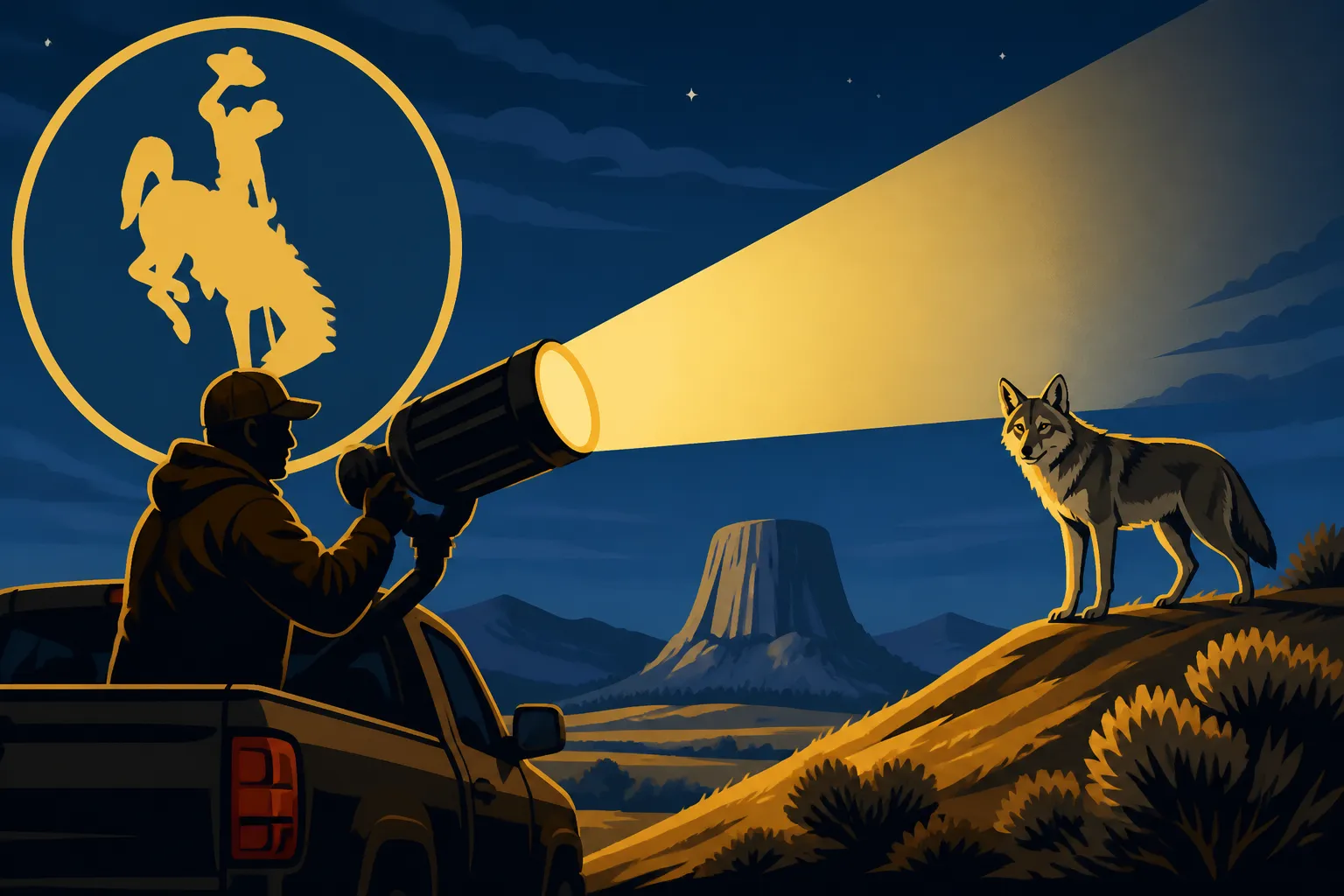
One of the biggest distinctions for predator hunting is the allowance for night hunting, which almost by definition, involves the use of artificial light. In Wyoming, you generally can use artificial light to hunt predators on private land and on public lands where it is not specifically prohibited. This means the hunt isn't restricted to daylight hours as it is for big game. This makes perfect sense, as many predator species, like coyotes and foxes, are most active during the nighttime, making them incredibly challenging to hunt during the day.
However, "legal hours" isn't a free pass for every situation. You need to verify local regulations for specific areas. While statewide regulations permit night hunting of predators, individual counties, towns, or even specific public land management areas (like certain BLM parcels or National Forests) might have their own ordinances or closures that restrict or prohibit night hunting or the use of lights. Always do your homework before you head out. A great resource for checking these things is the A Walkthrough of the Wyoming Hunt Planner, which can provide valuable insights into specific unit rules. Be sure to check with the local county sheriff's office or the land management agency (e.g., BLM, Forest Service) for the area you plan to hunt.
Which Predator Species Fall Under the Spotlighting Exception?
This is where clarity is paramount. Not all animals that act like predators are legally classified as such for the purpose of spotlighting rules. In Wyoming, the primary species that typically fall under the predator category for which night hunting with artificial light is permitted are:
- Coyotes: These are the most common target for night hunting, often done to manage their populations and protect livestock or game animals. The year-round nature of hunting them, as discussed in Hunting Coyotes in Wyoming Year Round, combined with night hunting rules, makes them a prime target.
- Red Fox: Another common small predator that can be hunted at night with lights.
- Skunk, Raccoon, Badger, Stray Domestic Cats: These are also generally included in the "predator" or "furbearer" category that can be hunted with artificial light.
- Bobcat: While often considered a furbearer with specific pelt tagging rules (see Bobcat Season and Pelt Tag Rules), they can also be hunted with lights under predator regulations.
It's absolutely critical to be able to positively identify your target. Misidentifying a protected animal in the dark could lead to severe legal trouble. For example, wolves, while predators, are designated as "trophy game animals" in specific zones and "predators" in others, with very different rules. You cannot just assume any four-legged carnivore can be spotlighted. This is where meticulous scouting and familiarity with the local wildlife are non-negotiable. Using tools like GoHunt's mapping features can help you understand the common ranges of different species and avoid areas where protected animals might be present.
Restrictions on Vehicle-Mounted Lights and Shooting from Roads
Even though you can use artificial lights for predators, there are still important restrictions regarding how you deploy those lights, especially in relation to vehicles and roads. You generally cannot shoot from, or across, any public road or highway. This rule is about public safety and preventing road hunting, which is widely considered unethical and dangerous. While you might use your vehicle's headlights to spot a coyote in a field, you cannot then shoot that animal from the vehicle or from the roadway itself. You'd need to exit the vehicle, move safely off the road, and then make your shot. This is a common theme in Western hunting, as touched upon in Hunting From a Vehicle Rules.
Furthermore, some areas might have specific rules against "shining" fields from a public roadway, even if you don't intend to shoot. This can be interpreted as harassment or scouting with illegal methods for big game, even if your stated intent is predator hunting. It's always best practice to pull completely off the road, turn off your vehicle, and use a handheld or weapon-mounted light once you're safely set up for your hunt. Always be mindful of private property boundaries, too; a light beam shining onto someone's property without permission can be just as problematic as physically trespassing. Responsible hunters always maintain respect for both the law and their neighbors.
Navigating Legal and Ethical Considerations
Hunting predators with lights, while allowed, isn't a free pass to ignore safety or ethical considerations. There's a fine line, and staying on the right side of it means understanding not just the letter of the law, but also the spirit behind it.
Distinguishing Between Predator and Non-Game Species
This is perhaps the most critical ethical and legal challenge when night hunting. In the dark, even with a bright light, animal identification can be tricky. A badger can look surprisingly like a small bear cub to an excited hunter, or a red fox might be mistaken for a coyote. But the consequences of shooting the wrong animal can be severe. Wyoming has stringent rules against the unlawful killing of game animals or protected species.
Before you ever pull the trigger at night, you must be 100% certain of your target. This means taking your time, using high-quality optics (binoculars, spotting scopes, or weapon sights designed for low light), and having a clear understanding of the animal's size, gait, and behavior. If there's any doubt, don't shoot. It's that simple. This is why resources like GoHunt maps are invaluable for understanding the geographic distribution of different species in your chosen hunting unit, helping you anticipate what you might encounter. Always remember that conservation and responsible hunting rely on accurate identification.
The Importance of Public vs. Private Land Rules
While Wyoming broadly allows night hunting of predators, the specific landowner context is paramount. On private land, you must always have explicit permission from the landowner to hunt, whether day or night, with or without lights. If you don't have permission, you're trespassing, and that's a serious offense. This includes projecting a light beam onto private property or shooting across private property lines.
On public land, the rules can be more complex. As mentioned earlier, while statewide regulations might permit it, individual land management agencies (like the Bureau of Land Management or the U.S. Forest Service) or local counties can have their own specific rules or seasonal restrictions for night hunting or spotlighting. Some areas might have seasonal closures to protect wintering wildlife or for safety reasons. Always check with the local office of the relevant land management agency before heading out. Online resources and maps provided by GoHunt can help you identify public land boundaries and sometimes link to specific area regulations, but a direct call to the land manager is always the safest bet. Just because it's public land doesn't mean all activities are allowed at all times.
Potential Penalties for Violations
Ignoring or misunderstanding Wyoming's spotlighting rules, particularly regarding big game, can lead to serious legal ramifications. These aren't minor infractions; they are often treated as significant wildlife violations. Penalties can include:
- Hefty Fines: Monetary penalties can range from hundreds to thousands of dollars, depending on the severity of the offense and the species involved.
- Loss of Hunting Privileges: You could face a suspension or complete revocation of your hunting license in Wyoming, and potentially in other states through interstate compacts.
- Confiscation of Equipment: Your firearms, vehicles, lights, and other hunting gear could be confiscated.
- Jail Time: In severe cases, especially involving repeat offenses or poaching protected species, jail time is a real possibility.
The Wyoming Game and Fish Department and local law enforcement take these violations seriously. Their primary goal is to protect wildlife resources and ensure ethical hunting practices. It's far better to err on the side of caution, double-check regulations, and if in doubt, choose not to engage in a potentially illegal activity. Staying informed about laws, such as those governing Suppressors and Lighted Nocks: What Wyoming Permits, ensures you're always operating within the legal framework.
Practical Tips for Responsible Night Predator Hunting
Okay, so you've done your homework, you know the rules, and you've got permission. Now, how do you actually go about hunting predators at night effectively and responsibly? It takes a bit more planning and specialized gear than a typical daytime hunt.
Essential Gear for Ethical and Effective Spotlighting
Hunting at night means you're operating with reduced visibility, and that means your gear needs to compensate. Here's what you should consider:
- High-Quality Lights: Not just any flashlight will do. You'll want a powerful, focusable spotlight or a weapon-mounted light with a good throw. Many dedicated predator lights come with interchangeable red or green filters. Red light is often preferred as it's less disturbing to animals and helps preserve your own night vision.
- Thermal or Night Vision Optics: While not always required, these can be a game-changer for ethical identification and shot placement. Thermal optics detect heat signatures, allowing you to spot animals that might be hidden to the naked eye, even with a spotlight. Night vision amplifies ambient light. These technologies significantly increase your ability to confirm your target and ensure a clean shot, reducing the risk of wounding an animal.
- Reliable Firearm and Ammunition: Accuracy is paramount at night. Use a firearm you're proficient with and suitable ammunition for the predator species you're targeting. A flat-shooting rifle in a caliber like .223 Remington or .204 Ruger is popular for coyotes.
- Electronic Calls: These are highly effective for drawing in coyotes and foxes. Knowing Electronic Calls for Predators and Varmint Hunting and their legal use is key. Many modern e-callers come with a remote control, allowing you to stay hidden and direct the sound.
- Safety Gear: Always carry a strong headlamp (for hands-free operation), a first-aid kit, and communication devices. Let someone know where you're going and when you expect to return.
- Mapping Tools: A GPS device or a smartphone app like GoHunt with downloaded offline maps is essential. It helps you navigate in the dark, identify property lines, and mark stands or locations of interest.
| Activity/Species | Legal During Day (Natural Light) | Legal at Night (Artificial Light) | Requires Permission on Private Land | Restrictions on Public Land (Check Local Rules) |
|---|---|---|---|---|
| Big Game | Yes (during legal hours) | No | Yes | Yes |
| Coyote | Yes | Yes | Yes | Yes (check local regs) |
| Red Fox | Yes | Yes | Yes | Yes (check local regs) |
| Skunk/Raccoon | Yes | Yes | Yes | Yes (check local regs) |
| Bobcat | Yes | Yes | Yes | Yes (check local regs) |
| Wolf (Predator Zone) | Yes (check local regs) | No | Yes | Yes (check local regs) |
| Shooting from Vehicle | No | No | No | No |
Note: This table is a general guide. Always consult current Wyoming Game & Fish regulations and local ordinances before hunting.
Scouting and Preparation for Night Hunts
Just like a daytime hunt, proper scouting is crucial for success and safety when hunting predators at night. You can't just drive around randomly and expect results.
- Daytime Reconnaissance: Spend time during the day scouting the area you plan to hunt. Look for tracks, scat, and other signs of predator activity. Identify natural travel corridors, den sites (from a distance), and good calling locations that offer clear shooting lanes and a safe backdrop. Pay close attention to terrain that might offer concealment for an approach, as discussed in Terrain That Hides an Approach.
- Understand the Wind: Wind direction is even more critical at night because you're relying on calls. Predators have an incredible sense of smell. Always set up so the wind is in your favor, blowing your scent away from where you expect animals to approach. Even for night hunting, techniques like Reading Wind on an Open-Country Stalk are vital.
- Safe Backdrops: In the dark, a safe shooting backdrop is paramount. Avoid areas near roads, residences, or other structures where a missed shot could be dangerous. Identify hillsides or other natural barriers that will safely stop a bullet.
- Practice with Your Gear: Get familiar with your lights and optics in low-light conditions before you hunt. Practice identifying targets and shooting with your chosen setup. This isn't the time to learn new equipment.
- Plan Your Entry and Exit: Know exactly how you'll get in and out of your hunting spot safely in the dark. Mark key points on your GPS or mapping app.
Respecting Property Boundaries and Neighboring Landowners
This cannot be stressed enough, especially when using lights at night. Even if you're hunting legally on public land, shining a bright spotlight onto private property without permission can cause serious issues. It can be unsettling for landowners and lead to complaints to law enforcement or Game and Fish.
- Know Your Boundaries: Use your mapping tools (like those from GoHunt) to be absolutely certain of property lines. Don't just assume. Even a slight trespass with your light beam can be seen as disrespectful or even an attempt to poach.
- Communicate: If you're hunting near residences, consider notifying neighbors that you'll be predator hunting at night. A quick, friendly heads-up can prevent misunderstandings and unnecessary alarm calls to the authorities.
- Minimize Disturbance: Try to be as quiet and unobtrusive as possible. Minimize vehicle noise, keep lights pointed away from homes, and leave no trace of your presence. The goal is to manage predators responsibly, not to create a disturbance in the community.
- Retain Permission: If you're hunting private land, maintaining a good relationship with the landowner is crucial for future access. Always follow their specific rules and be respectful of their property.
By adhering to these guidelines, you can enjoy the unique challenge and satisfaction of predator hunting in Wyoming at night, all while remaining a responsible and ethical hunter.
Disclaimer
Please remember that hunting regulations can change frequently. While this guide provides comprehensive information based on current knowledge, it is your responsibility to consult the most up-to-date Wyoming Game and Fish Department regulations, local ordinances, and land management rules before engaging in any hunting activity. This content is for informational purposes only and does not constitute legal advice.