Is Night Hunting Legal for Coyotes Out West?
It's a common scenario for many hunters out west: you're driving home after a long day, the sun has dipped below the horizon, and suddenly, a coyote darts across the road. Your mind immediately goes to the potential of calling in predators at night, but then the questions start bubbling up. Is it even legal to hunt coyotes after dark in Wyoming? The rules can feel murky, especially when you're used to strict legal shooting hours for big game. This guide will shine a clear light on Wyoming's regulations for night hunting coyotes, helping you understand what's permitted and what's not.
Understanding Wyoming's Rules on Night Hunting Predators
When it comes to hunting in Wyoming, most folks know there are very clear, non-negotiable rules about when you can hunt big game. We're talking about those golden hours from half an hour before sunrise to half an hour after sunset. That's etched into every hunter's mind for elk, deer, antelope, and the like. It’s there to ensure ethical shots and fair chase, and frankly, for public safety. You simply cannot be out there pursuing a trophy bull or buck under the cover of darkness. The consequences for violating these rules are severe, and rightly so, as they protect both the wildlife and the integrity of the hunting tradition.
However, coyotes, along with certain other furbearers and predators, often fall into a different category under Wyoming law. These aren't classified as "trophy game animals" or "big game." Instead, they are often considered predatory animals, and as such, they are managed differently by the Wyoming Game and Fish Department. This distinction is absolutely crucial, because it's what opens the door to methods and times that would be strictly forbidden for regulated species like moose or bighorn sheep. This difference acknowledges the impact these predators can have on livestock and other game populations, granting landowners and hunters more flexibility in their management.
For coyotes specifically, the good news is that Wyoming does allow night hunting. Yes, you read that right. You can pursue coyotes after dark, provided you follow certain regulations and respect property rights. This allowance is a significant departure from the rules governing other species and is a point of confusion for many hunters, especially those new to predator hunting or to Wyoming's specific nuances. The state has recognized the need for effective predator control, and hunting at night, when coyotes are often most active, can be a highly effective strategy for controlling their numbers. Just remember, while the "when" is more flexible, the "how" still has critical boundaries that must be observed.
Legal Methods and Gear for Night Hunting Coyotes
Alright, so you know you can hunt coyotes at night. Now, let's talk about the practical side of things: what tools and techniques are actually legal to use after the sun goes down? This is where many states differ, and Wyoming has its own set of guidelines to ensure ethical practices and safety, even in the darkness.
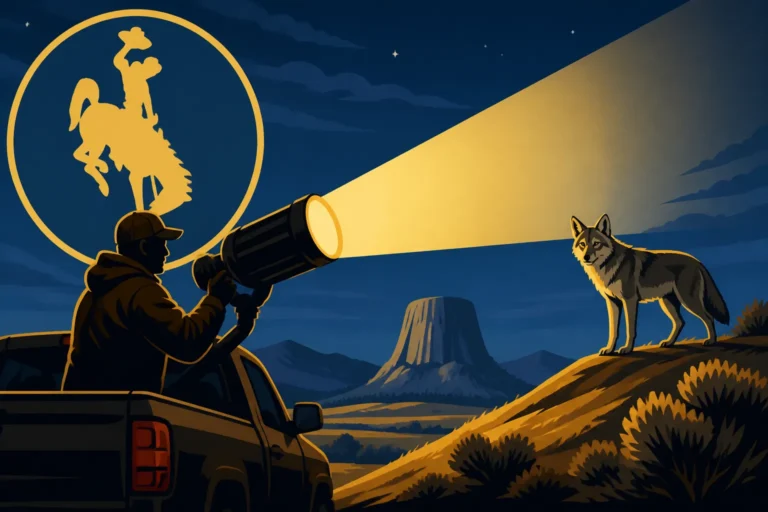
First off, let's address the use of artificial lights. For many years, and in many places, "spotlighting" has been a contentious issue. In Wyoming, you are permitted to use artificial light to hunt predatory animals like coyotes. This means you can mount a spotlight on your vehicle or carry a handheld light. However, there are significant caveats. You absolutely cannot hunt from a public road or highway, and you must have permission from the landowner if you're hunting on private land. This is incredibly important, as violating these rules can lead to serious charges, regardless of what you're hunting. For more details on this, you might want to look into the specifics of Wyoming Spotlighting Rules for Hunting Predators.
When it comes to advanced optics, hunters often wonder about thermal and night vision devices. These technologies have revolutionized night hunting, turning the darkness into an advantage. In Wyoming, hunters are legally allowed to use night vision and thermal imaging equipment for hunting predatory animals, including coyotes. This is a huge benefit for those serious about predator control, as it allows for much more effective target identification and shot placement in low-light conditions. These devices can be costly, but for dedicated night hunters, they offer an unparalleled edge. Many hunters use thermal scopes to spot the coyotes and then switch to a weapon-mounted light for positive identification and the shot itself, or use a thermal scope that also functions as a shooting optic.
Electronic calls are another tool that often raises questions. The good news for coyote hunters is that electronic calls are legal for hunting coyotes and other predatory animals in Wyoming. Unlike big game, where electronic calls are generally prohibited, using an e-caller for coyotes is perfectly acceptable. These devices can be incredibly effective at mimicking a distressed rabbit or a coyote howl, drawing in curious or hungry coyotes from a distance. For a broader understanding of legal sound devices, check out Electronic Calls and What Wyoming Allows. Choosing the right call sequence and volume is an art form, especially at night when sound can travel differently, so practice with your caller to understand its range and effectiveness.
As for weapon choices, there aren't specific restrictions for night hunting coyotes that differ from day hunting, beyond the general prohibitions on fully automatic weapons or certain dangerous devices. You can use rifles, shotguns, or even archery equipment if you're skilled enough to get that close in the dark. However, the ethical shot placement becomes even more critical at night, meaning your choice of firearm and caliber should be geared towards quick, humane kills. While the state has a Wyoming Legal Firearm List for Big Game, the rules for predators are generally less restrictive, but always double-check local ordinances or specific hunt area regulations. For most coyote hunters, a flat-shooting rifle in a caliber like .223 Remington or .204 Ruger is a popular choice, often paired with a suppressor to reduce noise and muzzle flash, which is permitted in Wyoming as discussed in Whether Suppressors Are Legal for Big Game.
Here’s a quick overview of some common practices:
| Practice | Legality for Night Coyote Hunting in Wyoming | Notes |
|---|---|---|
| Using Artificial Lights | Legal | Must be off public roads; private land requires landowner permission. |
| Thermal Imaging Devices | Legal | Highly effective for spotting and identifying. |
| Night Vision Devices | Legal | Useful for target acquisition and observation. |
| Electronic Calls | Legal | Excellent for attracting coyotes. |
| Hunting from a Vehicle | Generally Illegal | Cannot hunt from a public road or highway; private land is possible with permission. |
| Hunting from a Public Road | Illegal | Strict prohibition, regardless of species. |
| Suppressors | Legal | Helps reduce noise and muzzle flash, which can be beneficial at night. |
| Archery Equipment | Legal | Requires significant skill for close-range night shots. |
Safety and Ethical Considerations for Night Coyote Hunting
Just because you can hunt coyotes at night doesn't mean you should throw caution to the wind. Safety and ethics remain paramount, perhaps even more so when operating in darkness. The challenges of low light amplify the need for careful planning and strict adherence to responsible hunting practices.
One of the most critical aspects of night hunting is positively identifying your target. In the dark, it's incredibly easy for shadows and distances to play tricks on your eyes. A bobcat, which has stricter hunting regulations, or even a domestic dog, could be mistaken for a coyote, leading to serious legal trouble and ethical breaches. This is why having reliable identification tools like good quality thermal or night vision, coupled with a powerful, focused spotlight, is non-negotiable. Never take a shot unless you are 100% certain of your target and what lies beyond it. This is not just a suggestion; it's a fundamental principle of hunting safety that applies tenfold at night.
Consider the terrain and surroundings carefully. When you're hunting in broad daylight, you can easily pick out fences, roads, buildings, and other potential hazards. At night, these can disappear into the darkness, creating dangerous situations. Always scout your hunting area thoroughly during the day. Know your property boundaries, potential backstops, and areas where people or livestock might be. Remember, while you might be on public land, surrounding private properties need to be considered. For information on navigating different land types, understanding BLM Holds 27,860 Square Miles of Wyoming can be helpful, as can knowing the importance of Getting Permission to Cross Private Ground when dealing with checkerboard or landlocked parcels.
Furthermore, always be mindful of your backstop. When hunting with artificial light or thermal, your field of view can be incredibly narrow compared to daylight. A shot that seems clear might have an unseen hazard behind it. Always ensure you have a solid, natural backstop that can safely absorb any projectile. Thinking through your shot angles and potential trajectories is crucial. Even though you’re dealing with predators, the principles of ethical hunting mean aiming for clean, humane kills. Your shot placement must be as precise as it would be for any other animal, requiring steady aim and a full understanding of your weapon's capabilities.
Finally, show respect for other landowners and hunters. Even if you have permission to hunt on private property at night, the sudden flash of a spotlight or the report of a rifle can be unsettling for neighbors. Communicate your plans if possible, and choose locations where your activities won't disturb others. If you're hunting on public land, be aware that others might be camping or recreating nearby, even in the offseason for big game. Always prioritize safety over getting a shot, and remember that responsible hunting reflects positively on the entire hunting community. Night hunting offers unique opportunities, but it also demands heightened responsibility.
Practical Tips for a Successful Night Coyote Hunt
Once you've got the legalities and safety concerns dialed in, it's time to think about putting some practical strategies into play for a successful night hunt. Hunting coyotes after dark is a different beast than calling them in during the day, requiring a shift in tactics and an understanding of how the environment changes.
First and foremost, the importance of scouting during daylight hours cannot be overstated. Even with the best night vision or thermal gear, knowing the lay of the land, potential travel corridors, and natural funnels is critical. Drive or walk the property in daylight, noting distinct landmarks, elevation changes, and any obstacles like fences, ditches, or dense brush. Identifying good setup locations where you have a clear field of view but also some cover is key. Knowing where a coyote might approach from, or where you can expect to see them cross a certain open area, will dramatically increase your odds of success. Understanding how to use natural features like cutbanks and draws, even in the dark, is a game-changer.
Calling strategies take on a new dimension at night. Coyotes are often more active and less wary in the dark, which can make them more responsive to calls. However, sound travels differently at night. It can carry further, but it can also be distorted by atmospheric conditions. Start with softer, more subtle calls to avoid "blowing out" any coyotes that might be closer than you think. Distress sounds, like a rabbit in trouble, are perennial favorites, but don't be afraid to mix in some howls or pup distress calls, especially during certain times of the year. Pay close attention to how the coyotes respond, listening for their own howls or barks to pinpoint their location. Mastering the art of calling is vital, and resources like Bugle and Cow Call Timing Through the Rut (though for elk, the principles of calling apply) can offer insights into animal behavior, while Electronic Calls for Predators and Varmint Hunting can guide you on specific techniques.
Wind direction is still king, even in the dark. A coyote’s nose is their primary defense, and they will almost always approach from downwind to scent check the area before committing. This means your setup location and approach need to be meticulously planned to keep your scent out of their travel path. This can be tricky at night, as prevailing winds can sometimes shift after dark, or thermal currents can create unpredictable air movement, especially in hilly terrain. Always position yourself so that the wind is blowing away from where you expect the coyote to appear. Using terrain features for an approach, as discussed in Terrain That Hides an Approach, is just as relevant at night to keep your scent and silhouette hidden.
Finally, utilize the darkness to your advantage, but with caution. The cover of night can allow for closer approaches and less visible setups, but it also reduces your ability to react quickly or verify your shot. Take your time, move slowly and deliberately, and let your optics do the work. Coyotes often move in bursts, so be prepared for them to suddenly appear and disappear. Patience is a virtue in any hunting scenario, but it's amplified when you're waiting for those glowing eyes to appear in the beam of your spotlight or through your thermal scope. Coyote hunting is legal Hunting Coyotes in Wyoming Year Round, so you have ample opportunity to hone your skills.
Disclaimer
Please remember that hunting regulations can change. While this guide is based on current Wyoming Game and Fish Department rules, it is your responsibility to consult the most up-to-date regulations before heading into the field. This information is for educational purposes only and not a substitute for official legal guidance.