How Fast a Pronghorn Can Actually Run
For many hunters, the image of a pronghorn streaking across the wide-open sagebrush flats of Wyoming is iconic. But it’s one thing to imagine speed and another entirely to grasp the sheer, mind-boggling velocity and endurance these incredible animals possess. You might think you know "fast," but when it comes to pronghorn, you're looking at an evolutionary marvel specifically engineered to outrun some of the fastest predators that have ever walked the earth. This guide will dive deep into just how fast a pronghorn can actually run, explore the incredible adaptations that make them speed demons, and discuss what that means for hunters trying to close the distance on a buck in the vast expanse of the Cowboy State.
The Blistering Pace of the Pronghorn: More Than Just "Fast"
When we talk about pronghorn speed, we're not just discussing a quick sprint; we're talking about a creature that holds the title of the fastest land animal in North America. Forget about your deer, your elk, even your grizzly bears – nothing on this continent can touch a pronghorn when it decides to open up the throttle. It’s a level of speed that often catches hunters off guard, leading to missed opportunities or stalks that end with a white rump flag disappearing over the horizon at warp speed.
Peak Velocity and Sustained Effort
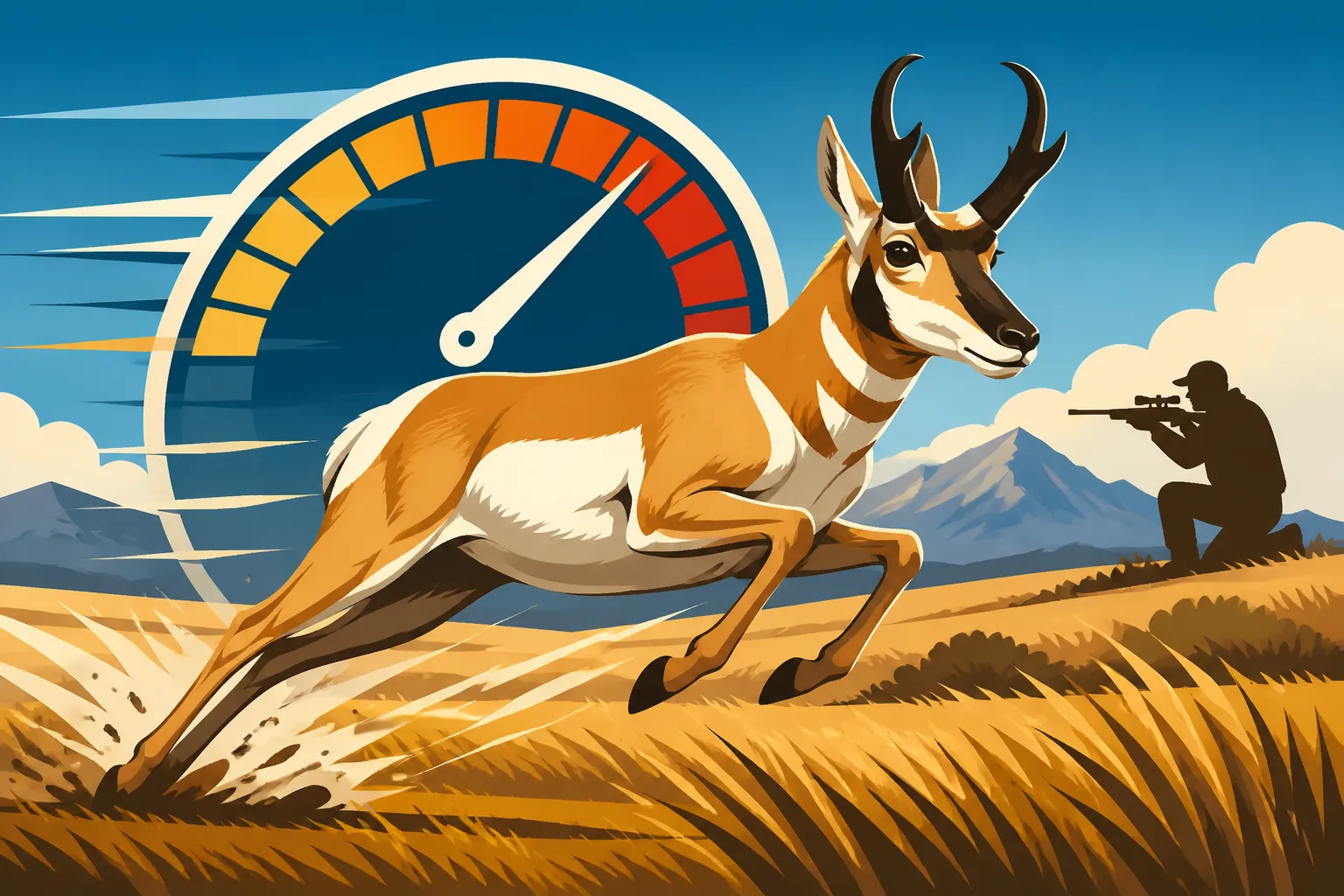
The numbers themselves are impressive. A healthy adult pronghorn can hit top speeds nearing 55 to 60 miles per hour over short bursts. That's faster than most vehicles legally drive on a county road in Wyoming! This incredible burst capability is critical for escaping immediate threats. However, what truly sets them apart isn't just their top-end speed, but their remarkable ability to sustain high speeds over significant distances. While a cheetah might outrun a pronghorn in a 100-yard dash, the cheetah would be panting and overheating long before the pronghorn even broke a sweat at a steady 30-35 mph over several miles.
Imagine trying to sprint after a world-class marathon runner, only to find they can also out-sprint you in a 100-meter dash. That's essentially what a pronghorn brings to the table. This sustained speed, coupled with their phenomenal eyesight, is why hunters often find themselves battling frustration on an open-country stalk. You might spot a buck a mile away, plan a perfect approach using every bit of terrain, and just as you get within what you think is range, they've already moved another quarter-mile. This challenge is why understanding their range and behavior is so critical for success, particularly when considering techniques like Stalking Pronghorn Across Wyoming's Open Sagebrush to minimize the impact of their senses.
Comparing Pronghorn to Other Big Game
To truly appreciate the pronghorn's speed, it helps to put it into perspective against other animals hunters pursue. There's a reason they're called "speed goats," even though they're not actually goats. Their closest living relatives are actually giraffes and okapis, a fact that just adds to their uniqueness!
Here's a quick comparison to illustrate the difference:
| Animal | Max Speed (Approx.) | Sustained Speed (Approx.) | Key Advantage |
|---|---|---|---|
| Pronghorn | 55-60 mph | 30-35 mph (for miles) | Burst speed & endurance |
| Mule Deer | 35-40 mph | 15-20 mph | Agility, bounding |
| Elk | 40-45 mph | 20-25 mph | Power, endurance in rough terrain |
| Whitetail Deer | 30-35 mph | 10-15 mph | Agility, cover use |
As you can see, the pronghorn stands alone. Their ability to cover ground quickly and maintain that speed is unparalleled, making them exceptionally difficult to approach in their natural, wide-open habitat. This is why when you're scouting for potential hunting spots, using tools like GoHunt can be invaluable for understanding the terrain and open spaces in areas like those discussed in Which Wyoming Counties Hold the Most Antelope.
Built for Speed: The Pronghorn's Evolutionary Adaptations
The pronghorn didn't just become fast by accident. Their entire physiology is a testament to millions of years of evolution, primarily driven by a need to escape predators like the now-extinct American cheetah. Every aspect of their being, from their bones to their lungs, is optimized for running. It’s a remarkable example of nature's engineering, resulting in an animal that seems almost alien in its specialization.
Incredible Lung Capacity and Cardiovascular System
One of the most significant factors in a pronghorn's speed and endurance is its massive lung capacity. Proportionally, their lungs are much larger than other similarly sized mammals, allowing them to take in huge amounts of oxygen with each breath. This oxygen is then efficiently delivered to their muscles by an exceptionally large heart and a dense network of blood vessels.
Think of it like a high-performance sports car with an oversized engine and a fuel delivery system that never falters. This allows them to process oxygen and clear waste products from their muscles at an incredible rate, preventing the lactic acid buildup that would slow down other animals. This means they can sprint, recover, and sprint again, or simply maintain a relentless pace that tires out anything trying to chase them down. This physiological advantage often impacts how far you might need to pursue a wounded animal, emphasizing the need for ethical shot placement.
Specialized Hooves and Leg Structure
The pronghorn's legs are another marvel of adaptation. They are long and slender, designed for maximum stride length. Their hooves are relatively small and hardened, providing excellent traction on the dry, often rocky, soils of the plains. Unlike deer or elk, which might have broader hooves better suited for uneven or soft ground, the pronghorn's hooves are like racing tires—perfect for speed on firmer terrain.
Their leg muscles are packed with fast-twitch fibers, built for explosive power. They also have an elongated Achilles tendon, which acts like a spring, storing and releasing energy with each stride, making their running incredibly efficient. This isn't just about raw power; it's about minimizing energy expenditure while maximizing distance and speed, especially when they need to cover vast distances, such as those described in How Long the Pronghorn Migration Route Runs.
Vision and Sensory Acuity
While not directly contributing to physical speed, a pronghorn's eyesight plays a crucial role in its survival and, by extension, its ability to utilize its speed. Pronghorns have enormous eyes relative to their head size, giving them an almost 300-degree field of view. They can spot movement at incredible distances, often picking up a hunter long before the hunter ever sees them. This makes Pronghorn Eyesight and the Stalking Distance It Forces one of the primary challenges for any antelope hunter.
Their vision is also highly adapted to detect movement on the open plains, where camouflage is often difficult to come by. This means that even a slight shift in your position, a flash of reflective gear, or a poorly timed peep over a ridge can instantly alert them. They rely on this early detection to give themselves a head start, initiating their high-speed escape before a predator, or a hunter, can even think about closing the gap. When planning a hunt, checking resources like GoHunt can provide detailed topographical maps that help identify potential stalking routes where you might actually break their line of sight.
Outrunning Persistence: Pronghorn Endurance and What It Means for Hunters
It's one thing to run fast, it's another to run fast and keep running. Pronghorn aren't just sprinters; they are endurance athletes of the highest caliber. Their ability to maintain high speeds over extended periods is what truly makes them kings of the open plains, and it presents a unique challenge for hunters.
The Long Game: Sustained Running Prowess
When a pronghorn feels threatened, it doesn't just bolt for a few hundred yards and then stop. It often runs for miles, maintaining speeds that would leave any other land animal gasping for breath. This incredible endurance is a direct result of their evolved cardiovascular and respiratory systems, allowing them to escape predators not just by out-sprinting them, but by outlasting them. They literally run their pursuers into the ground.
This means that a "quick chase" after a pronghorn is rarely quick at all. If you spook a herd, they might disappear over several ridges before you even have a chance to relocate them. This requires hunters to be incredibly patient and strategic, often necessitating long-range glassing techniques, like those detailed in Grid Glassing a Basin Without Missing Bucks, to relocate moving animals. You simply cannot expect to out-run or out-walk a spooked pronghorn across open ground.
Speed as a Defensive Strategy
For pronghorns, speed is their primary defense mechanism. Unlike elk or moose that might use their size and strength, or deer that rely on cover and agility, pronghorns live in environments where there's very little to hide behind. Their only real option is to run. This deeply ingrained instinct means that they will almost always choose flight over fight, and they will utilize every ounce of their incredible speed to put distance between themselves and perceived danger.
This behavior dictates hunting strategies. Instead of trying to push them, which will often just send them rocketing out of your hunting area entirely, hunters must focus on stealth, deception, and precise shot placement. Tactics like using a decoy, as explored in The Decoy Distance That Actually Pulls Antelope Bucks, are effective precisely because they play on the pronghorn's visual acuity and curiosity, often turning their defensive instincts into a potential weakness.
Implications for Hunters: Strategies for Dealing with Pronghorn Speed
Understanding the incredible speed and endurance of the pronghorn isn't just academic; it’s absolutely vital for anyone hoping to successfully hunt them in Wyoming. These animals demand a different approach than nearly any other big game species, forcing hunters to adapt their tactics, gear, and mindset.
Mastering the Stalk and Approach
Given their phenomenal eyesight and speed, a direct, casual walk-up approach is almost always doomed to fail. Successful pronghorn hunting hinges on executing an almost flawless stalk. This means utilizing every available piece of terrain—coulees, washouts, low ridges, and even stands of taller sagebrush—to stay out of sight. You need to think three-dimensionally, anticipating their movement and using the landscape to your advantage. For instance, when studying an area on GoHunt, I always look for those crucial topographical features that can offer concealment.
The wind is another critical factor. While pronghorns don't rely on scent as heavily as deer or elk do to detect danger at extreme distances, they can certainly smell you up close. More importantly, understanding wind direction helps you predict how sound might carry, and it gives you an edge if you do need to make a quick move. A good resource for this is learning about Playing Wind Direction on an Open Sagebrush Stalk, as it's not just about scent, but about how sounds carry.
Shot Distance and Accuracy
Because closing the distance on a pronghorn can be incredibly challenging, hunters often find themselves needing to take longer shots than they might for other species. This isn't about promoting irresponsible long-range shooting, but acknowledging the reality of pronghorn hunting. It emphasizes the need for extensive practice at various distances and a thorough understanding of your rifle's capabilities.
Many hunters dedicate significant time to practicing shooting from field positions, often using bipods or shooting sticks, which are essential tools when there's no natural rest on the open plains. Knowing your rifle's ballistics inside and out, and being able to make quick, accurate adjustments for wind and distance, is paramount. This attention to detail ensures that if you do get an opportunity after a difficult stalk, you're prepared to make an ethical shot. Even with their speed, a well-placed bullet from a capable rifle will put them down quickly.
Decoys and Calling
Sometimes, trying to out-stealth a pronghorn is simply impossible due to the lack of cover. This is where active strategies like using decoys and calling come into play. A well-placed decoy, especially during the rut when bucks are territorial, can pique a buck's curiosity enough to draw him into range. The sight of another "buck" challenging his territory, or a "doe" simply standing there, can override their natural caution.
Similarly, while not as widely used as for elk or deer, some hunters find success with pronghorn calls. These typically mimic doe bleats or fawn distress calls, appealing to a buck's paternal instincts or a doe's protective nature. These tactics often require two hunters, one to call or hold the decoy, and one to be ready to shoot, adding another layer of complexity. If you're considering this, researching The Decoy Distance That Actually Pulls Antelope Bucks can be a real game-changer.
Ultimately, hunting pronghorn is a dance between their incredible speed and your tactical acumen. It requires patience, precise execution, and a deep respect for an animal that is truly one of nature's fastest masterpieces.
Disclaimer
This article is for general informational purposes only and does not constitute professional advice. Laws, prices and regulations vary by location and change over time. Consult a qualified professional for guidance on your specific situation.