Bison as a Wyoming Once-in-a-Lifetime Species
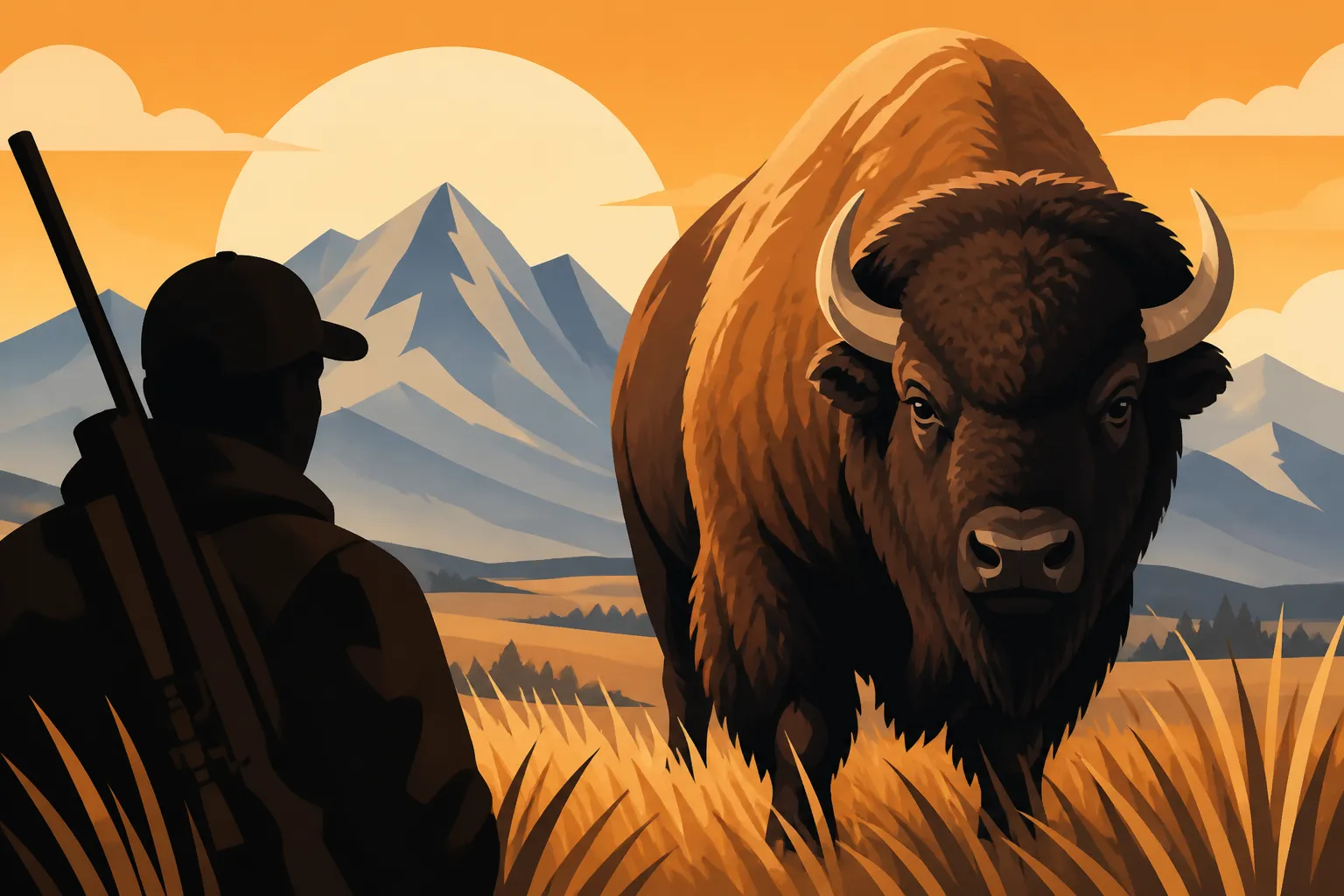
The idea of hunting bison in Wyoming stirs a primal feeling in many hunters, a connection to a wilder past. Yet, for many, the dream of drawing a Wyoming bison tag often feels like trying to win the lottery — an almost impossible feat. If you've been wondering how to even begin navigating the application process for this truly once-in-a-lifetime opportunity, or what it actually entails beyond just pulling a tag, you've come to the right place. This guide will meticulously break down everything you need to know about pursuing bison in the Cowboy State, from the incredibly challenging draw to the logistics of a successful hunt.
The Rarity of a Wyoming Bison Tag and What It Truly Means
Drawing a bison tag in Wyoming isn't just about harvesting a magnificent animal; it's about participating in a unique chapter of North American wildlife conservation. This isn't your average deer or elk hunt, and the "once-in-a-lifetime" designation really drives that home.
Understanding the Once-in-a-Lifetime Rule
When we talk about a "once-in-a-lifetime" species in Wyoming, it means exactly what it sounds like: if you are fortunate enough to draw a tag and successfully harvest a bison, you are generally no longer eligible to apply for another bison tag in Wyoming ever again. This rule underscores the extreme scarcity of these licenses and the state's commitment to spreading the opportunity among as many individual hunters as possible over time.
This isn't just a regulatory formality; it imbues the entire experience with a profound weight. Every decision, from application strategy to the shot you take, carries the significance of knowing this is likely your only chance. It elevates the hunt from a recreational pursuit to a deep personal connection with history and conservation, making careful planning and ethical considerations paramount long before you even step foot in the field. This singular opportunity means that every aspect of the hunt, from the scouting to the harvest, becomes a story to cherish and recount for generations.
The Historical Context of Wyoming's Bison
The American bison, or buffalo as they're often called, represent one of the greatest conservation comeback stories in history. Once numbering in the tens of millions, these majestic animals were driven to the brink of extinction in the 19th century, primarily through market hunting and government-backed extermination campaigns aimed at subjugating Native American tribes. By the late 1800s, fewer than a thousand bison remained in the entire United States, with some of the last wild populations finding refuge in remote corners like what would become Yellowstone National Park.
Wyoming, specifically the Greater Yellowstone Ecosystem, played a critical role in their survival and eventual recovery. The reintroduction and protection efforts over the last century have slowly brought their numbers back, allowing for limited, carefully managed hunting opportunities. This history is why every Wyoming bison tag is steeped in such deep conservation meaning; it's a testament to what dedicated efforts can achieve, and hunters who participate become part of this ongoing legacy.
Why Tags Are So Limited
The extreme scarcity of Wyoming bison tags is a direct consequence of their conservation status and the unique challenges of managing a wild, free-ranging bison herd. Unlike more common big game species such as deer or elk, whose populations are robust enough to support thousands of tags annually, wild bison herds in Wyoming are relatively small and localized. The primary huntable population, for instance, is often associated with the National Elk Refuge and adjacent areas near Jackson Hole, an ecosystem already under significant pressure.
Management goals for these herds extend beyond just population numbers; they often include genetic diversity, disease management (particularly brucellosis, which can affect cattle), and minimizing conflicts with private landowners and infrastructure. Because bison are large, powerful animals that can be destructive to fences and crops, their range is often carefully controlled. This complex balancing act means that only a handful of tags can be issued each year, ensuring that hunting remains a sustainable tool for herd management without jeopardizing the long-term health or genetic integrity of these iconic animals. The limited number of tags ensures that only the healthiest, most appropriate animals are harvested, contributing to the overall well-being of the population.
Navigating the Wyoming Bison Draw Odds
Let's be blunt: drawing a Wyoming bison tag is tough. Like, really tough. It's not a matter of accumulating preference points over years, as it is with elk or mule deer. For bison, it's essentially a pure lottery, which means every applicant, from a first-timer to someone who's applied for decades, has an equal, albeit slim, chance each year.
The Application Process for Bison
The journey to a Wyoming bison tag begins with the application, a process that requires meticulous attention to detail and adherence to strict deadlines. All applications are submitted through the Wyoming Game and Fish Department (WGFD) online Electronic Licensing System (ELS). For those eyeing a bison tag, mark your calendar: the application deadline for bison, along with bighorn sheep, moose, and mountain goat, typically falls on April 30th.
You'll need to create an ELS account if you don't already have one, then navigate to the big game application section. Be prepared for specific questions about hunt areas – knowing which areas are even open for bison hunting in a given year is crucial, and this information is released annually in the regulations. You'll also need to be ready to pay the full license fee upfront, which can be substantial, especially for non-residents. If you're unsuccessful, the license fee is refunded, but the application fee is not. It’s always a good idea to double-check the current year's regulations on the WGFD website, as dates and specific requirements can sometimes shift slightly. You can find detailed information about applying for these unique opportunities by looking at content like, "Applying for a Wyoming Bison Tag by April".
| Species | Application Deadline | Preference Points | Draw Type | Residency Impact |
|---|---|---|---|---|
| Bison | April 30th | No | Pure Lottery | Significant |
| Elk | February 1st | Yes | 75% Points / 25% Random | Significant |
| Deer | June 1st | Yes | 75% Points / 25% Random | Significant |
| Antelope | June 1st | Yes | 75% Points / 25% Random | Significant |
| Bighorn Sheep | April 30th | No | Pure Lottery | Significant |
The Realities of Drawing a Tag
Let's not sugarcoat it: the odds of drawing a Wyoming bison tag are astronomically low. We're talking single-digit percentages, often less than one percent, especially for non-residents. Consider the typical scenario for a coveted hunt area: hundreds, sometimes thousands, of applicants vying for just a handful of tags, perhaps as few as one or two. There are no preference points for bison in Wyoming, meaning that whether you're applying for the first time or the twentieth, your name goes into the same hat as everyone else's.
This lottery system means you can't strategize your way into a tag by accumulating points over years, like you might for a trophy elk unit. Instead, it’s a game of pure chance and persistence. Many dedicated hunters apply year after year, fully aware that they might never draw. This reality can be disheartening, but it also means that when that successful notification email finally arrives, it’s a moment of profound excitement and disbelief, knowing you've beaten truly incredible odds to pursue a magnificent creature that few others ever get the chance to hunt.
Using Tools to Assess Your Chances
Even with pure lottery odds, smart applicants still do their homework. While preference point analysis isn't a factor, understanding historical draw results can give you a clearer picture of just how few tags are issued and how many people typically apply. The WGFD publishes draw odds and statistics each year, showing the number of applicants versus tags awarded for each hunt area. This data is invaluable for setting realistic expectations and identifying which specific hunt areas, if any, might offer a slightly less competitive chance, although generally, all bison areas are tough draws.
Beyond the official state data, platforms like GoHunt provide incredibly user-friendly tools that aggregate and analyze this information. With GoHunt's Insider service, you can easily filter by species, residency, and hunt area to see historical success rates and the exact number of applicants for specific bison tags. This can help you visualize the competition and understand which units might have had slightly better (or worse) odds in previous years. Even though it's a pure lottery, seeing the numbers laid out helps hunters mentally prepare for the long shot and appreciate the magnitude of the opportunity if they do happen to draw. It’s a powerful way to stay informed and keep the dream alive, even if the odds are stacked against you.
Wyoming's Bison Hunt Areas and Herd Management
Wyoming's bison hunt areas are unique, primarily concentrated in a specific, world-renowned ecosystem, and their management reflects a complex interplay of wildlife biology, human impact, and public land use.
Key Bison Hunt Areas in Wyoming
When it comes to hunting wild bison in Wyoming, the conversation invariably turns to the Jackson Hole herd. This population is the primary source of hunting opportunities in the state, largely associated with the National Elk Refuge and the adjacent designated hunt areas. Unlike the sprawling, remote ranges often associated with elk or mule deer hunts, these bison areas are often in relatively close proximity to human development, roads, and even within view of the town of Jackson.
The specific hunt areas (e.g., Hunt Area 1 for the National Elk Refuge, and various other limited areas) are carefully delineated to manage bison that migrate off the refuge. Hunting here presents unique challenges and considerations, including navigating complex land ownership (National Elk Refuge, Bridger-Teton National Forest, private parcels), potential for high snow depths in winter, and the necessity of quickly locating and harvesting a large animal near sensitive areas. Hunters must be intimately familiar with the boundaries, rules, and local conditions, as the behavior of these bison can be heavily influenced by their interaction with humans and winter feeding operations. You can learn more about specific access points and regulations by checking resources such as "Hunting Access on the National Elk Refuge".
Understanding Herd Objectives and Management Challenges
The management of Wyoming's bison herds, particularly the Jackson Hole population, is a delicate balancing act. The Wyoming Game and Fish Department, in cooperation with federal agencies like the U.S. Fish and Wildlife Service (which manages the National Elk Refuge), works to maintain a healthy and sustainable bison population while addressing various ecological and socio-economic challenges. Herd objectives often involve maintaining a specific population size that the habitat can support, managing genetic diversity, and monitoring for diseases.
Brucellosis is a significant concern for bison in the Greater Yellowstone Ecosystem. This bacterial disease can be transmitted to cattle, leading to strict management protocols aimed at preventing contact between bison and livestock. Hunting plays a critical role in this management strategy, helping to control herd numbers, alter migration patterns away from cattle-grazing lands, and reduce the prevalence of disease within the herd. For context on disease management in Western herds, you might want to look at "Wyoming Elk, the Feedgrounds and the Disease Question". These efforts ensure the long-term viability of wild bison while mitigating potential impacts on agricultural communities.
Public Land Access and Logistics for Bison Hunts
Accessing huntable land for bison in Wyoming, particularly in the Jackson Hole area, requires careful planning and a thorough understanding of land ownership. While the National Elk Refuge offers public hunting opportunities, specific rules and regulations govern movement and harvest on this federal land. Hunters will encounter a mosaic of land types, including federal lands (National Elk Refuge, Bridger-Teton National Forest), state lands, and private property. Navigating these boundaries, especially during a hunt, can be complex, and using mapping tools like those offered by GoHunt or a reliable GPS with public land layers is essential.
Logistics for a bison hunt are significantly more involved than for smaller game. Due to the animals' size and often challenging terrain, successful hunters need robust plans for recovery and transport. This often involves heavy-duty vehicles, strong game carts, or even hiring professional packing services, especially if hunting in deeper snow or remote sections of the Bridger-Teton National Forest. Many hunters opt to hire a licensed outfitter or guide who specializes in bison hunts, not only for their expertise in locating animals but also for their logistical support in retrieving and processing such a large animal. This level of planning is critical, as improper or delayed field dressing can compromise the quality of the meat.
Planning Your Once-in-a-Lifetime Bison Hunt
Once you've beaten the odds and drawn that coveted bison tag, the real planning begins. A bison hunt is physically demanding, logistically complex, and requires a significant investment in preparation and resources.
Essential Gear and Physical Preparation
Hunting bison, especially in the rugged terrain and variable weather of Wyoming, demands top-tier gear and peak physical conditioning. These animals are immense and incredibly tough, requiring potent rifle calibers and robust bullet construction to ensure a clean, ethical harvest. Most experienced bison hunters recommend calibers in the .30-06 Springfield class and larger, with popular choices including .300 Winchester Magnum, .338 Winchester Magnum, or even .375 H&H Magnum, all loaded with premium, heavy-for-caliber bullets designed for deep penetration and bone-crushing performance. For a broader discussion on suitable firearms, consider "Best All-Around Caliber for a Western Hunt".
Beyond the firearm, durable clothing layers suitable for extreme cold and wet weather are critical, as many bison hunts occur in late fall or winter. High-quality optics, including binoculars and a spotting scope, are essential for identifying legal animals from a distance. However, perhaps the most overlooked aspect is physical preparation. Bison can lead you into incredibly challenging country, and retrieving a 1,500-2,000 pound animal from a steep hillside or deep snowdrift is Herculean work. Intense cardiovascular training and strength conditioning months before your hunt are not just recommended, they are absolutely necessary to safely and efficiently execute your hunt and pack out your trophy. Preparing for the physical demands of the high country is paramount, and resources such as "Physical Conditioning for a Mountain Hunt" can offer valuable insights.
Field Dressing and Meat Care in Remote Areas
This is where a bison hunt truly separates itself from almost any other big game experience. A mature bison bull can weigh over a ton, yielding hundreds of pounds of meat. The sheer volume and weight mean that traditional field dressing methods need to be scaled up dramatically, and often require multiple people, specialized equipment, or even professional assistance. The goal is rapid cooling of the meat to prevent spoilage, especially if temperatures are mild or if the animal is taken in a remote area requiring a lengthy pack-out.
Many hunters opt for the "gutless method" to remove quartered sections of meat directly, rather than attempting to field dress the entire animal on-site. You'll need game bags, sturdy knives, a bone saw, and potentially even a small hatchet. Getting the meat off the animal and into cool conditions as quickly as possible is paramount. If you're hunting in a wilderness area or far from vehicle access, planning for horseback packers or a large game cart is essential. Understanding "Field Dressing and Carcass Transport Rules Explained" is vital, as regulations stipulate how game must be transported to maintain its integrity and meet legal requirements. The logistical challenge of preserving such a large quantity of meat is one of the most significant aspects of a successful bison hunt.
The Financial Investment of a Bison Hunt
Securing a Wyoming bison tag is only the first step; the financial investment for a truly once-in-a-lifetime hunt can be substantial. For non-residents, the license fee alone is significant, often in the range of several thousand dollars (for perspective, "Wyoming Nonresident Tags Run $326 to $1,965" for other species, but bison can be higher). Beyond the license, you'll incur costs for travel to Wyoming, lodging, and perhaps vehicle rentals.
Many hunters choose to hire a guide or outfitter for a bison hunt, especially given the animal's size, the complex terrain, and the logistical challenges of retrieval. A guided bison hunt can range from several thousands to well over ten thousand dollars, depending on the services included, the duration, and the outfitter's reputation. For reference on general guided hunt pricing, you might consult "What a Guided Wyoming Elk Hunt Costs". Additionally, factor in costs for high-quality gear (if you don't already own it), meat processing (which will be considerable for a bison), taxidermy if you plan on preserving the hide or skull, and tipping your guide and packers. While the upfront investment is significant, it's often viewed as a worthwhile expenditure for an experience that truly comes along only once.
Ethical Considerations and Conservation for Bison Hunters
Hunting a bison is more than just pulling a trigger; it's an act laden with ethical responsibilities and a direct contribution to conservation. As a hunter participating in such a rare opportunity, your actions have a magnified impact on the perception of hunting and the future of these magnificent animals.
Respecting the Animal and the Landscape
Ethical hunting begins with respect for the animal and the landscape it inhabits. For bison, this means ensuring a clean, humane harvest. Due to their immense size and robust skeletal structure, precise shot placement is critical. Hunters should be proficient with their chosen firearm and practice extensively to ensure they can place a shot accurately under field conditions, which might include wind, cold, or challenging angles. Rapid follow-up shots should always be considered to minimize the animal's suffering.
Beyond the shot, the responsibility extends to the respectful handling of the animal post-harvest. This includes efficient field dressing and meat care to prevent waste, as well as retrieving the animal promptly. Leaving no trace is paramount, especially in popular or sensitive areas like the National Elk Refuge. This means packing out all trash, spent casings, and any non-biodegradable items. The entire process, from the initial approach to the final pack-out, should reflect a deep appreciation for the animal and its wild habitat, upholding the highest standards of ethical conduct.
Your Role in Bison Conservation Efforts
As a bison hunter, you are directly contributing to the ongoing conservation and management of these incredible creatures. The fees from your hunting license directly fund the Wyoming Game and Fish Department's research, habitat management, and wildlife enforcement efforts. These funds are vital for monitoring herd health, addressing disease concerns like brucellosis, and mitigating human-wildlife conflicts.
Furthermore, your participation in the hunt provides critical data for biologists. Accurate harvest reporting, including providing biological samples (such as lymph nodes for CWD testing, if required, although CWD in bison is less prevalent than in deer/elk; for reference on disease testing, see "Is Elk Meat Safe If the Animal Had CWD?"), helps scientists understand population dynamics, health trends, and genetic factors. This data is indispensable for making informed management decisions that ensure the long-term health and sustainability of Wyoming's bison herds. Your actions as a hunter are an integral part of the scientific process that safeguards these animals for future generations.
The Lasting Impact of Your Hunt
A successful Wyoming bison hunt is, for many, the pinnacle of a hunting career. It's an experience that transcends the moment of harvest, leaving a lasting impact on the hunter and those with whom the story is shared. The sheer scale of the animal, the challenge of the hunt, and the rarity of the opportunity all combine to create a profound memory. This isn't just about bagging a trophy; it's about the connection to a wild past, the respect for a powerful animal, and the deep satisfaction of providing a substantial amount of lean, organic meat for your family and friends.
Sharing the experience, whether through stories, photographs, or the meat itself, helps educate others about the role of hunting in conservation and fosters a greater appreciation for wildlife. It's a testament to the comeback of an iconic American species and a reminder of the wild places that still exist. For a hunter, it's not just a once-in-a-lifetime tag; it’s a once-in-a-lifetime journey into the heart of wild Wyoming, leaving you forever changed by the encounter with such a magnificent creature.
Disclaimer
Please remember that hunting regulations and seasons are subject to change. Always consult the latest Wyoming Game and Fish Department regulations directly before planning any hunt. This guide is for informational purposes and does not substitute official legal guidance.