Baiting Black Bear Against Baiting Big Game in Wyoming
Navigating the myriad of hunting regulations in Wyoming can feel like deciphering an ancient scroll, especially when it comes to something as specific as baiting. It’s incredibly frustrating when you’re trying to do everything by the book, but the rules seem to shift depending on the species or even the specific area. This guide is here to untangle that knot, specifically addressing the critical differences between baiting black bears and big game in Wyoming, so you can hunt with confidence and stay on the right side of the law.
The Absolute Ban: No Baiting Big Game in Wyoming
Let's start with the clearest, most straightforward rule: when it comes to Wyoming's coveted big game species, baiting is unequivocally illegal. This isn't just a suggestion or a guideline; it's a hard and fast law designed to uphold fair chase principles and manage wildlife responsibly across the vast landscapes of the Cowboy State. Ignoring this rule can lead to severe consequences, impacting your hunting future for years to come.
Defining "Big Game" in Wyoming Law
For those new to hunting in Wyoming or coming from states with different classifications, it’s crucial to understand what "big game" actually encompasses here. In Wyoming, big game refers primarily to elk, moose, deer (both mule deer and whitetail), pronghorn, bighorn sheep, and mountain goats. These are the animals that draw hunters from all over the world, and for good reason—they represent some of the most challenging and rewarding hunts North America has to offer.
The Wyoming Game and Fish Department (WGFD) is very clear in its regulations booklet about which species fall into this category. You'll often find these species listed prominently in the sections regarding seasons, tag applications, and general hunting rules. Hunters often travel great distances and invest significant time and money to pursue these animals, and the integrity of these hunts is paramount to the state's wildlife management philosophy. If you're targeting any of these animals, the thought of placing bait should immediately trigger a red flag.
What Constitutes "Bait" for Big Game
This is where things can get a little murky and cause unintentional violations. "Bait" isn't just a pile of corn or apples you scatter in the woods. Wyoming's definition is quite broad, essentially encompassing any substance that is placed or used to attract game animals to a specific location for the purpose of taking them. This could be feed, minerals, liquids, or even scent attractants if used in a way that is deemed to be baiting. The key is the intent to attract.
Think about it this way: that salt block you put out for your horses or cattle on private land could technically become an illegal baiting site if big game animals start frequenting it, and you then hunt over it. It’s not just about what you intentionally put out for deer; it's about anything that attracts them. Similarly, planting a food plot with the express purpose of luring big game for hunting could also be considered baiting, even though it's growing naturally. It’s a fine line, but the spirit of the law aims to prevent hunters from creating artificial feeding stations that give them an unfair advantage or concentrate animals in unnatural ways. This rule also applies to things like Is Baiting Ever Legal for Deer Hunting?, which clarifies specific state-by-state variations.
Intent Versus Accidental Feeding
The distinction between purposeful baiting and accidental attraction is critical. If you're driving down a county road and pass a private ranch with a hay bale in a field, and deer are feeding on it, you are not committing a baiting violation by hunting nearby (provided you are on public land or have permission for private land). The rancher isn't putting that hay out for you to hunt deer over; they're feeding livestock. The issue arises when a hunter knowingly places or uses a substance to attract big game specifically for hunting purposes, or hunts over a known attractant they or someone else placed.
Consider a scenario where a bear hunter is baiting black bears (which is legal under specific conditions, as we’ll discuss), and a mule deer wanders into the bait site. If the hunter then shoots that mule deer, it could be considered an illegal baiting violation for big game. The law is less about what the animal eats and more about the hunter's actions and intent. It requires hunters to be aware of their surroundings and to actively avoid situations that could be construed as baiting. This also extends to other attractants; for instance, understanding rules around Electronic Calls and What Wyoming Allows for different species helps avoid violations. Hunters need to be diligent and informed, constantly asking themselves if their actions could be perceived as trying to lure a big game animal.
Understanding Wyoming's Black Bear Baiting Regulations
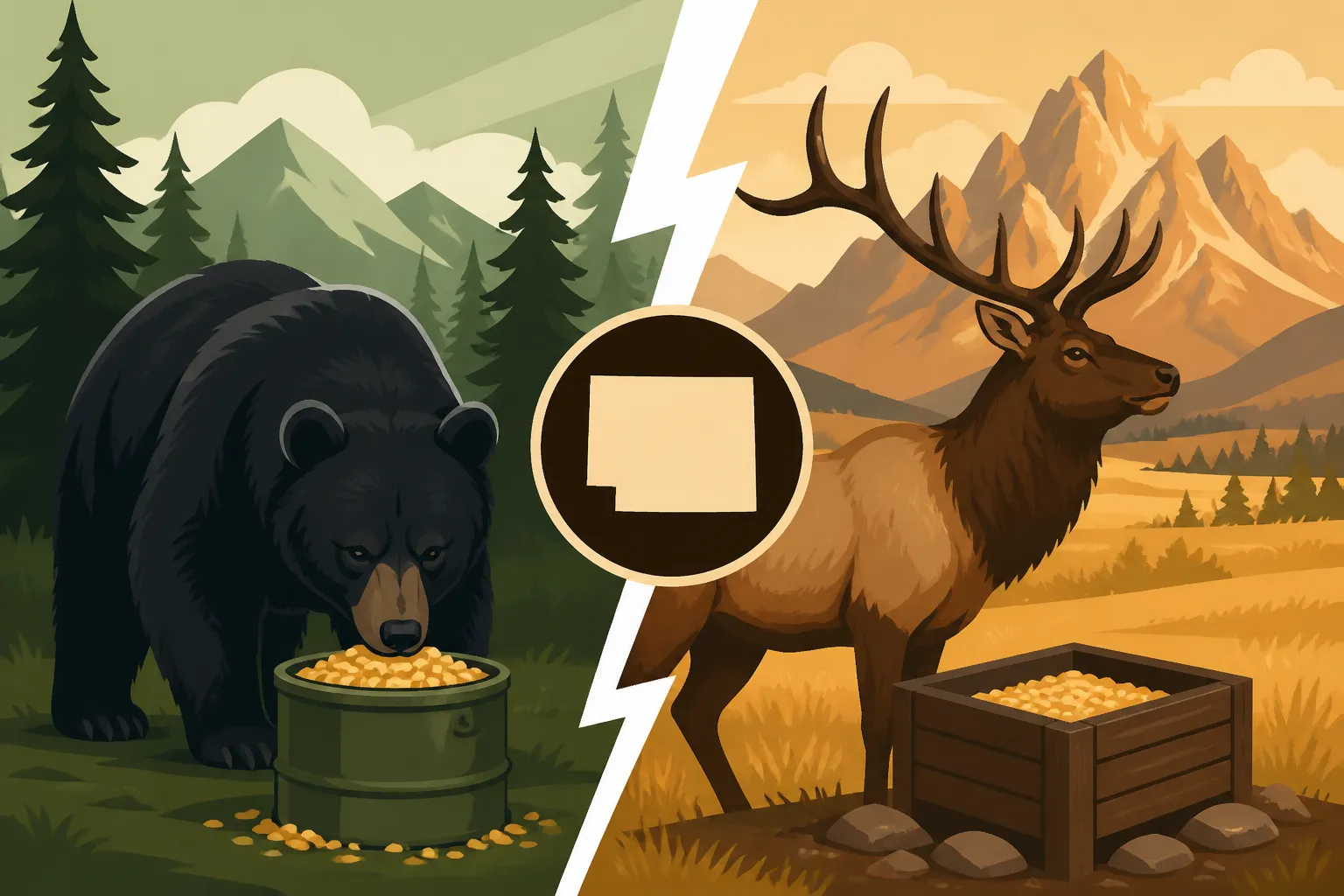
Now, let's flip the script. While baiting big game is a strict no-go, Wyoming does permit the baiting of black bears, but under a highly regulated framework. This isn't a free-for-all; it's a specific management tool employed by the WGFD to achieve certain harvest objectives and provide hunting opportunities. It’s a world apart from big game hunting and comes with its own set of rules, permits, and ethical considerations.
The Legal Framework for Bear Baiting
Unlike big game, black bear hunting in Wyoming is often managed differently due to their diet, behavior, and population dynamics. The ability to bait bears allows hunters to attract these often-elusive animals to a predictable location, which can be especially effective in dense timber or brush where traditional spot-and-stalk methods are extremely challenging. The WGFD carefully delineates specific areas and seasons where baiting is permitted, and these regulations are updated annually. You can't just pick any spot; you have to operate within the designated Wyoming Black Bear Baiting Areas.
To legally bait black bears in Wyoming, you must possess a valid black bear hunting license and a special black bear baiting permit. This permit is not automatically granted with your hunting license; it's an additional application and approval process. This extra layer of permitting ensures that the WGFD can track baiting activity, manage hunter density in certain areas, and enforce the specific rules that govern this method. Without both your license and the baiting permit, any attempt to bait bears is illegal, plain and simple.
Permitting and Placement Requirements
Obtaining a black bear baiting permit involves an application, typically submitted through the WGFD's online licensing system. There are specific windows for application, and often, permits are allocated on a first-come, first-served basis within each designated hunt area. Once you secure a permit, it will specify the precise hunt area where you are authorized to place your bait. You cannot move your bait to a different hunt area than the one specified on your permit.
Furthermore, there are strict rules regarding the placement of the bait itself. For instance, bait sites generally cannot be placed within a certain distance of public roads, established trails, or developed recreation sites. This is to ensure public safety, prevent conflicts with other recreational users, and maintain a semblance of wildness in the hunting experience. Each bait site must also be clearly marked with signs indicating it is an active bear bait site, including the permit holder's name and contact information. These requirements are in place to make sure that baiting is conducted responsibly and transparently, and that other members of the public are aware of the activity. It's a system designed for accountability and safety.
Approved Bait Materials and Prohibited Substances
Just as important as where you place your bait is what you use as bait. Wyoming regulations are specific about what materials are permissible for black bear baiting. Generally, food products like pastries, grains, meat scraps (excluding parts from CWD-positive animals), and other edibles that attract bears are allowed. Think donuts, dog food, expired candy—items bears are known to be drawn to. However, there are also explicit prohibitions.
For example, using any part of a big game animal carcass (such as deer or elk) that you've killed as bait is generally prohibited. This is to prevent the spread of diseases, particularly Chronic Wasting Disease (CWD), and to maintain ethical standards. Additionally, certain non-food items or substances that could be harmful to bears or other wildlife, or that are deemed particularly unsporting, are also forbidden. The WGFD provides clear guidelines on acceptable and unacceptable bait materials in their annual regulations. It’s incumbent upon the hunter to thoroughly review these rules. A good resource for checking the most current regulations and even for planning your hunt is The Wyoming Hunt Planner, which often includes detailed information on bear baiting rules.
Why the Distinction? The Rationale Behind the Rules
It might seem arbitrary to allow baiting for one species but prohibit it for another, especially to a new hunter. However, these regulations are not randomly assigned. They are carefully crafted by the Wyoming Game and Fish Department based on decades of scientific research, wildlife management principles, ethical considerations, and public input. Understanding the "why" behind the rules helps underscore their importance and logic.
Wildlife Management Objectives
The primary driver behind these differing regulations is wildlife management. Black bears, while a magnificent species, present different management challenges and opportunities compared to big game like elk or mule deer. Black bear populations in Wyoming are generally healthy, and regulated hunting seasons, including baiting, are a tool to manage those populations, control potential conflicts with humans or livestock, and provide recreational opportunities. In areas with dense cover, baiting is often the most effective method for hunters to achieve harvest goals, which are set by biologists to maintain healthy, sustainable bear numbers.
For big game, the management objectives often focus on maintaining herd health, age structures, and migration patterns across vast, open landscapes. Baiting big game could disrupt these natural behaviors, concentrating animals in unnatural ways, increasing their susceptibility to disease, and skewing harvest data. It could also make it too easy to harvest animals, leading to overharvest in localized areas and undermining the concept of fair chase inherent in most big game hunting. The WGFD also considers the potential for disease transmission; for example, the serious concerns about CWD on the Feedgrounds Means for Hunters directly informs policies against baiting other big game species, as it congregates animals unnaturally.
Ethical Considerations and Fair Chase
The concept of "fair chase" is a cornerstone of hunting ethics, particularly in North America. It essentially means that a hunter should not have an unfair advantage over the animal, and that the animal should have a reasonable chance to escape. For many big game species, especially those hunted in wide-open country like pronghorn or mule deer, the challenge lies in spotting them, making a difficult stalk, and executing a precise shot. Baiting fundamentally alters this dynamic by luring the animal to a fixed, known location.
While some argue that baiting bears still requires skill in stand placement, shot execution, and patience, the general consensus among wildlife managers and many hunters is that it significantly reduces the challenge and effort required for big game. The vast majority of big game hunting regulations in Wyoming are designed to promote a challenging pursuit that tests a hunter's woodcraft, tracking, and shooting abilities. Allowing baiting for these species would be seen by many as diminishing the sport and the ethical principles it stands for.
Preventing Disease Transmission and Other Harms
Another critical rationale for prohibiting big game baiting is the prevention of disease transmission. When animals congregate at a bait site, they share saliva, urine, and feces, creating a prime environment for diseases like Chronic Wasting Disease (CWD) to spread rapidly. CWD is a fatal neurological disease affecting deer, elk, and moose, and Wyoming is actively engaged in efforts to monitor and manage its spread. Any practice that artificially concentrates these animals is seen as a risk factor.
Beyond disease, baiting can also lead to other undesirable ecological and behavioral changes. It can alter natural foraging patterns, increase aggression among animals competing for food, and potentially habituate animals to human presence, leading to conflicts. For black bears, which are often more solitary and less prone to widespread disease epidemics through baiting (and whose populations can rebound quickly), these risks are weighed differently. The benefits of achieving management goals through bear baiting outweigh the perceived risks under strict regulation, whereas for big game, the risks are generally considered too high.
Practical Considerations for Hunters
Understanding the rules is one thing; applying them practically in the field is another. For hunters in Wyoming, whether you're targeting big game or bears, these regulations demand careful planning, research, and adherence to ensure a legal and ethical hunt.
Researching Specific Hunt Area Regulations
This cannot be stressed enough: always consult the current year's Wyoming Game and Fish Department hunting regulations specific to your species and hunt area. While this guide provides a general overview, regulations can and do change annually. What was legal last year might not be this year, or rules might differ significantly between hunt areas. For example, some areas might have specific restrictions on bear baiting that aren't statewide.
The WGFD's website is your go-to resource, providing the most up-to-date information. They publish comprehensive regulation booklets for each species. Online tools like GoHunt also offer invaluable resources, consolidating regulations, draw odds, and area information, which can be incredibly helpful for planning your hunt. Using platforms like GoHunt can help you quickly identify specific rules for your chosen unit, ensuring you're not inadvertently violating any local baiting restrictions for bears, or confirming the complete ban for big game. It’s not just about knowing if baiting is allowed, but where and how.
Avoiding Accidental Violations
The broad definition of "bait" for big game means hunters must be incredibly vigilant to avoid accidental violations. This is particularly relevant if you're hunting in an area frequented by both black bears and big game. If you have a legal bear bait set up, you absolutely cannot harvest a deer or elk that happens to be feeding on or near that bait. The presence of the bait itself makes it an illegal situation for big game. You would need to move far away from that bait site to pursue big game, ensuring no influence from the attractant.
Furthermore, be mindful of any non-hunting activities that might inadvertently create a baiting scenario. For example, if you're camping in a primitive site and leave food scraps out, and big game animals begin to frequent that site, hunting anywhere near it could become problematic. The responsibility falls on the hunter to ensure they are not hunting over any form of bait for big game, whether intentionally placed by them or inadvertently created by other activities. When you're Scouting a Wyoming Unit From Your Kitchen Table, make sure you're also checking for any potential human activity or existing attractants that could complicate your hunt plan.
The Importance of Scouting and E-Scouting
Since baiting is off-limits for big game, successful hunting relies heavily on traditional skills like scouting and understanding animal behavior. This means spending time in the field before the season, identifying travel corridors, feeding areas, bedding sites, and water sources. Technologies like GPS, satellite imagery, and mapping software have revolutionized how hunters can e-scout from home, but nothing replaces boots on the ground.
Tools like GoHunt often integrate detailed maps and public/private land ownership overlays, allowing you to meticulously plan routes and identify potential hot spots from your computer. This preparation is especially crucial in Wyoming's vast and often unforgiving terrain. Learning to Glassing Wyoming Basins Before You Take a Step and understanding how to Read Wind on an Open-Country Stalk are far more valuable skills than any bait could ever offer for big game. These methods embody the fair chase principle and often lead to a much more fulfilling hunting experience, knowing you've outsmarted the animal on its terms.
| Species Category | Baiting Legality | Primary Rationale | Key Considerations |
|---|---|---|---|
| Big Game | Strictly PROHIBITED | Fair Chase, Disease Prevention, Natural Behavior | Avoid all attractants, check local rules for any incidental feeding, focus on traditional hunting methods. |
| Black Bear | Permitted (with strict regulations) | Population Management, Hunter Opportunity, Effectiveness in Dense Cover | Requires specific baiting permit, adheres to designated areas, approved bait materials, clear signage. |
Penalties for Violating Baiting Laws
Let's not mince words: violating Wyoming's baiting laws, especially for big game, carries significant repercussions. These aren't minor infractions; they are serious offenses that can permanently impact your ability to hunt, both in Wyoming and potentially in other states. The WGFD takes these violations very seriously to protect the integrity of its wildlife resources and hunting traditions.
Fines and Legal Consequences
The penalties for baiting violations can include substantial monetary fines. Depending on the severity of the offense and the species involved, these fines can range from several hundred to several thousand dollars. Beyond the fines, you could also face criminal charges, particularly if the violation is deemed poaching or if it involves multiple animals. This could mean court appearances, legal fees, and a criminal record, which can affect various aspects of your life.
The WGFD has game wardens patrolling hunt areas, and they are well-versed in identifying baiting activities. They rely on tips from other hunters, landowners, and their own surveillance. The legal system in Wyoming supports these wardens in their efforts to enforce wildlife laws, meaning that if you're caught, the chances of facing the full weight of the law are high. It's a risk simply not worth taking when you consider the relatively straightforward nature of the rules.
Loss of Hunting Privileges
Perhaps even more impactful than the financial penalties is the potential loss of your hunting privileges. A conviction for baiting big game, or for illegal bear baiting, can result in the suspension or revocation of your hunting license for a specified period, often several years. This suspension might not be limited to Wyoming; through interstate compacts like the Wildlife Violator Compact, a suspension in Wyoming can lead to the loss of hunting, fishing, and trapping privileges in many other participating states.
Imagine putting in years, even decades, into accumulating preference points for a coveted Wyoming elk tag, only to have all of that wiped out and your hunting career put on hold because of a baiting violation. It's a harsh reality, but it's designed to be a significant deterrent. The state wants to send a clear message: illegal activities that undermine fair chase and wildlife management will not be tolerated.
The Impact on Your Hunting Reputation
Beyond the legal and financial ramifications, a baiting violation can severely damage your reputation as a hunter. The hunting community in Wyoming and across the country is generally very supportive of ethical practices and fair chase. Being caught violating baiting laws can lead to ostracization from fellow hunters, outfitters, and even hunting organizations. Your name might be published as a violator, and that stigma can be difficult, if not impossible, to shake.
Many hunters dedicate themselves to conservation and ethical pursuit. When someone breaks these fundamental rules, it reflects poorly on the entire hunting community and provides ammunition for anti-hunting sentiments. The long-term damage to your personal integrity and your standing within the outdoor community is a consequence often overlooked but deeply felt by those who have run afoul of these rules. Ultimately, adhering to the regulations like Wyoming's Black Bear Baiting Rules and the strict prohibitions for big game is not just about avoiding punishment; it's about upholding the values and traditions of hunting.
Disclaimer
This article is for general informational purposes only and does not constitute professional advice. Laws, prices and regulations vary by location and change over time. Consult a qualified professional for guidance on your specific situation.