A Hunting Overview of the Red Desert
Hunting the vast, often intimidating expanse of Wyoming's Red Desert can feel like stepping onto another planet, a place where the rules of the game are written by wind, sagebrush, and endless horizons. Many hunters find themselves overwhelmed by the sheer scale and subtle nuances of this unique landscape, unsure how to approach its challenges or what to expect from its elusive game. This guide aims to pull back the curtain on hunting the Red Desert, offering a realistic overview and practical advice to help you prepare for a successful, albeit demanding, adventure in this iconic part of the West.
Understanding the Red Desert's Unique Landscape for Hunting
The Red Desert isn't just a location; it's a character in itself, a land defined by its immense scale, sparse vegetation, and extreme conditions. It's a place that demands respect and thorough preparation, far removed from the timbered mountains or agricultural fields most hunters are familiar with.
The Vast, Open Expanse and Its Implications
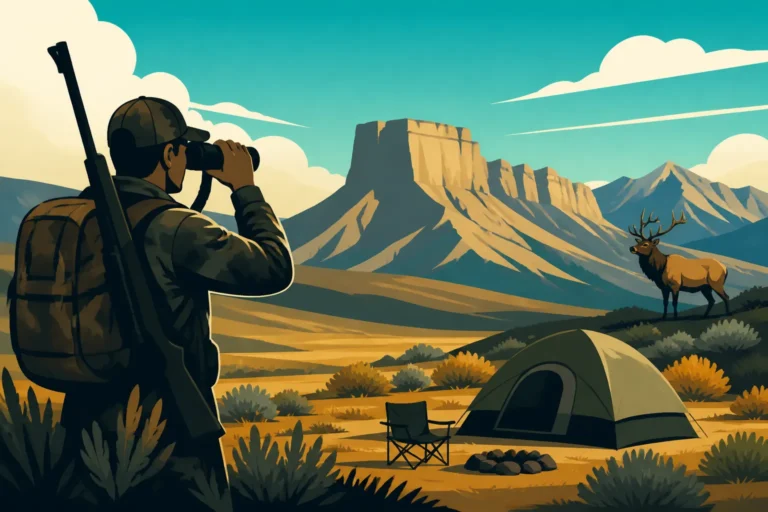
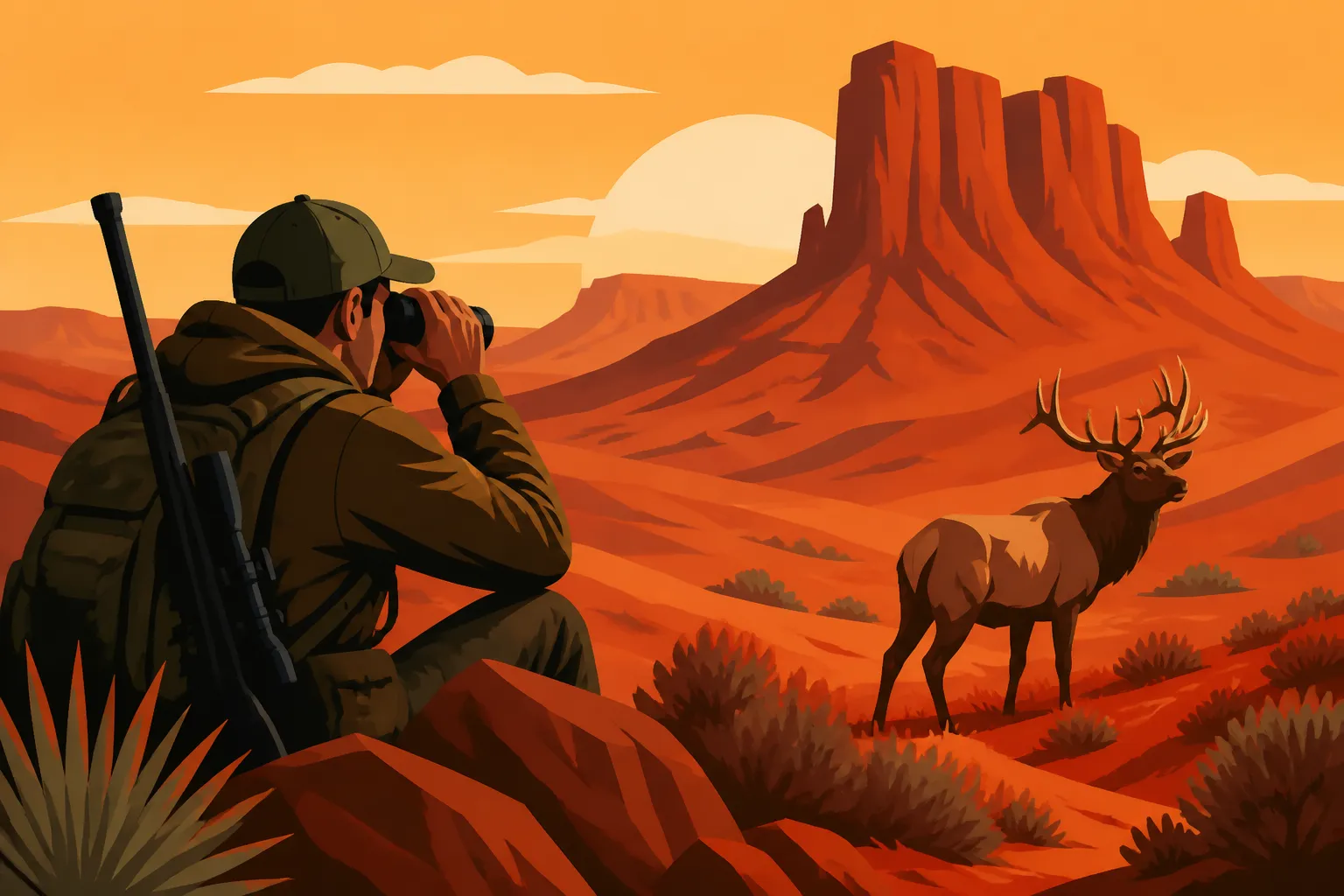
Imagine an ocean of sagebrush, stretching further than the eye can see, punctuated by low-lying buttes, ancient badlands, and alkali flats that shimmer in the distance. That's the Red Desert. This isn't country where you'll be sneaking through dense timber or using deep canyons for cover. Your visibility often extends for miles, which means any animals you're pursuing also have miles of visibility. This immediately shifts your hunting tactics from close-quarters stalking to long-range glassing and strategic, often painstaking, approaches.
The lack of significant topographical features means wind is almost always a factor, and it can swirl and change direction with little warning. You'll learn quickly that "playing the wind" takes on a whole new meaning when you don't have a mountain range to funnel or block it. Furthermore, water sources are few and far between, concentrated in isolated springs, stock tanks, or ephemeral puddles after a rare rain. This scarcity dictates game movement patterns and can make or break a hunt if you don't account for it. Planning your water strategy, both for yourself and for locating game, becomes paramount.
Navigating Extreme Weather and Remoteness
The Red Desert experiences true high-desert climate extremes. Summer days can be scorching, pushing well into the 90s or even 100s, while nights can drop dramatically. Fall hunting, while generally more pleasant, can still bring freezing temperatures, sudden blizzards, or persistent, biting winds that cut through layers. I've been caught in September snow squalls out there that turned dusty tracks into muddy quagmires in minutes. The key is to be prepared for everything within a single day. Layering is not just recommended; it's absolutely essential.
Beyond the weather, the sheer remoteness of much of the Red Desert is a critical factor. Cell service is practically nonexistent in vast areas. You are often hours from the nearest paved road, and even further from any services like gas, food, or medical help. This means self-sufficiency isn't just a good idea; it's a survival imperative. Your vehicle must be robust, reliable, and equipped for rough, rocky, and sometimes sandy two-tracks. Carry extra fuel, multiple spare tires, a comprehensive first-aid kit, plenty of food and water, and emergency communication devices like a satellite messenger or inReach. Breaking down fifty miles from the nearest human can quickly turn into a serious situation.
Key Game Species and What to Expect When Hunting Them Here
The Red Desert is primarily known for two big game species: pronghorn and mule deer. While elk can be found in the fringe mountains surrounding the desert, the core sagebrush country is home to these two iconic prairie dwellers.
Pronghorn: The Speedsters of the Sagebrush
If there's one animal that embodies the spirit of the Red Desert, it's the pronghorn. These incredible animals are built for speed and survival in this wide-open country. Their eyesight is legendary, often compared to that of an 8x binocular, making a close-range stalk a true test of patience, skill, and terrain utilization. Pronghorn Eyesight and the Stalking Distance It Forces is a great article to prepare you. You'll spend hours, maybe days, glassing from vantage points, trying to pick apart the landscape for a buck.
Pronghorn hunting in the Red Desert is often a spot-and-stalk affair. You'll drive two-tracks, stopping frequently to glass distant herds. Once a promising buck is spotted, the real work begins. This usually involves long hikes, often crawling on hands and knees through low sagebrush, using every slight rise or cutbank for cover. Expect shots to be longer than in many other hunting scenarios, given the open nature of the terrain. Hunters should be proficient and confident with their rifle at ranges stretching beyond 300 yards, and often closer to 400 or more, especially when playing the wind. Decoy setups, like those detailed in The Decoy Distance That Actually Pulls Antelope Bucks, can also be highly effective during the rut, drawing in curious bucks who can't resist challenging a perceived intruder.
| Species | Primary Habitat | Key Challenges | Typical Shot Distance | Essential Gear |
|---|---|---|---|---|
| Pronghorn | Open sagebrush, flats | Incredible eyesight, sparse cover, long distances | 300-500+ yards | High-power optics, rangefinder, fast-shooting rifle, flat-shooting cartridge, decoys (optional) |
| Mule Deer | Rolling hills, draws, rims, isolated badlands | Elusiveness, vastness, patchy distribution | 250-400+ yards | High-power optics, rangefinder, sturdy boots, hydration, navigation tools |
Mule Deer: Surviving in a Harsh Environment
Mule deer in the Red Desert are a different beast than their mountain cousins. They are often more scattered, incredibly wary, and adept at using the subtle contours of the land for cover. You won't find them in dense timber, but rather tucked into the bottoms of draws, behind low ridges, or bedded in isolated pockets of taller sagebrush or scattered junipers. The population objectives for herds like the Wyoming Range deer herd show how vulnerable these animals are to harsh winters, but also their resilience.
Hunting mule deer here is also primarily a glassing game, but instead of focusing on large, open basins for pronghorn, you'll be systematically picking apart draws, slopes, and rimrock country. Patience is paramount. Often, the deer you find will be ghosting through the landscape, making them incredibly difficult to spot. Early morning and late evening are prime times, as they move between bedding and feeding areas. Best Time of Day to Glass Mule Deer offers insights into effective timing. When you do find a buck, be prepared for a long, strategic stalk that might involve crawling for hundreds of yards, making full use of every piece of topography the desert offers. The Red Desert Mule Deer Migration Explained highlights the incredible journeys some of these animals undertake, further illustrating their adaptability and how difficult they can be to pattern.
Navigating Public Access and Land Status in the Red Desert
One of the biggest hurdles and sources of frustration for hunters in the Red Desert, especially non-residents, is understanding and navigating land ownership. Wyoming's landscape, particularly in the Red Desert, is a complex patchwork of public and private ground.
The Checkerboard Conundrum
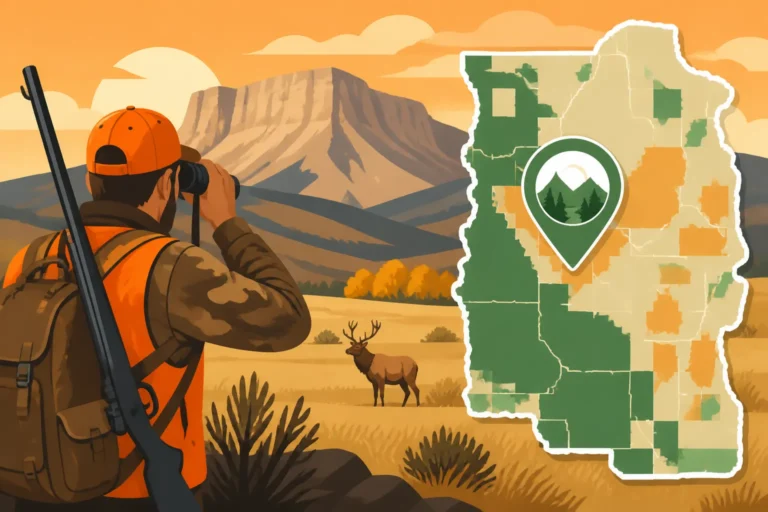
Much of the Red Desert falls into what's known as the "checkerboard" land pattern, a legacy of railroad grants from the 19th century. Imagine a massive chessboard laid across the landscape, where alternating squares are private and public (often BLM land). This creates a situation where public land can be surrounded on all four sides by private land, effectively "landlocking" it. This pattern can be incredibly frustrating, and understanding How Wyoming's Checkerboard Land Pattern Came About is crucial.
Knowing exactly where you are and what type of land you're on is not just helpful; it's legally essential. Trespassing onto private land, even unknowingly, can lead to fines, loss of hunting privileges, and a generally miserable experience. This is where modern mapping tools become absolutely indispensable. Applications like onX Hunt are invaluable, overlaying land ownership maps directly onto satellite imagery on your phone or GPS device. This allows you to see private, BLM, State, and National Forest lands in real-time, helping you avoid accidental trespass and plan your access routes effectively. You can mark waypoints, track your movements, and ensure you're always on legal ground.
Identifying Public Lands and Access Points
While the checkerboard pattern presents challenges, the good news is that What Percentage of Wyoming Is Federal Land is substantial, and a significant portion of the Red Desert is indeed public, primarily managed by the Bureau of Land Management (BLM). These vast tracts offer incredible hunting opportunities, but finding legal and practical access can still be tricky.
Many public lands are accessible via established county roads or BLM two-tracks. However, many of these two-tracks can be rough, require high-clearance 4×4 vehicles, and may not be maintained. It's vital to research your chosen hunt area thoroughly. This involves studying physical maps (like those from the BLM or Forest Service), digital mapping tools, and potentially calling the local BLM field office for current conditions or access restrictions. Using onX Public Land Layers in Wyoming can help you visualize these corridors and boundaries from home.
Wyoming also has State Trust Land, which is often open to public hunting but sometimes comes with specific rules. Always check the Wyoming Game and Fish Department (WGFD) website or current regulations for these areas. Additionally, programs like Access Yes, while more common in agricultural areas, occasionally open up private parcels in desert fringes for public hunting, as explained in How Wyoming's Access Yes Program Works. These areas are often walk-in only, meaning you leave your vehicle and proceed on foot. Always be on the lookout for yellow Access Yes signs.
Essential Strategies and Gear for Red Desert Success
Hunting the Red Desert requires a different mindset and gear list than hunting in the mountains. Preparation is the name of the game, blending physical readiness with smart equipment choices and a robust understanding of the environment.
Optics and Long-Range Shooting Prowess
Given the expansive views, high-quality optics are your best friend in the Red Desert. Forget those small binoculars you use in the woods; here, you'll want at least 10x or 12x binoculars, preferably stabilized, for scanning vast areas. A good spotting scope, 60x or 80x, mounted on a sturdy tripod is almost mandatory for confirming distant animals and assessing their trophy potential without putting on unnecessary miles. Optics Power for Wyoming's Long Sightlines is a great resource. You'll spend a lot of time behind glass, so comfort and clarity are paramount.
The open landscape often means long shots. While you should always strive to get as close as ethically and practically possible, prepare for scenarios where a shot at 300, 400, or even 500 yards might be your only option. This isn't a suggestion to take irresponsible shots, but rather an imperative to practice extensively at these distances. Know your rifle, your ammunition, and your personal limitations. A precise rangefinder, a ballistic calculator, and practice with your rifle zeroed for open country (perhaps 200 or 300 yards, as discussed in Rifle Zero Distance for Open Country Shooting) are critical.
Hydration, Navigation, and Vehicle Preparedness
You cannot overstate the importance of water in the Red Desert. Carry significantly more than you think you'll need, both for yourself and for emergency situations. Electrolyte tablets are also a wise addition. Dehydration can creep up quickly and severely impair judgment and physical ability.
Navigation tools are non-negotiable. While onX Hunt on your phone is excellent, always have backup. A traditional paper map of your hunt unit and a compass, and knowing how to use them, are lifesavers when electronics fail (and they will, whether from battery drain, dropping, or lack of signal). A dedicated GPS unit can also serve as a reliable backup. Always let someone know your detailed hunting plan, including your expected route and return time.
Your vehicle is your lifeline. A reliable 4×4 with good ground clearance is a must. All-terrain tires, at least one full-size spare, a tire repair kit, a small air compressor, extra fuel, and basic tools are not luxuries; they are necessities. Getting stuck or breaking down in remote areas can be incredibly dangerous. Consider bringing traction boards and a shovel. When possible, travel with another vehicle, or at least let someone back home know your route.
Thorough Scouting and Research
The Red Desert is not a place for last-minute decisions. Dedicated e-scouting using satellite imagery, topo maps, and resources like GoHunt (which offers draw odds, unit data, and migration maps) can give you a significant advantage. Look for areas with a mix of sagebrush, draws, and maybe some scattered rimrock or badlands. Pinpoint potential water sources and glassing knobs.
Even with extensive e-scouting, ground scouting before the season, if possible, is invaluable. This allows you to check road conditions, identify prime glassing locations, and get a feel for the scale and lay of the land. If pre-season scouting isn't feasible, dedicate your first day or two of the hunt purely to scouting and learning the area. The Red Desert rewards patience and meticulous preparation. It might just be the most challenging, yet most rewarding, hunt you'll ever undertake.
Disclaimer
This article is for general informational purposes only and does not constitute professional advice. Laws, prices and regulations vary by location and change over time. Consult a qualified professional for guidance on your specific situation.