Access Into the Bighorn National Forest
Hunting in Wyoming can feel like deciphering a complex puzzle, especially when you’re looking at vast public lands like the Bighorn National Forest. Trying to figure out where you can legally park, walk, and pitch a tent can be a major headache, often leading to frustration and wasted time. This guide will walk you through the specifics of accessing the Bighorn National Forest, offering practical advice and detailing key considerations to help you plan a successful and stress-free hunt.
Understanding the Bighorn National Forest: A Hunter's Overview
The Bighorn National Forest, nestled in north-central Wyoming, is a majestic and sprawling landscape that offers incredible hunting opportunities. For many, just looking at a map of it can be intimidating – it's a huge area, covering over a million acres across three distinct mountain ranges: the Bighorns, the Pryor Mountains, and the Rattlesnake Mountains. When you’re dreaming of chasing elk, mule deer, or even bear, this forest often comes to mind, and for good reason. It’s a mix of high alpine peaks, vast timbered slopes, open meadows, and deep canyons, each presenting its own set of challenges and rewards.
From a hunter's perspective, the Bighorns are not just one monolithic block. You've got different zones within it, ranging from easily accessible areas with well-maintained forest roads to remote wilderness areas where motorized travel is completely off-limits. Understanding this mosaic is the first step to planning any hunt here. Don't just see a green blob on a map; recognize it as a dynamic environment with varied access rules and terrain that will directly impact your hunting strategy.
Geographic Layout and Primary Access Points
The Bighorn National Forest spans across several counties, including Sheridan, Johnson, Big Horn, and Washakie. The main arterial roads that get you into the heart of the forest are generally U.S. Highways 14, 14A, and 16, which cut through the mountains, connecting the eastern plains with the Bighorn Basin to the west. These highways are paved and provide relatively easy access to numerous smaller forest roads and trailheads. However, "easy access" can be a bit misleading during hunting season, especially for popular game species, as these areas often see a lot of pressure.
Once you leave the main highways, you'll encounter a network of gravel and dirt roads. Some are well-maintained and passable by most vehicles, while others quickly degrade into rough two-tracks requiring high-clearance 4x4s. It’s crucial to know the condition of these roads before you commit to a route, especially if you’re pulling a trailer or relying on a less robust vehicle. Many of these secondary roads are seasonal, meaning they close down due to snow or wet conditions, often well before the end of the hunting season. Always check the current conditions with the Bighorn National Forest office before heading out.
What Makes the Bighorns a Prime Hunting Destination?
The Bighorn National Forest is renowned for its diverse big game populations, making it a highly sought-after destination for hunters. You'll find healthy herds of elk, particularly in the more remote wilderness areas and the transition zones between timber and open country. Mule deer are also abundant, inhabiting a wide range of habitats from high-elevation summer ranges to lower, more brushy areas. For those seeking other challenges, black bears are common throughout the timbered regions, and moose can be found in localized willow bottoms and riparian areas.
The sheer variety of habitat means you can tailor your hunt to your preferred style. Whether you enjoy rugged backcountry packing deep into the wilderness for a challenging elk hunt or prefer to work accessible timber fringes for mule deer, the Bighorns offer it. The draw of big country and the chance to escape crowds, especially during mid-week or later in the season, is a huge part of its appeal. However, this also means you need to be prepared for the demands of truly wild country, from variable weather to the physical exertion required for successful hunting here.
Navigating Access Points and Terrain
Getting into the Bighorn National Forest is one thing; navigating it effectively for hunting is another. This isn’t a place where you can just pull off any old highway and expect to find game immediately. The terrain is rugged, vast, and often steep, requiring careful planning and physical preparation. Understanding the nuances of roads, trails, and non-motorized areas will define your hunt.
Forest Roads and Vehicle Use
The Bighorn National Forest has a well-developed system of forest roads, categorized by their intended use and maintenance levels. You’ll find everything from paved scenic byways to primitive two-tracks that are barely more than old logging routes. The key is knowing which roads are open to public vehicle use and when. Many smaller roads are behind gates or marked as seasonal closures, meaning they’re only open during specific times of the year, often to protect wildlife winter range or prevent damage during spring thaw. Ignoring these closures can lead to fines and habitat damage, so always respect the signage.
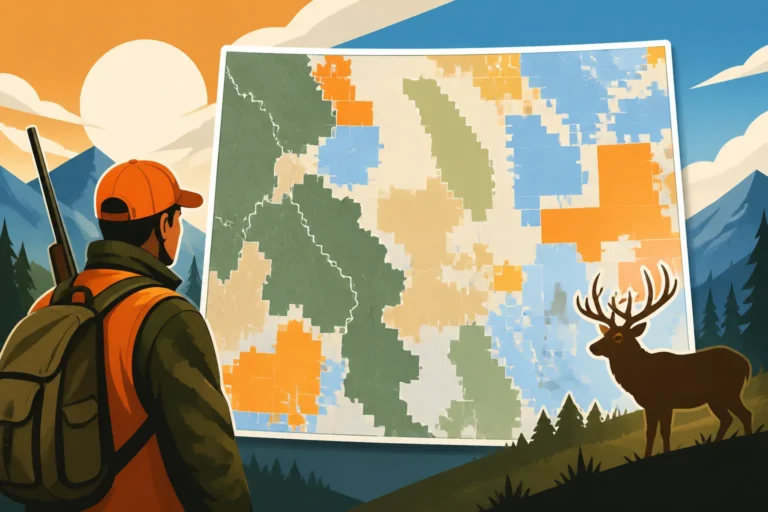
For hunters, this means using a reliable map, like those found on onX Hunt or detailed Forest Service Motor Vehicle Use Maps (MVUMs), is absolutely essential. These maps clearly mark roads that are open, closed, or restricted to specific vehicle types (e.g., ATVs only). Don't rely on general navigation apps; they often don't have the granular detail needed for responsible hunting access. You might find a promising looking track on a satellite image, only to discover it’s closed to motorized use or terminates on private land. Being prepared with the right mapping tools can save you hours of backtracking and frustration.
Trails and Wilderness Areas
Beyond the roads, the Bighorns boast an extensive network of hiking and equestrian trails. These trails are your gateway to the deeper, more remote sections of the forest, including designated wilderness areas. In Wyoming, Wyoming's Wilderness Guide Law for Nonresidents is a critical piece of information to be aware of if you plan to hunt bighorn sheep, moose, or elk in these areas. For many general hunts, however, these trails offer a chance to escape pressure and find less disturbed game. Remember, in wilderness areas, all motorized and mechanized transport (including mountain bikes) is prohibited. It's foot or horseback only.
The terrain off-trail can be incredibly challenging. You'll encounter steep slopes, dense timber, rocky outcroppings, and deep drainages. Navigating this kind of country requires excellent physical conditioning, solid navigation skills, and a commitment to carrying all your gear in and your game out. Planning your route, understanding elevation changes, and identifying natural travel corridors are vital for success. Sometimes, even what looks like a small creek on a map can be a deep, impassable gorge on the ground, so always factor in extra time and effort for scouting these remote sections, whether virtually or on foot before the season.
Seasonal Closures and Winter Range
A major consideration for hunting access in the Bighorn National Forest is seasonal closures. Many areas, particularly lower elevations and south-facing slopes, are designated as critical winter range for elk and mule deer. To protect these animals during their most vulnerable period, these areas are often closed to all public access (or motorized access) during late fall, winter, and early spring. These closures are not just suggestions; they are strictly enforced for wildlife conservation.
It's absolutely imperative to check the current closure orders before your hunt, especially if you're planning a late-season deer or elk hunt. A route you used in September might be completely inaccessible in November. These closures are typically marked on Forest Service maps and posted at trailheads and major access points. Failure to comply can result in serious penalties. It pays to have backup plans for access if your primary area falls within a seasonal closure.
Essential Tools for Planning Your Bighorn Hunt
Planning a successful hunt in the Bighorn National Forest isn't something you can do with just a casual glance at a road atlas. This vast and complex landscape demands meticulous preparation, and thankfully, modern tools can significantly enhance your planning process.
Digital Mapping Applications
In today's hunting world, digital mapping applications like onX Hunt are indispensable for navigating public lands. These apps overlay public and private land boundaries directly onto satellite imagery and topographic maps, clearly showing roads, trails, and landowner information. For the Bighorn National Forest, this means you can instantly identify National Forest land, know where it borders private property, and visualize terrain features like drainages, ridges, and timber pockets. This kind of detail is invaluable for scouting, route planning, and ensuring you're always on legal ground.
Beyond boundary lines, these apps often include layers for wilderness areas, motorized vehicle use, and even recent wildfire activity, all of which can drastically impact your hunt plan. You can drop waypoints for potential camp spots, water sources, game sign, or likely ambush points. Having this information on your phone or GPS unit, even without cell service (by downloading maps beforehand), gives you a huge advantage in understanding the lay of the land and making real-time decisions in the field. This capability allows you to truly understand your hunting area before you ever set foot in it, minimizing surprises.
Topographic Maps and Satellite Imagery
While digital apps are fantastic, traditional topographic maps still hold immense value, especially for understanding the subtle contours and elevation changes that satellite imagery alone might not fully convey. Combining high-quality topo maps with satellite views allows you to grasp the three-dimensional nature of the Bighorns. You can identify pinch points, saddles, benches, and thick cover that will dictate game movement and your approach.
For areas with dense timber or steep canyons, satellite imagery can sometimes obscure the ground truth. Topographic lines, however, always tell you the story of the slope. Many hunters use services like GoHunt not only for drawing odds and research but also for their integrated mapping tools that offer various base layers, including high-resolution satellite and detailed topographic views, which can be printed or used digitally. This dual approach gives you the most comprehensive understanding of the challenging Bighorn terrain.
Forest Service Resources and Local Intel
Beyond commercial products, the U.S. Forest Service provides invaluable, free resources. The Bighorn National Forest website offers current conditions, road closure updates, fire restrictions, and Motor Vehicle Use Maps (MVUMs). These MVUMs are the definitive source for legal motorized access and should be consulted alongside any other mapping tools. You can often download these directly to your device or pick up paper copies at ranger stations.
Equally important is talking to local contacts. A quick call to a Bighorn National Forest Ranger District office can provide up-to-the-minute information on road accessibility, specific localized closures, or recent game sightings. Local sporting goods stores or even coffee shops in nearby towns like Buffalo, Sheridan, or Lovell can also be goldmines of information from hunters who are regularly in the area. Just remember to be respectful and offer to share any general observations in return – it’s a small community, and goodwill goes a long way.
Key Regulations and Considerations for Bighorn Hunters
Hunting in the Bighorn National Forest means adhering to both statewide Wyoming hunting regulations and specific forest regulations. Ignoring either can turn an exciting hunt into a costly and disappointing experience. It’s not just about tags and seasons; it’s about how you behave on the land.
Camping and Campfire Rules
Dispersed camping is generally allowed throughout the Bighorn National Forest, which is fantastic for hunters who want to set up a backcountry spike camp or a comfortable base camp closer to a trailhead. However, there are rules. You must typically be a certain distance from developed recreation sites, water sources, and main roads. Also, always check for fire restrictions. During dry periods, campfires might be prohibited entirely, or only allowed within established fire rings at developed campgrounds. A small portable stove is a good backup for cooking, regardless.
When choosing a campsite, consider your impact. Practice Leave No Trace principles: pack out everything you pack in, minimize your footprint, and properly dispose of human waste. In grizzly country, which parts of the Bighorns are, stringent food storage regulations apply. All food, garbage, and scented items must be stored in bear-resistant containers or hung from a tree out of a bear's reach. Failing to follow these rules is not just risky for you but can also habituate bears to human food, leading to dangerous encounters and potential wildlife management actions.
Firearm and Archery Regulations
Wyoming has specific rules regarding legal firearms and archery equipment for big game. For instance, Wyoming Sets Bow Draw Weight at 40 Pounds, 50 for Elk covers minimum draw weights for various species, while What Wyoming Counts as a Legal Firearm for Big Game details legal calibers and weapon types for rifle hunters. It's not enough to just have a tag; your equipment must meet state standards. This includes broadhead minimums for bowhunters and caliber minimums for firearms.
Also, be acutely aware of shooting hours, which are typically half an hour before sunrise to half an hour after sunset. Shooting outside these hours is illegal. When you're in the Bighorns, especially near roads or established campgrounds, you also need to be mindful of safe shooting zones and ensure a clear backstop for any shot. Public safety is paramount, and accidental discharges or unsafe shooting practices can lead to serious consequences.
Other Important Forest-Specific Rules
Beyond general hunting laws, the Bighorn National Forest might have specific rules regarding things like off-road vehicle use, baiting, or the use of electronic calls. For example, while Electronic Calls for Predators and Varmint Hunting might be legal in many parts of Wyoming, specific restrictions can apply within National Forest boundaries or for certain game species. It's easy to assume that rules are uniform across an entire state, but local forest and district regulations often add another layer of complexity.
Here's a quick look at some key aspects to consider:
| Aspect | General Bighorn National Forest Rule | Hunter's Consideration |
|---|---|---|
| Motorized Travel | Restricted to marked roads and trails; check MVUMs for current status and seasonal closures. | Plan routes carefully, have backup options, and always carry a physical map or downloaded digital maps. |
| Dispersed Camping | Generally allowed, but rules apply regarding distance from roads/water and duration. Check for fire restrictions. | Choose low-impact sites, practice bear-safe food storage, and pack out all trash. |
| Wilderness Areas | Non-motorized, non-mechanized access only. Designated wilderness areas might require a guide for non-residents. | Be prepared for arduous foot or horseback travel; understand Wilderness Rules Every Wyoming Nonresident Should Know. |
| Fire Restrictions | Vary by season and conditions; typically announced by the Forest Service. | Always check current fire danger and restrictions before building a fire. Carry a stove as a backup. |
| Food Storage | Critical in areas with grizzly bears (certain parts of the Bighorns). Bear-resistant containers or hanging required. | Protect your camp and prevent bear habituation; know proper food storage techniques. |
Always double-check the official Wyoming Game and Fish Department regulations for your specific species and hunt area, alongside any current Bighorn National Forest orders. These resources are readily available online and at local offices, and being informed is your best defense against inadvertently breaking a rule. Knowing these details upfront will allow you to focus on the hunt, not on worrying if you're in the wrong place or using the wrong gear.
Disclaimer
This article is for general informational purposes only and does not constitute professional advice. Laws, prices and regulations vary by location and change over time. Consult a qualified professional for guidance on your specific situation.