Elk and Deer Hunting in Johnson County
Johnson County, Wyoming, offers a captivating but often challenging landscape for big game hunters. Many hunters, especially those new to this part of the state, find themselves scratching their heads, wondering how to tackle the vast tracts of public land and the intricate private land boundaries, all while trying to pinpoint where the elk and deer actually live. This guide aims to unravel the complexities of hunting elk and deer within Johnson County, providing you with actionable insights and strategies to increase your chances of a successful and memorable hunt.
Understanding Johnson County's Landscape and Herds
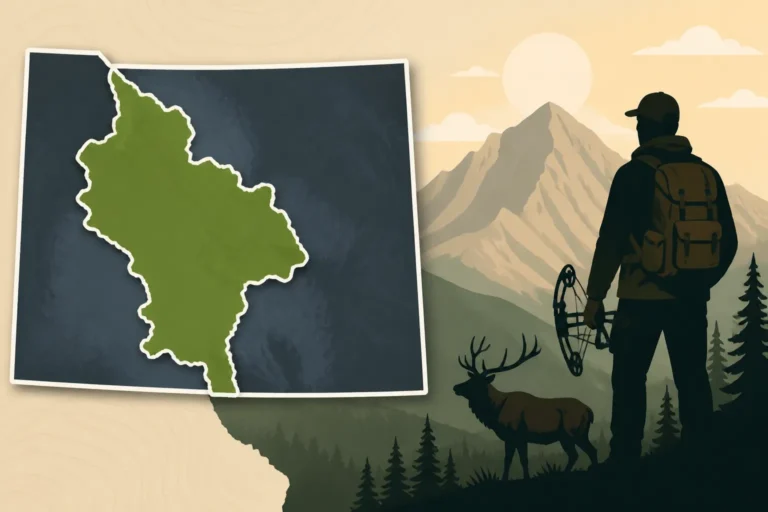
Johnson County is a fascinating blend of towering mountains, rolling foothills, and expansive plains, each offering distinct opportunities and challenges for the hunter. This diverse geography is precisely what makes it a stronghold for both elk and deer, but it also demands a nuanced understanding of where each species prefers to roam.
Geographic Overview and Habitat for Elk
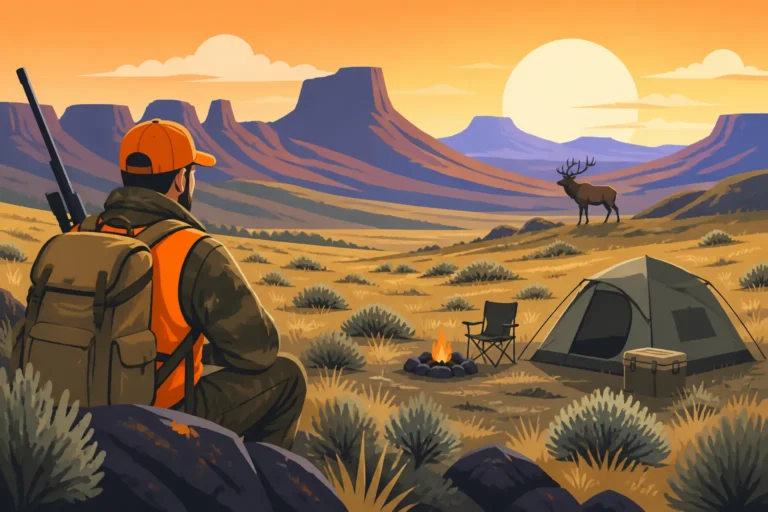
When you think of elk in Johnson County, your mind should immediately drift to the Bighorn Mountains. The western portion of the county extends deep into these rugged ranges, providing the steep, timbered slopes and high mountain meadows that elk absolutely thrive in. These areas are characterized by significant elevation changes, ranging from dense conifer forests in the higher elevations to aspen groves and open parks that dot the landscape. During the early archery seasons and the general rifle opener, many elk will still be utilizing these higher elevations, seeking refuge in the dark timber during the day and feeding in the open parks at dawn and dusk. As the weather cools and snow begins to accumulate, especially during the later rifle seasons, elk will often start a slow migration to lower elevations, following traditional routes to more sheltered winter range in the foothills.
This transition from high country to lower slopes is a critical factor for elk hunters to understand. What worked in September at 9,000 feet might not be effective in November at 6,000 feet. You'll need to adapt your scouting and hunting efforts to these seasonal shifts. Successful elk hunters in Johnson County spend considerable time not just looking for elk, but for the sign of elk movement, understanding that these animals are constantly reacting to forage availability, pressure from other hunters, and weather patterns. Wyoming Elk Season Dates Are Set Hunt Area by Hunt Area are highly variable by area, so checking the specific dates for your Johnson County unit is paramount.
Mule Deer and Whitetail Zones
Johnson County is a bit unique in that it offers solid opportunities for both mule deer and whitetail, each occupying different ecological niches within the county.
Mule Deer: The iconic mule deer of the West are found primarily in the western and central parts of Johnson County, in the foothills of the Bighorns and extending into the vast sagebrush-dominated plains and broken badlands of the Powder River Basin. These deer are masters of utilizing sparse cover, often blending seamlessly into draws, coulees, and the folds of the rolling terrain. They thrive in country that might appear barren to the untrained eye, but is actually rich with sagebrush, bitterbrush, and various forbs that make up their diet. Hunting mule deer here often involves extensive glassing, covering vast amounts of ground with your optics to locate bedded or feeding animals. Once spotted, a patient and strategic Stalking Pronghorn Across Wyoming's Open Sagebrush (a similar approach often applies to mule deer) is necessary, using every undulation of the land to close the distance.
Whitetail Deer: In contrast, whitetail deer in Johnson County are predominantly found in the eastern part of the county, particularly along the river bottoms and drainages associated with the Powder River, Crazy Woman Creek, and other riparian areas. These lush corridors, often interspersed with agricultural fields, provide the dense cover, consistent water sources, and abundant food that whitetails prefer. Unlike their mule deer cousins, whitetails are more apt to stay within a smaller home range, relying on their incredible ability to vanish into thickets. Hunting the Whitetail River Bottoms of Eastern Wyoming requires a different set of tactics, often involving stand hunting, still-hunting through thick cover, or drives, depending on the terrain and hunting pressure. Understanding their localized patterns, especially during the rut, can be key to success.
Navigating Regulations and Access in Johnson County
Understanding Johnson County's geography is just the first step. Next comes the crucial task of deciphering regulations and figuring out how to legally access the land. Wyoming's land ownership mosaic can be complex, and Johnson County is no exception.
Key Hunt Areas and License Types
Wyoming breaks its big game hunting into specific "Hunt Areas," which are geographical units defined by the Wyoming Game and Fish Department (WGFD). For elk and deer in Johnson County, you'll be dealing with several of these units. It's absolutely critical to know which hunt area your tag is valid for, as boundaries can be intricate and specific to the species. For example, an elk hunt area might cover a different geographical footprint than a deer hunt area, even in the same general vicinity.
Wyoming offers both general licenses and limited quota licenses. Wyoming General Licenses Against Limited Quota: Two Different Games explains this in detail. General licenses for deer, for instance, often allow hunting in a broader region, giving you more flexibility. However, many of the prime elk and mule deer areas within Johnson County operate under limited quota licenses, meaning you have to draw these tags in a competitive lottery. This is where researching draw odds and accumulating preference points becomes vital. Without a clear understanding of your license type and the boundaries of your specific hunt area, you risk violating regulations, and trust me, that's not how you want your hunt to go.
Public Land Access and Private Land Considerations
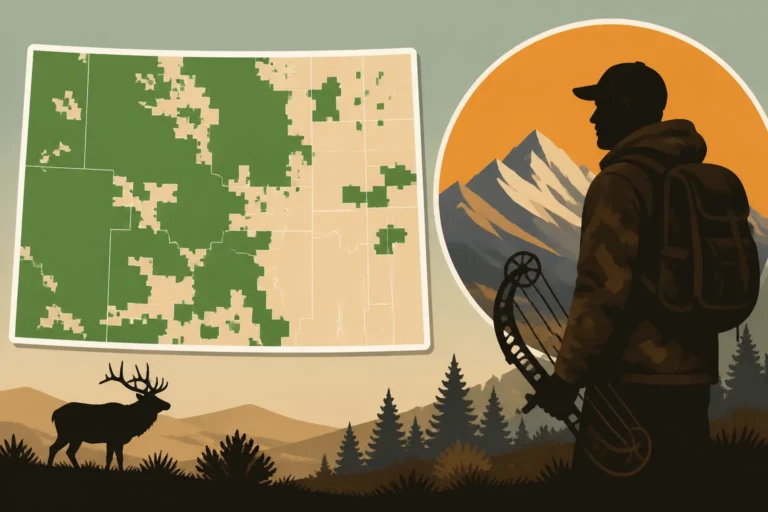
Johnson County features a substantial amount of public land, particularly in the western mountainous regions and scattered across the central plains. These include large swaths of national forest (part of the Bighorn National Forest) and vast tracts of Bureau of Land Management (BLM) ground. BLM Holds 27,860 Square Miles of Wyoming is excellent news for public land hunters, but access isn't always straightforward.
The challenge often lies in the "checkerboard" land patterns, where alternating sections of public and private land create a complicated patchwork. This is where modern mapping tools become indispensable. Services like onX Hunt are game-changers, allowing you to clearly visualize land ownership boundaries, identify public access points, and plan your routes without inadvertently trespassing. Many hunters ask, Can You Rely on onX for a Boundary?, and while it's an incredibly powerful tool, it's always wise to cross-reference with official maps and maintain a healthy respect for property lines.
Beyond mapping, understanding different types of access is key:
- Public Roads and Trailheads: This is the most common and often easiest way to access public land.
- Walk-In Areas and Hunter Management Areas (HMAs): The WGFD's Access Yes program is a fantastic resource. Access Yes Opens Private Wyoming Ground to Public Hunters by securing agreements with private landowners to allow public hunting. These areas are designated as Walk-In Areas (WIAs) or Hunter Management Areas (HMAs), and while both offer public access, HMAs often require a permission slip, obtainable online, so always check the specific requirements for the area you plan to hunt.
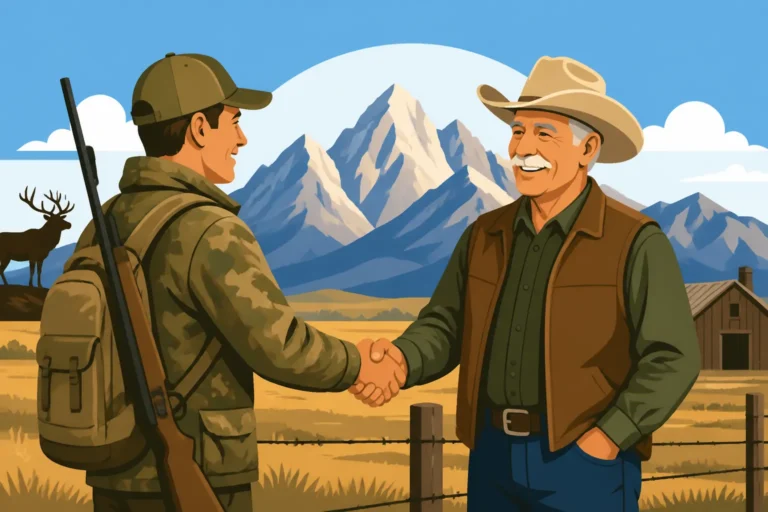
- Private Land Permission: Many exceptional hunting opportunities, especially for whitetail along river bottoms or for mule deer on plains, lie on private ground. The only way to hunt these lands is to obtain explicit permission from the landowner. This might involve knocking on doors, sending letters, or in some cases, paying a trespass fee or hiring an outfitter. Respecting private property is not just a legal obligation, it's crucial for maintaining positive landowner-hunter relations for future generations.
Strategies for Successful Elk and Deer Hunting
With the lay of the land and regulations understood, it's time to talk tactics. Johnson County's varied terrain means you'll need a versatile approach to hunting elk and deer effectively.
Elk Hunting Tactics Specific to Johnson County
Hunting elk in the Bighorns demands a blend of physical stamina and keen observation.
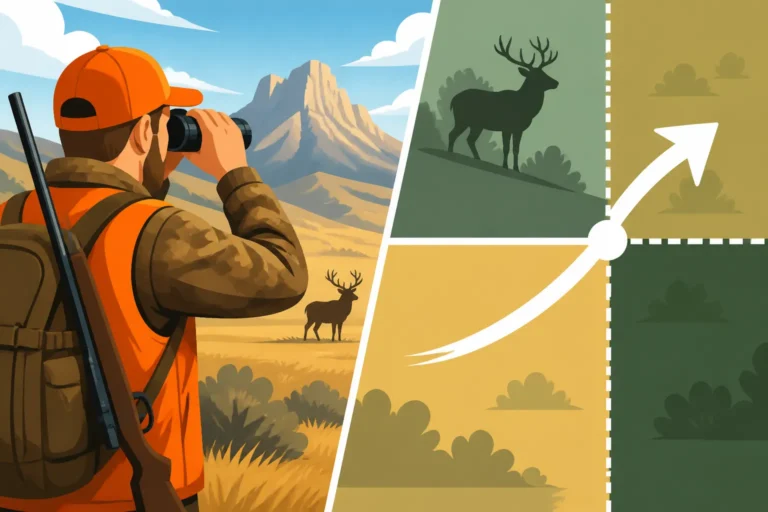
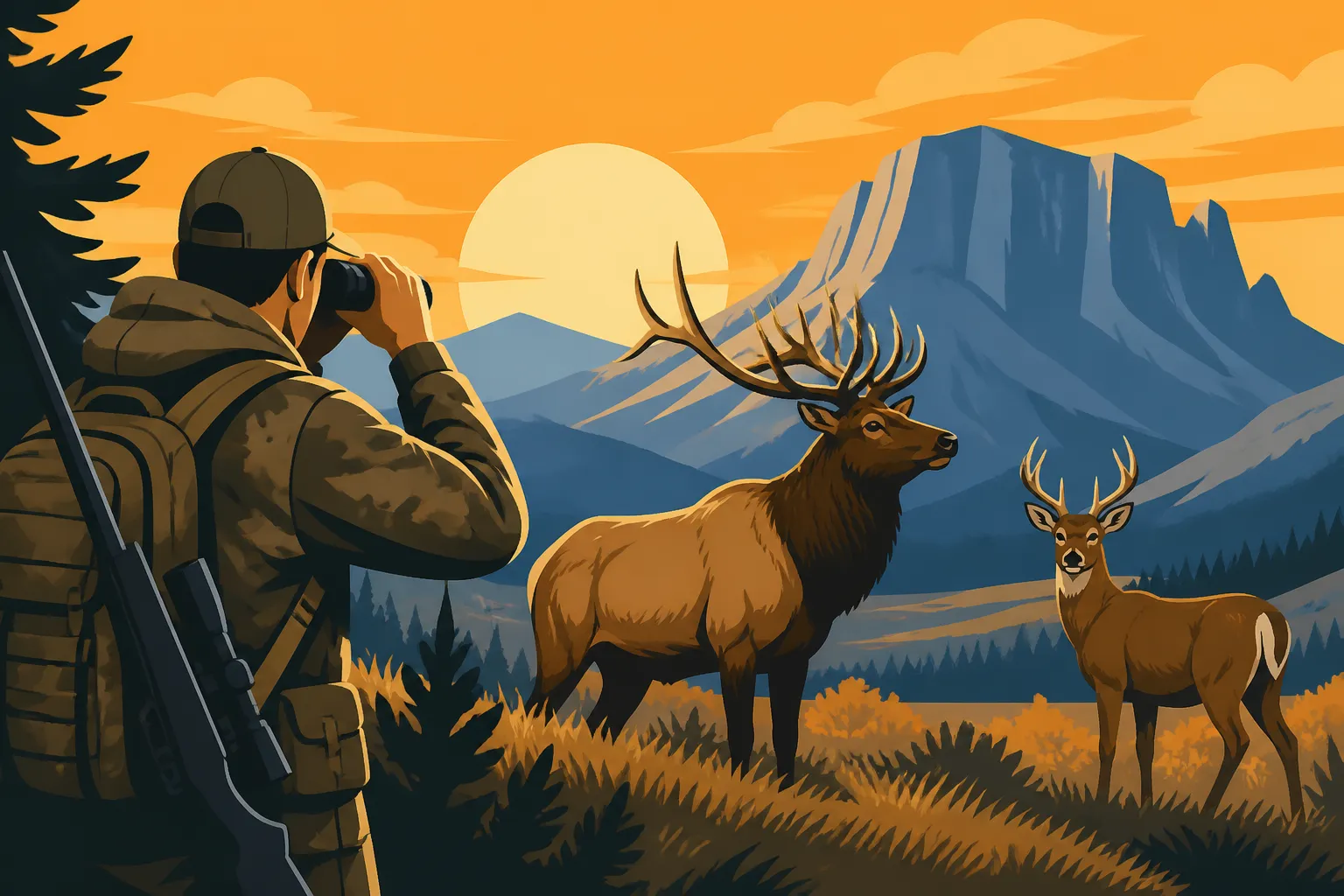
- Glassing: This is your primary tool. Utilize high-quality binoculars and a spotting scope on a tripod. Find elevated vantage points early in the morning and late in the evening. Systematically Grid Glassing a Basin Without Missing Bucks (an approach equally effective for elk) to pick apart distant hillsides, timber edges, and meadows where elk feed. Look for subtle movements, unusual colors, or horizontal lines in vertical timber.
- Calling: During the early season and into the peak of the rut, calling can be incredibly effective. Locator bugles can help you find bulls, while cow calls and subtle glunking can bring them closer. Learning Bugle and Cow Call Timing Through the Rut is crucial, as the type of call and intensity will change throughout the season. On heavily pressured public land, sometimes less is more, and subtle cow calls can be more effective than aggressive bugles.
- Stalking and Still-Hunting: Once you locate elk, a careful stalk is often necessary. Pay close attention to wind direction and terrain features that can provide cover. When in dense timber, slow, methodical still-hunting can be productive, moving only a few steps at a time and pausing to listen and scan. Remember, elk have incredible senses, and you'll need to be at your stealthiest. Understanding Terrain That Hides an Approach will be invaluable.
- Seasonal Movement: Early season elk in Johnson County's Bighorns will often be higher, but as hunting pressure increases and winter approaches, they'll begin to move down. Focusing on transition areas, saddles between ridges, and benches at varying elevations can be productive as the season progresses.
Deer Hunting Approaches for Different Species
Different deer, different strategies. Adapting to the species and habitat is key.
Mule Deer: In Johnson County's more open mule deer country, patience and optics are your best friends.
- Spot and Stalk: This is the quintessential mule deer hunting method. Spend hours Best Time of Day to Glass Mule Deer from high points, patiently scanning vast landscapes for the subtle movement or tell-tale ear flick of a deer. Mule deer often bed on hillsides with good visibility, so knowing how to pick them out against the background is a skill that develops with practice.
- Understanding Patterns: Mule deer in these open environments often have predictable routines, especially regarding feeding and bedding areas. E-scouting platforms like GoHunt can help you identify potential travel corridors, water sources, and bedding areas before you even set foot in the field. This allows for a more targeted approach.
- Wind and Terrain: Always use the wind to your advantage when stalking. Mule deer rely heavily on their sense of smell. Also, use every piece of terrain for cover, whether it's a small rise, a cutbank, or a clump of sagebrush, to break up your silhouette.
Whitetail Deer: Hunting whitetails in the river bottoms of eastern Johnson County demands a more intimate knowledge of smaller, denser parcels.
- Stand Hunting: This is a highly effective method where dense cover limits visibility. Identifying key pinch points, rubs, scrapes, or travel corridors between bedding and feeding areas, and then setting up a treestand or ground blind, can be incredibly productive.
- Still-Hunting Dense Cover: Slowly and quietly moving through thick river bottom timber, pausing frequently to scan and listen, can lead to encounters with bedded or moving deer. This requires extreme patience and attention to detail.
- Tracking and Sign: Whitetails leave abundant sign in their preferred habitats. Learning to read rubs, scrapes, and fresh tracks will help you understand their movement patterns and narrow down their locations. During the whitetail rut When Whitetail Rut Dates Fall on the Plains, these signs become even more pronounced, indicating increased buck activity.
Planning Your Johnson County Hunt
Thorough preparation is the bedrock of any successful hunting trip, especially in a diverse and potentially challenging area like Johnson County.
Essential Tools and Information Sources
You wouldn't head into the wilderness without a map, and in today's hunting world, that map needs to be digital and highly detailed.
- Mapping Applications: Tools like onX Hunt are invaluable. They provide detailed land ownership overlays (public, private, state trust), topographic maps, satellite imagery, and GPS functionality, all critical for navigating Johnson County's complex land mosaic. They can also help you mark waypoints for game sightings, water sources, and potential ambush points.
- Research Platforms: Beyond mapping, platforms like GoHunt offer comprehensive draw odds, harvest statistics, and unit-by-unit breakdowns, helping you make informed decisions when applying for those coveted limited quota tags. They also provide valuable insights into herd health and population trends.
- Official Regulations: Always, always, always consult the current Wyoming Game and Fish Department regulations. These are the definitive source for season dates, bag limits, weapon restrictions, and any other specific rules for your chosen hunt area in Johnson County. Regulations can change annually, so relying on outdated information is a recipe for disaster. Where the Current Wyoming Regulations Are Posted
- Physical Conditioning: The varied terrain of Johnson County, especially the Bighorn Mountains, demands good physical fitness. Whether you're hiking steep slopes for elk or covering miles of rolling plains for mule deer, being in shape will make your hunt more enjoyable and increase your stamina for those critical moments. Physical Conditioning for a Mountain Hunt is not a suggestion, it's a requirement for a rewarding mountain experience.
- Optics: As mentioned, good quality binoculars (10×42 or 12×50 are popular choices) and a spotting scope (15-45x or 20-60x) are essential for effective glassing in Johnson County's expansive landscapes. Optics Power for Wyoming's Long Sightlines can make or break your ability to find game from a distance.
Season Dates and Application Strategy
Timing is everything in hunting, and Johnson County's diverse habitat means season dates can vary significantly.
- Elk Seasons: Elk seasons in Johnson County can range from early archery opportunities in late August/early September, through various rifle seasons extending into November. These are highly specific to each hunt area.
- Deer Seasons: Similarly, deer seasons will have archery openers, often in September, followed by various rifle seasons. Whitetail seasons along the river bottoms might run longer or have different dates than mule deer seasons in the foothills or plains.
- Application Process: For limited quota tags, you'll need to participate in the Wyoming draw. This involves applying well in advance of the season, usually in January or February for elk, and April or May for deer and antelope. Understanding How Wyoming Splits Every Draw 75 Percent Points and 25 Percent Random is crucial for developing a long-term strategy, especially if you're aiming for high-demand units. Many hunters purchase preference points annually, even if they don't apply for a tag, to build up their chances for future hunts. Buying Wyoming Preference Points Without Applying for a Tag is a common strategy.
Hunting in Johnson County: A Snapshot
| Species | Primary Habitat Type | Key Hunting Strategy | Typical Challenges |
|---|---|---|---|
| Elk | Bighorn Mountains (timber, high meadows) | Glassing, calling (rut), stalking, still-hunting | High elevation, thick timber, physical demand, pressure |
| Mule Deer | Foothills, sagebrush plains, draws | Spot and stalk, extensive glassing | Open country, long distances, wary animals, pressure |
| Whitetail | River bottoms, riparian areas, agriculture | Stand hunting, still-hunting dense cover | Limited visibility, dense cover, private land access |
Johnson County offers a wide spectrum of hunting experiences, from the demanding mountain elk hunts to the strategic river bottom whitetail pursuits. Success hinges on thorough preparation, a deep respect for the landscape and its wildlife, and the flexibility to adapt your methods to the dynamic conditions of Wyoming.
Disclaimer
This article is for general informational purposes only and does not constitute professional advice. Laws, prices and regulations vary by location and change over time. Consult a qualified professional for guidance on your specific situation.