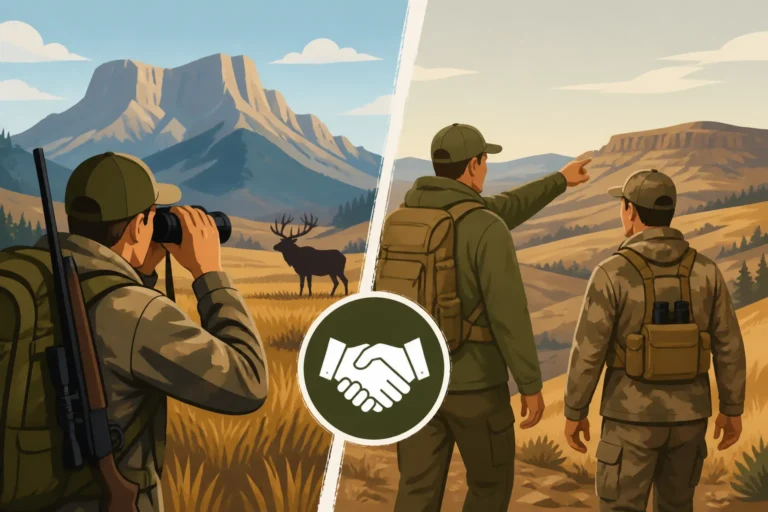
Every Wyoming Guide Works Under a Licensed Outfitter
Planning a hunting adventure in Wyoming can feel like navigating a legal labyrinth, especially when you start looking into professional assistance. Many hunters, particularly those new to the state or nonresident, get tangled up in the terminology and regulations surrounding guides and outfitters. It’s a common frustration to wonder who’s who, who’s licensed, and who you can actually trust to lead you into the vast, wild country. This comprehensive guide is here to untangle that confusion, explaining Wyoming's unique system where every professional guide operates directly under a licensed outfitter, ensuring a clearer, safer, and more regulated hunting experience for everyone involved.
Understanding the Wyoming Outfitter-Guide Structure
Wyoming has a very specific and intentional structure when it comes to professional hunting services. It's not just a matter of semantics; it's a legal framework designed to ensure accountability, safety, and a certain standard of professionalism. This system often surprises hunters who might be used to other states where "guide" and "outfitter" are sometimes used interchangeably or have less rigid definitions. Here, the distinction is clear and absolutely critical.
The Fundamental Relationship: Outfitter as the Principal
At the heart of Wyoming's professional hunting services lies the outfitter. Think of the outfitter as the business entity, the licensed operator who holds the permits, the insurance, and the ultimate responsibility for the hunting trips offered. An outfitter is a person or business that, for compensation, arranges and conducts hunting or fishing activities, or provides accommodations, equipment, and services for these activities. They are the ones with the official state license from the Wyoming Board of Outfitters and Professional Guides.
This means that whether you're booking a full-service elk hunt, a drop camp for mule deer, or even just hiring someone to pack your gear into the backcountry, you're ultimately dealing with an outfitter. The outfitter is the principal, the person or company whose name is on the legal documents, and who is ultimately accountable to the state for the operations of their business. They are the ones who recruit, train, and employ the guides, ensuring everyone working for them adheres to Wyoming's strict hunting regulations and ethical standards. This clear line of authority protects you, the hunter, by having a single, responsible party overseeing the entire operation.
Why This Structure Matters for Hunters
Understanding this hierarchical structure isn't just academic; it has very real implications for your hunting trip. First and all foremost, it provides a layer of consumer protection. When you book a hunt, you are contracting with the outfitter. This means the outfitter is legally responsible for the actions of their guides and sub-guides. If a guide makes a mistake, violates regulations, or fails to deliver on promised services, the outfitter is the one held accountable by the state's licensing board. This greatly reduces the risk of encountering rogue operators or individuals acting outside the bounds of established legal and ethical practices.
Secondly, this system promotes professionalism. Outfitters, to maintain their license and reputation, are motivated to ensure their guides are well-trained, knowledgeable, and competent. They often invest in their guides' education, first aid certifications, and continued development, knowing that the guide's performance reflects directly on their business. As a hunter, this means you can expect a higher standard of service and expertise from the guides you encounter in Wyoming. When you're spending your hard-earned money and precious vacation time on a hunting trip, knowing there's a licensed, accountable entity behind the scenes provides significant peace of mind. This structured approach helps ensure that your experience, whether it's a grueling backcountry trek or a more comfortable base camp hunt, meets the expectations set by state regulations and the outfitter's reputation.
What Defines a Licensed Wyoming Outfitter
Becoming a licensed outfitter in Wyoming is a rigorous process, far beyond simply hanging a shingle. It involves meeting specific criteria set by the state, designed to safeguard both the hunting public and Wyoming's precious wildlife resources. This isn't a casual endeavor; it's a serious business commitment with significant oversight.
Licensing, Bonding, and Insurance Requirements
To operate legally in Wyoming, an outfitter must first obtain a license from the Wyoming Board of Outfitters and Professional Guides. This board is the regulatory body overseeing the entire industry in the state. The licensing process involves demonstrating significant experience in hunting, outfitting, or guiding, often requiring years of proven work in the field. It’s not just about knowing how to hunt; it’s about understanding the logistics of running a complex operation, managing staff, and adhering to a myriad of state and federal laws.
Beyond the basic license, a key component of an outfitter's legal standing is their bonding and insurance. Outfitters are required to carry a surety bond, which acts as a financial guarantee that they will fulfill their contractual obligations to clients. If an outfitter fails to provide the services as agreed upon, this bond can provide a mechanism for clients to recover funds. In addition to bonding, comprehensive liability insurance is mandatory. This protects both the outfitter and their clients in the event of accidents or unforeseen circumstances that might occur during a hunt. These financial safeguards are crucial because they offer a tangible layer of protection for hunters who are often making significant financial investments in their hunting trips. You want to know that if something goes wrong, there are mechanisms in place to address it.
The Responsibilities of an Outfitter
An outfitter's responsibilities extend far beyond just signing up clients. They are the strategic planners, the logistical wizards, and the ultimate decision-makers for their operation. Their duties include obtaining all necessary permits for operating on public lands, such as those managed by the Bureau of Land Management (BLM) or the National Forest Service. This can involve extensive paperwork, environmental reviews, and adherence to specific land-use regulations. A good outfitter understands these complexities and navigates them smoothly, ensuring your hunt is legal and sustainable.
Furthermore, the outfitter is responsible for equipping the hunt. This means everything from horses and pack saddles to tents, cooking gear, and safety equipment. They must ensure all gear is in good working order and meets safety standards. They also handle the training and supervision of their guides, ensuring that everyone working for them is competent, ethical, and follows all state hunting regulations. This oversight is paramount; an outfitter's reputation—and livelihood—depends on the performance and integrity of their entire team. They are also the primary point of contact for clients, managing bookings, deposits, and addressing any concerns that arise before, during, or after a hunt. It’s a demanding role, requiring a deep understanding of both the hunting world and business management. When you're considering a significant investment like a guided hunt, remember that Vetting a Wyoming Outfitter Before You Send a Deposit is incredibly important, as is understanding the depth of their responsibilities.
The Role of a Professional Guide in Wyoming
While the outfitter is the business owner and orchestrator, the professional guide is the boots-on-the-ground expert who directly leads and assists hunters in the field. These individuals are crucial to the success and safety of your hunt, and their role is strictly defined by Wyoming law. They are the ones who wake up before dawn with you, track game, make calls, and ultimately help you pursue your quarry.
What a Guide Can (and Cannot) Do
A professional guide in Wyoming is licensed by the same state board as outfitters, but their license is specific to guiding activities. They are the individuals who possess specialized knowledge of the local terrain, animal behavior, tracking techniques, and hunting strategies for specific species like elk, deer, or antelope. They lead hunters, provide advice, help with glassing, stalking, and field dressing. A skilled guide is intimately familiar with the hunt area, including where animals feed, water, and bed, and how their patterns change with weather and pressure. They can also provide essential safety oversight, particularly in rugged or remote wilderness areas.
However, a professional guide cannot operate independently for compensation. They are legally prohibited from soliciting clients directly, advertising their services as a standalone entity, or signing contracts with hunters. All of these commercial activities must go through their employing outfitter. This distinction is vital for hunters to understand because it reinforces the accountability chain. If someone offers to "guide" you for money in Wyoming but isn't working for a licensed outfitter, they are operating illegally, and you could be putting yourself in a risky situation, potentially facing legal repercussions yourself. The guide's license allows them to work, but the outfitter's license allows the business to operate and collect payment.
The Importance of Working Under an Outfitter's Authority
The legal requirement for a professional guide to work under a licensed outfitter is not merely bureaucratic; it’s a cornerstone of Wyoming’s regulated hunting industry. This ensures that every guide operating commercially in the state is part of an established, vetted, and accountable operation. When a guide works for an outfitter, they are covered by the outfitter's insurance and bond, and their actions fall under the outfitter's responsibility and oversight. This provides a crucial safety net for hunters.
Imagine the alternative: if any individual could simply declare themselves a "guide" and take clients into the wilderness, there would be no guaranteed standards of safety, ethics, or financial accountability. By tethering guides to outfitters, the state maintains control over the industry, ensuring that a baseline level of professionalism and client protection is met. For hunters, this means that when you book through a reputable outfitter, you're not just hiring an individual; you're engaging with a professionally structured service where the outfitter takes ultimate responsibility for the quality and legality of your hunt. This structure reinforces why Every Wyoming Guide Works Under a Licensed Outfitter, and why that framework is designed for your benefit.
Navigating Wyoming's Wilderness Guide Law
Wyoming has a specific law that often comes as a surprise to nonresident hunters, particularly those eyeing the state's vast and wild backcountry: the nonresident wilderness guide law. This regulation isn't about making things harder; it's about safety, resource protection, and supporting local businesses within some of the most remote and challenging hunting grounds in the Lower 48.
When a Nonresident Absolutely Needs a Guide
If you're a nonresident hunter planning to hunt elk, deer, antelope, moose, bighorn sheep, or mountain goat in any designated Wilderness Area in Wyoming, you are legally required to employ a licensed Wyoming outfitter or be accompanied by a resident guide. This is one of the most important pieces of information any nonresident planning a deep backcountry hunt needs to know. You cannot simply enter a designated wilderness area and hunt big game as a nonresident without one of these two forms of accompaniment.
What constitutes a "designated Wilderness Area"? These are federally protected lands, managed by the Forest Service or other agencies, set aside specifically for their wild, untrammeled character. They are often vast, roadless, and require significant wilderness skills and self-reliance. Think of areas like the Bridger-Teton Wilderness, the Popo Agie Wilderness, or parts of the Shoshone National Forest. These are not places for the inexperienced or ill-prepared, and the guide law is, in part, a response to the inherent risks and complexities of hunting in such environments. The penalty for violating this law can be severe, including fines, license revocation, and even confiscation of game, so it's absolutely crucial to understand if your chosen hunt area falls within a designated wilderness. For more specifics, checking Wyoming's Wilderness Guide Law for Nonresidents is a must.
The Specifics of the Two-Hunters-Per-Guide Rule
Should you decide to go the professional outfitter route for your wilderness hunt (and for many nonresidents, it's the only practical option), Wyoming also has a specific rule regarding the ratio of guides to hunters. The law states that a licensed outfitter, or their professional guide, can supervise no more than two nonresident hunters at any given time within a designated wilderness area. So, if you're a party of four nonresident hunters, you would need at least two licensed guides from your outfitter to accompany you.
This "one guide for every two hunters" rule is designed to ensure adequate supervision and safety in challenging terrain. It prevents a single guide from being overwhelmed with too many clients, potentially compromising safety or the quality of the hunt. It also reinforces the idea that these hunts are serious endeavors requiring focused attention. It's a logistical consideration that outfits must factor into their planning and pricing, and it's something you, as a client, should be aware of when discussing group sizes and costs with potential outfitters. It impacts everything from camp setup to stalking strategies. Always confirm these ratios when booking, particularly if you're part of a larger group heading into the wilderness; Wyoming Requires One Guide for Every Two Nonresident Hunters is a non-negotiable part of the regulations.
Resident Guides: Friends Helping Friends (Without Payment)
Not every guided experience in Wyoming involves a hefty outfitter fee. Wyoming law makes a special provision for residents to assist nonresident friends or family members in wilderness areas, under very strict conditions. This "resident guide" option is a popular choice for many, allowing nonresidents to access some of Wyoming's prime backcountry hunting without the full cost of a commercial outfitter. However, it comes with a critical caveat: no money can exchange hands.
The Affidavit and Unpaid Assistance
If you're a nonresident and have a resident friend or family member who wants to take you hunting in a designated wilderness area, they can do so, provided they meet the criteria for a "resident guide." This isn't a paid professional role; it's a voluntary act of assistance. To make this legal, the resident must complete and file a specific "Affidavit of Resident Guide" with the Wyoming Game and Fish Department before the hunt begins. This affidavit is a legal document stating that the resident will personally accompany the nonresident hunter(s) into the wilderness and will not receive any compensation, direct or indirect, for their services.
This "no compensation" clause is absolute. It means the resident guide cannot accept money, gifts, equipment, or any other form of payment or exchange for their guiding services. This includes things like splitting the cost of gas to the trailhead, paying for their groceries, or even offering to buy them dinner as a thank you. The spirit of the law is truly about a non-commercial, personal favor. Any hint of compensation could invalidate the affidavit and lead to serious legal consequences for both the resident and nonresident hunters. The resident guide must be at least 18 years old, possess a valid Wyoming hunting license, and be capable of providing adequate assistance and supervision. Understanding and meticulously following the requirements of The Affidavit a Wyoming Resident Guide Must File is essential to avoid legal trouble.
Limitations and Avoiding Legal Pitfalls
While the resident guide option offers an accessible path into Wyoming's wilderness for nonresidents, it comes with specific limitations. First, just like with professional outfitters, a resident guide can only accompany up to two nonresident hunters at a time in a designated wilderness area. This maintains the safety and supervision ratio. Second, as mentioned, the "no compensation" rule is paramount. This can be a tricky line to walk for many friends who genuinely want to help each other out. It's critical to remember that the intent is for a completely unpaid, voluntary arrangement.
To avoid legal pitfalls, both the resident and nonresident must be scrupulously honest and transparent about the nature of their trip. Do not assume that subtle forms of repayment or contributions are permissible. The safest approach is for the nonresident to fully cover their own expenses and for the resident to genuinely offer their time and expertise without any expectation of financial return. The legal repercussions for violating this rule can be severe, ranging from hefty fines to hunting license suspensions for both parties. It is not uncommon for game wardens to inquire about the nature of the relationship and any financial transactions, so it's best to err on the side of extreme caution. Understanding Why a Resident Guide Cannot Be Paid is foundational to utilizing this exemption legally.
Vetting Outfitters and Guides for Your Wyoming Hunt
Once you understand the structure, the next logical step is finding the right outfitter and guide for your adventure. This isn't a decision to take lightly; a good outfitter can make your dream hunt a reality, while a bad one can turn it into a nightmare. Due diligence is absolutely critical, and thankfully, Wyoming provides resources to help you make informed choices.
Confirming Licenses and Reputations
The first and most non-negotiable step in vetting an outfitter is to confirm their licensing. As we've discussed, every legitimate outfitter in Wyoming must be licensed by the Wyoming Board of Outfitters and Professional Guides. This isn't optional. You can (and should) contact the board directly to verify an outfitter's license status. They maintain a public record of all currently licensed outfitters and their contact information. Any outfitter unwilling to provide their license number or any guide claiming to be independent for commercial purposes should be an immediate red flag. Online platforms like BookYourHunt and GoHunt often feature outfitters, but always cross-reference their licensing directly with the state board.
Beyond basic licensing, delve into their reputation. This means asking for references from past clients, preferably recent ones. Don't just take their word for it; actually call or email these references and ask specific questions about the hunt experience, the professionalism of the guides, the quality of the camp, and how the outfitter handled any unexpected issues. Look for consistency in feedback. Also, search online reviews, but do so with a critical eye, understanding that not all reviews are equally reliable. A solid outfitter will have a long-standing history of positive feedback and be transparent about their operations. Remember, your goal is to find someone reputable and reliable, and a quick check with The Wyoming Board of Outfitters and What It Regulates can save you a lot of headache. You can also directly ask for their license number and verify it through Verifying a Wyoming Outfitter's License Number.
Key Questions to Ask Before Booking
When you're ready to engage with potential outfitters, have a comprehensive list of questions prepared. Don't be shy; this is a significant investment of your time and money. Here are some key areas to cover:
- Hunt Details: What specific hunt area will we be in? What are the typical dates? What species are we targeting, and what are the realistic success rates for that particular hunt (ask for specific numbers, not just vague assurances)? What a Guided Wyoming Elk Hunt Costs will vary wildly, so clarify exactly what the price includes.
- Logistics & Accommodations: What kind of camp will we be staying in (tent, cabin, lodge)? What are the sleeping arrangements? How will we get to and from the hunting grounds? What kind of food can I expect? How long are the typical hunting days?
- Guide Experience: How many guides will be on our hunt? What is their experience level, and how long have they worked for this outfitter?
- What's Included/Excluded: This is crucial. Clarify if the price includes licenses, tags, transportation from a specific airport, meat processing, taxidermy, or gratuities. Often, these "extra" costs can add up significantly.
- Physical Demands: Be honest about your physical condition and ask about the typical physical demands of the hunt. Is it strenuous hiking at high altitude, or more accessible terrain?
- Emergencies: What is their emergency plan? Do they carry satellite communication devices? What are their procedures for medical emergencies or lost hunters?
- Deposit and Cancellation: What is the deposit amount? What are the cancellation and refund policies, especially if you fail to draw a tag?
Asking specific questions like these, as detailed in Questions to Ask a Wyoming Outfitter, will not only give you concrete information but also give you a sense of the outfitter's professionalism and willingness to communicate openly.
Different Types of Guided Hunt Experiences
Not all guided hunts are created equal. Outfitters offer a range of experiences, from fully immersive, all-inclusive trips to more independent setups. Understanding these distinctions is key to choosing a hunt that aligns with your expectations, budget, and desired level of involvement.
Fully Guided, Drop Camps, and Semi-Guided Options
The most comprehensive option is the fully guided hunt. This is typically an all-inclusive experience where the outfitter provides everything: a licensed guide (or guides), food, lodging (whether a comfortable lodge or a backcountry tent camp), horses or vehicles for access, and all necessary camp equipment. Your guide will be with you every step of the way, from morning coffee to the end of the day, actively assisting in spotting, stalking, and packing out game. This is often the most expensive option, but it offers the highest level of service and convenience, allowing you to focus purely on the hunt.
On the other end of the spectrum are drop camps. These are designed for more independent, experienced hunters who want the benefit of backcountry access without a full-time guide. With a drop camp, the outfitter will pack you and your gear (and often your food) into a pre-set camp location in the wilderness, usually via horses or mules. They'll leave you there with camp equipment (tents, cooking gear, etc.) for a predetermined number of days, and then return to pack you out. You are essentially on your own to hunt, navigate, and manage your camp once dropped off. This is a fantastic option for hunters who enjoy the challenge and solitude of a do-it-yourself hunt but lack the means or experience to pack into remote areas themselves. It’s also generally more affordable than a fully guided hunt. More information on these can be found in Drop Camps: Packed In and Left to Hunt.
Semi-guided hunts fall somewhere in between. The offerings can vary widely by outfitter, but generally, a semi-guided hunt might include lodging and meals, and possibly some general area orientation or advice from a guide, but the guide won't be with you actively hunting every single day. They might check in with you periodically, help you get to a trailhead, or retrieve game once you've harvested an animal. This option appeals to hunters who want some support and local knowledge but prefer more autonomy in the field than a fully guided trip allows.
Understanding What's Included (and What's Not)
This is perhaps one of the most common sources of misunderstanding and frustration for hunters booking trips. It’s absolutely critical to get a detailed breakdown of what is, and is not, included in the advertised price of a hunt. Never assume anything.
- Licenses and Tags: Almost universally, the cost of your Wyoming hunting licenses and tags is not included in the outfitter's price. You are responsible for drawing and purchasing these yourself. Outfitters can advise you on the application process and odds, but they won't pay for them.
- Transportation: Clarify transportation. Does the outfitter pick you up at a specific airport (e.g., Casper or Jackson)? Or are you responsible for getting yourself to their base camp or a trailhead?
- Meat Processing & Taxidermy: After a successful harvest, what happens to your animal? Outfitters typically field-dress your game and pack it out to a trailhead, but the costs associated with commercial meat processing (cutting, wrapping, freezing) and taxidermy are almost always your responsibility. They can often provide referrals, but you pay the bill.
- Gratuities: Tipping your guide and camp staff is customary in the hunting industry. It's an important part of their income. While not included in the upfront cost, factor this into your budget. A good rule of thumb is 10-20% of the hunt cost, depending on the service and your satisfaction.
- Personal Gear: You'll need to bring your own hunting clothes, boots, rifle/bow, optics, and personal hygiene items. Outfitters will provide a suggested gear list, but the acquisition of these items is your responsibility.
- Contingency Costs: What if you need an extra night of lodging due to bad weather? What if you want to extend your stay? Clarify potential extra charges for unforeseen circumstances.
A detailed conversation about these inclusions and exclusions will prevent unpleasant surprises and help you budget accurately for your Wyoming hunting adventure. Make sure to ask What Outfitter Prices Leave Out before you commit.
The Wyoming Board of Outfitters and Professional Guides
Every industry with professional services needs oversight, and for Wyoming hunting, that body is the Wyoming Board of Outfitters and Professional Guides. This board is not just a government entity; it's a critical component of ensuring fair play, ethical conduct, and high standards within the state's outfitting and guiding community.
Their Role in Regulation and Oversight
The Wyoming Board of Outfitters and Professional Guides is responsible for a wide array of duties that directly impact both outfitters and hunters. First and foremost, they are the licensing authority. They establish the requirements for obtaining and renewing outfitter and professional guide licenses, review applications, and issue licenses to qualified individuals. This rigorous process helps weed out unqualified or unethical operators before they even get started. The board also sets standards for conduct, safety, and business practices that all licensed outfitters and guides must adhere to.
Beyond initial licensing, the board actively oversees the industry. They investigate complaints from clients or other members of the public regarding alleged violations of state law or ethical standards. This oversight means that if you have a legitimate issue with a licensed outfitter or guide, there is a formal avenue for redress. They also play a role in setting fees, maintaining public records of licensees, and providing resources and information to both the industry and the hunting public. Their existence gives teeth to the regulations, providing a layer of accountability that is invaluable to consumers. If you're looking for an outfitter, it's a good idea to know The Wyoming Board of Outfitters and What It Regulates.
How to File a Complaint or Verify Credentials
If, despite all your vetting, you unfortunately have a negative experience with a licensed outfitter or guide in Wyoming, you have the right to file a complaint with the Wyoming Board of Outfitters and Professional Guides. The process typically involves submitting a formal written complaint detailing the nature of the issue, providing any supporting documentation (contracts, emails, photos, etc.), and clearly stating which regulations or ethical standards you believe were violated. The board will then investigate the complaint, which may involve gathering testimony from both parties and reviewing evidence. Depending on their findings, they can take disciplinary action against the licensee, ranging from warnings to fines, suspension, or even revocation of their license.
Conversely, if you simply want to verify an outfitter's credentials before booking, you can also contact the board. They can confirm whether an outfitter or guide holds a current, valid license and if there have been any public disciplinary actions against them. This is an excellent, free resource for hunters doing their due diligence. Never hesitate to reach out to the board if you have questions about an outfitter's standing or if you need to report an issue. Utilizing Filing a Complaint With the Wyoming Board or simply calling to verify is a smart consumer practice that protects you and helps maintain the integrity of Wyoming's hunting industry.
Comparison of Wyoming's Guiding Services
To help clarify the distinctions we've covered, here's a table comparing the three main types of "guiding" scenarios you might encounter in Wyoming.
| Feature | Licensed Outfitter | Professional Guide | Resident Guide (Affidavit) |
|---|---|---|---|
| Legal Status | Business entity, principal | Individual, employee of outfitter | Individual, voluntary assistant |
| Licenses Required | Outfitter License (state issued) | Professional Guide License (state issued) | Wyoming Hunting License (for resident) |
| Can Receive Payment? | Yes (for services rendered) | Yes (paid by outfitter) | No (explicitly prohibited) |
| Can Solicit Clients? | Yes (through their business) | No (must work under outfitter) | No (voluntary, non-commercial) |
| Insurance/Bonding | Required (covers their operation) | Covered by employing outfitter | Not required (personal responsibility) |
| Areas of Operation | Statewide (specific permits for public land) | Statewide (under outfitter's permits) | Designated Wilderness Areas (for nonresidents) |
| Hunter Ratio (Wilderness) | 1:2 (guide to nonresidents) | 1:2 (guide to nonresidents) | 1:2 (resident to nonresidents) |
| Main Benefit | Full service, legal, accountable, experienced | Direct field assistance, expertise | Cost-effective access to wilderness |
| Primary Risk | Cost, potential for bad fit | Dependent on outfitter's quality | Legal complications if compensated |
Disclaimer
This article is for general informational purposes only and does not constitute professional advice. Laws, prices and regulations vary by location and change over time. Consult a qualified professional for guidance on your specific situation.