Firearm Safety Expectations From Your Guide
Hunting in Wyoming is an incredible adventure, but let's be honest, anytime firearms are involved, there's an underlying current of seriousness. When you're out in the vast, wild country with a guide, you're not just relying on your own skills, but also on their leadership and commitment to safety. This guide will walk you through what you, as a client, should absolutely expect from your Wyoming hunting guide regarding firearm safety, and just as importantly, what they'll expect from you.
The Foundation of Trust: What Your Guide Should Model
When you step into the field with a professional guide, whether it's for elk in the Bridger-Teton or antelope on the plains, you're placing a lot of trust in their hands. The very first thing you should notice, and actively look for, is their unwavering commitment to firearm safety. A good guide doesn't just talk the talk; they walk the walk, setting the standard for responsible gun handling from the moment you meet.
Demonstrating Consistent Muzzle and Trigger Discipline
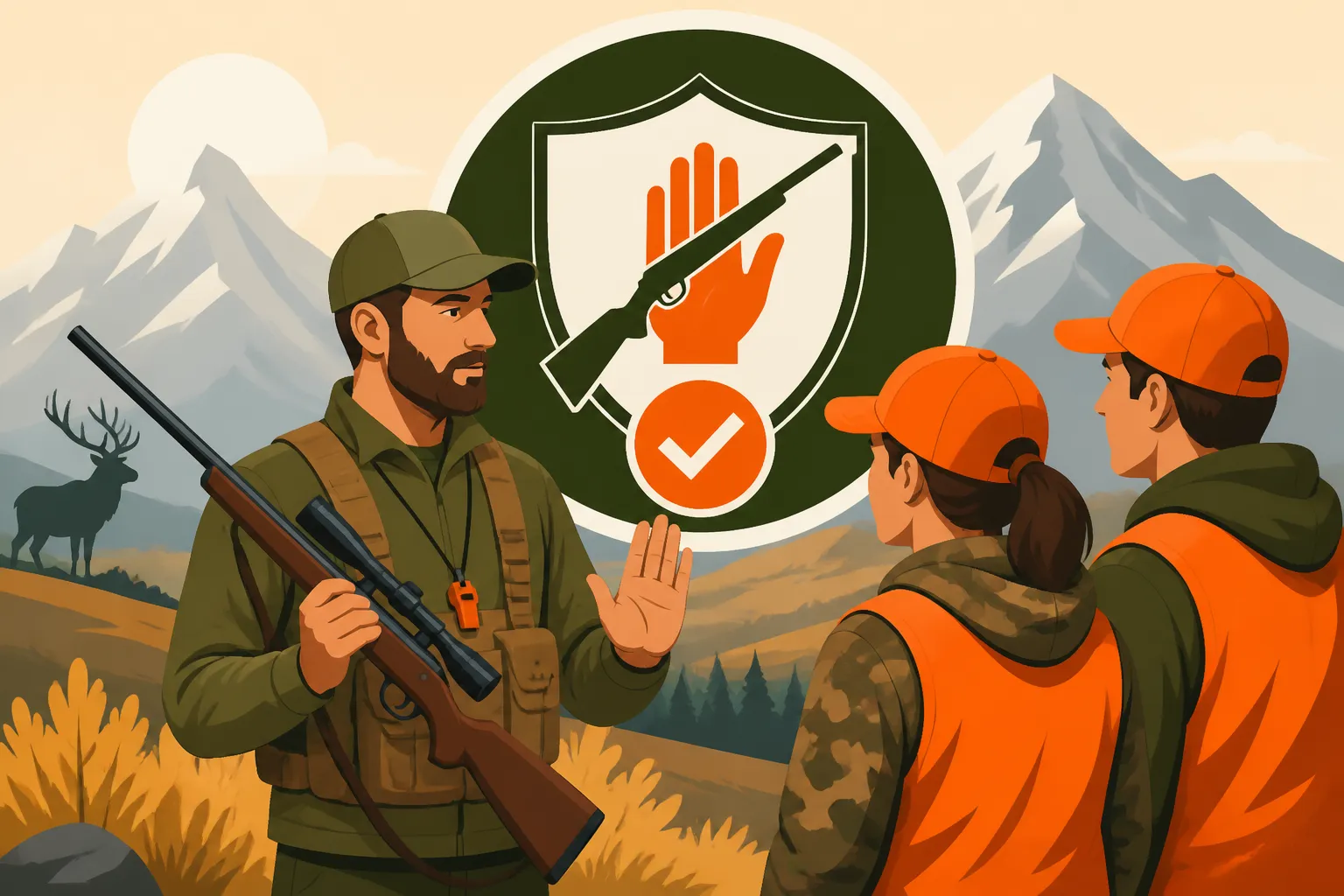
A truly professional guide will demonstrate impeccable muzzle and trigger discipline at all times. This isn't just about handling their own rifle; it's about their constant awareness of yours and everyone else's. You should see them consistently control the direction of their muzzle, always pointing it in a safe direction, never sweeping you or any other person. This is especially critical when you're navigating tricky terrain, getting in and out of vehicles, or simply stopping to glass the country.
For instance, imagine you're glassing a ridge for mule deer and suddenly spot a buck. As excitement builds, a safe guide will still ensure that before they even touch their rifle, the muzzle is pointed downrange or up into the sky, never inadvertently at a hunting partner. Their finger should be off the trigger, resting outside the trigger guard, until the moment they are absolutely ready to take a shot. This constant, almost unconscious vigilance is a hallmark of someone who deeply respects firearms and the safety of those around them. It sets the calm, serious tone that prevents accidents, especially when adrenaline is high.
Clear Communication on Loading and Unloading Protocols
One of the most common times for accidents is during the loading and unloading of firearms. Your guide should have clear, explicit protocols for when and where a firearm should be loaded and unloaded, and they should communicate these rules unequivocally. There should be no ambiguity. For example, it's typical for firearms to be unloaded when traveling in vehicles, especially on bumpy backcountry roads or ATVs. The guide should instruct you to load only when actively hunting, and often not until a target animal has been identified and a safe shot opportunity is presenting itself.
Consider a scenario where you're leaving camp for the morning hunt. Your guide should instruct everyone to load their firearms after you've walked a safe distance from camp and are actively beginning the hunt, ensuring all muzzles are pointed downrange during the process. Similarly, upon returning to a vehicle or camp, the instruction should be to unload immediately, again with muzzles pointed in a safe direction. If you're utilizing a horse or pack string, the guide will have specific instructions for how firearms are carried, usually cased and unloaded, to prevent any accidental discharges related to movement or falls. Any deviation from these protocols should be met with immediate, firm correction from your guide.
Establishing Safe Shooting Zones and Backstops
Before you even step into the field, or at the very least, early in your hunt, a good guide will have a conversation about safe shooting zones and identifying proper backstops. This is crucial in Wyoming's varied landscape, where open plains can offer long shots but also present challenges with identifying what lies beyond your target. Your guide should emphasize the importance of knowing your target, what's in front of it, and what's behind it.
During any practice shooting session, the guide will designate a clear firing line and a safe backstop. In the field, when an animal is spotted, they will help you assess the shot angle, potential ricochets, and what's beyond the animal. For example, if you're stalking elk in timber, your guide will consider the possibility of other animals or even hidden terrain features that could be struck. They won't rush you into a shot if the background isn't clear. This might mean waiting for the animal to move, or adjusting your position. Sometimes, it means letting an animal walk away because a safe shot simply isn't there. This demonstrates a core principle: no trophy is worth compromising safety.
Your Role as the Client: Shared Responsibility for Safety
While your guide is responsible for leading the hunt and ensuring overall safety, you, as the client, are an equally vital part of the safety equation. Hunting is a team effort, and when it comes to firearms, every team member must be actively engaged and responsible. Never forget that a firearm is an inanimate object; it's the person handling it that makes it safe or unsafe.
Communicating Your Own Firearm Experience and Comfort Level
One of the best things you can do to ensure a safe hunt is to be completely honest with your guide about your firearm experience and comfort level. Don't feel embarrassed if you're not an expert marksman or if you're new to hunting a particular species. Your guide isn't there to judge your skill, but to ensure everyone's safety and help you succeed. Perhaps you've only ever shot at a flat range and aren't accustomed to shooting from unconventional positions or at steep angles. Or maybe you're less familiar with a new rifle you've brought along.
By openly communicating this, your guide can tailor their instructions and observations to your specific needs. They might suggest more practice shots, provide more detailed instructions on field positions, or simply keep a closer eye on your firearm handling. It's far better to say, "I'm a little rusty with this rifle," or "I've never hunted in country this steep," than to struggle in silence and potentially make a mistake. A good guide will appreciate your honesty and work with you to build confidence and reinforce safe habits. Before you even book, consider checking out resources like GoHunt, which often highlights outfitters, giving you an idea of who might be a good fit for your experience level.
Adhering to All Instructions and Protocols Without Question
Once your guide has established the rules and protocols for firearm handling, it is absolutely paramount that you adhere to them without hesitation or argument. Your guide is the expert in that particular hunting area, and their instructions are given for a reason, almost always related to safety, especially when you are on public lands or navigating specific unit boundaries. In the field, the guide's word on safety is law. This means if they tell you to unload your rifle, you do it immediately. If they instruct you on a specific carry method, you follow it.
Think of it this way: hunting often involves dynamic, unpredictable situations. A guide is constantly assessing variables – terrain, wind, animal behavior, and the position of every hunter in the group. Their instructions are based on this real-time assessment. Questioning or ignoring their directives can put everyone at risk. Even if you think you know a better way, in the moment of an active hunt, trust their judgment. You can always discuss it respectfully later. Wyoming Requires One Guide for Every Two Nonresident Hunters for a reason – that guide is your primary safety officer in the field.
Understanding and Practicing the Four Universal Rules
Beyond your guide's specific instructions, every hunter should live by the four universal rules of firearm safety. These are non-negotiable and form the bedrock of responsible gun ownership and use. Your guide will assume you know and practice these, but it’s still worth a refresher:
- Treat every firearm as if it's loaded: This mindset means you are always respectful of the firearm's power and potential. It means never pointing it at anything you don't intend to shoot, even if you are absolutely sure it's unloaded.
- Always point the muzzle in a safe direction: This is the golden rule. A "safe direction" means a direction where an accidental discharge would cause no injury or property damage. This might be up into the sky, down into the ground, or downrange. Never sweep people or objects with your muzzle.
- Keep your finger off the trigger until your sights are on the target and you are ready to shoot: This prevents accidental discharges caused by flinching, stumbling, or sudden movements. Your finger should rest alongside the trigger guard, not inside it, until the very last second.
- Be sure of your target and what is beyond it: This is incredibly critical in hunting. You must positively identify your target animal, ensure no other animals or people are in the line of fire, and be certain your bullet will not strike anything unintended beyond your target. This applies equally whether you're taking a long shot across an open basin or a close shot in dense timber.
Your guide will reinforce these rules constantly, often without explicitly stating them, simply through their own actions and subtle corrections. Integrating these into your every move in the field is a sign of a responsible, safety-conscious hunter.
Handling Firearms in the Field: Real-World Scenarios
Wyoming's hunting environment presents unique challenges. From navigating rugged roads to stalking through dense timber or open sagebrush, the way you handle your firearm needs to adapt to the specific situation. Your guide will have specific protocols for these varying scenarios, and understanding them beforehand can make a huge difference in maintaining safety and enjoying your hunt.
Safe Practices in Vehicles, Camps, and During Travel
Travel is an inherent part of most Wyoming hunts, and it's a prime time for potential firearm mishaps if protocols aren't followed. Whether you're in a pickup truck, an ATV, or even a side-by-side, your firearm should almost always be unloaded and cased. A loaded rifle bouncing around in a vehicle, or even unsecured, is an accident waiting to happen, especially on rough two-track roads common in Wyoming's backcountry. Your guide will insist on this.
In camp, firearms should also remain unloaded and ideally stored in a safe, designated location. This prevents accidental discharges around tents, cooking areas, or sleeping quarters. Many outfitters provide gun racks or designated areas where rifles can be stored. It's tempting to keep a rifle loaded and ready, but a camp is a communal space. A moment of forgetfulness could lead to disaster. Even when heading to a nearby practice range, the guide will ensure all firearms are cased and unloaded until you are safely on the firing line, ready to shoot. This might be a good time to review The Gear List Your Outfitter Will Send, as it often specifies how firearms should be transported.
Navigating Challenging Terrain and Group Dynamics
Wyoming's mountains, draws, and dense timber can make firearm handling tricky. When walking in a line, especially through thick brush or up steep inclines, maintaining proper muzzle control is paramount. Your guide will often set a specific spacing between hunters and dictate how muzzles should be oriented – perhaps slightly up or down, depending on the slope and vegetation. If you're climbing over a fence or crossing a stream, the guide will likely instruct everyone to unload their firearms and pass them over one at a time, or cross with an open action.
In a group hunting situation, communication is key. Your guide should always be aware of everyone's position and will communicate if someone is moving to a different spot or if an animal is spotted. Imagine still hunting through a patch of dark timber: the guide will ensure hunters are spaced far enough apart, and that muzzles are pointed in a safe direction relative to each other. When an animal is sighted, the guide will ensure everyone knows its location and direction of travel, and confirm a clear shooting lane and backstop before anyone prepares to shoot. This coordination is especially critical on a guided hunt, where multiple clients might be present.
What to Do in Emergency Situations or Malfunctions
Even with the strictest safety protocols, mechanical malfunctions or unforeseen emergencies can occur. Your guide should be prepared for these and provide calm, clear instructions. If your rifle has a misfire, for instance, the guide will instruct you on how to safely address it, such as keeping the muzzle pointed downrange for a few seconds before attempting to clear the chamber. For any serious firearm malfunction, the guide will take control, ensuring the firearm is rendered safe and removed from the hunting situation.
While extremely rare, an accidental discharge is a serious incident. A guide should have a protocol for this, which includes immediately ensuring no one is injured, securing the firearm, and assessing the situation calmly and professionally. This also extends to general first aid readiness. It's part of What a Fully Guided Wyoming Elk Hunt Includes – the guide's preparedness for any eventuality, from a twisted ankle to a firearm issue. Knowing your guide is trained for these unlikely scenarios offers immense peace of mind.
Selecting an Outfitter with a Strong Safety Culture
Choosing the right outfitter isn't just about finding someone who can put you on animals; it's fundamentally about choosing someone who prioritizes your safety above all else. A strong safety culture trickles down from the outfitter to every guide they employ. This is where your due diligence becomes crucial, even before you submit your application for that coveted Wyoming tag.
Questions to Ask Before Booking Your Hunt
Before you commit to an outfitter, it's perfectly reasonable, and indeed recommended, to ask specific questions about their safety policies and protocols. Don't be shy; a reputable outfitter will welcome these questions as a sign of a responsible client. You might ask:
- "What are your specific rules for firearm handling in vehicles and in camp?"
- "How do your guides address firearm safety during challenging stalks or in dense cover?"
- "What kind of safety training do your guides receive, especially regarding first aid and emergency procedures?"
- "Do you have a policy for pre-hunt target practice or checking zeros, and if so, how is that handled?"
These questions not only give you insight into their operational standards but also reveal how seriously they take client safety. An outfitter who can articulate clear, comprehensive answers is likely one who runs a tight, safety-conscious ship. This is part of the broader process of Vetting a Wyoming Outfitter Before You Send a Deposit and should be a top priority. When you're browsing platforms like BookYourHunt or doing research on GoHunt, keep these questions in mind and look for signs of transparency and professionalism regarding safety.
Red Flags to Watch For in the Pre-Hunt Phase
Just as there are signs of a good, safety-focused outfitter, there are also red flags that should give you pause. If an outfitter is vague about safety protocols, dismisses your concerns, or rushes through explanations, that should be a warning sign. A lack of clear communication around firearm handling before the hunt, or an unwillingness to discuss emergency procedures, indicates a potential issue.
Another red flag might be if an outfitter focuses exclusively on "trophy" and "success rates" without mentioning any aspect of client experience or safety. While success is important, it should never come at the expense of safety. If the initial communication feels rushed or disorganized, or if they don't seem interested in your experience level with firearms, it might be worth exploring other options. Remember, Red Flags When Booking a Wyoming Outfitter often start subtly, sometimes in these early conversations. You are investing significant time, money, and personal safety into this experience, so choose wisely. Your guide will play a critical role, especially if your hunt takes you into wilderness areas where Wyoming's Wilderness Guide Law for Nonresidents might apply.
Disclaimer
This article is for general informational purposes only and does not constitute professional advice. Laws, prices and regulations vary by location and change over time. Consult a qualified professional for guidance on your specific situation.