Whitetail Deer Hold Wyoming’s Eastern River Bottoms
When most hunters dream of Wyoming, their minds likely conjure images of vast, sweeping plains dotted with mule deer or towering mountains where elk bugle on crisp fall mornings. It's easy to overlook the hidden gems, the pockets of intense habitat that hold another incredible big game animal. Many hunters, especially those new to the state or traveling from elsewhere, often miss the fantastic whitetail hunting opportunities that flourish in Wyoming's eastern river bottoms. This comprehensive guide is here to shed light on these often-underestimated deer, helping you understand where they live, how to hunt them, and what makes them a unique challenge in the Cowboy State.
The Overlooked Whitetail: A Wyoming Niche
For many years, the Wyoming Game and Fish Department (WGFD) and hunters alike primarily focused on the majestic mule deer, the iconic symbol of Western hunting. This focus inadvertently left the whitetail deer as a bit of an afterthought, a supporting character in the grand narrative of Wyoming's big game. But these adaptable animals have quietly carved out a substantial presence, particularly in the state's eastern half, offering a distinct hunting experience that contrasts sharply with the typical open-country pursuits.
The Perception Versus Reality of Wyoming Deer
The popular image of Wyoming hunting often involves vast, open sagebrush flats, spotting scopes, and long-range rifle shots on mule deer. This perception is certainly accurate for a significant portion of the state and for many hunting units. However, it paints an incomplete picture. The reality, especially in the eastern counties, includes dense riverine corridors, agricultural fields, and brushy draws that are tailor-made for whitetails. Hunters accustomed to glassing miles of country for a mule deer buck might find themselves disoriented by the close-quarters, cover-intensive tactics required for whitetails. It’s a different game entirely, demanding patience, stealth, and a keen eye for subtle sign in thick cover. Many hunters even lament that they didn't know these opportunities existed until they stumbled upon them, realizing they'd been missing out on a thrilling alternative.
Historical Presence and Population Growth
Whitetail deer aren't new to Wyoming; they've been here for a long time, historically sticking to the lush, well-watered drainages. However, their populations have seen significant increases and expanded their range over the past few decades, largely due to agricultural development and thoughtful habitat management. As farms and ranches expanded, so did the food sources and cover available to whitetails. These deer are incredibly resilient and opportunistic, quickly taking advantage of suitable environments. They don't need vast wilderness areas; a narrow strip of timber along a river, nestled between cornfields and alfalfa, is often enough to support a thriving population. This growth has transformed parts of eastern Wyoming into legitimate whitetail destinations, sometimes rivaling states traditionally known for their whitetail hunting.
Understanding Whitetail Distribution in Wyoming
While mule deer dominate the mountainous and high desert regions, whitetail deer prefer the lower elevations, particularly where major river systems create ribbons of verdant habitat. The eastern side of the state, roughly east of Interstate 25, is where you'll find the highest concentrations. Counties like Crook, Weston, Niobrara, Platte, Goshen, and Laramie are prime examples. These areas benefit from the North Platte River, the Cheyenne River, and their numerous tributaries, which provide the essential water, cover, and food needed for whitetail to flourish. Understanding a Whitetail Range Map for Eastern Wyoming is crucial for any hunter planning to pursue these deer. While scattered pockets can be found in central and even western Wyoming, those tend to be isolated and far less robust than their eastern counterparts. This geographic preference means hunters often need to shift their mental maps and scouting techniques away from the wide-open spaces and toward more intimate, brushy terrain.
Eastern River Bottoms: Whitetail Strongholds
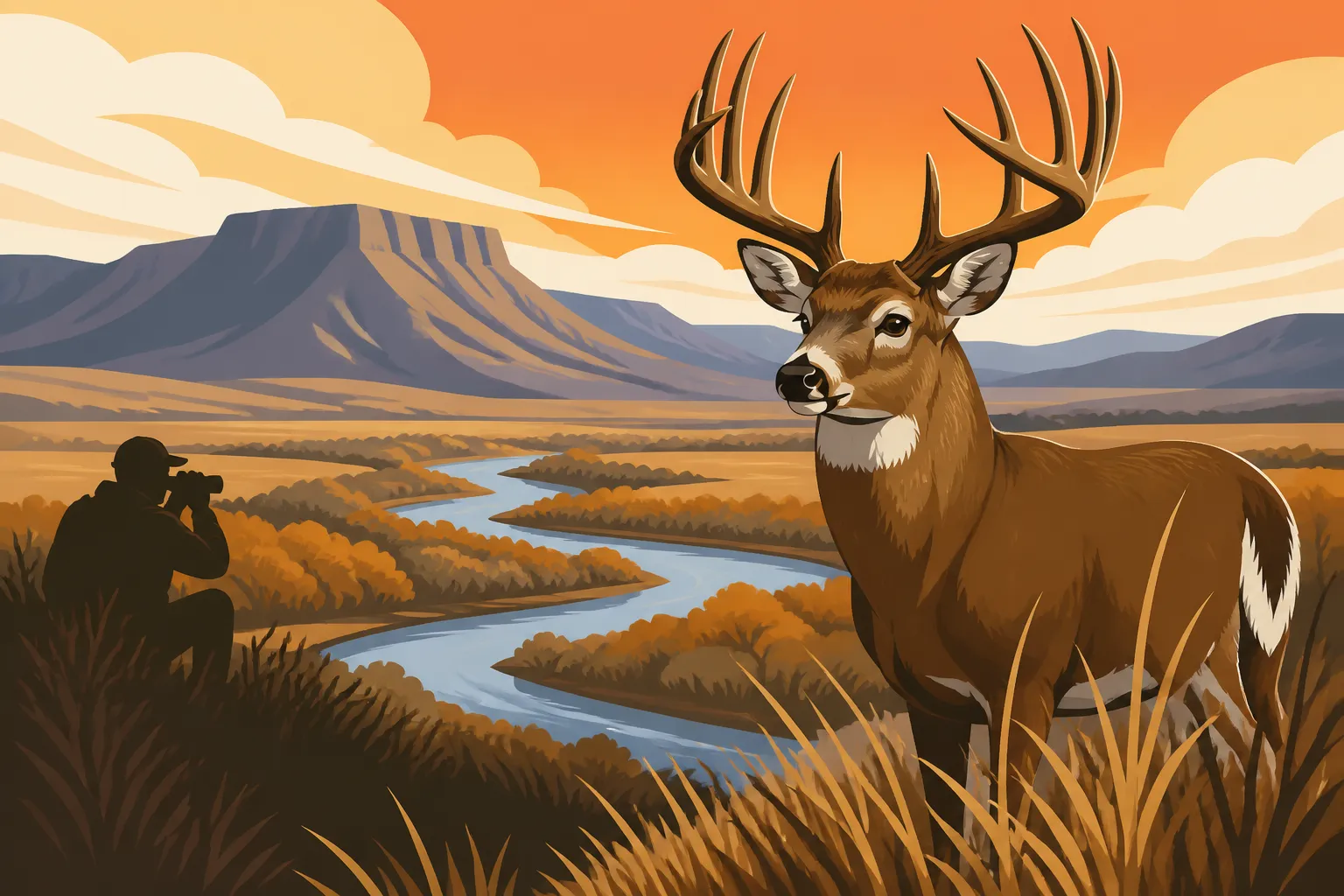
The lifeblood of Wyoming's whitetail population flows through its eastern river bottoms. These riparian zones are ecological oases, starkly contrasting with the arid landscapes that often surround them. They are not merely waterways but complex ecosystems that provide everything a whitetail needs to survive and thrive. Without these vital corridors, whitetails would struggle to establish a significant foothold in much of the state.
Key River Systems and Their Role
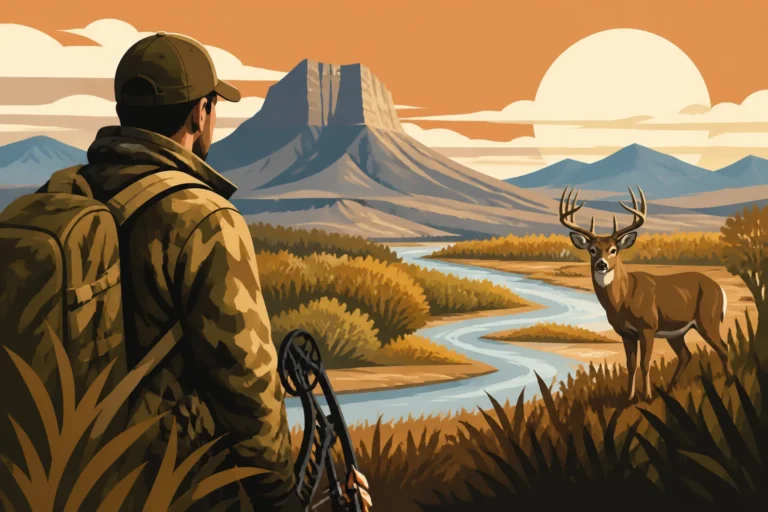
The North Platte River, in particular, acts as a superhighway for whitetail deer through southeastern Wyoming. From Casper eastward toward the Nebraska border, this river system creates an almost continuous ribbon of prime habitat. Similarly, the Cheyenne River drainage in the northeastern part of the state, along with its smaller tributaries like Lance Creek and Rawhide Creek, offers excellent whitetail country. These rivers ensure a consistent water supply, which is critical in a dry climate, but their role extends far beyond just hydration. They carve out fertile floodplains that support a diverse array of vegetation, from towering cottonwoods to dense willows and various shrubs. This linear habitat also provides natural travel corridors, allowing deer to move between feeding areas, bedding cover, and security zones with relative safety. Scouting these areas thoroughly, perhaps even doing some E-Scouting a Unit Before the Season Opens from your kitchen, can give you a massive advantage.
The Cover and Forage They Provide
Imagine a thick jungle gym of branches, interwoven with tall grasses, dense undergrowth, and a canopy of mature trees – that's often what a Wyoming river bottom looks like. This dense cover is paramount for whitetail deer, offering sanctuary from predators (both two-legged and four-legged) and harsh weather. They can vanish into a willow thicket or a patch of heavy timber, feeling secure and unpressured. Beyond concealment, these areas are food factories. The fertile soils support a rich variety of browse, including dogwood, buffalo berry, wild rose, and various forbs that deer relish. Adjacent agricultural fields, like alfalfa, corn, and winter wheat, further supplement their diet, especially during the fall and winter months. A deer can spend its entire life within a very small radius in a healthy river bottom, rarely needing to venture far from the security of its dense confines.
Why Whitetails Thrive in These Corridors
The combination of water, dense cover, and abundant forage creates an ideal environment where whitetails not only survive but truly thrive. Unlike mule deer, who are built for traversing open, broken terrain, whitetails are masters of concealment and using thick cover to their advantage. The linear nature of river bottoms often creates natural pinch points and funnels that deer routinely use for travel, making them predictable in certain situations. The relatively milder winters in eastern Wyoming compared to the high country also reduce mortality rates, contributing to robust populations. Furthermore, the fragmented land ownership in these areas, with a mix of private ranches, farms, and some public access, often creates sanctuaries where deer can escape hunting pressure, allowing them to grow older and larger. This blend of factors means that the Hunting the Whitetail River Bottoms of Eastern Wyoming experience is about understanding these specific dynamics.
Distinguishing Whitetails from Mule Deer in Wyoming
Wyoming is unique in that hunters can often find both mule deer and whitetail deer in the same general regions, sometimes even in the same hunt unit. However, while they share the "deer" moniker, they are distinct species with clear physical and behavioral differences. Being able to correctly identify the species is not just a matter of biological curiosity; it's critical for hunters, as tags and seasons can often be species-specific.
Physical Characteristics and Antler Differences
The most obvious distinguishing feature, especially for bucks, lies in their antlers. Whitetail bucks typically grow antlers with a single main beam from which all tines (points) branch upward. Imagine a candelabra, with all candles pointing skyward from a central holder. Mule deer, on the other hand, usually have antlers that "fork" or "dichotomously branch." Their main beam forks into two, and then those two branches may fork again. Beyond antlers, there are other tell-tale signs. Whitetails have a large, broad tail that is brown on top and pure white underneath, which they "flag" or hold erect and wave when startled – a flash of white that earned them their name. Mule deer have a narrower, rope-like tail that is typically white with a black tip, and they hold it down when running. Their ears are also noticeably larger, like a mule's, giving them their common name. Learning to confidently identify these traits, perhaps by reviewing resources on Telling Whitetail From Mule Deer in Wyoming, is essential for a successful and legal hunt.
Behavioral Patterns and Habitat Preferences
Beyond their looks, whitetails and mule deer exhibit different behaviors that reflect their preferred habitats. Mule deer are often found in open country, from high mountain forests to sagebrush deserts, relying on their keen eyesight, hearing, and incredible stamina to evade predators. When startled, they often employ a distinctive "stotting" gait – a four-legged bounding jump that covers ground quickly while allowing them to survey their surroundings. Whitetails, however, are masters of stealth and concealment. They prefer dense cover, often choosing to freeze and hide rather than run when they sense danger. If they do bolt, it's typically a more fluid run, often with their white tail flagging, as they weave through thick brush. They are also notoriously homebodies, often living their entire lives within a few square miles if food and cover are plentiful. Mule deer, especially migrating herds like those found in the Red Desert, can cover vast distances seasonally.
Hybridization and Management Challenges
While relatively rare, it is possible for whitetail and mule deer to hybridize, especially in areas where their ranges overlap significantly. These hybrids, sometimes called "muley-tails" or "whitetail-muleys," can exhibit a mix of characteristics from both species, making identification even more challenging. They might have mule deer-like antlers with some whitetail branching patterns, or a tail that's a blend of the two. For wildlife managers, hybridization presents unique challenges in terms of population assessment and specific management strategies. For hunters, it underscores the importance of being absolutely certain of your target species, especially when specific tags (e.g., a "white-tailed deer only" tag) are involved. When in doubt, it's always best to pass on a shot or consult with a warden or experienced hunter to ensure you are compliant with local regulations.
Hunting Strategies for Wyoming River Bottom Whitetails
Hunting whitetail deer in Wyoming's river bottoms demands a fundamentally different approach than hunting mule deer in the open country. It's less about long-range glassing and more about intimate knowledge of the terrain, patience, and precise execution in close quarters. Forget covering miles of ground; here, success often comes from understanding a few hundred yards of prime cover.
Scouting the Thickets and Pinch Points
Effective scouting is the bedrock of river bottom whitetail hunting. You're not looking for deer out in the open; you're looking for their sign within the thickest cover. Focus on finding well-used trails leading from bedding areas (often dense stands of willows or cottonwood thickets) to feeding areas (alfalfa fields, cornfields, or areas with abundant browse). Look for rub lines where bucks have marked their territory on trees, and scrape lines, which are pawed-out spots on the ground where bucks leave scent. These indicate active deer use and potential ambush points. Pay close attention to "pinch points" – narrow strips of cover, fences, or changes in topography that funnel deer movement into predictable corridors. These are goldmines for stand placement. A reliable mapping application like those offered by GoHunt can be incredibly valuable for identifying these features and marking potential stand sites even before you set foot on the ground. They can help you visualize how deer might move between different cover types and agricultural fields.
Stand Hunting and Ambush Tactics
Given the dense cover, stand hunting is often the most productive method for river bottom whitetails. Whether you're in a tree stand overlooking a trail or a ground blind tucked into a willow clump, the goal is to position yourself where a deer is likely to pass, often at close range. Think about prevailing winds – more on that in a moment – and how deer will approach. Set up your stand far enough in advance to let the area "cool down" from your intrusion. Overlooking a transition zone, where the dense cover meets a field, or a natural funnel between two bedding areas, can be incredibly effective. Sometimes, simply finding a heavy game trail that parallels the river and setting up a comfortable ground blind, brushed in, is all it takes. The key is to be still, silent, and patient, letting the deer come to you. Don't be afraid to experiment with different setups.
The Importance of Wind and Scent Control
In thick river bottom country, wind becomes your absolute master. Unlike open plains where the wind might be a steady flow, in river bottoms, it can swirl and eddy unpredictably due to topography, dense vegetation, and even thermal drafts from the water. Always, and I mean always, hunt with the wind in your favor, positioning yourself downwind of where you expect deer to approach. Even then, be prepared for shifting breezes. Strict scent control is non-negotiable. Use scent-eliminating sprays, wash your hunting clothes in scent-free detergent, and store them in airtight bags. Consider using an ozone generator if you're serious about minimizing your human odor. Deer in these tight quarters rely heavily on their sense of smell, and a single whiff of human scent will send them scattering. You might find some excellent advice on Reading Wind on an Open-Country Stalk which, while geared toward open country, offers transferable principles for understanding wind direction in any terrain.
Seasonal Considerations and Rut Timing
Like all big game, whitetail deer patterns shift throughout the hunting season in response to food availability, weather, and the all-important rut. Understanding these seasonal changes is key to maximizing your success in Wyoming's river bottoms.
Early Season Opportunities and Patterns
Wyoming's archery season for deer often opens in September, offering fantastic early-season opportunities for whitetails. During this period, deer are often still on predictable summer patterns, primarily focused on feeding to build up fat reserves for the coming winter and rut. They will be heavily utilizing agricultural fields like alfalfa and corn, often moving from dense bedding cover in the river bottom out to these food sources in the late afternoons and early mornings. Setting up stands or blinds along these travel corridors can be highly effective. The foliage is still thick, providing excellent cover for hunters, but also making it harder to spot deer at a distance. As the weather can still be warm, consider hunting early mornings and late evenings when deer are most active. This is a great time to pattern a specific buck if you've done your summer scouting diligently.
The Whitetail Rut Dates Fall on the Plains
The rut is undoubtedly the most exciting time to hunt whitetails, as bucks become far less cautious, driven by the urge to breed. In eastern Wyoming's river bottoms and plains, the whitetail rut dates generally peak from early to mid-November, though you might see pre-rut activity starting in late October and post-rut continuing into early December. During the peak rut, bucks will be actively cruising for does, making scrapes, and fighting rivals. This is when aggressive tactics like rattling antlers, grunt calling, or even using doe bleats can be incredibly effective. Bucks will move throughout the day, not just at dawn and dusk, offering longer hunting windows. Focus your efforts on high-traffic areas, near fresh scrapes and rubs, and anywhere does are likely to congregate. Remember that while the rut is intense, it's also brief, so timing your hunt to coincide with this period can dramatically increase your odds.
Late Season Whitetail Hunting on the Prairie
As winter sets in and temperatures drop, whitetail deer shift back to survival mode. Food sources become scarcer, and deer movements are dictated by finding sustenance and conserving energy. Late Season Whitetail Hunting on the Prairie can be incredibly challenging, but also highly rewarding. Deer will often congregate in large groups, especially around reliable food sources like standing cornfields, winter wheat, or hay bales in private landowner areas. They will also seek out the densest thermal cover in the river bottoms to escape bitter winds and snow. Hunting pressure from the general rifle season will have also pushed deer into even thicker cover, making them extremely wary. This is a time for patience, perseverance, and often, more specialized tactics like tracking fresh snow or sitting on food sources for long periods. A well-placed ground blind with good insulation can make all the difference during these cold hunts.
Accessing Whitetail Country in Eastern Wyoming
One of the biggest hurdles for any hunter, particularly non-residents, in eastern Wyoming is navigating land ownership. Much of the prime whitetail habitat in the river bottoms is found on private land. However, there are still viable public land options and innovative access programs that can open up opportunities.
Navigating Private Lands and Permission
Given the prevalence of private land in eastern Wyoming, securing permission from landowners is often the most direct route to good whitetail hunting. This requires politeness, respect, and often, starting the conversation well in advance of the season. Knocking on doors in August or early September, looking neat and respectful, and offering to help with chores or even offering a trespass fee can sometimes open doors. Be clear about where you want to hunt, what you're hunting for, and your commitment to ethical hunting and leaving no trace. A good relationship with a landowner can provide years of hunting access. Always carry written permission if possible, and ensure you understand all the specific rules the landowner might have. This personal touch is often invaluable, as a good hunter-landowner relationship benefits everyone.
Public Access Areas and State Trust Lands
While private land dominates, public access does exist. Many of Wyoming's river bottoms will have parcels of State Trust Land interspersed. These lands are generally open to public hunting unless specifically posted otherwise, but they often require navigating access issues across private property. It's crucial to consult detailed land ownership maps, such as those provided by GoHunt or the WGFD's online mapping tools, to identify legal access points. Additionally, the Bureau of Land Management (BLM) and National Forests also hold acreage in Wyoming, some of which might include riparian areas or adjacent habitats that hold whitetails. These areas are typically open to hunting without special permits, beyond your standard hunting license and conservation stamp. Always be mindful of vehicle restrictions and other regulations on public lands. Remember that Wyoming State Trust Land Hunting often requires careful planning to ensure you can legally get to and from the parcel.
Hunter Management Areas and Walk-In Opportunities
The Wyoming Game and Fish Department's Access Yes program is a fantastic resource for public hunters. This program leases hunting and fishing access on private land and inaccessible public land, creating designated Walk-In Hunting Areas Need No Permission Slip and Hunter Management Areas (HMAs). Walk-in Areas are generally self-explanatory – you can walk in and hunt without prior permission. Hunter Management Areas, however, often require a free online permission slip, which you print out before your hunt. These areas are managed in cooperation with landowners and can offer some of the best whitetail hunting in the state without having to knock on doors. Checking the WGFD website for current Access Yes maps and regulations is paramount, as these areas and their rules can change annually. The program is specifically designed to expand hunting opportunities on private ground, making it an invaluable tool for ethical and legal access.
Licenses, Regulations, and Management
Understanding the specifics of Wyoming's deer licenses, regulations, and how whitetail populations are managed is crucial for any hunter. The WGFD works hard to balance opportunity with conservation, and knowing the rules ensures a legal and responsible hunt.
General Licenses and Limited Quota Options
For whitetail deer, Wyoming offers a mix of general licenses and limited quota licenses. General deer licenses, often available Wyoming General Deer Licenses Over the Counter for residents, or through a less competitive draw for non-residents, typically allow you to hunt any deer (mule deer or whitetail) in a wide range of general hunt areas. However, many eastern Wyoming units will have "white-tailed deer only" general licenses, or limited quota licenses that are specifically designated for either antlered or antlerless whitetails in certain hunt areas. It’s absolutely critical to read the current year's hunting regulations booklet thoroughly to understand which type of license you need for your chosen hunt area and species. Missing this detail could lead to harvesting the wrong animal, which carries serious penalties. The draw for limited quota licenses can be competitive, especially for trophy buck tags, so planning ahead is essential.
Doe and Fawn Deer Tag Pricing in Wyoming
In many hunt areas, especially those with robust whitetail populations, the WGFD offers "Type 6," "Type 7," or "Type 8" licenses, which are often reduced-price antlerless (doe or fawn) tags. These tags are an important management tool to control deer populations, especially in areas where agricultural damage might be an issue. Doe and Fawn Deer Tag Pricing in Wyoming is typically much lower than antlered tags, making them an excellent option for meat hunters or those looking to extend their season. They provide a valuable opportunity to fill the freezer and contribute to wildlife management efforts. Always check the specific regulations for the hunt area you intend to pursue, as these antlerless tags often have specific dates and boundaries. Sometimes, these tags are even available over-the-counter after the main draw, providing additional opportunities for hunters.
Conservation Efforts and Population Objectives
The Wyoming Game and Fish Department actively manages whitetail deer populations to ensure their health and sustainability. This involves setting population objectives for various herd units, monitoring herd health, and adjusting hunting quotas and season lengths as needed. Habitat conservation, particularly of the critical riverine corridors, is also a significant focus. While mule deer often grab the headlines for population concerns, whitetail management is equally important, especially in balancing deer numbers with agricultural interests. Hunters play a vital role in these conservation efforts, not just through their license fees (which contribute to wildlife management) but also through ethical harvesting and reporting. Additionally, The Wyoming Conservation Stamp and Who Needs One helps fund crucial habitat and access programs across the state.
Essential Gear for River Bottom Whitetail Hunting
Hunting in Wyoming's dense river bottoms presents unique challenges and therefore requires a slightly different gear setup than hunting the open plains or mountains. Your equipment should be optimized for close-quarters stealth, visibility, and enduring the specific conditions of this habitat.
Optics for Dense Cover
While a high-power spotting scope is indispensable for mule deer hunting in open country, it's far less useful in a thick river bottom. Here, your primary optics will be high-quality binoculars, perhaps 8×42 or 10×42, for scanning dense cover at closer ranges. The goal is to pick apart shadows, identify flicking ears, or spot a horizontal line that doesn't belong among the vertical trees. A good pair of binoculars will help you identify deer at close range before they spot you, allowing you to make a clean shot or adjust your position. A rangefinder is also crucial, as judging distances in thick cover can be deceptively difficult. Unlike open country where you might be shooting 300-400 yards, in the river bottoms, shots are often 50-150 yards, sometimes even closer, and knowing the exact range to key landmarks from your stand is essential for making ethical shots.
Weapon Choices for Close-Quarters Hunting
The dense environment of a river bottom typically means shorter shooting lanes and quicker shot opportunities. This influences optimal weapon choice. While a high-powered rifle certainly works, many whitetail hunters prefer calibers that are well-suited for medium ranges and can deliver plenty of punch without excessive overpenetration if the shot is close. Many hunters favor a fast-handling bolt-action or lever-action rifle chambered in calibers like .30-30, .308 Winchester, 6.5 Creedmoor, or .270 Winchester. For those who enjoy more of a challenge, archery equipment excels in these close-quarters settings. Bowhunters will find that the natural cover provides excellent concealment for getting into bow range. When considering archery, remember that Wyoming Sets Bow Draw Weight at 40 Pounds, 50 for Elk and has specific broadhead rules. Shotguns loaded with slugs can also be highly effective in dense areas where shots are typically under 100 yards, particularly for hunters who prefer that style or hunt in specific zones with shotgun restrictions.
Clothing and Scent Elimination
Clothing for river bottom whitetail hunting needs to be quiet, durable, and camouflaged effectively for dense, brushy environments. Avoid noisy fabrics that will rustle against branches as you move. Layering is always smart in Wyoming, as morning temperatures can be drastically different from midday. Choose camouflage patterns that break up your outline in a woody, riparian setting. Most importantly, strict adherence to scent control protocols is paramount. Whitetails are incredibly wary and possess an exceptional sense of smell. As discussed earlier, use scent-free detergents, wash your clothes thoroughly, and spray down with a quality scent eliminator before every hunt. Consider wearing rubber boots to avoid leaving human scent on the ground as you walk to your stand. Remember that during rifle season, Blaze Orange Requirements Through the Rifle Season apply, so make sure you have enough visible blaze orange to stay safe and legal.
Disclaimer
Please note: Hunting regulations and seasons can change frequently. Always consult the official Wyoming Game and Fish Department (WGFD) regulations for the current year before planning any hunt. This guide is for informational purposes only and does not supersede official WGFD publications.