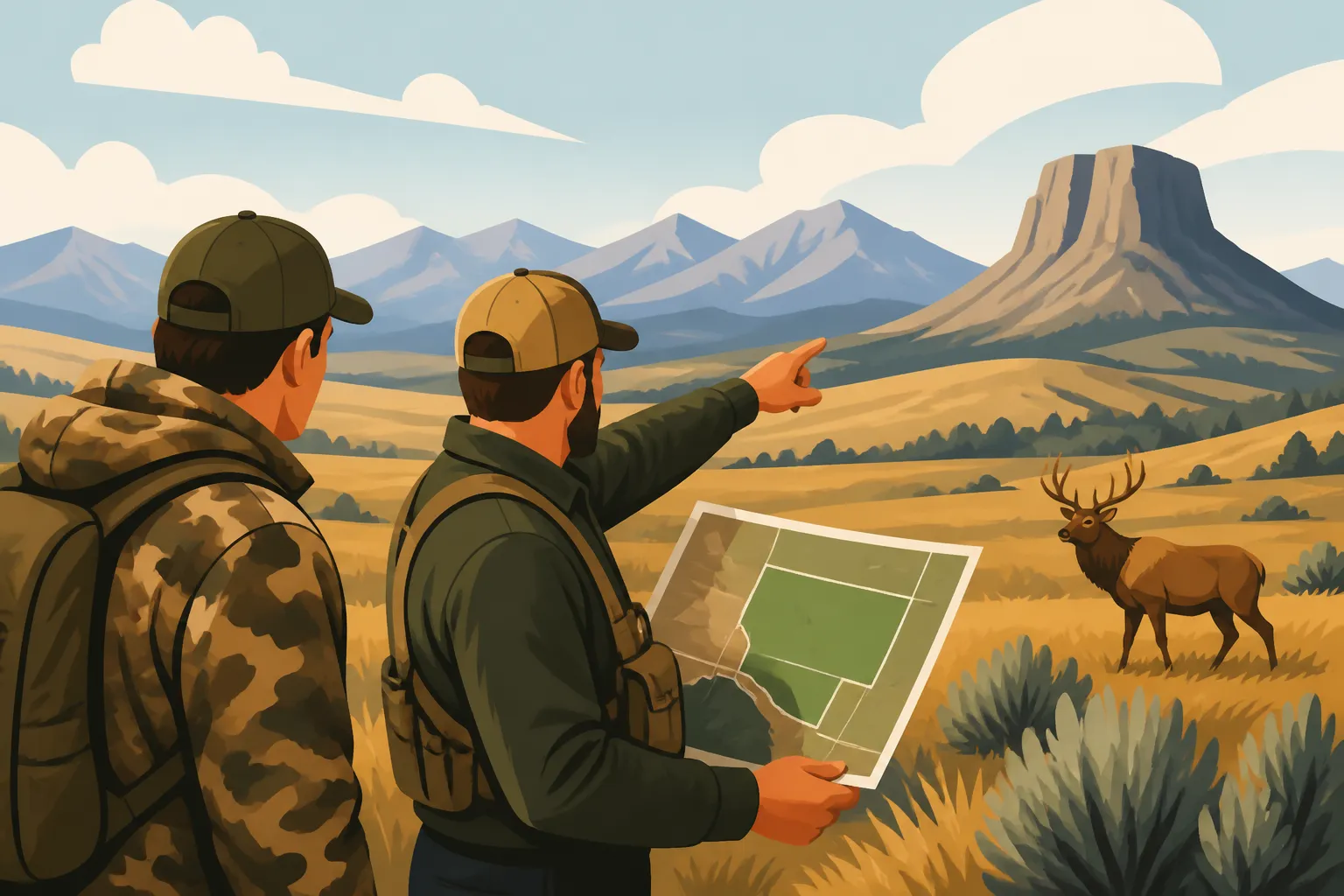
Landowner Guiding on Deeded Ground
Navigating the complexities of hunting access in Wyoming can feel like deciphering an ancient map, especially when you're a landowner with prime hunting ground. Many landowners wonder if they can share their local knowledge and property with hunters without running afoul of the state's strict outfitter and guide regulations. This guide will meticulously break down the rules and realities of landowner guiding on deeded ground in Wyoming, helping both property owners and hunters understand their options.
Understanding the Landscape: Deeded Ground Versus Public Access
Wyoming is famous for its vast public lands, but a significant amount of excellent hunting terrain lies on private, deeded ground. For many hunters, gaining access to these private parcels is a golden ticket, often leading to less crowded experiences and potentially higher quality animals. However, this isn't simply a matter of opening a gate. The rules governing who can "guide" and under what circumstances are clear, and they largely depend on the land's ownership and whether money is changing hands for the guiding service itself.
When we talk about "deeded ground," we're specifically referring to land owned outright by an individual, family, or corporation. This is distinct from public lands like BLM or National Forest, or even state trust lands, which have their own set of access rules. Wyoming State Trust Land Hunting for example, is open to the public but managed under different guidelines than private property. The essence of landowner guiding on deeded ground is that the property owner is utilizing their private property rights to manage hunting access and, in some cases, provide assistance or direction to hunters. This isn't about charging for a guide service on public land; it's about controlling and benefiting from what you own.
The Role of Private Land in Wyoming Hunting
Private land plays an enormous role in Wyoming's hunting culture, often serving as crucial winter range, migration corridors, and prime habitat for big game like elk, deer, and antelope. While public land offers incredible opportunities, the sheer volume of hunters on popular units can make finding solitude and unpressured animals a real challenge. Deeded ground, on the other hand, can offer a more controlled environment, fewer crowds, and a different kind of hunting experience altogether. For landowners, managing this resource for hunting can be a way to generate income, control animal populations, and even connect with like-minded individuals who appreciate the land.
Many hunters actively seek out private land opportunities because it often means a higher likelihood of success or a chance at a truly mature animal that might have become nocturnal on heavily hunted public ground. It’s a reciprocal relationship: landowners offer access and often local expertise, and hunters pay for that privilege, contributing to the landowner's ability to maintain their property and manage wildlife. This dynamic creates a distinct niche within the broader Wyoming hunting scene.
Differentiating Landowner Guiding from Commercial Outfitting
It's crucial to understand that "landowner guiding" in Wyoming is generally not the same as operating a licensed outfitting business. A traditional outfitter provides comprehensive services, often including guides, lodging, meals, and equipment, and typically operates on both public and private lands under strict state regulations and permits. They charge a professional fee for these services. Wyoming Requires One Guide for Every Two Nonresident Hunters on public lands, and these guides must be employed by a licensed outfitter.
A landowner, by contrast, is usually operating under a specific exemption when providing assistance on their own deeded property. This distinction is vital for avoiding legal trouble. The state's primary concern is ensuring fair play and proper licensing for commercial ventures, and the definition of a "guide" or "outfitter" can be very broad. However, specific provisions allow landowners to manage hunting on their property without needing to jump through all the hoops of a full-fledged outfitter license, provided they meet certain criteria that largely revolve around the nature of the service and whether they are charging specifically for "guiding" versus simply "access."
The Landowner Exemption: What It Means for You
Wyoming law provides specific exemptions for landowners who wish to provide hunting access or certain forms of assistance on their deeded ground. This isn't a free pass to become an unlicensed outfitter, but rather a recognition of a property owner's right to manage activities on their own land. Understanding these nuances is key for any landowner considering opening their property to hunters, or for any hunter looking to book such an experience.
The core of the exemption often lies in whether the landowner is charging for "guiding services" or merely for "access" to their property, or for other amenities like lodging and meals. The Wyoming Board of Outfitters and Professional Guides regulates commercial guiding operations, and they define "guide" and "outfitter" quite broadly. However, they also carve out exceptions for landowners.
Who Qualifies as an Exempt Landowner
To qualify for the landowner exemption, you generally must be the owner of the deeded ground in question. This isn't about leasing land and then trying to guide on it; it's about direct ownership. The state recognizes the proprietor's right to manage their property.
Here's what typically defines an exempt landowner:
- Direct Ownership: You or your immediate family own the deeded land where the hunting will occur. This isn't just someone who leases the property for agricultural purposes or has a casual agreement. You are the titled owner.
- No Charge for Guiding Services: This is often the most critical distinction. The exemption typically applies when the landowner is not charging a fee specifically for guiding services. You might charge a trespass fee, a lodging fee, or a fee for other amenities, but if you're explicitly charging for leading the hunt, finding the game, or providing extensive field assistance, you might stray into requiring an outfitter's license. The line can feel blurry, so it's always wise to err on the side of caution and understand the full implications.
- Operating Solely on Your Deeded Land: The exemption applies only to activities conducted on the landowner's private, deeded property. If you take hunters onto adjacent public land, or even through public land to reach another private parcel, you might then fall under the full outfitter and guide regulations. This is a common pitfall, as many private lands in Wyoming are bordered by or intermingled with public parcels. The Landowner Exemption From Wyoming's Guide Rule is very clear about these boundaries.
Guiding on Leased Deeded Land
What about landowners who lease out their deeded ground, or individuals who lease deeded ground from someone else? This is where things get a bit more intricate.
- Landowners Leasing Their Land: If you own the land and lease it to a hunter or group of hunters, and those hunters are then self-guiding, this typically falls within the bounds of a legal access agreement. You, as the landowner, are providing access to your property for a fee, but not guiding services. This is a very common arrangement in Wyoming.
- Individuals Leasing Land to Guide: If you lease deeded ground from another private party and then wish to offer guided hunts on that leased property, you would likely need to obtain a professional outfitter's license. The exemption is for the owner of the deeded ground, not necessarily for anyone operating on it. Essentially, you cannot simply lease someone else's property and then claim a "landowner" exemption to guide without a license. Guiding Hunters on Leased Deeded Land clarifies these scenarios, emphasizing that the entity offering the guided service must hold the appropriate license if they are not the direct, titled owner.
It's a crucial distinction, and misunderstanding it can lead to significant penalties. The state wants to ensure that anyone offering commercial hunting services, especially those involving guiding, is properly licensed, insured, and accountable.
Setting Expectations: What Landowner Guiding Often Entails
When a landowner opens their property for hunting, whether they are providing a degree of "guiding" or just access, there's an inherent understanding that both parties have roles and responsibilities. This isn't just about the legalities; it's about creating a positive and safe experience for everyone involved. For a hunter, knowing what to expect from a landowner hunt versus a fully outfitted trip is critical.
A landowner "guide" on deeded ground often provides a unique blend of local knowledge, property management, and hospitality that can enhance a hunt significantly. They might not be tying your bootlaces or packing out your animal unless explicitly agreed upon, but their insights into their specific piece of land are invaluable.
Services a Landowner Might Offer
Many landowners provide a range of services that fall short of full-blown outfitting but greatly assist hunters. These can include:
- Property Orientation: A detailed tour of the property, showing boundaries, access points, and areas of interest. This is fundamental, especially on large parcels. They might point out areas where Terrain That Hides an Approach is useful, or where animals frequently travel.
- Game Movement Insights: Based on years of observation, landowners often know where specific animals tend to bed, feed, or water during different times of the season. They can offer advice on Best Time of Day to Glass Mule Deer on their property, or where a particular elk herd tends to move.
- Assistance with Retrieval: While not always guaranteed, a landowner might offer help with retrieving a downed animal, especially if it's a large one like an elk and specialized equipment (like a tractor or ATV) is needed to get it out of difficult terrain. This is a huge benefit in remote areas.
- Lodging and Meals: Many landowners have cabins, bunkhouses, or even guest rooms they can offer as part of a hunting package, often including home-cooked meals. This enhances the experience and makes the stay more comfortable.
- Pre-Scouting Information: The landowner might share trail camera photos, recent sightings, or maps marked with known game trails or feeding areas. Hunters using platforms like
GoHuntto research units might find this level of detail on private land very appealing and a significant advantage. - Security and Management: By controlling access, landowners can ensure a less pressured hunting environment, potentially leading to better success rates and a more enjoyable hunt compared to crowded public lands.
These services, when offered without an explicit charge for "guiding," generally fall within the landowner exemption, making for a legitimate and sought-after hunting opportunity.
What Hunters Should Expect and Prepare For
Hunters pursuing opportunities on deeded ground should always clarify what is included in their arrangement. Don't assume anything. A good landowner will be upfront about what they provide.
- Clear Communication: Expect detailed conversations about what the fee covers, what services are provided, and any rules specific to the property. This should happen well in advance of the hunt.
- Self-Sufficiency: Unless explicitly stated, assume you will be responsible for your own hunting, tracking, field dressing, and basic retrieval. If you're going after elk, for instance, be ready for Arrow Weight That Gets Through an Elk and to handle a large animal yourself. Always confirm if the landowner offers any assistance with packing out.
- Respect for Property and Rules: Landowners often have specific rules about vehicle use, gates, campfires, and waste disposal. Adhering to these is paramount. You are a guest on their private property.
- License and Tags: You are responsible for drawing or purchasing your own licenses and tags for the species you plan to hunt. The landowner is providing access, not the ability to bypass the draw system. Remember to check Wyoming Nonresident Elk Applications Close in Early February and other deadlines.
- Physical Conditioning: Just because it's private land doesn't mean it's easy. Many private parcels in Wyoming are rugged and vast. Be prepared for strenuous activity, especially for species like elk in mountainous terrain. Physical Conditioning for a Mountain Hunt is just as important on private land as on public.
A reliable landowner will want to ensure you have a safe and successful hunt, but the primary responsibility for your hunting success and personal safety still rests with you.
Finding and Vetting Landowner Hunting Opportunities
For hunters, finding legitimate private land hunting opportunities with landowners who aren't operating illegally as unlicensed outfitters can be a challenge. Similarly, for landowners, connecting with responsible, ethical hunters is crucial. The digital age has certainly made these connections easier, but due diligence is still paramount for both parties.
Reputable landowners will be transparent about their operations and what they offer. They won't promise guaranteed kills or try to sneak you onto public land without a proper outfitter license. Hunters need to be wary of deals that sound too good to be true, or where the landowner seems evasive about their services.
Platforms and Resources for Hunters
Several platforms and resources exist that can help hunters discover private land opportunities directly from landowners or through reputable booking agents that work with landowners.
- Online Booking Platforms: Websites dedicated to connecting hunters with landowners and outfitters can be invaluable. Platforms like
BookYourHuntserve as a marketplace where landowners can list their trespass fee hunts or access opportunities, sometimes including basic services like lodging. These sites often provide structured ways for landowners to describe their offerings and for hunters to inquire. - State Game & Fish Resources: The Wyoming Game and Fish Department's website often has programs or links related to private land access, such as the Access Yes Opens Private Wyoming Ground to Public Hunters program. While Access Yes primarily focuses on public access across private land, the Game & Fish Department can sometimes point to resources or general information about private land hunting.
- Hunting Forums and Social Media Groups: Online communities can be a good place to find recommendations or hear about experiences from other hunters who have booked private land hunts. However, always exercise caution and verify any leads.
- Word of Mouth: Still one of the best ways to find reliable opportunities. Ask friends, family, or fellow hunters for recommendations. A personal referral often carries the most weight.
When using online resources, pay attention to the details of the listing. Does it clearly state it's a trespass fee hunt? What kind of assistance is offered? Are there reviews from previous hunters?
What Landowners Should Do to Attract Hunters
Landowners looking to open their property to hunters need to be proactive and professional in their approach. This isn't just about putting up a "Hunting Allowed" sign.
- Clear Communication and Documentation: Create a detailed description of your property, what game species are present, what services you offer (e.g., lodging, property tour, game recovery assistance), and what your fees cover. Have a clear access agreement or contract that both parties sign, outlining expectations, liability, and payment terms.
- Online Presence: Consider listing your property on hunting platforms like
BookYourHunt. A well-crafted listing with good photos of the land and game animals can attract a lot of interest. Providing information on local game populations and success rates can be compelling for hunters using tools likeGoHuntto analyze their options. - Transparency: Be upfront about the terrain, hunting pressure, and what hunters can realistically expect. Don't over-promise.
- Manage Your Land: Good wildlife management practices will naturally attract more game and, therefore, more hunters. This includes maintaining habitat, providing water sources, and potentially planting food plots.
- References and Testimonials: If you've had hunters on your property before, ask them for testimonials. Positive word-of-mouth is incredibly powerful.
- Liability Insurance: It's highly recommended that landowners carry appropriate liability insurance to protect themselves in case of accidents on their property.
By being organized, transparent, and professional, landowners can build a reputation that attracts serious and responsible hunters year after year.
The Legalities and Protecting Yourself
Understanding the letter of the law is paramount for both landowners and hunters involved in private land guiding arrangements in Wyoming. The state has an interest in regulating commercial hunting operations to ensure safety, ethical practices, and fair competition for licensed outfitters. Ignoring these regulations, even inadvertently, can lead to significant fines and legal troubles.
This section isn't just about avoiding penalties; it's about operating with integrity and ensuring a positive experience that benefits wildlife, the land, and the hunting community.
Navigating Wyoming's Outfitter and Guide Regulations
Wyoming's outfitter and guide laws are designed to regulate commercial hunting operations. The key differentiator for a landowner providing "guiding" services on their deeded ground, as we've discussed, is typically the absence of a direct charge for guiding itself.
- What Constitutes "Guiding": The definition can be broad. It generally involves leading or directing another person in the field for the purpose of hunting, often for compensation. If a landowner is taking hunters out, actively tracking game, making decisions on where to hunt, and doing so for a fee beyond simple property access, they might be considered a guide or outfitter under the law.
- The Payment Question: This is the crux. If you are charging a "trespass fee" for access to your property, or for lodging and meals, that's generally permissible. However, if you add a line item for "guiding services" or imply that the fee covers your personal guidance in the field, you risk falling outside the landowner exemption.
- Penalties for Unlicensed Guiding: The penalties for acting as an unlicensed outfitter or guide in Wyoming can be severe, including substantial fines, seizure of equipment, and even jail time. It's not something to take lightly. This is why it's vital to know The Wyoming Board of Outfitters and What It Regulates and err on the side of caution.
If a landowner has any doubt, consulting with a legal professional specializing in land use and hunting law, or directly contacting the Wyoming Board of Outfitters and Professional Guides, is the safest course of action. They can provide specific advice tailored to your situation.
Essential Legal and Safety Considerations for Landowners
Beyond simply staying within the bounds of the outfitter laws, landowners have other critical legal and practical considerations to ensure a safe and successful operation.
- Liability Waivers: While not foolproof, having hunters sign a liability waiver can help protect the landowner in case of accidents or injuries on their property. This should clearly state the inherent risks of hunting.
- Insurance Coverage: General liability insurance for landowners is crucial. Ensure your policy covers recreational activities, including hunting, on your property. This protects against potential lawsuits arising from accidents.
- Clear Boundaries: Clearly mark your property boundaries. This prevents hunters from inadvertently trespassing onto neighboring private land or onto public land where their "landowner guide" exemption would no longer apply. Hunters relying on digital maps like those found on
GoHuntshould still be advised to respect physical boundary markers. - Hunter Education and Safety: While not a legal requirement for landowners, encouraging safe hunting practices is always a good idea. Ensure hunters are aware of any property-specific safety rules, such as designated shooting zones or firearm handling protocols around structures. Remind hunters that Anyone Born After 1965 Needs Wyoming Hunter Education and carrying proof is important.
- Emergency Preparedness: Have a plan for emergencies. Know where the nearest hospital is, have communication methods available (especially if cell service is spotty), and ensure hunters know what to do in a crisis. Many private hunting lands are just as remote as public ones. Satellite Communication From a Hunting Camp can be a lifesaver.
- Roads and Access: Maintain access roads and trails to ensure safe passage for hunters. Clearly communicate any areas that are off-limits or require special vehicles.
- Game Recovery and Reporting: Ensure hunters understand Wyoming's tagging requirements and meat salvage laws. How Soon You Must Tag a Downed Animal and The Meat Salvage Requirements for Big Game are critical regulations everyone must follow.
By proactively addressing these legal and safety aspects, landowners can protect themselves, their property, and their hunting guests, fostering a positive environment for private land hunting in Wyoming. It's about being a responsible steward of the land and a conscientious host.
Comparing Guiding Options in Wyoming
Understanding the different ways a hunter can be "guided" in Wyoming is essential, especially when considering private land opportunities. Each option comes with its own set of rules, costs, and expectations. A comprehensive look at landowner guiding in contrast to other forms helps clarify the unique niche it fills.
Here's a table summarizing the key differences between various guiding scenarios in Wyoming:
| Feature | Landowner Guiding (on deeded ground) | Resident Guide (unpaid friend/family) | Professional Outfitter/Guide (licensed) |
|---|---|---|---|
| Location | Exclusively on the landowner's deeded private property. | Any legal hunting area (public or private), provided land access. | Public land (with permits) and/or leased private land. |
| Payment for Guiding | No direct payment for guiding. May charge for access, lodging, etc. | No payment allowed for guiding services. Can share expenses. | Direct payment for guiding services, typically a comprehensive fee. |
| Licensing | Generally exempt if not charging for guiding services directly. | No license required, but must file an affidavit. Must be 18, certified, licensed. | Full outfitter license required by Wyoming Board of Outfitters. |
| Client Limit | No specific state limit for access on own land; informal limit for "assistance." | One nonresident hunter per resident guide. | Varies by outfitter's permits and staffing; typically one guide per two nonresidents on wilderness. |
| Services Offered | Property orientation, game info, access, potential lodging/meals. | Field assistance, game location, tracking, companionship. | Full-service: guides, lodging, meals, equipment, game retrieval, etc. |
| Focus | Providing private land access and local property knowledge. | Helping a friend/family member achieve a hunt. | Commercial hunting experience, maximizing client success/comfort. |
| Legal Basis | Landowner exemption from outfitter/guide act. | Can a Resident Friend Guide You Legally? under affidavit rules. | Regulated under the Wyoming Outfitter and Professional Guide Act. |
This table highlights why landowner guiding on deeded ground stands apart. It's a way for property owners to control access and share their unique knowledge without entering the highly regulated world of commercial outfitting, provided they stick to the spirit of the exemption.
The Resident Guide Contrast
It's important to clearly distinguish landowner guiding from the scenario of a Wyoming resident acting as a guide for a nonresident friend or family member. While both involve someone helping a hunter without being a professional outfitter, the legal frameworks are entirely different.
A resident guide must file a specific affidavit with the Wyoming Game and Fish Department, declaring they will not charge for their services and are guiding only one nonresident. They must also meet age and hunter education requirements. A Wyoming Resident Guide License Costs Nothing, and Pays Nothing highlights this unique aspect. This arrangement primarily facilitates a nonresident hunter accessing public land, or private land where they already have permission, with the assistance of a knowledgeable local. The resident guide cannot accept payment for guiding. This is a crucial distinction from a landowner charging a trespass fee for private land access.
Why Outfitting is a Different Ballgame
Professional outfitters and their guides are in a completely different category. They run businesses, provide comprehensive services, and are heavily regulated by the state. They have to obtain specific licenses, carry insurance, and adhere to strict operating procedures, especially when utilizing public lands through special use permits. Wyoming's Wilderness Guide Law for Nonresidents is a prime example, mandating nonresidents hire an outfitter when hunting certain species in designated wilderness areas.
An outfitter's services are typically all-inclusive, encompassing everything from pre-hunt planning to post-hunt game care, and their fees reflect this. They are professionals whose livelihood depends on providing high-quality, legal hunting experiences. While a landowner might offer valuable assistance on their property, they are not held to the same commercial standards or expectations as a licensed outfitter. Hunters choosing private landowner access should understand they are getting a different service with different inclusions and levels of support than a fully guided, outfitted trip.
Ultimately, whether you're a landowner thinking about offering hunting access or a hunter seeking private land opportunities, a deep understanding of these distinctions is crucial for a legal, safe, and satisfying experience for all involved.
Disclaimer
This article is for general informational purposes only and does not constitute professional advice. Laws, prices and regulations vary by location and change over time. Consult a qualified professional for guidance on your specific situation.