Hunting the Shoshone in Northwest Wyoming
You're looking at the Shoshone National Forest, and I can tell you, that's a beast of a hunting ground. It's not just big; it's a labyrinth of towering peaks, deep canyons, and vast wilderness that can swallow a hunter whole if they're not prepared. This guide is going to peel back the layers of this magnificent but challenging landscape, helping you understand how to approach a hunt in one of Wyoming's most iconic and rugged national forests, from the logistics to the actual on-the-ground tactics.
Understanding the Shoshone National Forest's Unique Character
The Shoshone National Forest in northwest Wyoming isn't just a place on a map; it's an experience, a challenge, and a truly wild frontier for hunters. As the nation's first national forest, its character is defined by its immense size and the sheer untamed nature of its terrain. Planning a hunt here means understanding that you're stepping into an arena where nature sets the rules, and your preparation will be your best ally.
The Sheer Scale and Diverse Terrain
When we talk about the Shoshone, we're talking about roughly 2.4 million acres. That's larger than some states, and it encompasses an incredible diversity of landscapes. You've got the towering, rugged Absaroka Range in the north, with its volcanic rock formations and high alpine basins. Then there are the more rolling, forested hills and river bottoms as you move towards the east, eventually giving way to the Red Desert's sagebrush steppe on its fringes, though the core Shoshone is very much a mountain ecosystem. This variance means that "hunting the Shoshone" isn't a single experience; it's a collection of many different types of hunts, each demanding unique skills and approaches. A hunt for elk high in the Absarokas is a world away from stalking mule deer in the lower, more timbered sections.
The elevations range dramatically, from around 6,000 feet in some river valleys to over 13,000 feet on peaks like Gannett Peak, Wyoming's highest point, which is technically within the Bridger-Teton National Forest but borders the southern Shoshone. This elevation gradient translates directly to climate zones, vegetation types, and ultimately, where different game species thrive at various times of the year. Hunters often find themselves starting in one ecological zone and ascending through several others in a single day, moving from conifer forests to subalpine parks and eventually to barren, windswept tundra. It's not uncommon to experience all four seasons in a single hunt, with warm sunny days giving way to sudden snow squalls or freezing rain, even in September.
Ecosystems and Wildlife Distribution
The vastness of the Shoshone creates a mosaic of ecosystems, each supporting specific wildlife populations. The deep river valleys and lower elevations, often bordering private agricultural lands, might hold pockets of whitetail deer or provide critical winter range for mule deer and elk. As you climb, you transition into dense lodgepole pine, spruce, and fir forests, which are prime habitat for elk and black bears, offering cover and forage. Above the timberline, in the high alpine meadows and rocky cirques, you'll find hardy mule deer bucks, bighorn sheep, and sometimes even mountain goats. Moose, with their preference for willows and riparian areas, will be found along the numerous creeks and rivers, especially in areas like the Thorofare.
Understanding these ecosystem distinctions is crucial for successful hunting. An elk hunter might focus on the dark timbered slopes and north-facing aspects where elk seek shade and security, especially during the archery season. A bighorn sheep hunter, if they're lucky enough to draw a tag, will be spending their time meticulously Glassing Wyoming Basins Before You Take a Step in the craggy peaks, far above any road. The distribution of water sources, timbered bedding areas, and open feeding grounds dictates animal movements, and these patterns are directly influenced by the Shoshone's diverse ecological makeup. Learning to "read the country" here means recognizing these micro-habitats and anticipating where your target species will be.
Accessibility Challenges and Opportunities
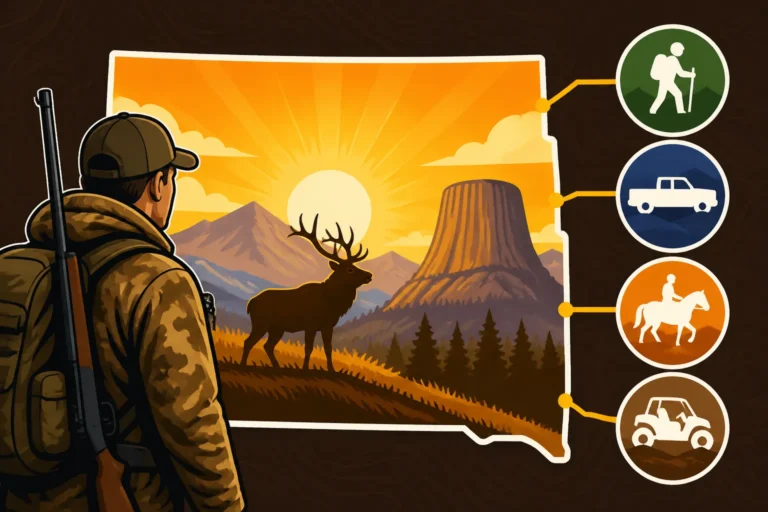
One of the Shoshone's defining characteristics is its relative inaccessibility, which, for many hunters, is precisely its appeal. While some areas are crisscrossed by forest service roads, vast sections are designated wilderness or simply so rugged that roads are impossible or impractical. This means a significant portion of the forest requires foot, horseback, or even raft access. For the hunter seeking a true wilderness experience, this is a golden opportunity to get away from the crowds and into genuinely remote country. However, it also demands a higher level of fitness, preparation, and self-reliance.
Access points are often limited to specific trailheads, many of which are a long drive from major towns like Cody or Dubois. These trailheads can serve as jumping-off points into multi-day backcountry excursions. The presence of wilderness areas, such as the Absaroka-Beartooth, Washakie, and Fitzpatrick wilderness areas within or adjacent to the Shoshone, means strict rules about motorized travel and group sizes. This often necessitates the use of pack stock—horses or mules—to get deep into the backcountry, or the willingness to carry everything on your back. Wilderness Rules Every Wyoming Nonresident Should Know are particularly important here, as is understanding Wyoming's National Forests: Bridger-Teton, Shoshone, Bighorn, Medicine Bow overall. The challenge of access, while daunting, often correlates with better hunting experiences for those willing to put in the effort.
Key Species and Their Habitats Within the Shoshone
The Shoshone National Forest is a stronghold for several big game species, drawing hunters from around the world. However, finding these animals requires a deep understanding of their preferred habitats and behaviors within this vast and varied landscape. It’s not enough to know the species; you need to know where they live in the Shoshone and why.
Elk: High Country and Timber Pockets
Elk are perhaps the most sought-after species in the Shoshone, and for good reason. The forest provides ideal habitat for them, especially the sprawling timbered slopes, high alpine parks, and deep canyon bottoms that offer both security and forage. During the early archery season, you'll often find bulls bugling in the high country, above 9,000 feet, reveling in the cool temperatures and lush feed of summer. As the rifle season progresses and hunting pressure increases, these animals become masters of discretion, retreating into the thickest timber, often on north-facing slopes, where they can evade detection.
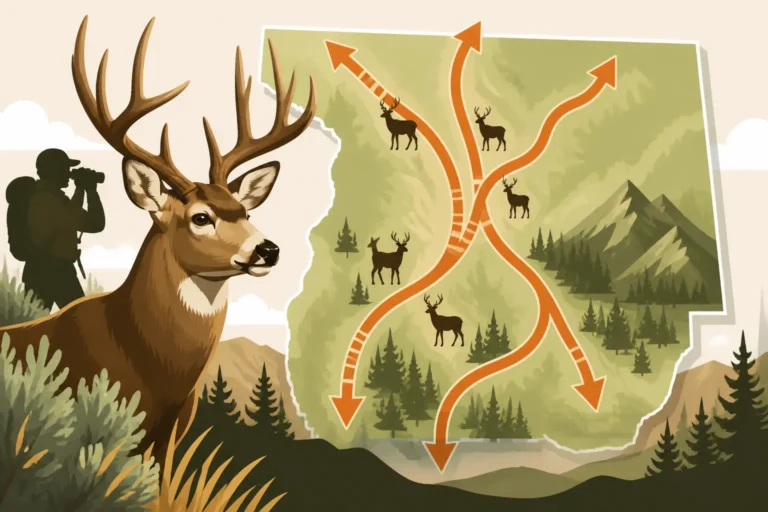
Their movements are heavily dictated by weather, forage, and hunting pressure. A sudden snowstorm can push elk down from the highest basins into lower elevation timber or even down into traditional wintering grounds, sometimes bordering private land. Understanding these migration corridors and seasonal movements is absolutely critical. Many hunters focus on areas with a mix of dark timber for bedding and open parks or burns for feeding. Bugle and Cow Call Timing Through the Rut is a key skill for elk hunters in the Shoshone, as the vastness of the landscape often requires hunters to actively locate animals rather than simply bumping into them. Success often hinges on identifying these transition zones between bedding and feeding, or simply putting in the miles to find unpressured animals in remote pockets.
Mule Deer: Above the Timberline and Transition Zones
Mule deer in the Shoshone are true mountain dwellers, often found at higher elevations than their prairie counterparts. While some mule deer will utilize the lower forested areas, especially during the late season, many of the trophy bucks will spend their summers and early fall above the timberline, grazing on the lush alpine vegetation. These high-country bucks develop impressive antlers in the solitude of the rocky cirques and open tundra, making them a prime target for ambitious hunters.
Later in the season, particularly with the onset of cold weather and snow, mule deer will begin their migration to lower elevation winter ranges. This movement can concentrate animals in specific drainages or transition zones, offering different hunting opportunities. Hunters pursuing high-country mule deer need excellent optics for Grid Glassing a Basin Without Missing Bucks and the physical endurance to climb to challenging elevations. They'll often be glassing vast, open landscapes, trying to pick out a bedded buck that blends seamlessly into the rocks and sparse vegetation. The key to success is patience and a willingness to explore, constantly assessing the terrain for natural funnels, escape routes, and areas where deer might seek shelter from the elements or predators.
Other Big Game: Moose, Sheep, and Bear Considerations
Beyond elk and mule deer, the Shoshone is home to other incredible big game species, though their tags are often much harder to come by. Shiras moose, for example, prefer riparian habitats, willow bottoms, and areas with dense aquatic vegetation. They are often found in the wetter drainages and along stream courses throughout the forest. Their populations are not as widespread as elk or deer, making them a special hunt for those who draw a Shiras Moose: A Wyoming Tag Measured in Decades.
Bighorn sheep inhabit the most rugged and inaccessible portions of the Shoshone, particularly the steep, rocky cliffs and high peaks of the Absaroka and Wind River ranges. Drawing a bighorn sheep tag is a once-in-a-lifetime dream for many, and the hunt itself is incredibly demanding, requiring extreme physical fitness, specialized gear, and often the assistance of an experienced guide. Wyoming Bighorn Sheep Random Odds Sit Under One Percent for nonresidents, making it a true lottery hunt.
Black bears are common throughout the Shoshone, found in a variety of habitats from dense timber to riparian corridors. They are opportunists, feeding on berries, nuts, carrion, and occasionally fawns or elk calves. The Shoshone allows for both spring and fall bear hunting, with specific rules about baiting and hound hunting depending on the area. Wyoming Black Bear Runs Spring and Fall and hunters need to be acutely aware of bear safety, especially in grizzly country, which overlaps significantly with the Shoshone. Grizzly bears are present in the northern portions of the Shoshone, making bear spray and proper food storage essential for any backcountry trip. Mountain lions also roam these mountains, though they are elusive and rarely seen, requiring special licenses and often hounds to pursue.
Navigating Access and Public Land Boundaries
Successfully hunting the Shoshone National Forest is as much about logistics and navigation as it is about hunting skill. This immense landscape, while primarily public land, has a complex weave of access points, motorized use restrictions, and occasional private inholdings that can catch an unprepared hunter off guard. Knowing how to get in, where you can go, and what tools to use is paramount.
Identifying Access Points and Trail Systems
Getting into the Shoshone often means finding the right trailhead or forest service road. Many primary access points are located off major highways like US-14/16/20 west of Cody, or US-26/287 near Dubois. These main arteries often lead to a network of smaller, sometimes rougher, gravel roads that penetrate deeper into the forest. It's crucial to research these roads beforehand, especially if you're pulling a trailer or driving a lower-clearance vehicle, as conditions can change rapidly with weather. Some roads may be impassable due to snow well into June or even July at higher elevations.
Once off the main roads, a vast system of trails awaits. These range from well-maintained, popular hiking trails to faint, unmaintained game trails that might only be visible to an experienced eye. For hunters, these trails are often the only way to get deep into the backcountry, particularly into designated wilderness areas where motorized travel is prohibited. Understanding which trails lead to your chosen hunt area, their typical conditions, and potential challenges like stream crossings or steep ascents, is vital. Relying solely on historical maps can be risky; recent fires, floods, or heavy snow seasons can alter the landscape and make previously navigable trails impassable. Checking with the local Forest Service ranger district is always a good first step for current conditions.
Understanding Motorized Use Rules and Wilderness Designations
One of the biggest pitfalls for hunters in the Shoshone is violating motorized use rules. The forest has a comprehensive Motor Vehicle Use Map (MVUM) that delineates exactly where motorized vehicles are permitted. These maps are available online and at ranger stations, and they are the law. Off-road travel is strictly prohibited except on designated routes, and these routes are often seasonally restricted or closed entirely to protect wildlife and habitat. It's easy to get turned around, especially when focused on a hunt, so having a reliable map and GPS is non-negotiable.
Within the Shoshone are significant wilderness areas, including portions of the Absaroka-Beartooth, Washakie, and Fitzpatrick Wildernesses. These areas have even stricter regulations. No motorized vehicles are allowed—that includes ATVs, e-bikes, and even game carts with motors. Commercial guiding in wilderness for nonresidents also has specific requirements, often requiring a licensed outfitter. Hunting the Shoshone in Northwest Wyoming often involves these wilderness areas, meaning hunters must be prepared for foot travel or pack stock. Understanding these designations and planning accordingly can save you from costly fines and ensure you're hunting ethically and legally. Always confirm the specific rules for your chosen hunt area, as they can vary even within the same forest.
Mapping Tools for Shoshone Hunters
Given the complexity of the Shoshone's terrain and regulations, modern mapping tools are absolutely indispensable. Gone are the days of relying solely on paper maps, though a physical map and compass should always be a backup. Digital mapping applications, like onX Hunt, have revolutionized how hunters navigate public land. These apps provide detailed topographic maps, overlaid with public and private land boundaries, forest service roads, wilderness designations, and even historical burn areas. With onX Hunt, you can download maps for offline use, mark waypoints for camps, game sightings, or water sources, and track your movements in real-time, all from your smartphone. This ability to see exactly where you are relative to boundaries and roads is invaluable in preventing accidental trespass and staying within legal hunting areas.
Another fantastic resource, especially for draw odds and unit breakdowns, is GoHunt. While primarily known for its extensive research tools on Western draws, its mapping features and data layers can complement your onX Hunt subscription. GoHunt often integrates information about harvest statistics, public land percentages, and other critical data directly onto maps, helping you evaluate potential hunt units before you even step foot in the forest. Using a combination of these digital tools, along with official Forest Service maps, provides the most comprehensive navigational strategy. It’s a game-changer for scouting from home E-Scouting a Unit Before the Season Opens and navigating once you’re on the ground, ensuring you know exactly where Wyoming's Huntable Public Land Actually Sits.
| Feature / Benefit | Traditional Paper Map & Compass | onX Hunt (Digital App) | GoHunt (Digital Platform) |
|---|---|---|---|
| Real-time Location | Requires active navigation | GPS-enabled, real-time tracking | GPS-enabled, real-time tracking (via app) |
| Land Ownership Layers | Not available | Detailed public/private overlays | Detailed public/private overlays (often with more data) |
| Road & Trail Networks | Good, but static | Comprehensive, often updated, MVUM overlays | Good for planning, less for real-time navigation |
| Offline Capability | Always available | Downloadable maps for no cell service | Downloadable maps for no cell service (via app) |
| Waypoint/Track Saving | Manual marking | Easy digital marking, photo attachment | Integration with draw data, harvest stats |
| Draw Odds & Unit Data | Not available | Limited | Extensive and specialized for Western hunting |
| Cost | Low (one-time purchase) | Subscription-based | Subscription-based (higher tier often for full access) |
| Durability / Power Needs | High / None | Vulnerable to damage, requires battery power | Vulnerable to damage, requires battery power |
Planning Your Hunt in the Shoshone National Forest
A successful hunt in the Shoshone isn't about luck; it's about meticulous planning. This isn't your backyard woodlot; it's vast, unforgiving country that demands respect and thorough preparation. From your physical condition to the gear in your pack, every detail matters when you're miles deep in the Wyoming wilderness.
Essential Gear and Physical Conditioning for Rugged Terrain
Let's be blunt: the Shoshone will test your physical limits. The terrain is relentlessly steep, often rocky, and elevations can quickly climb above 10,000 feet. If you haven't been training, you're going to suffer, and potentially put yourself and your hunting partners at risk. A pre-hunt fitness regimen should include plenty of hiking with a weighted pack, stair climbing, and general cardiovascular endurance. You need to be able to cover miles daily, often with significant elevation gain, and still have the stamina to pack out an animal. Consider your hunting plan; if you’re planning on Recurve, Longbow or Compound for Western Elk in steep country, your physical conditioning needs to be top-notch.
Your gear needs to be just as robust as your body. Layered clothing is non-negotiable; temperatures can swing wildly from morning to midday, and from one side of a ridge to another. Quality rain gear, sturdy hiking boots (broken in!), and reliable optics are foundational. For optics, consider binoculars in the 10x range, and if you plan on extensive glassing, a spotting scope in the 15-45x or 20-60x range on a tripod will save your eyes and reveal details you'd otherwise miss. Optics Power for Wyoming's Long Sightlines is critical here. Don't skimp on a good pack, either, one capable of carrying heavy loads comfortably. Think about emergency supplies: a first-aid kit, fire starter, water filter, headlamp, and emergency shelter are minimums. Satellite communication devices, like an inReach or Spot device, are also highly recommended, as cell service is virtually nonexistent in most of the Shoshone.
Understanding Hunt Area Regulations and Special Provisions
Before you even apply for a tag, you need to dive deep into Wyoming's regulations, particularly those specific to the Shoshone's hunt areas. Wyoming's game and fish department publishes annual regulations booklets that are your bible for the season. Pay close attention to the specific hunt area boundaries, which species are open, weapon restrictions (archery-only vs. rifle), and season dates. Some areas might have early archery seasons, followed by general rifle, or even late-season antlerless opportunities. Wyoming Elk Season Dates Are Set Hunt Area by Hunt Area, and these can vary wildly even between adjacent units within the Shoshone.
Beyond the general regulations, be aware of any special provisions or closures. This might include seasonal road closures for winter range protection, habitat management area restrictions, or specific rules for hunting near developed areas or private land interfaces. If you’re hunting in a designated wilderness area, remember the nonresident guide requirement for certain species like elk, deer, or bighorn sheep. Wyoming's Wilderness Guide Law for Nonresidents is a critical piece of information that can easily be overlooked. Always cross-reference your chosen hunt area with the latest regulations, and don't hesitate to call the local Wyoming Game and Fish Department office for clarification on any ambiguous rules.
Safety Considerations: Bear Country, Weather, and Solitude
Hunting in the Shoshone means entering true wilderness, and that comes with inherent risks. The most prominent wildlife-related concern is often bears. The northern Shoshone is grizzly country, and even in areas where grizzlies are less common, black bears are plentiful. Carrying bear spray, knowing how to use it, and practicing proper food storage in camp (bear canisters or hanging food) are not suggestions—they are necessities. Understand Bear Safety Practices in an Outfitter Camp even if you are hunting DIY, as the principles apply to everyone. Educate yourself on bear behavior and how to react to an encounter.
Weather in the Shoshone can turn on a dime, especially in the high country. Bluebird skies can quickly give way to thunderstorms, hail, or even snow, even in August or September. Hypothermia is a real threat if you're caught unprepared for a sudden temperature drop or prolonged rain. Always pack extra layers, a waterproof outer shell, and an emergency bivy sack. Tell someone your detailed hunt plan, including your intended route, where you'll be camping, and when you expect to return. Since cell service is rare, this "leave a plan" strategy, combined with a satellite communication device, could be a lifesaver. The sheer solitude of the Shoshone means that help is often hours, if not a day, away. Self-reliance and conservative decision-making are paramount.
Strategic Hunting Approaches for the Shoshone's Challenging Landscape
Hunting the Shoshone National Forest requires more than just good gear and fitness; it demands a strategic mindset tailored to its unique challenges. This isn't a place for casual strolls; it's a landscape that rewards careful planning, keen observation, and the willingness to adapt.
Glassing Vast Basins and High Ridges
The Shoshone is a glasser's paradise and a stalker's nightmare, especially in the more open, high-alpine environments. The sheer scale of the landscape means that covering ground on foot is often inefficient for locating animals. Instead, positioning yourself on a high vantage point to methodically Grid Glassing a Basin Without Missing Bucks is usually the most effective approach. This means finding a spot with a broad, unobstructed view of potential feeding areas, bedding slopes, and travel corridors. Patience is your best friend here. Spend hours behind your binoculars and spotting scope, meticulously scanning every shadow, rock, and patch of timber. Animals blend incredibly well, and what might look like a rock one minute can become a bedded elk the next.
Consider the time of day and light conditions. Early mornings and late evenings are prime times for animals to be active and visible. The angle of the sun can make a huge difference in spotting game; sometimes a different vantage point will reveal animals obscured by glare or shadows from another. Wind direction is also critical; you want to glass from a position that doesn't carry your scent directly into the areas you're observing. Once an animal is spotted, the real challenge begins: planning an approach that accounts for terrain, wind, and the animal's likely escape routes. Often, the best approach might involve a long, circuitous route that puts you in a position for a shot.
Stalking Timber and Tracking in Remote Areas
While glassing is vital in open country, large portions of the Shoshone consist of dense timber and thick brush, especially at mid-elevations. Here, still hunting and tracking become the primary tactics. Still hunting involves moving incredibly slowly and deliberately, pausing frequently to scan your surroundings, listen for sounds, and observe subtle movements. Every step should be planned, minimizing noise and avoiding breaking branches. This is a game of patience and heightened senses, moving through the woods as if you are part of them. Pay attention to changes in terrain, such as benches, saddles, and creek bottoms, where animals are likely to travel or bed.
Tracking is another highly effective method in timbered areas, particularly after a fresh snow. Learning to read sign—tracks, droppings, rubs, and beds—can tell you a story about animal movement, size, and freshness. Following a set of tracks through the timber demands focus and experience. It's not just about seeing the tracks; it's about interpreting them. Are they fresh? Is the animal walking, trotting, or running? Where is it headed? Combine tracking with still hunting techniques, moving quietly and constantly checking the wind. This is a slow, methodical process that can be incredibly rewarding, especially when it leads to a surprise encounter with a bedded animal. For elk, Reading Fresh Elk Sign in Dark Timber is an art form that can pay off handsomely.
Calling Strategies for Elk and Deer in the Mountains
Calling can be a highly effective tactic in the Shoshone, especially for elk during the rut and for certain situations with deer. Elk calling, primarily bugling and cow calling, aims to mimic the sounds of elk to attract bulls or locate them. How to Bugle a Wyoming Bull Into Bow Range is a skill that takes practice and careful timing. Early in the archery season, aggressive bugling can challenge a bull and bring him charging in. Later, as bulls become more call-shy from hunting pressure, subtle cow calls or glunking might be more effective. Two-person calling setups, where one hunter calls from behind while the shooter moves forward, can be devastatingly effective, making the incoming bull think the calls are further away.
For deer, calling is generally less effective than for elk, but certain calls, particularly a fawn bleat or a buck grunt, can sometimes pique the curiosity of a mule deer buck. During the rut, rattling antlers or using a doe bleat can occasionally pull in a curious buck, especially if he thinks there's a rival or a receptive doe nearby. However, mule deer in the wide-open Shoshone are often more wary than whitetails, making calling a secondary tactic to glassing and stalking. Regardless of the species, always consider the wind when calling; an animal will always try to get downwind to scent-check the source of the sound, and you want to be positioned to intercept them before they bust you.
Disclaimer
This article is for general informational purposes only and does not constitute professional advice. Laws, prices and regulations vary by location and change over time. Consult a qualified professional for guidance on your specific situation.