Outfitter Success Rates on Mule Deer
Heading out to Wyoming with dreams of a mule deer buck in your sights? It's a common aspiration, and if you're like many hunters, you've probably spent hours poring over outfitter websites, looking for that magic number: the success rate. It feels like the ultimate benchmark, doesn't it? A quick glance at a high percentage can either instill confidence or make you question if your own skills are up to snuff. But here's the honest truth: interpreting "outfitter success rates on mule deer" is far more nuanced than just looking at a single figure. This guide is here to help you peel back the layers, understand what those numbers really mean, and equip you with the knowledge to make an informed decision for your next Wyoming mule deer adventure.
Understanding "Success Rates" in Wyoming Mule Deer Hunting
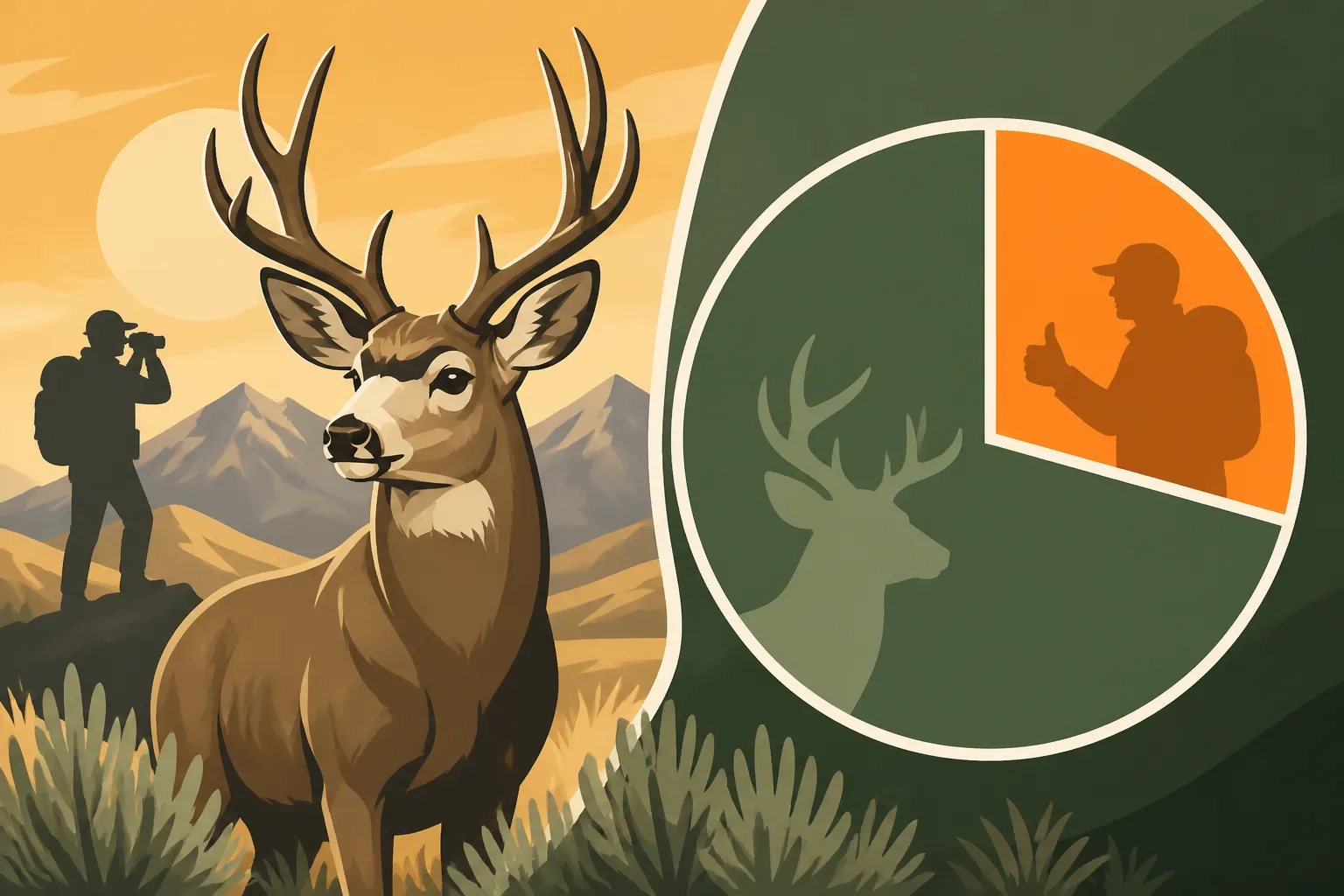
When you see an outfitter proudly display a "90% success rate," it's natural to feel a surge of optimism. Who wouldn't want those kinds of odds? But as a seasoned hunter and someone who's seen the marketing ebb and flow of the outfitting world, I've learned that these numbers often need a bit of translation. They're not always trying to mislead you, but they are certainly designed to present the best possible picture. And honestly, "success" itself can be defined in many different ways.
What an Outfitter's Stated Success Rate Really Means
First off, consider what "success" means to the outfitter. For many, it's simply whether a client harvested any deer. This could be a mature buck, a young spike, or even a doe if the tag allowed and the hunter chose to fill it. While filling a tag is certainly a form of success, it might not align with your personal goal of a trophy mule deer. Imagine a hunter who spends a week in the high country, passes on several smaller bucks, and goes home empty-handed but satisfied with the experience. The outfitter might count that as an "unsuccessful" hunt, even if the hunter felt it was a fantastic trip.
Another critical point is the time frame and selection bias. An outfitter might highlight their best seasons or particular hunts where conditions were ideal, or they had a group of highly experienced and physically capable hunters. Conversely, a poor season with bad weather or inexperienced clients might get less airtime. It's not always a deliberate deception, but a natural human tendency to focus on the positives. Always remember that a stated success rate is a snapshot, and sometimes, it's a very carefully chosen snapshot.
Finally, some outfitters might even categorize "opportunity rates" as success, meaning you had a legitimate chance to harvest an animal, whether you connected or not. This is a very different metric from actual harvest. If you got a shot but missed, or spooked a buck, that might count as an "opportunity" and inflate a success rate that, in terms of animals actually put on the ground, would be much lower. Always clarify what the outfitter means by "success."
The Different Metrics for "Success"
To truly gauge an outfitter, you need to understand the various ways "success" can be measured. It’s not just about pulling a trigger; it’s about the overall hunting experience and whether it meets your expectations.
Here’s a breakdown of different metrics an outfitter might track or that you should ask about:
- Harvest Rate (Kill Rate): This is the most straightforward: the percentage of clients who actually harvested a mule deer. This is often what hunters think they are looking at when they see a "success rate." If 10 hunters went out and 7 harvested a deer, that's a 70% harvest rate. This is usually the most relevant number for those primarily focused on bringing home venison or a specific buck.
- Opportunity Rate: As mentioned, this is the percentage of clients who had a legitimate shooting opportunity at a legal mule deer, regardless of whether they harvested it. This rate can be much higher than the harvest rate, especially with less experienced hunters or those who might have buck fever. It tells you that the outfitter is good at putting you in front of game.
- Trophy Quality Rate: This is a much trickier metric and less commonly advertised directly. It measures the percentage of clients who harvested a mule deer meeting certain size criteria (e.g., 160-inch P&Y minimum, a 4×4 or better, etc.). This is crucial for hunters whose primary goal is a specific class of animal. An outfitter might have a high overall harvest rate, but if most of those are smaller bucks, it won't satisfy a trophy hunter.
- Return Client Rate: While not a direct measure of hunting success, a high percentage of returning clients is a fantastic indicator of overall satisfaction. It suggests the outfitter provides a great experience, whether or not every hunt results in a kill. Hunters don't typically come back to operations that consistently disappoint.
It's important to remember that these metrics can fluctuate wildly from year to year, even for the best outfitters. Variables outside anyone's control, like winter severity, spring moisture, and drought, can dramatically impact a mule deer herd's health and distribution. For instance, How Far Wyoming's Mule Deer Have Rebounded will give you an idea of the population dynamics impacting these rates.
Factors That Influence Mule Deer Outfitter Success
A good outfitter doesn't just magically produce deer; they understand the intricate dance between habitat, animal behavior, and hunter capability. Several factors weigh heavily on whether your hunt will be "successful," however you define it. It’s a dynamic equation, not a static formula.
Unit Quality and Public vs. Private Land Access
The specific hunt area, or "unit," where an outfitter operates is perhaps the most significant predictor of success. Some units in Wyoming are renowned for their high mule deer populations and potential for mature bucks, while others are known for being tougher draws or having more limited opportunities. An outfitter running hunts in a consistently high-performing unit naturally has a better chance of success. This is why doing your homework on Wyoming's Best Units to Draw for a Mature Mule Deer is so important.
Furthermore, access to private land can dramatically alter an outfitter's success rate. Mule deer on private land often experience less hunting pressure, have better access to forage, and can therefore grow older and larger. An outfitter with exclusive access to large tracts of well-managed private land typically has higher and more consistent success rates than one who primarily hunts public land. Public land hunting, while incredibly rewarding, often means more pressure and harder-earned success. Outfitters who have built relationships with landowners often advertise this as a key benefit, and it genuinely can be. However, don't discount public land outfitters entirely; they often specialize in challenging but incredibly fulfilling backcountry experiences.
Consider also the type of terrain. Some units are relatively open, allowing for extensive glassing and long-range opportunities, while others are timbered and require more strenuous still-hunting or tracking. An outfitter specializing in one type of terrain will have honed their skills there, but your own preferences and physical capabilities should align with that.
Hunter Skill, Physical Conditioning, and Expectations
Let’s be honest: a significant portion of "outfitter success" rests squarely on the hunter's shoulders. Even the most experienced guide can't shoot for you, nor can they magically make you fit enough to climb a mountain when you haven't trained. Your physical conditioning is paramount, especially on a Wyoming mule deer hunt. These aren't typically sedentary hunts. You'll be covering ground, often at elevation, and possibly in rugged terrain. An honest conversation with your outfitter about the physical demands of their hunts is essential.
Your shooting proficiency is another critical component. If an outfitter puts you on a 200-yard mule deer, but you can only consistently hit a target at 100 yards, that's a missed opportunity, not an outfitter failure. Practice, practice, practice before your hunt. Know your rifle and your limits. Similarly, your hunting experience and patience play a role. Are you willing to pass on smaller bucks for a chance at a true trophy, even if it means going home empty-handed? Or is filling a tag your main objective?
Finally, managing your expectations is vital. If you go into a hunt expecting a Boone and Crockett buck every time, you're setting yourself up for disappointment. A good outfitter will try to manage these expectations upfront, painting a realistic picture of what's possible in their given area. A high success rate doesn't guarantee your success, nor does it guarantee a trophy.
Weather and Environmental Conditions
Mother Nature wields immense power over hunting success, often more than any outfitter or hunter. Harsh winters can decimate mule deer herds, while mild winters can allow populations to grow. A late spring snowstorm or a prolonged drought during the hunting season can profoundly affect deer behavior and distribution. If deer are holed up due to extreme heat or are not moving because of unusual weather patterns, even the best outfitter will struggle.
For example, a sudden cold front with snow can push deer into lower elevations, making them easier to locate, but it can also make travel and glassing incredibly difficult for hunters. Conversely, an unseasonably warm spell can make deer nocturnal, bedding down early and moving late. These are factors entirely beyond human control, and they can swing success rates dramatically year to year. A responsible outfitter will understand these cycles and try to anticipate them, but no one can guarantee perfect conditions. This is where researching The Wyoming Pronghorn Population Estimate Explained might offer insight, as pronghorn and mule deer often share similar environmental impacts, giving you a broader understanding of the ecosystem.
Researching and Interpreting Outfitter Success Rates
So, how do you sift through the marketing speak and get to the real story behind those success rates? It requires a bit of detective work and some pointed questions. Don't be afraid to dig deep; a reputable outfitter will appreciate your diligence.
Where to Find Reported Success Data (and its Limitations)
While outfitters will often display their own success rates on their websites, it's always wise to look for independent verification or, at the very least, supplementary information.
Some hunting platforms and services specialize in connecting hunters with outfitters and often compile data or reviews. For instance, platforms like BookYourHunt often feature reviews from past clients, and sometimes success rates are mentioned in those reviews or in the outfitter's profile section. While these aren't official government statistics, they provide a valuable third-party perspective. Similarly, hunting intelligence resources like GoHunt might offer insights into specific hunt units, drawing odds, and general herd health, which can indirectly help you assess the potential of an outfitter's operating area. While they might not provide specific outfitter success rates, they can help you understand the broader context of the hunt you're considering.
However, remember the limitations:
- Self-Reported Data: Many "success rates" are self-reported by the outfitters themselves. While most are honest, there's no official, standardized auditing process for these numbers in Wyoming.
- Averages vs. Specifics: An outfitter might average their success rate over five years, which could smooth out good and bad seasons. Ask for year-by-year data if possible.
- Sample Size: If an outfitter only takes a handful of clients each year, a single lucky (or unlucky) hunter can drastically skew their reported percentage.
- Bias in Reviews: Online reviews are invaluable, but they often come from very happy or very unhappy clients. The middle-ground experiences might be underrepresented.
It’s about compiling as much information as you can from various sources, then cross-referencing and looking for consistent patterns. Don’t rely on one data point.
Asking the Right Questions to Your Potential Outfitter
The best way to get to the truth is to have a direct, honest conversation with the outfitter. Prepare a list of questions, and don’t hesitate to ask for specifics.
Here are some questions to consider:
- "What do you mean by 'success' in your reported rates?" (Are we talking harvest, opportunity, or trophy?)
- "What were your mule deer harvest rates for the last 3-5 years, broken down by year?" (This helps identify trends and unusual seasons.)
- "What percentage of those harvested deer were mature bucks (e.g., 4×4 or larger, or 160+ class)?" (Crucial for trophy hunters.)
- "What kind of physical condition should I be in for this particular hunt?" (Listen carefully to their description of terrain and typical daily effort.)
- "Can you provide me with references from past clients who hunted mule deer with you in the last year or two?" (And definitely follow up and call those references. Ask them similar questions you're asking the outfitter.)
- "What is the average shot distance your clients typically take on mule deer?" (This helps you prepare your shooting skills.)
- "How do you adapt your strategy in challenging weather conditions?" (Shows their experience and contingency planning.)
- "What type of terrain will we be hunting, and how will we be covering ground?" (e.g., foot, horses, vehicle access, etc.)
- "Are there any specific Wyoming Hunt Areas That Limit Your Weapon Choice or other special regulations I should be aware of in your operating units?" (Demonstrates your own research and diligence.)
Remember, a good outfitter wants you to have a successful hunt and be happy with your experience. They should be transparent and willing to answer your questions thoroughly. If they get defensive or vague, that’s a red flag. When you're talking with them, you can also learn a lot by asking about their personal experiences with Reading Fresh Elk Sign in Dark Timber or Finding Water Sources in Dry Hunting Country, even if it's not directly mule deer related, as it shows their general hunting acumen and connection to the landscape.
Setting Realistic Expectations for Your Wyoming Mule Deer Hunt
Ultimately, hunting, especially for an animal as wily as a mule deer, is rarely a guarantee. Setting realistic expectations for your guided hunt in Wyoming is arguably more important than fixating on a single success rate number. It transforms the experience from a transaction into an adventure.
Trophy Quality vs. Opportunity Rates
Many hunters dream of a record-book buck. Wyoming certainly produces them, but they are the exception, not the rule. If your primary goal is a truly massive mule deer, your "success rate" might inherently be lower, even with a top-tier outfitter, simply because truly giant bucks are rare and often require specific circumstances.
An outfitter might have a 70% harvest rate, but if only 10% of those harvests were trophy-class animals, that's important information for you. Be clear with your outfitter about your goals. If you're looking for a "any legal buck" experience, your odds are usually much higher. If you're holding out for a buck of a lifetime, understand that it might mean passing on many animals and potentially going home empty-handed. This isn't a failure; it's a choice you're making as a trophy hunter. It's often a balance between having a high Wyoming Antelope Odds With Zero Preference Points and the rarity of truly giant animals.
It's helpful to discuss the typical size of bucks harvested in the outfitter's area. Look at their photo galleries, but remember that outfitters tend to post their biggest successes. Ask if they have photos from all their clients in a given year, or at least a representative sample.
The "Unpredictable" Factor of Hunting
The beauty and frustration of hunting lie in its inherent unpredictability. This isn't a grocery store; you can't guarantee a specific item will be on the shelf. While an outfitter provides expertise, scouting, equipment, and access, they cannot control every variable. A sudden blizzard could make travel impossible for a day or two, or a warm spell could make deer bed down early and move late, reducing daytime activity. A specific buck you've been chasing might simply vanish.
This "unpredictable" factor is precisely why we love hunting, isn't it? It challenges us, forces us to adapt, and makes the eventual success so much sweeter. Go into your Wyoming mule deer hunt with an open mind, ready to embrace the challenges and celebrate the small victories. Whether it's the breathtaking sunrise over the sagebrush, the camaraderie around the campfire, the unexpected encounter with another wildlife species, or the thrill of a hard-earned stalk, these are all elements of a successful hunt, regardless of whether a mule deer buck ends up in your freezer. Appreciating the overall experience, the chance to be out in Wyoming's National Forests: Bridger-Teton, Shoshone, Bighorn, Medicine Bow, is often what truly makes a hunt memorable.
| Factor | Impact on Success Rates | Hunter's Role/Consideration |
|---|---|---|
| Hunt Unit Quality | High-quality units (good habitat, lower pressure) generally yield higher success rates, especially for larger bucks. | Research unit draw odds and buck-to-doe ratios. Ask the outfitter about their specific unit's history. |
| Public vs. Private Land | Private land often has less pressure and better deer, leading to higher rates. Public land can be harder but very rewarding. | Clarify what type of land the outfitter primarily hunts. Be realistic about public land challenges. |
| Hunter Physical Condition | Poor fitness limits ability to cover ground and get into optimal positions, directly impacting opportunities. | Train rigorously before your hunt. Be honest with your outfitter about your fitness level. |
| Hunter Skill (Shooting/Patience) | Inaccurate shooting or impatience can turn opportunities into misses or missed chances, lowering personal success. | Practice shooting extensively at various distances and positions. Clearly communicate your trophy goals to the outfitter. |
| Weather & Environmental | Extreme weather (heat, blizzards, drought) can make deer less active or harder to locate, reducing outfitter and hunter success. | Understand that weather is unpredictable. Pack appropriate gear for all conditions. Flexibility is key. |
| Outfitter Experience/Knowledge | Experienced outfitters know the land, deer patterns, and effective strategies, increasing the likelihood of opportunities. | Vet the outfitter thoroughly, check references, and ask about their specific experience with mule deer in the given area. |
| Definition of "Success" | Varies widely (harvest, opportunity, trophy). A high "opportunity" rate might mask a lower "harvest" or "trophy" rate. | Always clarify what the outfitter's reported success rate actually measures. What is your definition of a successful hunt? |
At the end of the day, an outfitter can put you in the best position possible, but the hunt itself remains an unpredictable dance between hunter, animal, and environment. Focus on finding an outfitter who aligns with your values, communicates openly, and offers a hunting experience you'll cherish, regardless of the final outcome. Whether you're interested in Reading Wind on an Open-Country Stalk or perfecting your Optics Power for Wyoming's Long Sightlines, the learning and the adventure are what truly count.
Disclaimer
This article is for general informational purposes only and does not constitute professional advice. Laws, prices and regulations vary by location and change over time. Consult a qualified professional for guidance on your specific situation.