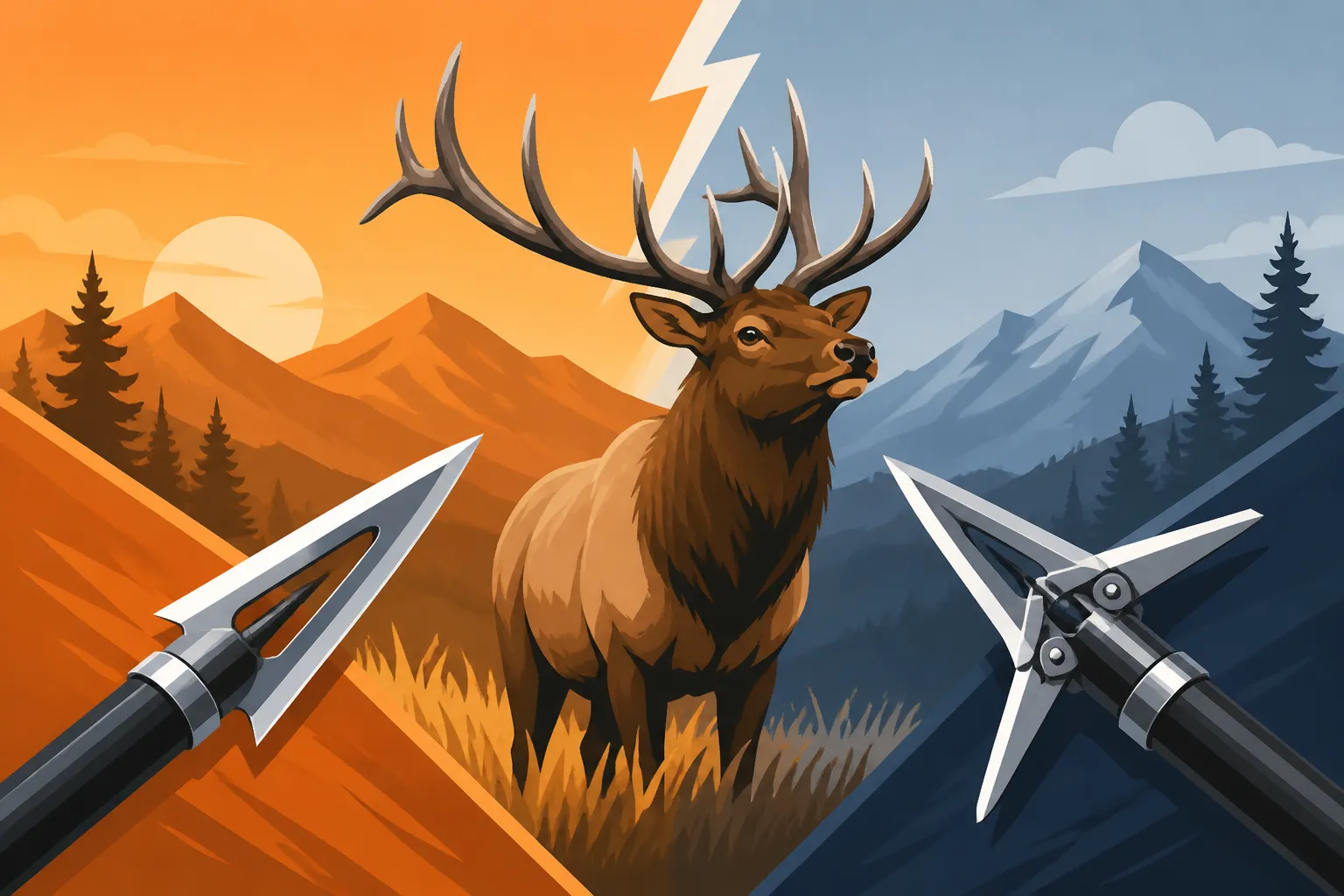
Fixed Blade Against Mechanical Broadheads on Elk
Choosing a broadhead for elk can feel like stepping into a minefield of opinions, especially when you’re planning a hunt in a place as vast and challenging as Wyoming. Every hunter seems to have their deeply held convictions about what flies best and hits hardest, and the internet is rife with passionate arguments for both fixed blade and mechanical designs. It’s enough to make your head spin trying to figure out which one is truly the best choice for tackling a tough animal like a Wyoming bull. This guide will walk you through the nuances of both fixed blade and mechanical broadheads, helping you understand their performance characteristics and empowering you to make the most informed decision for your upcoming elk hunt.
The Enduring Debate: Fixed Blades for Elk
For generations, fixed blade broadheads were the only option, and they’ve certainly proven their mettle on countless animals, including some of the largest and toughest game worldwide. There's a reason why so many experienced elk hunters still swear by them, especially when facing the kind of unpredictable terrain and conditions you often find in Wyoming.
Why Fixed Blades Have Stood the Test of Time
Fixed blade broadheads are, at their core, beautifully simple. They consist of a solid ferrule with blades that are permanently attached and extend beyond the tip. This design means there are no moving parts to fail. When you send that arrow downrange, the blades are already in their full cutting position, ready to do their job upon impact. This inherent reliability is a massive psychological comfort, particularly when you’ve spent days, weeks, or even years preparing for a single shot at a magnificent bull elk. You know what you’re getting every single time.
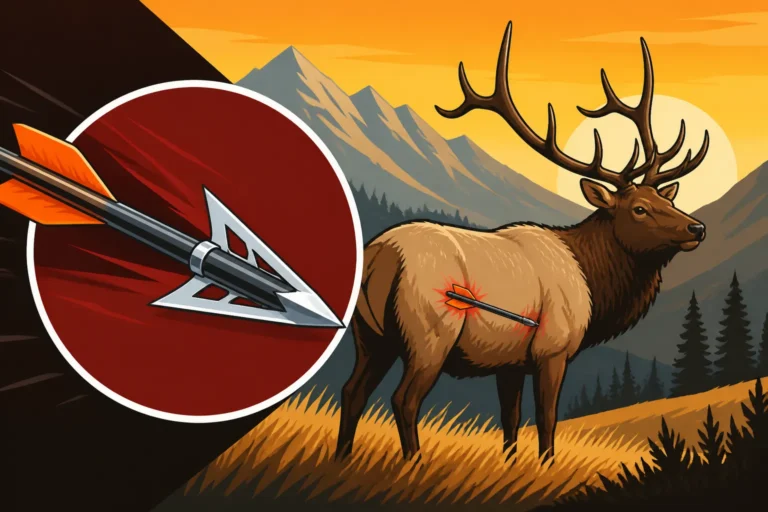
Their strength and reliability contribute directly to superior penetration. Because there's no energy expended on opening blades, all kinetic energy is focused directly into driving the broadhead through hide, muscle, and potentially bone. This is a critical factor when hunting an animal as robust as an elk, where a clean pass-through isn't just nice, it's often essential for a quick, ethical kill and a manageable blood trail. When you hit a rib or even the edge of a scapula, a well-designed fixed blade broadhead, backed by sufficient arrow weight and bow poundage, often punches right through, maximizing the wound channel and increasing the chances of hitting vital organs deep within the chest cavity. This is particularly important for those of us who prioritize performance and reliability above all else when hunting big game.
The Realities of Using Fixed Blades on Elk
While their simplicity and reliability are huge advantages, fixed blade broadheads aren’t without their quirks. The biggest challenge for many archers is achieving consistent, accurate flight. Because the blades act like small fletchings, they can catch the wind or be influenced by inconsistencies in your bow tuning or shooting form. This means that a fixed blade broadhead that flies perfectly out of one bow might spiral uncontrollably out of another. It demands a meticulous approach to bow tuning, ensuring your arrows leave the string with no wobble or porpoising. Walk-back tuning, paper tuning, and bare shaft tuning become almost religious rituals for hunters committed to fixed blades.
In Wyoming’s wide-open spaces, wind can be a constant, formidable adversary. Picture yourself on a high ridge in the Bighorn Mountains, stalking a herd of elk, when suddenly a gust of wind whips across the basin. A fixed blade broadhead, with its exposed blades, can be more susceptible to wind drift than a field point or a collapsed mechanical. This doesn't mean you can't hit your target, but it demands an even greater understanding of wind direction and speed, and often requires practice shooting in windy conditions to anticipate and compensate for potential drift. Every slight variable can throw off your shot, making an already challenging scenario even more so. It’s a frustration many bowhunters know all too well, especially when an opportunity arises after a tough Open-Country Stalk.
When choosing a fixed blade for elk, hunters often look for designs with strong, thick blades and ferrules that can withstand significant impact. Brands like GrizzlyStik, QAD Exodus, and G5 Montec are popular choices known for their durability and penetration. Ultimately, if you put in the time to tune your bow and practice with your chosen fixed blade, you’ll be rewarded with a broadhead that inspires immense confidence and performs reliably under the toughest conditions that a Wyoming elk hunt can throw at you.
Mechanical Broadheads: The Appeal and the Apprehension
In recent decades, mechanical broadheads have soared in popularity, largely due to their promise of field point accuracy and devastating cutting diameters. For many hunters, especially those new to archery or those struggling with fixed blade tuning, mechanicals offer an attractive alternative.
The Draw of Larger Cutting Diameters
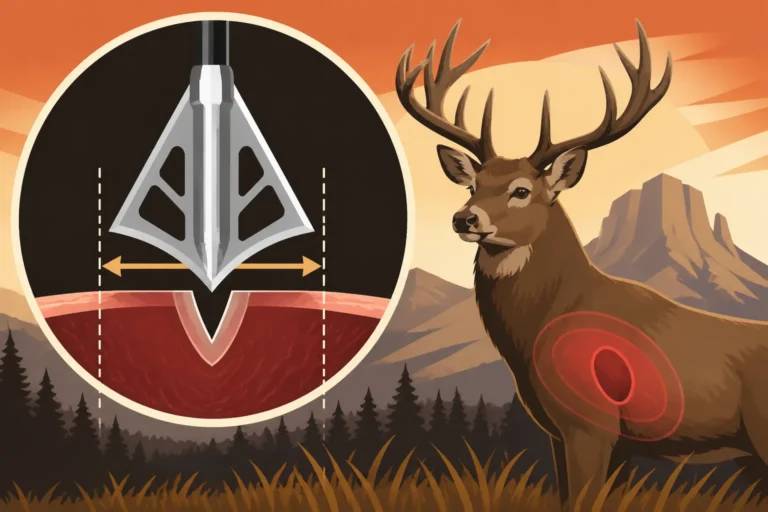
The primary appeal of mechanical broadheads lies in their ability to offer a massive cutting diameter upon impact, far exceeding what’s typically possible with a fixed blade that must maintain a streamlined profile during flight. Imagine a broadhead that flies like a field point, then, upon hitting your target, deploys three razor-sharp blades to create a two-inch or even larger wound channel. This wider cut means more tissue damage, faster blood loss, and a significantly larger entry and exit wound, which theoretically leads to quicker recoveries and more robust blood trails. For a hunter tracking an elk across vast Wyoming landscapes, a clear, consistent blood trail can be the difference between recovering your animal and a lost game.
Many mechanical broadheads are designed to mimic the flight characteristics of a field point, making them incredibly easy to tune. You can typically screw them onto your hunting arrows, shoot them alongside your practice field points, and find very little, if any, difference in point of impact. This "field point accuracy" is a huge selling point, reducing the frustration and time commitment often associated with fixed blade tuning. Hunters using lighter draw weight bows, or those prioritizing a flatter trajectory, often find mechanicals simplify their setup and enhance their confidence at typical hunting ranges. Whether they're front-deploying, like many Rage models, or rear-deploying designs, such as some from NAP Killzone or Grim Reaper, the goal is consistent, reliable blade deployment upon impact. Just make sure your chosen broadhead meets the legal The Minimum Cutting Width a Broadhead Must Make in Wyoming, which is 7/8 of an inch.
Addressing the "What Ifs" with Mechanicals on Elk
Despite their advantages, mechanical broadheads come with a set of "what ifs" that often give elk hunters pause. The most significant concern revolves around potential mechanical failure. What if the blades don't deploy properly? What if they deploy prematurely in flight? What if they break or bend upon hitting heavy bone? While modern mechanicals have come a long way in design and reliability, these questions linger, especially when hunting an animal like an elk where success hinges on deep penetration and devastating terminal performance.
Another common apprehension is the energy required for proper deployment and penetration. A mechanical broadhead needs a certain amount of kinetic energy to open its blades and then continue to drive through the animal. This means there's a slight loss of kinetic energy during deployment, which can be critical on deep-penetrating shots or when hitting heavy bone. For elk, especially with the minimum Wyoming Sets Bow Draw Weight at 40 Pounds, 50 for Elk of 50 pounds, ensuring you have enough kinetic energy is paramount. A general rule of thumb for elk is to aim for at least 55-60 ft-lbs of kinetic energy, combined with sufficient Arrow Weight That Gets Through an Elk. If your bow setup is on the lower end of the power spectrum, or if you're using a lighter arrow, a mechanical broadhead might be a riskier choice. Blade integrity is also a factor; while some mechanicals boast incredibly tough designs, hitting the heavy shoulder bone of a bull elk can sometimes damage blades or compromise the ferrule, potentially limiting penetration. Ultimately, for those who choose mechanicals for elk, selecting a robust, proven design is absolutely critical. Resources like GoHunt often have forums and gear reviews where hunters share their real-world experiences with different broadhead brands on elk.
Making the Choice: Factors Beyond the Broadhead Itself
The broadhead itself is only one part of the equation when it comes to successful elk hunting. Your personal bow setup, shooting skill, and understanding of elk anatomy and regulations all play a crucial role in determining which broadhead will serve you best.
Your Bow Setup and Shooting Prowess
Your archery setup, from your bow's draw weight to your arrow's FOC (Front of Center) and total weight, profoundly impacts broadhead performance. For hunting elk in Wyoming, the regulations stipulate a minimum draw weight of The 50-Pound Bows Elk and Moose Require. While this is a legal minimum, many experienced elk hunters will tell you that more is often better, both for kinetic energy and for driving through bone. A heavier arrow, for instance, carries more momentum, which translates to better penetration regardless of broadhead type. If you’re shooting a compound bow at 70 pounds with a 500-grain arrow, you’ll have a lot more energy to work with than someone shooting 50 pounds with a 350-grain arrow. This difference in energy can influence how reliably a mechanical broadhead deploys and penetrates, or how effortlessly a fixed blade slices through.
Ultimately, broadhead choice cannot compensate for poor shooting. Shot placement is, without a doubt, the single most critical factor in ethical elk hunting. An arrow perfectly placed through the lungs with a "less optimal" broadhead will be infinitely more effective than a poorly placed shot with the "best" broadhead. This means dedicating significant time to Realistic Archery Practice Distance for Big Game – not just at 20 yards, but out to your maximum ethical shooting distance. Practice shooting from varied positions, uphill, downhill, and after physical exertion, to simulate actual hunting conditions. Confidence in your shot, fueled by consistent practice with your actual hunting setup (broadheads included!), is your greatest asset in the field.
Understanding Wyoming's Regulations and Elk Anatomy
Before you even step foot in Wyoming’s elk country, it's vital to be intimately familiar with the state's hunting regulations. Wyoming Game and Fish Department rules are clear about broadhead requirements for archery hunting. Both fixed blade and mechanical (often called "expandable" in the regulations) broadheads are legal, but they must have a minimum cutting diameter of 7/8 inch. This means some very small fixed blades or certain novelty mechanicals might not pass muster. Always check the current regulations, which you can often find detailed on the Wyoming Game and Fish website or through online resources like GoHunt, which compiles and summarizes hunting regulations for various states. Understanding Fixed and Expandable Heads Under Wyoming Rules is paramount.
Beyond the regulations, a deep understanding of elk anatomy is non-negotiable. Elk are incredibly tough animals, built for survival in rugged terrain. Their vitals—lungs and heart—sit relatively low and forward in the chest cavity, protected by a dense cage of ribs and the massive scapula (shoulder blade). The sternum also presents a formidable barrier if struck head-on. A perfectly broadside shot through the "pocket" behind the shoulder offers the best chance of a double-lung pass-through. However, elk rarely stand perfectly broadside, and sometimes slight quartering-away or quartering-to angles are the only ethical shots presented. This is where broadhead performance on bone becomes incredibly important. A broadhead that can reliably penetrate a rib or even chip through the edge of a shoulder blade will significantly increase your odds of reaching the vitals and securing a clean kill. Knowing How Close a Bowhunter Really Needs to Get directly correlates to your ability to make the best shot selection on an elk.
Practical Advice for Wyoming Elk Hunters
Choosing between fixed blade and mechanical broadheads doesn't have to be a source of stress. By focusing on preparation, practice, and understanding the real-world implications of each design, you can confidently select the right tool for your Wyoming elk adventure.
Tuning, Practice, and Confidence
Regardless of your broadhead choice, the most crucial element of your archery setup is its harmony. Your bow, arrows, and broadheads must work together seamlessly. This means meticulous tuning. If you opt for fixed blades, expect to spend time paper tuning, walk-back tuning, and potentially adjusting your rest and cam timing until your broadheads fly perfectly alongside your field points. For mechanicals, while often easier to tune, it's still wise to shoot a few practice broadheads to confirm their flight characteristics and deployment. Remember, an arrow with a broadhead will rarely fly exactly like a field point; the goal is to minimize the difference to an imperceptible margin within your ethical shooting range.
Beyond tuning, consistent practice builds confidence. You need to trust your equipment and your ability to make the shot when the moment of truth arrives, whether you're hunting an elk on a Wyoming General Elk License or a coveted limited quota tag. Practice from treestands, ground blinds, and simulating real hunting scenarios like quick draws and holding at full draw for extended periods. Knowing your limits and sticking to them is a hallmark of an ethical hunter. Many seasoned archers recommend that if you can't consistently hit a pie plate at a given distance, you shouldn't shoot at an animal at that distance. This disciplined approach is especially important for elk, where opportunities are often hard-earned in diverse Wyoming Elk Herd Units and Winter Range. Using tools like GoHunt’s planner can help you visualize the terrain and anticipate shot opportunities, further integrating your practice with the realities of your hunt.
A Comparative Look: Fixed vs. Mechanical
To help distill the decision-making process, here's a quick comparison of the key features of fixed blade and mechanical broadheads for elk hunting:
| Feature | Fixed Blade Broadhead | Mechanical Broadhead |
|---|---|---|
| Pros | Unmatched reliability, superior penetration, no failure points, robust on bone | Wider wound channels, field point accuracy, easier tuning, less wind drift in flight |
| Cons | Can be harder to tune, more susceptible to wind drift, smaller initial cutting diameter | Potential for failure (non-deployment, breaking), energy loss on deployment, less robust on heavy bone |
| Best for | Heavier arrows, high poundage bows, tough quartering shots, absolute reliability | Flatter shooting setups, perfect broadside shots, easier tuning, archers prioritizing large wound channels |
| Wyoming Elk | Highly recommended for reliability, penetration, and peace of mind on a tough animal | Viable with adequate kinetic energy (50lb minimum, preferably more), robust design, and careful shot placement |
| Legal in Wyoming | Yes | Yes, with 7/8 inch cutting diameter minimum |
Ultimately, the "best" broadhead is the one you have the most confidence in and can shoot most accurately with your specific setup. Whether you lean towards the tried-and-true reliability of a fixed blade or the large cutting diameter of a mechanical, ensure your choice is sharp, legal, and backed by plenty of practice. A successful Wyoming elk hunt begins long before you pull your bow back in the field, starting with meticulous preparation and smart gear choices.
Disclaimer
The information provided in this article is for general guidance and informational purposes only. Hunting regulations and best practices can change, and it is the hunter's responsibility to consult the most current Wyoming Game and Fish Department regulations and any other applicable laws before engaging in any hunting activities. Always prioritize safety, ethical hunting practices, and respect for wildlife and the environment.