Bow Tuning Worth Doing Before a Mountain Hunt
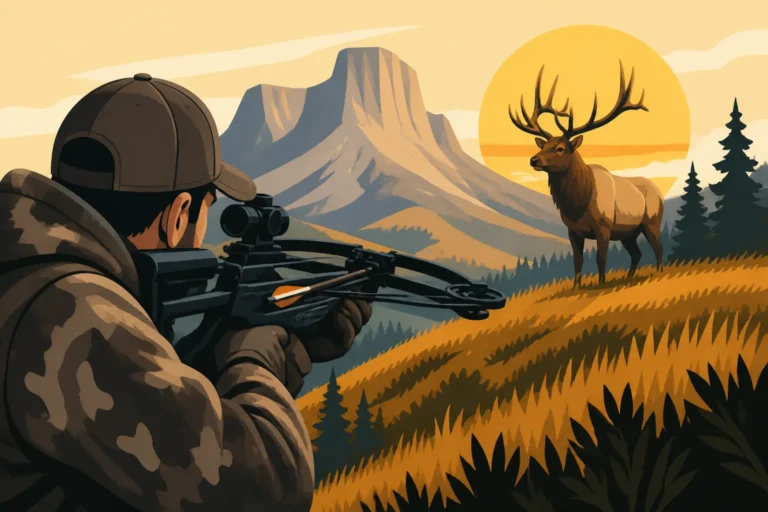
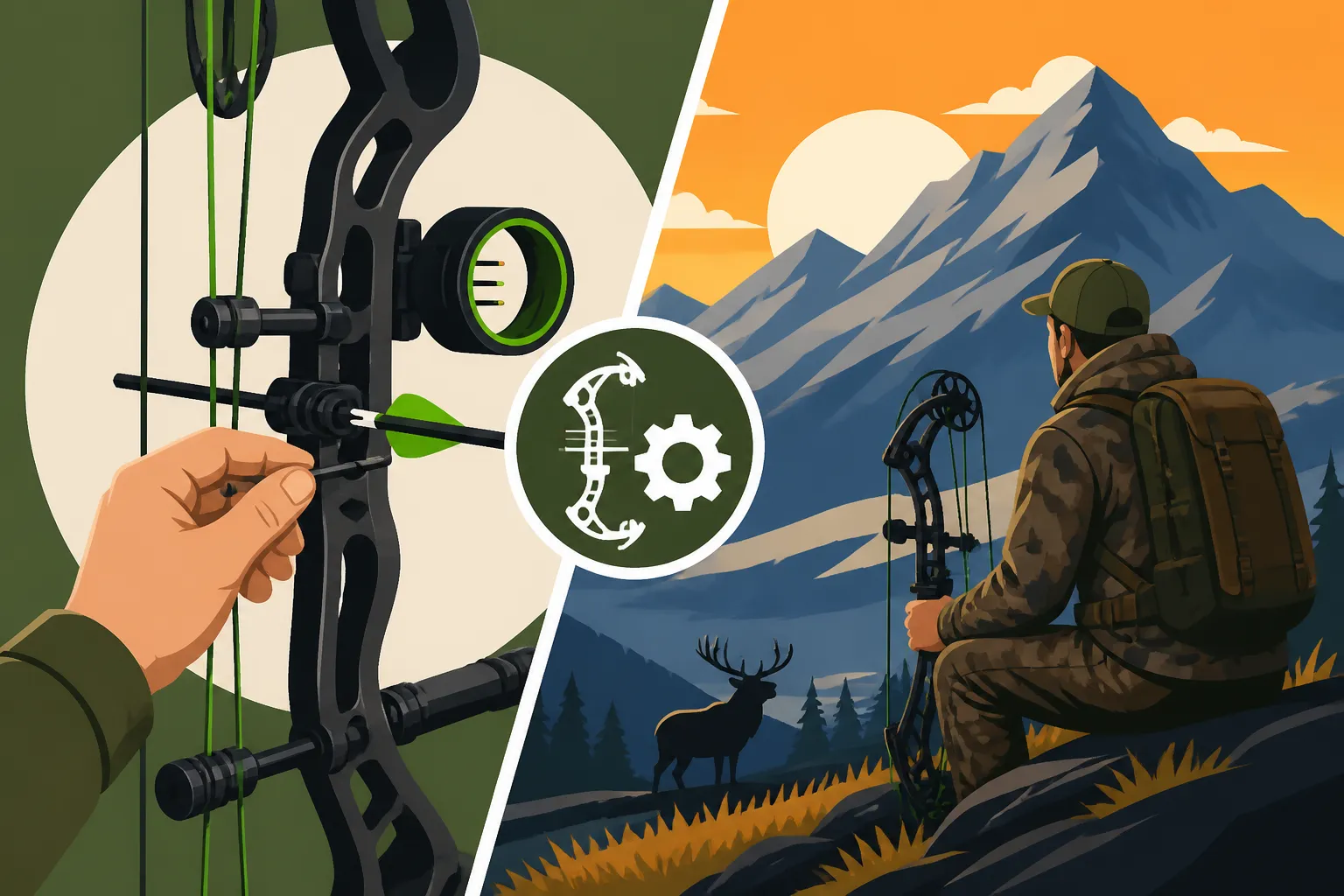
When you’ve spent months preparing for a Wyoming mountain hunt, drawing a coveted tag, and finally staring down that elk or mule deer, the last thing you want is for your bow to let you down. The high country is unforgiving, and a shot opportunity might be fleeting and at an unfamiliar angle or distance. This guide is all about ensuring your bow setup is perfectly dialed in, giving you the confidence that when the moment arrives, your equipment will perform flawlessly.
Why Meticulous Bow Tuning is Non-Negotiable for Mountain Hunts
Hunting in Wyoming's vast, rugged terrain throws curveballs that your backyard range might never prepare you for. It's not just about hitting the target; it's about ethical, clean kills under pressure, where every variable seems to conspire against you. A bow that's merely "close enough" at 20 yards will expose its flaws dramatically when you stretch those distances or shoot from an awkward position. The challenges of the high country demand absolute precision from your gear.
The Impact of Altitude and Temperature on Arrow Flight
One of the most underestimated factors when heading to the high country is how changes in atmospheric pressure and temperature can subtly affect your arrow's flight. Up at 8,000 to 10,000 feet, the air is thinner. This reduced air density means less drag on your arrow, which can translate to a slightly flatter trajectory and sometimes even a higher point of impact than you'd expect at sea level. It’s not a huge difference for most hunters, but when you’re talking about tight groupings on a vital zone at 60 yards, even an inch or two can matter significantly.
Think about it: you sight in perfectly in your home state at 1,000 feet. Then you arrive in the Bighorns or the Bridger-Teton National Forest, and suddenly you're a mile or more higher. The difference is real, and it’s why savvy hunters don’t just sight in once and forget it. They’ll often re-verify their pins and broadhead flight once they get to their hunting elevation, or at least run some practice shots to confirm. Similarly, extreme temperature swings—from a frosty dawn to a warm midday—can also affect string tension and limb performance, though usually to a lesser degree than altitude. Being aware of these environmental influences and how they might impact your setup is the first step toward true mountain readiness.
Ensuring Accuracy at Extended Ranges
Let's be brutally honest: most hunting shots in the mountains are not going to be at chip-shot distances. You might get lucky, but more often, you’ll find yourself needing to take a shot at 40, 50, or even 60 yards. This is where impeccable bow tuning truly shines—or fails spectacularly. Any minor flaw in your arrow's flight, any wobble, any corkscrew, will be magnified significantly over distance. A perfectly tuned bow sends an arrow straight and true, minimizing paradox and maximizing kinetic energy transfer.
If your arrow isn't flying perfectly straight, your broadhead might plane or steer the arrow off course, leading to a missed shot or, worse, a wounded animal. This is why you hear so much about folks struggling to achieve consistency with their fixed-blade broadheads, for example. If the bow isn't tuned, the broadhead will only highlight that flaw. A well-tuned bow, on the other hand, allows your broadhead to guide the arrow precisely where you aim, even when the wind is trying to push it around. When you're dreaming of a big bull elk on the side of a Wyoming mountain, you want to be confident in your setup from close to those farther, more common distances. This is also why we talk about Realistic Archery Practice Distance for Big Game—because those long shots are part of the game.
Steep Angle Shooting Considerations
Imagine that mule deer buck bedded 40 yards directly below you on a steep slope, or an elk feeding 30 yards above you on a timbered bench. These are common scenarios in Wyoming's mountains, and they introduce a whole new set of challenges for shot placement. Gravity works differently on an arrow shot at a steep angle. Without getting too bogged down in physics, the effective horizontal distance to the target is actually less than the actual slant distance you’re aiming at. This means you’ll typically shoot high if you aim using your horizontal distance pin.
Many modern rangefinders compensate for angle, giving you an "adjusted for angle" distance. But even with that, your form needs to be perfect. Gripping your bow differently, canting it, or dropping your bow arm can all be exacerbated on steep terrain, leading to significant shot deviation. Tuning helps mitigate some of the arrow flight issues, but mastering the shot comes down to practice and understanding these mechanics. A well-tuned bow is more forgiving of slight errors in form, but there's no substitute for drilling those angled shots.
Essential Tuning Steps for Western Bowhunters
Tuning isn't a one-and-done deal. It's a systematic process that builds confidence with every step. For a serious mountain hunt, you need to go beyond just "it hits the target." You need perfection, because the margins for error are so much smaller in the backcountry.
Setting Up Your Bow for Optimal Performance
Before you even think about shooting paper, your bow needs to be mechanically sound and set to your specifications. This means verifying your draw weight and ensuring your draw length is spot on. For Wyoming, remember that Wyoming Sets Bow Draw Weight at 40 Pounds, 50 for Elk, so double-check those numbers, especially if you're chasing larger game. Your cam timing should be synchronized, the string and cables in good condition, and your nocking point perfectly level or slightly nock-high, as recommended by your bow manufacturer.
Crucially, your arrow rest must be installed correctly and centered. Many rests have micro-adjustments, which you'll use heavily during the tuning process. Start with your rest’s centerline aligned with the center of your bowstring and the center of your riser’s berger hole. This initial setup provides a solid foundation before you start fine-tuning. Don't skip these foundational steps, as they directly influence everything that comes after, from the efficiency of your Recurve, Longbow or Compound for Western Elk setup to how accurately you can place a shot.
Paper Tuning and Bare Shaft Tuning for Straight Flight
This is where the magic begins. Paper tuning involves shooting through a sheet of paper at a close distance (typically 6-10 feet) to analyze how the arrow is leaving your bow. You're looking for a clean, symmetrical tear, indicating the fletchings are not steering the arrow excessively. If your tear is high, low, left, or right, you'll make small adjustments to your arrow rest or nocking point. It's a methodical process, moving your rest in the direction of the tear, usually. For example, a high tear means your nock is diving, so you might raise your rest or lower your nocking point.
Bare shaft tuning takes this a step further. You remove the fletchings from a few arrows and shoot them alongside fletched arrows at a slightly longer distance (20-30 yards). If your bare shaft hits in the same group as your fletched arrows, you know your bow is truly tuned, and the fletchings aren't "fixing" a problem. A bare shaft will expose any minor inconsistencies in arrow flight that fletchings might mask. It’s an advanced technique but incredibly valuable for discerning hunters looking to maximize Arrow Weight That Gets Through an Elk or deer. GoHunt has some excellent articles explaining the nuances of bare shaft tuning for different bow setups.
Walk-Back Tuning for Consistent Point of Impact
Once your arrow is flying straight out of the bow, you need to confirm that your point of impact is consistent at varying distances. Walk-back tuning, also known as French tuning, is a fantastic way to do this. You set up a large target or paper at a close distance, say 10 yards. Shoot an arrow, then without adjusting your aim, walk back 5 yards and shoot another, then another 5 yards, and so on, out to 40 or 50 yards. You're aiming at the same spot on the target, but using your 10-yard pin for all shots.
A perfectly tuned bow will show a vertical line of impacts. If your impacts veer off to the left or right as you move back, it indicates a horizontal tuning issue that needs addressing with small micro-adjustments to your arrow rest. This method is incredibly effective for ensuring your arrow's trajectory is consistent across a range of distances, which is paramount when you're facing varied terrain and unknown shot distances in the field.
Broadhead Tuning for Hunting Integrity
This is perhaps the most critical step for hunters. A field point and a broadhead, particularly a fixed-blade broadhead, can fly differently due to the broadhead's larger surface area catching the wind or being slightly out of alignment. The goal of broadhead tuning is to get your broadheads to hit the exact same spot as your field points at all huntable distances.
Start by getting your field points grouped perfectly. Then, shoot your chosen broadheads. If they hit differently, you'll need to make tiny adjustments. For fixed blades, this often involves slight tweaks to your arrow rest (moving it in the direction the broadhead hits) or even micro-adjustments to the broadhead itself (though this is more advanced). If you're using mechanical broadheads, they should fly like field points, but you still need to verify this. Ensure you're using sturdy, reliable broadheads that won't fail the Broadheads That Fail the 7/8-Inch Ring Test and are legal in Wyoming. This step cannot be skipped; your broadhead is your hunting edge, and it must fly true. Many hunters debate Fixed Blade Against Mechanical Broadheads on Elk, but regardless of your choice, proper tuning is paramount.
Pre-Hunt Preparation and Mental Fortitude
Tuning your bow is a mechanical process, but a successful hunt also hinges on your physical and mental readiness. The mountains will test both, and neglecting either can undermine all your tuning efforts.
Practicing Realistic Mountain Shots
Once your bow is perfectly tuned, your practice needs to reflect the reality of your upcoming hunt. Forget standing flat-footed on a pristine archery range shooting at static targets. You need to practice shooting uphill, downhill, from kneeling positions, sitting positions, or even after a brisk walk that gets your heart rate up. Simulate the fatigue, the adrenaline, and the awkward positions you might encounter when stalking that wary mule deer across open sagebrush or trying to get How Close a Bowhunter Really Needs to Get to an elk in timber.
Set up targets at varying, unmarked distances. Guess the distance, then range it, and shoot. This trains your distance estimation and decision-making under pressure. Practice shooting at multiple targets quickly, mimicking a scenario where you might have a brief window for a shot. The more realistic your practice, the more confident you'll be when that moment of truth arrives. Consider using a training regimen you might find on GoHunt for specific Western hunting scenarios. Don't forget to factor in other elements like Reading Wind on an Open-Country Stalk—even if you can't shoot in actual wind, visualize how it might affect your shot.
Gear Check and Consistent Maintenance
Your bow is a system of many moving parts, and each one needs to be in top working order. Before you head to Wyoming, conduct a thorough inspection:
- String and Cables: Look for fraying, wear, or nicks. Even a small imperfection can compromise accuracy or lead to a catastrophic failure. Replace them if there's any doubt.
- Arrow Rest: Ensure it's secure, not wobbly, and all moving parts function smoothly and quietly. Apply a tiny drop of lubricant if needed, but avoid anything that attracts dirt.
- Sight: Check that all pins are tight and bright, and the housing is secure. Many hunters opt for a Single Pin or Multi Pin for Open Country and it's essential it's dialed in correctly. Don't forget to verify if Whether Lighted Nocks Are Legal for Bowhunters in your specific area.
- Accessories: Stabilizers, quivers, and other attachments should be tight and free of rattles. Silence is golden in the backcountry.
- Arrows: Inspect each arrow for cracks, dents, or loose components. Spin test them to ensure they're straight. Damaged arrows are dangerous and inaccurate.
- Release Aid: Test its function, ensure it’s clean, and check for any sticky triggers or worn jaws.
A small issue overlooked at home can become a hunt-ending disaster miles deep in the backcountry. Regular maintenance not only prolongs the life of your equipment but significantly enhances your confidence in its reliability. This is especially true when pursuing game like elk that require The 50-Pound Bows Elk and Moose Require—you need every component functioning flawlessly.
Simulating Hunting Conditions and Mental Prep
Beyond the physical aspects, the mental game is huge. Hunting is about patience, perseverance, and managing adrenaline. Practice visualizing successful shot scenarios. When you're out practicing, treat every shot as if it's the only shot of your season. Take a deep breath, focus on your anchor, and execute.
Consider doing a "pre-hunt shakedown." Pack your hunting backpack, wear your hunting boots, and hike to a spot where you can shoot. Practice shooting after carrying your bow for a mile, simulating how your muscles will feel when you finally spot that animal. This helps identify any uncomfortable gear or unforeseen issues. The more you immerse yourself in realistic scenarios during practice, the better prepared your mind and body will be to handle the real thing. It’s not just about bow tuning; it’s about hunter tuning.
Common Tuning Pitfalls and Troubleshooting for the Aspiring Hunter
Even with the best intentions, bow tuning can sometimes feel like chasing a phantom. It’s easy to get frustrated, but understanding common mistakes can save you a lot of headache and ensure your hard-earned Wyoming tag doesn't go to waste.
Ignoring Minor Issues or Rushing the Process
One of the biggest pitfalls is rushing through the tuning steps or dismissing what seems like a "minor" tear on paper. That slight high-left tear at 6 feet? It will be a significant miss at 60 yards. Don't tell yourself "it's good enough." Good enough gets you a long walk home without an animal, or worse, a wounded animal. Each step of the tuning process builds on the last. If your paper tune isn't perfect, your walk-back tune will struggle, and your broadheads will never fly true.
Take your time. Make small, incremental adjustments. Sometimes, the solution isn't moving your rest half an inch; it's moving it a sixteenth of an inch. Patience is a virtue in hunting, and it's absolutely essential in bow tuning. Document your adjustments. Keeping a small notebook with your settings (rest position, nock height) and the results of your tuning sessions can be invaluable, especially if you ever need to troubleshoot or change components.
Inconsistent Form Masking Tuning Problems
Your bow can be perfectly tuned, but if your shooting form is inconsistent, you'll constantly be chasing problems that aren't there. A poor grip, a varying anchor point, plucking the string, or an inconsistent follow-through can all make it seem like your bow is out of tune when, in reality, it's a shooter issue. Before blaming the bow, honest self-assessment of your form is crucial.
Consider having an experienced archer or a pro shop technician watch you shoot. They can often spot subtle form flaws you're unaware of. Filming yourself can also be incredibly enlightening. Focus on maintaining a consistent grip pressure, a solid anchor, and a smooth release. Until your form is repeatable, you'll struggle to achieve a truly consistent tune, because every shot will be slightly different regardless of your bow's setup. This is why many hunters find value in professional coaching or seeking advice from reputable sources when they use platforms like GoHunt to scout and plan, or learn tactics like How to Bugle a Wyoming Bull Into Bow Range.
Arrow and Component Mismatches
Sometimes, the issue isn't your bow or your form, but the components you're trying to make work together. Your arrow spine needs to match your draw weight and draw length. An arrow that is too stiff or too weak will never tune perfectly, leading to erratic flight. Broadhead weight (e.g., 100-grain vs. 125-grain) can also impact spine dynamics, altering how your arrow flexes during the shot.
Consult arrow charts and consider using a dynamic spine calculator if you're experimenting with different arrow lengths or point weights. Don't mix and match different arrow brands or types in your hunting quiver unless you've individually tuned and verified each one—which is rarely practical or advisable. Stick with a consistent batch of quality arrows, chosen specifically for your bow setup and the game you're pursuing, to give yourself the best chance at a true tune.
Tuning vs. Sighting In
It's a common misconception that tuning and sighting in are the same. Sighting in is simply adjusting your pins to hit where you aim at various distances. Tuning is the process of making your bow and arrow system work harmoniously so the arrow flies straight and true, before you even start adjusting your pins. You can sight in a poorly tuned bow, but your groups will be wide, and your accuracy inconsistent, especially at longer ranges or with broadheads.
Always tune first, then sight in. And remember to re-verify your sight pins and broadhead flight once you're in your hunting area, especially if there's a significant change in elevation or temperature from where you originally tuned. That final check can be the difference between a successful hunt and a heartbreaking miss.
Here's a quick comparison of broadhead types you might consider for your tuned bow:
| Broadhead Type | Pros | Cons | Tuning Complexity | Ideal Use Case |
|---|---|---|---|---|
| Fixed Blade | Exceptionally durable, reliable penetration, no moving parts to fail, often good for dense bone. | Can be harder to tune perfectly with some bows, larger surface area can catch wind, typically less cutting diameter. | Moderate to High | Large game, dense bone, windy conditions, hunters prioritizing reliability and deep penetration. |
| Mechanical/Expandable | Fly like field points (generally easier to tune), large cutting diameter, clean pass-throughs often. | Moving parts can potentially fail, reduced penetration on heavy bone (depending on design), less durable after impact. | Low to Moderate | Smaller game, less dense bone, hunters prioritizing ease of tuning and large wound channels. |
Remember, no matter which broadhead you choose, its flight must be identical to your field points. Your bow tuning endeavors are a waste if your hunting projectile behaves differently.
Good luck out there, and happy hunting!
Disclaimer
This guide provides general information for bow tuning and hunting in Wyoming. Hunting regulations and conditions can change, and it is the hunter's responsibility to consult the most current Wyoming Game and Fish Department regulations before any hunting activity. Always prioritize safety, ethical hunting practices, and respect for wildlife and the land.