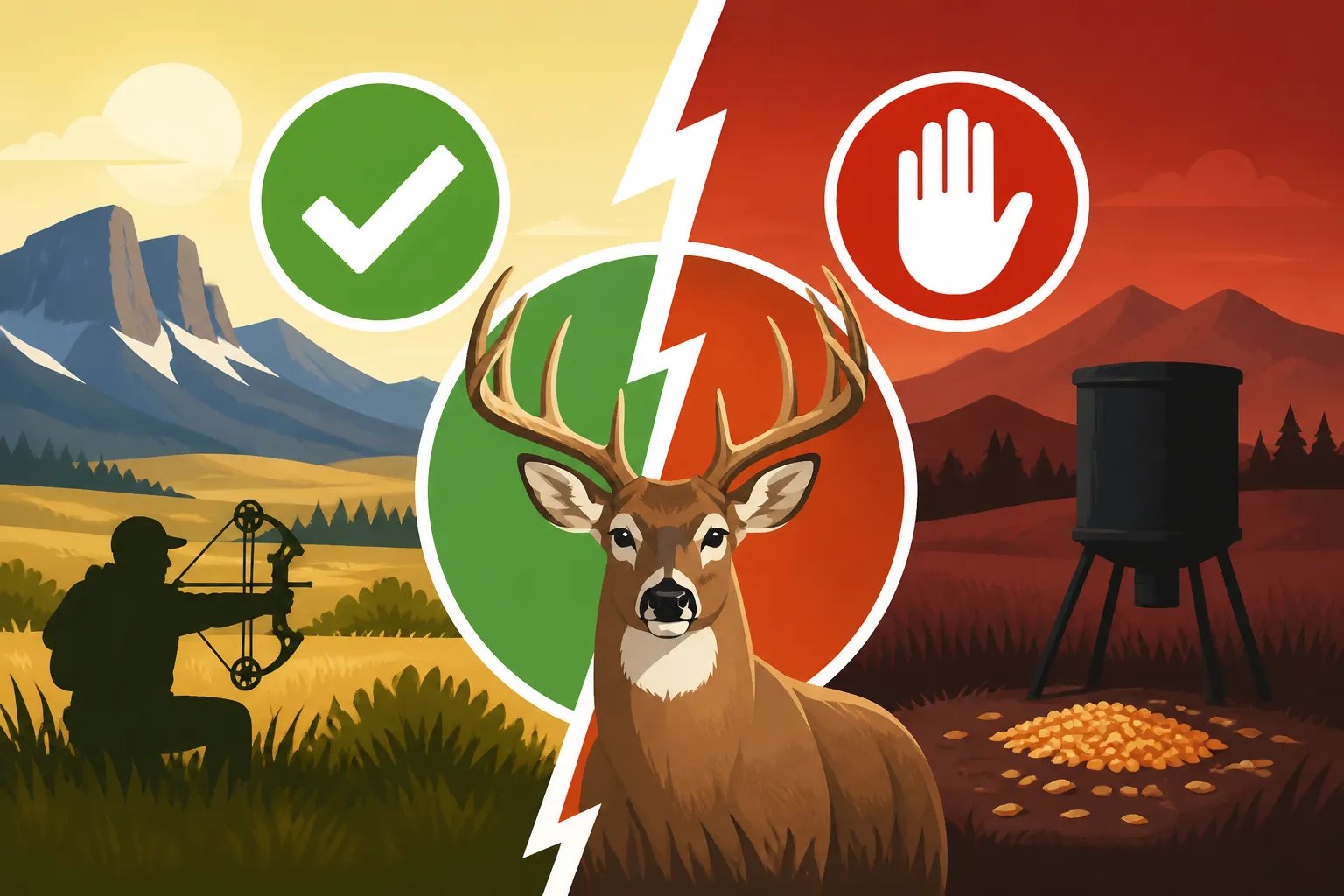
Is Baiting Ever Legal for Deer Hunting?
It's incredibly frustrating when you're trying to do everything by the book, but the rules around something as seemingly simple as "baiting" feel like a tangled mess. You hear whispers about what's allowed in one state versus another, or even for different species within the same state, leaving you constantly second-guessing your setup. This guide is here to untangle the complexities of deer baiting regulations specifically in Wyoming, so you can hunt ethically and legally without fear of running afoul of the law.
The General Rule: Big Game Baiting is Out in Wyoming
Let's cut right to the chase for deer hunters: when it comes to big game like deer, elk, and antelope in Wyoming, the act of baiting them is generally a no-go. This isn't just a suggestion; it's a strict regulation enforced by the Wyoming Game and Fish Department. It's easy to get confused, especially if you've hunted in other states where baiting deer might be a common practice, but here in the Cowboy State, the rules are pretty clear for most species.
Why the Hard Stance Against Baiting
Wyoming takes a firm stance against baiting big game for several important reasons, all rooted in the principles of fair chase, wildlife management, and disease prevention. The concept of fair chase is central to hunting ethics here, meaning that hunters should not have an unfair advantage over the animal. When you introduce bait, you're creating an artificial situation that can concentrate animals, making them less wary and easier targets, which many argue undermines the challenge and integrity of the hunt.
Beyond ethics, there are significant practical concerns, especially regarding wildlife health. Placing food, minerals, or other attractants in a concentrated area forces animals to gather in close proximity. This congregation creates a prime environment for the rapid spread of diseases like Chronic Wasting Disease (CWD) and Brucellosis. These diseases are a serious threat to Wyoming's deer and elk populations, and the Game and Fish Department works tirelessly to mitigate their spread. For instance, the discussion around CWD on Wyoming's elk feedgrounds highlights how serious the state takes disease transmission when animals congregate. Minimizing such congregation points, therefore, becomes a critical management strategy. Additionally, baiting can alter natural migration patterns and feeding behaviors, creating unnatural dependencies and potentially impacting the ecosystem in unforeseen ways. It's all part of the broader effort to ensure healthy, wild herds for generations to come.
What "Baiting" Actually Means to Wyoming Game & Fish
So, what exactly constitutes "baiting" in the eyes of Wyoming Game and Fish? It's more than just a pile of corn. The regulations define bait as any substance placed to attract wildlife, including but not limited to food, minerals, salt, hay, grain, fruit, vegetables, or any other edible or ingestible substance. The key here is the intent to attract. If you're putting something out with the purpose of luring deer to a specific spot, that's baiting. This definition is pretty broad and covers various forms of attractants that hunters might consider using.
It's important to understand that this also extends to things like liquid attractants or mineral blocks designed to draw in deer, even if they're not directly consumable food items. The spirit of the law is to prevent artificial manipulation of animal movement and behavior for hunting purposes. This means if you're thinking about putting out a mineral block or a lick, even if it's marketed for deer health, during deer season with the intent to hunt over it, you're likely stepping into illegal territory for big game. The rules are designed to cover a wide array of attractants to ensure the fair chase principle and disease prevention goals are upheld.
Exceptions and Nuances: Where Attractants Might Be Permitted
While baiting big game like deer is largely prohibited, the world of hunting regulations is rarely black and white. There are specific exceptions and nuances, particularly when it comes to certain types of attractants or different species. It's crucial for hunters to understand these distinctions to remain compliant with Wyoming law.
Scent Lures and Their Limits
Scent lures are a common tool many deer hunters use, and thankfully, they aren't blanket-banned like traditional food baits for big game. These are generally products designed to mimic the scent of deer urine, glands, or other natural odors to attract bucks or does during the rut. Think of doe-in-estrus scents or mock scrapes. The good news is that these kinds of scent lures are generally permissible for deer hunting in Wyoming. They're seen as an attempt to mimic natural conditions, rather than creating an artificial food source.
However, there's a significant caveat you absolutely must pay attention to: restrictions around Chronic Wasting Disease (CWD) Management Areas. To combat the spread of CWD, Wyoming has specific rules regarding the use of natural urine-based lures, especially in certain regions. Some natural urine or gland products could potentially carry CWD prions, even if processed. Because of this, some areas or specific regulations might restrict or prohibit their use, favoring synthetic alternatives instead. It’s imperative to check the most current regulations for the specific hunt area you plan to be in. A resource like GoHunt can be incredibly helpful for quickly referencing these area-specific rules and staying informed on crucial details like Scent Lure Limits Near CWD Management Areas. Always default to synthetic lures if there’s any doubt, or better yet, consult the official Game and Fish regulations directly.
Electronic Calls and Other Permitted Attractants
When it comes to electronic calls, the rules change depending on the species you're pursuing. For big game, including deer, using electronic calls to attract animals is generally prohibited. This means you can't use a device that plays recorded deer sounds to try and lure in a buck. The intent behind this is similar to the baiting rule: to maintain fair chase and prevent hunters from having an undue technological advantage.
However, this prohibition doesn't apply across the board for all species. For predators and furbearers like coyotes, foxes, or bobcats, electronic calls are often entirely legal and widely used. Hunters regularly employ electronic calls mimicking distress sounds of rabbits or other prey to bring coyotes into range. The distinction is key: what's allowed for a predator hunt is often forbidden for a big game hunt. So, while you might be able to use an electronic call for Hunting Coyotes in Wyoming Year Round, you cannot for deer. If you're ever unsure about a specific device or its legality, refer to the official regulations on Electronic Calls and What Wyoming Allows or Where Electronic Calls Are Legal for Big Game.
Natural Food Sources vs. Intentional Bait
There's a really important distinction to make between intentionally placing bait and hunting near a natural food source. The regulations are focused on the act of placing attractants. If deer are naturally drawn to an alfalfa field, an oak stand dropping acorns, or a private landowner's hayfield, hunting nearby is perfectly legal and a common strategy. You are hunting where the deer choose to be, based on natural foraging patterns, not where you've lured them with an artificial handout.
For example, if you're scouting a unit in eastern Wyoming known for its whitetail populations, you might identify a river bottom area with lush natural browse or agricultural fields where deer are consistently feeding. Setting up a stand or planning a stalk to intercept deer moving to or from this natural food source is entirely ethical and legal. The deer are there because of the existing environment, not because you introduced something new to draw them in. The challenge lies in identifying these natural patterns and executing a successful hunt without altering their behavior through artificial means. This is a fundamental aspect of hunting that relies on reading the landscape and animal movements, often explored through techniques like Reading Fresh Elk Sign in Dark Timber or Using Cutbanks and Draws to Close on Antelope to approach game without artificial aids.
The Broader Context: Baiting for Other Species
While the focus for deer is a clear "no baiting" rule, it's worth understanding that Wyoming's regulations are nuanced across different species. What's strictly prohibited for big game might be perfectly legal, albeit regulated, for others. This variation is why it’s so important to verify rules for each specific species you intend to hunt.
Black Bear Baiting: A Different Set of Rules
Here's where things get interesting and can cause some confusion: black bear baiting. Unlike deer and other big game, black bear baiting is legal in specific areas of Wyoming, under strict permitting and regulatory guidelines. The rationale for this difference lies in the management strategies for bears, their diets, and the challenges of hunting them in dense cover. Bear baiting typically involves placing a legal attractant, often sweets or grease, to draw bears out of their natural habitat to a consistent location, making them observable and allowing for a more controlled harvest.
However, this isn't a free-for-all. Hunters must obtain a specific bear baiting license, register their bait sites, and adhere to strict rules regarding the type of bait used, the distance from roads and residences, and how the bait is maintained. There are also designated Wyoming Black Bear Baiting Areas where this practice is allowed, and often specific seasons for baiting versus spot-and-stalk or hound hunting. All these details are laid out in The Black Bear Baiting Rules in Wyoming, which you absolutely must study if you plan on pursuing bears in this manner. It's a highly regulated activity, designed to ensure ethical hunting and public safety.
Predator and Varmint Hunting: More Flexibility
For predators and varmints in Wyoming, the regulations on baiting and attractants are generally much more lenient than for big game. Species like coyotes, foxes, raccoons, and prairie dogs are often managed differently due to their population dynamics, potential impacts on livestock, and their classification outside of "trophy game" or "big game."
For example, when hunting coyotes, the use of bait (like a carcass from a harvested deer or livestock) to attract them is typically permitted. This is often done to help control populations or for fur harvesting. Similarly, electronic calls, as mentioned before, are a staple for predator hunters, mimicking distress sounds to lure in wary animals. While there are still rules to follow – such as not hunting from a motorized vehicle or respecting private property boundaries – the direct prohibition on baiting that applies to deer does not extend to these species. However, always double-check the current regulations for the specific predator or varmint you're targeting, as rules can occasionally change or have regional variations. The Wyoming Game & Fish website and resources like the Wyoming Hunt Planner are invaluable for this.
Staying Legal and Ethical: Resources for Hunters
Navigating hunting regulations can feel like deciphering ancient texts, but ultimately, it's every hunter's responsibility to understand and abide by the law. Wyoming is committed to fair chase and responsible wildlife management, and that commitment is reflected in its regulations.
| Species Category | Baiting for Hunting | Electronic Calls for Hunting | Scent Lures (Urine-Based) |
|---|---|---|---|
| Big Game (Deer, Elk, Antelope, Moose, Sheep, Goat) | Generally PROHIBITED | PROHIBITED | Generally Permitted (with CWD area restrictions) |
| Black Bear | Permitted (with specific license & site registration) | PROHIBITED | Generally Permitted |
| Predators (Coyote, Fox, etc.) | Generally Permitted | Permitted | Generally Permitted |
| Varmints (Prairie Dog, etc.) | Generally Permitted | Permitted | Generally Permitted |
Note: This table provides a general overview. Always consult the most current Wyoming Game & Fish regulations for precise, up-to-date rules specific to your hunt area and species.
Checking the Regulations: Your Best Defense
Your single most important tool in staying legal is the official Wyoming Game and Fish Department hunting regulations. These aren't just suggestions; they are the law. Before every season, and especially if you're venturing into a new hunt area or targeting a different species, you need to read the current year's regulations booklet. These are available online, often at sporting goods stores, and directly from Game and Fish offices. They detail everything from license requirements and season dates to specific weapon restrictions and, yes, baiting rules.
Don't rely solely on what you heard from a buddy or what applied last year. Regulations can and do change. Websites like GoHunt provide fantastic tools and summaries that can help you cross-reference and understand complex regulations, acting as a crucial aid in your planning. However, remember that any third-party resource should always be backed up by a quick check of the official document itself. It’s on you to know the rules for Where the Current Wyoming Regulations Are Posted and apply them. Taking the time to do this homework is an investment in your hunting future and helps ensure the integrity of the sport.
Contacting Wyoming Game & Fish
If you've read the regulations and still have a lingering question or find yourself in a gray area, the absolute best thing you can do is contact the Wyoming Game and Fish Department directly. They have regional offices staffed with biologists and wardens who are there to help hunters understand the rules. A quick phone call or email can save you a lot of headache, fines, or even the loss of hunting privileges.
Local game wardens are often your best resource for area-specific questions, as they are most familiar with the nuances of their jurisdiction. Don't be shy about reaching out. They appreciate proactive hunters who are trying to comply with the law. The consequences of illegal baiting can be severe, ranging from hefty fines and confiscation of game or equipment to the loss of hunting licenses for multiple years. It's simply not worth the risk. Always prioritize doing things the right way, ensuring your hunt is not only successful but also legal and ethical.
Disclaimer
The information provided in this article is for general guidance and informational purposes only and does not constitute legal advice. Hunting regulations in Wyoming are complex and subject to change. Always consult the official Wyoming Game and Fish Department regulations and, if necessary, contact the department directly for the most current and accurate information before engaging in any hunting activities.