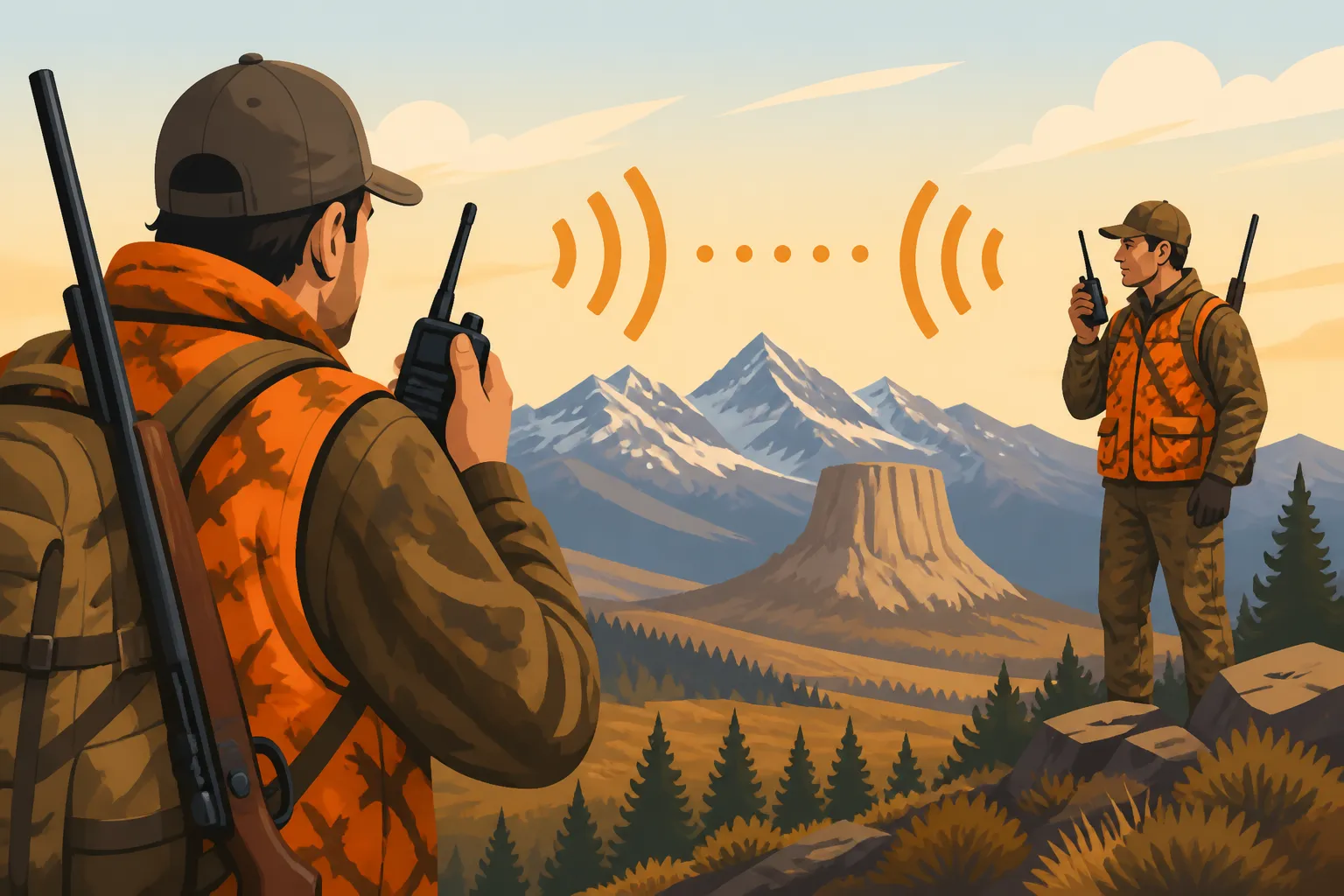
Two-Way Radio Use Between Hunting Partners
There's nothing quite as frustrating as being out in the vast, wild beauty of Wyoming's hunting grounds, needing to communicate with your partner, and realizing your cell phone might as well be a paperweight. Whether you're trying to coordinate a stalk on a mule deer buck across a wide-open basin or ensuring everyone's safe when spread out in dense timber, reliable communication is absolutely crucial. This guide is all about demystifying two-way radios for hunters, helping you understand how to use them effectively, and what to consider when choosing one for your next Wyoming adventure.
The Undeniable Advantage of Two-Way Radios for Wyoming Hunters
Hunting in Wyoming means often venturing into places where the nearest cell tower is a distant dream. From the sprawling plains to the rugged peaks of the Bighorns or the Absaroka Range, cell service is spotty at best and nonexistent at worst. This is precisely where two-way radios become more than just a convenience; they become an indispensable tool for safety, strategy, and overall success.
Why Communication is King in the Backcountry
Imagine this: you've glassed up a bull elk on a distant ridge, but your hunting partner is two canyons over, working their way towards a different drainage. How do you tell them to hold up, or that the plan has changed? A quick call over the radio can save hours of wasted effort, prevent spooking animals, and most importantly, keep everyone on the same page and safe. The feeling of being completely cut off from your hunting party can be genuinely unnerving, especially if someone gets turned around or has a minor mishap. Radios provide that immediate connection, a lifeline when you need it most. They minimize the guesswork and the yelling, which, let's be honest, doesn't do much for stealth.
Beyond Cell Service: Where Radios Shine
The beauty of two-way radios is their independence from cellular networks. They operate on their own frequencies, meaning as long as you have power and line-of-sight (or close enough for signal bounce), you have communication. This is a game-changer in Wyoming's remote wilderness areas or deep river bottoms where cell service has never dared to tread. Think about trying to coordinate a drive through thick timber or working a brushy draw. Radios allow for constant, real-time updates: "I'm pushing through the north side," "He just broke right," "Hold up, I see movement." This kind of fluid communication simply isn't possible with limited cell service or shouting through the woods. Many hunters use mapping apps like those from GoHunt to plan their routes and mark waypoints, but for the actual, moment-to-moment communication in the field, a radio is hard to beat.
Legal Considerations for Communication Devices
Before you load up on gear, it’s always smart to double-check the regulations. When it comes to two-way radios for general communication between hunting partners, Wyoming's rules are quite clear and permissive. You're allowed to use them to talk to each other, coordinate your movements, or relay information about animal locations as long as you are not using them as an electronic call to attract game. That distinction is critical. Devices designed or primarily used to mimic animal sounds to lure game are generally prohibited for big game hunting in Wyoming. For example, Electronic Calls and What Wyoming Allows clarifies that while such calls are legal for predators and varmints, they are restricted for big game. So, using your radio to tell your buddy you see a deer is perfectly fine; using it to play a deer grunt to bring one closer is not. Always ensure your radio use aligns with ethical hunting practices and state regulations, which focus on fair chase and preventing unfair advantages.
Choosing the Right Two-Way Radio for Your Hunt
Navigating the world of two-way radios can feel a bit like learning a new language, especially with all the acronyms and technical jargon. But for hunting in Wyoming, understanding a few key concepts can make all the difference in selecting the right device to keep you connected and safe.
FRS vs. GMRS: Understanding the Differences
When you're looking at consumer-grade two-way radios, you'll primarily encounter two types: FRS (Family Radio Service) and GMRS (General Mobile Radio Service). The biggest difference often boils down to power and range.
- FRS Radios: These are typically what you find in multi-packs at big box stores, often advertised as "walkie-talkies." They operate on low power (usually 0.5 to 2 watts), have fixed antennas, and do not require a license. They're great for short-range communication, like keeping track of kids in a camp or talking to a buddy a few hundred yards away in open terrain. Their range in actual hunting conditions, especially with any terrain interference, is often less than a mile, sometimes much less.
- GMRS Radios: These radios can transmit at higher power levels (up to 50 watts, though most handheld units are 5-8 watts), often have detachable antennas (allowing for upgrades), and require a license from the Federal Communications Commission (FCC). This license covers your entire family for ten years and is relatively inexpensive, currently around $35. The higher power and potential for better antennas mean significantly greater range and penetration through obstacles compared to FRS radios. For serious backcountry hunting, where communication across a mile or more of broken terrain is essential, GMRS radios are usually the superior choice.
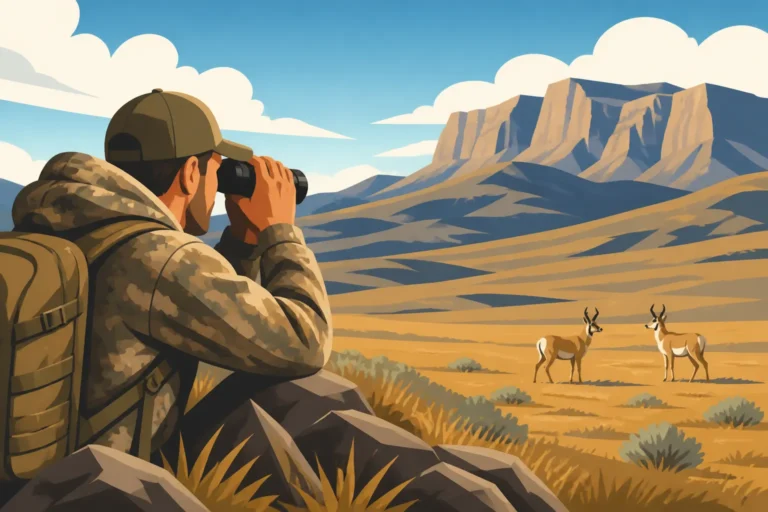
Many modern radios are "hybrid" FRS/GMRS units, meaning they can operate on both sets of frequencies, with the GMRS channels often offering higher power when licensed. Carefully consider the terrain you'll be hunting. A multi-day elk hunt in the mountains demands more robust communication than a quick antelope stalk on the prairie.
Range, Power, and Antenna Considerations
Manufacturers love to advertise "up to 30 miles" on their radio packaging, but any experienced hunter will tell you that's marketing fluff for perfectly flat, unobstructed line-of-sight conditions. In the real world, especially in the varied topography of Wyoming, range is drastically reduced by mountains, hills, dense timber, and even slight rises in terrain.
- Power (Wattage): More wattage generally means more transmission power and thus better range. FRS radios are limited, but GMRS radios can offer 5-8 watts for handhelds, which is a noticeable improvement.
- Antenna: The antenna is critical. Longer, more efficient antennas (often aftermarket upgrades for GMRS radios) can significantly extend your effective range. A small, stubby antenna might be convenient, but it won't perform as well as a longer whip antenna designed for better signal propagation.
- Line-of-Sight: This is the golden rule for radio communication. If you can see your partner, your radio signal probably can too. If a mountain, ridge, or dense stand of lodgepoles is between you, the signal will struggle or fail. This is why tactics like using high ground for communication are so important. Even with a powerful GMRS radio, you won't transmit through a mountain.
When you're looking at optics for Optics Power for Wyoming's Long Sightlines, you're thinking about seeing far; with radios, you need to think about transmitting far. It's a different kind of reach, but equally vital for success.
Features That Matter to Hunters
Beyond raw power and range, several features can greatly enhance a radio's utility in the field:
- Durability and Water Resistance: Wyoming weather can be unpredictable, from sudden downpours to snow squalls. Look for radios rated IPX4 or higher for water resistance. A ruggedized casing can also withstand the bumps and drops that inevitably happen in the backcountry. Brands like Midland and Garmin offer robust options popular among hunters.
- Battery Life: Long battery life is non-negotiable. Look for units with rechargeable lithium-ion batteries and consider carrying spare battery packs or a portable power bank. Cold weather dramatically reduces battery performance, so keeping radios warm (e.g., in an inside pocket) is a good strategy.
- Privacy Codes (CTCSS/DCS): These aren't truly "private" but rather filter out chatter from other users on the same channel. They encode your transmission with a sub-audible tone, so your radio only opens up when it detects that specific tone. This helps reduce annoying interference, especially on popular FRS channels.
- NOAA Weather Alerts: Many radios include a feature to receive NOAA weather radio broadcasts, which can provide critical, real-time weather updates when you're far from any internet signal.
- Hands-Free (VOX) Operation: This allows you to transmit by simply speaking, without pressing a button. While convenient, it can sometimes pick up ambient noise (wind, heavy breathing) and transmit unintentionally, so many hunters prefer the push-to-talk button for clarity and control.
Practical Strategies for Effective Radio Use in Wyoming
Having the right radio is only half the battle. Knowing how to use it effectively in the challenging and expansive landscapes of Wyoming is what truly makes it a valuable asset. Good communication takes practice and a solid plan.
Pre-Hunt Planning and Channel Protocols
The time to figure out your radio strategy is long before you hit the trailhead. Before you even start E-Scouting a Unit Before the Season Opens on GoHunt, sit down with your hunting partners and establish clear communication protocols.
- Assign Channels and Codes: Decide on specific FRS/GMRS channels and privacy codes for your group. Choose a primary channel and one or two backups in case of interference.
- Practice Communication: Get comfortable with the radios before the hunt. Practice clear, concise language. Use terms like "over" when you're done speaking and "out" when you're ending the conversation. Avoid rambling.
- Battery Management: Fully charge all batteries. Label them if you have spares. Develop a charging rotation if you're using solar panels or a portable generator in camp. Cold weather saps battery life quickly, so keep spare batteries warm, perhaps in an inner jacket pocket.
- Emergency Plan: Discuss what to do if a radio goes dead or you lose contact. What are your rendezvous points? What is the signal for an emergency? This ties into your broader safety plan for the hunt. Integrating tools like The Wyoming Hunt Planner for overall logistics, and then layering in radio communication, forms a comprehensive strategy.
Maximizing Range and Signal in Challenging Terrain
Wyoming's varied topography, from wide-open sagebrush flats to deep, timbered canyons and towering mountain ranges, presents unique challenges for radio communication. You can't just talk into thin air and expect a signal to punch through rock.
- Seek High Ground: This is perhaps the most crucial tip. Radio signals travel best via line-of-sight. If you're trying to talk to someone on the other side of a ridge or in a deep draw, move to the highest point available to you. Even a slight elevation gain can make a huge difference. Think about how Terrain That Hides an Approach from game can also hide your radio signal.
- Relay Messages: If your group is widely dispersed, designate a "relay" person positioned on high ground or a central location who can receive messages from one party and transmit them to another.
- External Antennas: For GMRS users, upgrading to a longer, more efficient external antenna can significantly boost your signal, especially if you're stationary at a camp or glassing point.
- Directional Transmission: While most handheld radios are omnidirectional, sometimes simply turning your body or aiming the radio in the direction of your partner can slightly improve signal strength. This is less about directional antenna effects and more about minimizing your own body's interference.
Integrating Radios with Other Tools
Two-way radios are powerful, but they are just one piece of your overall backcountry communication and navigation strategy. For optimal safety and efficiency, they should be used in conjunction with other essential tools.
- GPS Devices and Mapping Apps: A modern GPS unit or a smartphone running a detailed mapping app like GoHunt is invaluable. You can use your radio to relay coordinates or landmarks you've marked on your map. For instance, "I'm at waypoint 'Big Rock', see if you can see me on your GoHunt map," or "Move towards the saddle marked 'North Pass' on your screen." This combination is far more effective than trying to describe complex terrain verbally. When you're trying to Glassing Wyoming Basins Before You Take a Step, radios can help coordinate which section each hunter is watching.
- Satellite Communicators: For true emergency backup in areas where even GMRS radios might struggle, a satellite communicator (like Garmin inReach or Zoleo) is essential. These devices use satellite networks to send text messages and, more importantly, trigger an SOS call to emergency services. Radios are for tactical, short-range communication; satellite devices are for critical, long-range safety. This integration means you have layers of communication available, providing peace of mind, especially on longer trips into the wilderness, or when you might need Satellite Communication From a Hunting Camp.
- Whistles and Hand Signals: Don't forget the basics! For very close-range communication where silence is paramount (like when you're trying to How Close a Bowhunter Really Needs to Get), or if batteries die, simple hand signals and an emergency whistle can be crucial. Sometimes, a series of short blasts on a whistle is the quickest way to get a nearby partner's attention without revealing your position with voice.
Common Pitfalls and Troubleshooting with Hunting Radios
Even the best gear can let you down if you're not prepared for its quirks. Two-way radios, while incredibly useful, aren't immune to issues in the demanding environment of a Wyoming hunt. Understanding these common problems and how to troubleshoot them can save you a lot of headaches in the field.
Battery Life and Power Management
The most common complaint about any electronic device in the backcountry is battery life, and radios are no exception. There's nothing worse than needing to communicate a critical piece of information and getting only a dead silence in return.
- Cold Weather Drain: As mentioned, cold temperatures significantly reduce battery performance. Keep your radios and spare batteries as warm as possible, perhaps in an inside pocket when not actively in use.
- Over-reliance on High Power: While higher wattage means better range, it also drains batteries faster. Use the lowest power setting that still allows for clear communication. Reserve high power for when you truly need to punch through some interference or reach a distant partner.
- Charging Habits: Make sure you fully charge all batteries before leaving home. Consider a portable charger or solar panel if you're on a multi-day hunt without vehicle access. Some radios can run on standard AA/AAA batteries, which can be a lifesaver in a pinch, but always check your model's specifications. Carrying a separate, fully charged power bank is also a wise move, especially for charging during long glassing sessions.
Interference and Channel Congestion
You've got your channels set, your privacy codes locked in, and then suddenly, you hear chatter from another hunting group, or worse, static that drowns out your partner. This is a common reality on public land.
- FRS Channels are Public: Remember, FRS channels are shared by everyone. On popular hunting weekends, you're likely to encounter other users.
- GMRS Offers More Control: While GMRS also shares channels, the higher power and license requirement tend to mean less casual chatter. You also have access to repeater channels on some GMRS units, which can significantly extend range if you can hit a repeater.
- Privacy Codes Don't Encrypt: While privacy codes (CTCSS/DCS) filter out unwanted chatter, they don't actually encrypt your conversation. Anyone else on the same channel using the same radio type can still hear you if they don't have a privacy code set, or if they scan channels. If you hear others, switch to a backup channel or a different privacy code. Sometimes, the problem isn't another group, but electrical interference from power lines, certain types of electronic gear, or even weather phenomena.
User Error and Miscommunication
Sometimes the radio works perfectly fine, but the people using it are the source of the problem. Effective radio communication requires discipline and clarity.
- Clear, Concise Language: Avoid jargon, mumbling, or long, rambling sentences. Speak clearly and directly into the microphone. Wyoming's wide-open spaces demand precise information, especially when you're coordinating movements across vast areas.
- Confirmation: Always confirm that your message was received. "Did you copy that, over?" and waiting for a "Copy that, over" prevents assumptions and ensures everyone is on the same page.
- Don't Interrupt: Wait until your partner is finished speaking (signaled by "over") before you begin your transmission. "Breaker, breaker" or similar phrases are unnecessary and just add clutter.
- Practice Silence: On a stalk, radios might need to be off or on a very low volume to avoid spooking game. Agree on non-verbal signals or extremely brief, whispered messages for these critical moments, particularly when you're using tactics like Reading Wind on an Open-Country Stalk.
These little details might seem minor, but they collectively contribute to a smooth, efficient, and ultimately safer hunting experience with your partners.
FRS vs. GMRS Radios for Hunting: A Quick Comparison
To help you decide which type of radio might be best for your Wyoming hunts, here's a handy comparison of FRS and GMRS features.
| Feature | FRS (Family Radio Service) | GMRS (General Mobile Radio Service) |
|---|---|---|
| Power Output | Low (0.5 – 2 watts) | Higher (typically 5-8 watts handheld, up to 50 watts mobile/base) |
| Effective Range | Short (0.5 – 2 miles in real-world conditions) | Moderate to Long (1-5+ miles in real-world conditions, terrain dependent) |
| License Required? | No | Yes (FCC license, covers immediate family for 10 years) |
| Antenna | Fixed (cannot be changed) | Often detachable (can upgrade for better performance) |
| Channel Count | 22 channels (some overlap with GMRS) | 22 channels (shared with FRS) + 8 repeater channels |
| Interference | More prone to public chatter due to no license | Less common due to license, but still possible |
| Cost | Generally inexpensive | Slightly higher due to power and features; license fee applies |
| Best Use Case | Short-range communication in open terrain, camp communication | Backcountry hunting, mountainous terrain, longer distances, enhanced safety |
Ultimately, the best choice depends on your specific hunting conditions, the size of your group, and how far apart you expect to be. For most serious Wyoming big game hunters venturing into remote areas, the added power and flexibility of a licensed GMRS radio are often worth the small investment.
Disclaimer
The information provided in this guide is for general informational purposes only and does not constitute legal advice. Hunting regulations, including those related to electronic devices, can change. Always consult the most current Wyoming Game and Fish Department regulations and official sources before any hunting activity. Failure to do so could result in fines or legal penalties.