Hunting the Whitetail River Bottoms of Eastern Wyoming
Hunting whitetail deer in Wyoming often conjures images of wide-open sagebrush flats or towering mountain ranges, but for those who know, the eastern river bottoms present a totally different, equally thrilling, and often more frustrating challenge. If you've ever felt like you're entering a green labyrinth where visibility shrinks to mere yards and deer seem to vanish into thin air, you're not alone. This guide is here to unravel the mysteries of these dense, brushy havens, offering practical advice to help you find success where the whitetails thrive.
The Eastern Wyoming Whitetail Landscape: More Than Just Open Plains
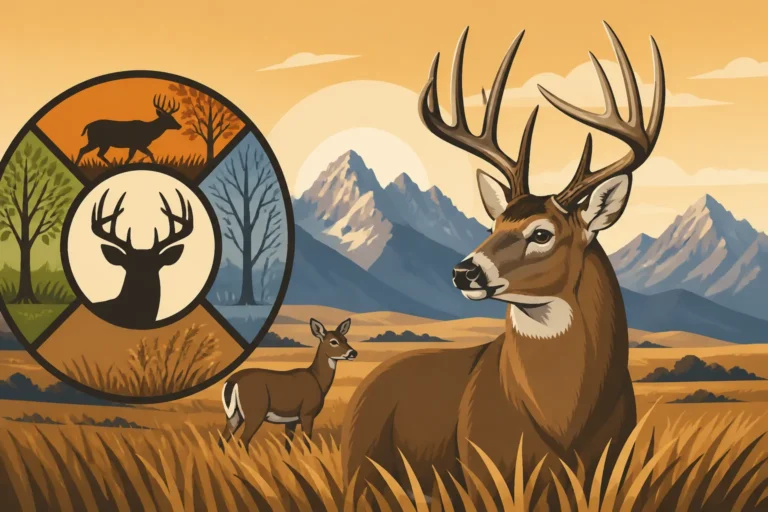
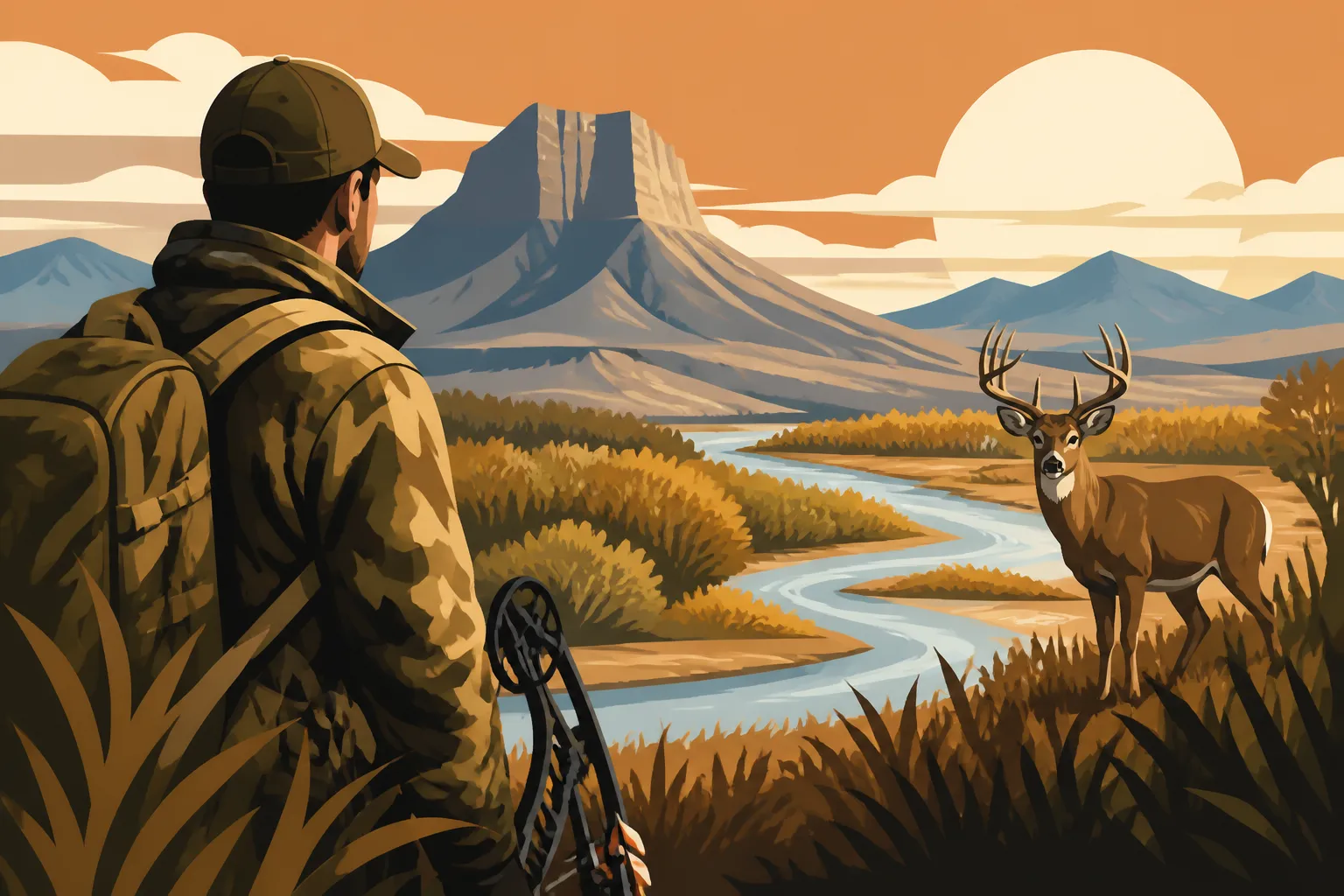
When most folks picture Wyoming, they think vast, open country, perfect for spotting game from miles away. And while that's true for a good portion of the state, especially out west, the eastern side holds a secret: a network of life-giving rivers and streams that create dense, tangled corridors. These riparian areas, often lined with cottonwoods, willows, and thick brush, are the absolute magnets for whitetail deer. They offer everything a whitetail needs: consistent water, abundant browse, and, crucially, thick cover to escape predators and hunters alike. It's a completely different game here than stalking a mule deer on a high ridge.
Understanding River Bottom Ecology and Deer Behavior
The ecology of these river bottoms is a vibrant, complex system. Picture lush vegetation forming a canopy that blocks out the sky in some places, intertwined with thorny bushes and fallen timber. This isn't just a place for deer to hide; it's their entire world. They live, feed, and breed within these confines. You'll find them bedding down in the thickest tangles during the day, emerging cautiously to feed along the edges or in small clearings within the bottomland. Their movements are often dictated by these dense travel corridors, where they feel most secure. Understanding the specific Whitetail Range in Eastern Wyoming is your first step; it’s not statewide.
Whitetail deer in these river bottoms are incredibly adept at using the terrain to their advantage. They'll often sneak through almost silently, relying on their keen sense of smell and hearing to detect danger long before you see them. Unlike mule deer, which often bound away across open country, a whitetail's first instinct in these dense areas is to freeze or melt into the shadows, using every branch and bush as camouflage. This behavior demands a different hunting approach, one that prioritizes stealth, patience, and a deep understanding of how they utilize every nook and cranny of their environment. You might even find yourself wondering if you're chasing a phantom, but with the right knowledge, you'll start to see patterns.
Spotting Whitetail Sign in Dense Cover
Finding sign in dense river bottom cover can feel like looking for a needle in a haystack, but it's crucial. You're not looking for deer across a distant hillside; you're looking for subtle clues on the ground right in front of you. Rubs on small trees, particularly those roughly wrist-to-ankle thick, are a dead giveaway that a buck is active in the area. These rubs are often found along defined travel routes, indicating where a buck is marking his territory. Scrapes, patches of bare earth pawed clean by a buck and often urinated into, are another excellent indicator of buck activity, especially as the rut approaches.
Beyond rubs and scrapes, keep an eye out for fresh tracks, especially where deer might cross muddy banks or dusty trails within the riparian zone. Pay attention to the size and freshness of the tracks – larger, deeper tracks often mean a mature deer has passed through recently. Droppings can also tell you a lot; fresh, moist droppings indicate recent activity. Also, look for browse lines on bushes and trees, where deer have been feeding. These indicators, pieced together, form a narrative of deer movement and presence. Learning the subtle differences in behavior and tracks can also help you with Telling Whitetail From Mule Deer in Wyoming, which occasionally overlap in some areas.
Essential Gear and Hunting Tactics for River Bottom Success
Hunting these thick river bottoms demands a specific set of tools and a mindset that's different from what you might use in more open terrain. Forget long-range precision shots; here, it's all about close-quarters encounters, quick reactions, and intimate knowledge of your surroundings. Your gear choices will directly impact your ability to navigate the cover, detect deer, and make an ethical shot when the opportunity finally arises.
The Right Tools for Close-Quarters Whitetail Hunting
First, let's talk about firearms. A short, fast-handling rifle, perhaps a lever-action or a compact bolt-action, chambered in a cartridge suitable for brush, can be ideal. Think calibers that pack a punch without excessive muzzle blast in confined spaces. Some hunters even prefer shotguns with slugs, or even muzzleloaders, depending on the specific hunt area rules. For archery hunters, a compact compound bow or a traditional recurve or longbow can navigate tight spots more easily than a longer bow. You also need tough, durable clothing that can withstand snags and thorns.
Optics are important, but perhaps not the powerful spotting scopes you might use in the mountains. Instead, focus on good quality binoculars (8x or 10x power) that are easy to carry and provide a bright, clear image in low light. You'll be using them to pick apart small patches of cover, looking for a horizontal line that shouldn't be there, or the flicker of an ear. A good rangefinder is also critical, as judging distance in thick cover can be incredibly deceptive. And speaking of close quarters, a sharp, sturdy hunting knife and a game bag are absolutely essential for field dressing in potentially difficult terrain. When it comes to firearms, always double-check the local regulations to understand, for instance, Where the .22 WMR Is Legal for Hunting, or if a shotgun is restricted.
Still Hunting, Stands, and Blinds in the Thicket
When it comes to tactics, patience is a virtue in the river bottoms. Still hunting, moving slowly and deliberately, stopping frequently to glass and listen, is incredibly effective. Take a few steps, then pause for several minutes, scanning every shadow and bush. Whitetails are masters of standing still, letting you walk right past them. By moving slowly, you increase your chances of spotting a deer before it spots you, or prompting a bedded deer to shift slightly, revealing its position. This is not a fast-paced hunt; it's a game of inches and observation.
Another highly effective strategy is using tree stands or ground blinds. Elevated positions in a tree stand offer a much-needed advantage in these dense areas, allowing you to see over some of the brush and giving you a wider field of view. Carefully scout for natural funnels, pinch points, or well-used trails within the river bottom and set up downwind. Ground blinds can also be effective if placed strategically, blending into the natural vegetation, and offering cover for movement. Remember to always check Tree Stand Rules That Apply on Public Land if you're hunting without prior arrangement. Timing your hunt to coincide with favorable conditions, like a cold snap that gets deer moving, or during the active phase of When Whitetail Rut Dates Fall on the Plains, can dramatically increase your odds.
Navigating Access and Planning Your Eastern Wyoming Hunt
One of the biggest hurdles for any hunter, especially a nonresident, is understanding land ownership and access. In eastern Wyoming, the river bottoms often weave through a patchwork of public and private lands, making careful planning and due diligence absolutely critical. Showing respect for landowners and knowing where you stand legally is paramount to a successful and ethical hunt.
Unraveling Public and Private Land Along Waterways
Many of the prime whitetail river bottom areas in eastern Wyoming are a mix of private agricultural land, sometimes with smaller parcels of state or federal public land interspersed. It can be incredibly frustrating to find a promising looking stretch of river only to realize it's entirely private. This is where meticulous pre-season scouting and mapping come into play. Always, and I mean always, know exactly where you are and whose land you're on. Digital mapping tools, like those offered by GoHunt, can be invaluable for identifying land ownership boundaries, even down to the individual parcel. These tools allow you to overlay public land, state lands, and even private parcels, giving you a clear picture of accessible ground.
When hunting along these waterways, remember that just because a river is technically navigable doesn't always grant you access across adjoining private land. The law regarding access can be complex, and it's always best to err on the side of caution. Often, the best public land opportunities come through programs like Access Yes Opens Private Wyoming Ground to Public Hunters, which lease private land for public hunting. Look into these programs well in advance of the season, as they are often limited and popular. Don't be afraid to knock on doors and ask for permission on private land; a friendly, respectful approach can sometimes open up amazing opportunities. Just be prepared for "no," and always respect that answer. It's especially crucial to understand the nuances of Retrieving Game From Private Land in Wyoming before you even start hunting, as a wounded animal may cross boundaries.
E-Scouting and Pre-Season Preparation
E-scouting is your best friend when it comes to eastern Wyoming whitetails. Before you ever set foot in the field, use online mapping resources, satellite imagery, and tools like GoHunt to identify potential public access points, analyze terrain features, and pinpoint likely deer habitat. Look for changes in vegetation density, pinch points where deer movements might be concentrated, and areas with good escape cover near food sources. You can often spot well-worn trails from above, especially if they follow distinct terrain features. This digital reconnaissance allows you to narrow down your focus and make the most of your limited time in the field. This goes hand-in-hand with creating an effective E-Scouting a Unit Before the Season Opens plan.
Once you have a few promising spots identified, a physical scouting trip, if possible, is incredibly beneficial. This allows you to confirm what you saw on the maps, find fresh sign, and identify suitable stand or blind locations. Pay attention to prevailing wind directions and how the terrain might funnel or swirl the wind. Setting up trail cameras in key locations, where allowed, can give you invaluable insight into deer movement patterns and the presence of mature bucks. Just be sure you understand the Trail Camera Rules on Wyoming Public Land beforehand to avoid any issues. The more homework you do before the season starts, the higher your chances of success.
Overcoming Unique Challenges of Whitetail River Bottoms
Hunting whitetails in Wyoming's river bottoms isn't for the faint of heart. It presents its own distinct set of challenges that can test even the most experienced hunter. From navigating incredibly dense vegetation to mastering scent control in tight quarters, these hunts demand adaptability, careful planning, and a deep respect for the whitetail's home turf.
Dealing with Dense Vegetation and Limited Visibility
The sheer density of the vegetation in these river bottoms is perhaps the biggest hurdle. Visibility can be severely limited, often to less than 50 yards, sometimes even closer. This means that a deer can literally be standing feet from you, completely concealed. This lack of visibility can be incredibly frustrating, but it also creates opportunities. It forces you to slow down, to rely more on your ears and nose than your eyes. Listen for the subtle sounds of rustling leaves, snapping twigs, or even the soft snort of a deer.
One way to mitigate this challenge is to utilize natural openings or small clearings within the thicket, or to find elevated ground, even a small rise, that offers a slightly better vantage point. Cutting shooting lanes, where legal and appropriate, around a tree stand or blind can also be highly effective. This isn't about clear-cutting, but carefully removing a few branches to open up crucial shooting windows. Think about Late Season Whitetail Hunting on the Prairie – as leaves fall, visibility can improve dramatically, which is a great time to target these areas.
The Importance of Wind and Scent Control in Tight Spaces
In any hunting scenario, wind direction is critical, but in the close confines of a river bottom, it becomes absolutely paramount. Whitetails rely heavily on their sense of smell, and in an environment where visual cues are limited, they'll often trust their nose above all else. A swirling or unpredictable wind can quickly ruin a hunt. Before you even head out, check multiple weather sources for wind direction and use the terrain to your advantage. Try to position yourself so that your scent blows away from known deer travel routes or bedding areas.
Strict scent control is non-negotiable. This includes showering with scent-free soap, washing hunting clothes in scent-free detergent, and storing them in airtight bags or containers. Using scent-eliminating sprays on your clothes and gear is a common practice. Many hunters also use natural cover scents, like earth or pine, to help mask their human odor. However, be cautious with attractant scents, and always check Scent Lure Limits Near CWD Management Areas as regulations can vary. In the end, the best strategy is always to play the wind; no amount of scent control can completely fool a whitetail if your scent is blowing directly into its path.
Table: River Bottom vs. Open Country Whitetail Hunting
Here's a quick look at how hunting whitetails in river bottoms often compares to more open country pursuits:
| Feature/Aspect | River Bottom Hunting | Open Country Hunting |
|---|---|---|
| Visibility | Extremely limited (often <50 yards) | High (often hundreds of yards to miles) |
| Terrain | Dense, tangled, often brushy, riverine | Open, rolling hills, sagebrush, often higher elevation |
| Deer Behavior | Sneaky, holds tight, relies on cover and scent | More prone to flight, uses distance for safety |
| Primary Senses | Hearing, smell | Sight, then hearing/smell |
| Optimal Tactics | Still hunting, tree stands, ground blinds | Spot and stalk, glassing, long-range shooting |
| Weapon Choice | Fast-handling rifles, shotguns, compact bows | Longer-range rifles, powerful optics |
| Patience Level | Extremely High (slow, methodical movement) | High (for spotting and closing distance) |
| Physical Demands | Navigating dense cover, quiet movement | Long walks, climbing hills, dealing with altitude |
Disclaimer
This article is for general informational purposes only and does not constitute professional advice. Laws, prices and regulations vary by location and change over time. Consult a qualified professional for guidance on your specific situation.