Telling a Grizzly From a Black Bear
Few things get a hunter's heart racing quite like an unexpected bear encounter in the Wyoming backcountry, but the adrenaline quickly turns to genuine anxiety when you're not absolutely sure what kind of bear you're looking at. The stakes are incredibly high, not just for your safety, but for the bears themselves, especially with federally protected grizzlies sharing so much territory with huntable black bears. This guide is here to cut through the confusion and give you clear, actionable ways to tell the difference, so you can make informed decisions in the field.
Why Bear Identification Is Non-Negotiable in Wyoming
When you're out in the wilds of Wyoming, whether you're chasing elk in the Bridger-Teton or glassing for deer in the Bighorns, coming across a bear is a real possibility. But it’s not just about a cool wildlife sighting; it’s about critical safety and legal compliance. Misidentifying a bear can lead to truly dire consequences, and as responsible outdoors enthusiasts, it’s our job to know the difference.
The Critical Safety Aspect
Let's be blunt: a close encounter with a grizzly bear is generally a very different situation than one with a black bear, and knowing which one you're facing can dictate your immediate response. Grizzlies, especially a sow with cubs, can be incredibly defensive. They're built for power and can be unpredictable, often reacting to a perceived threat with aggressive charges. While black bears can also be dangerous, particularly if they are food-conditioned or feel cornered, their typical reaction is often to flee or climb a tree. Knowing the physical cues that separate these two species allows you to assess the risk more accurately and decide whether to stand your ground, attempt to deter, or slowly back away. Carrying bear spray is always prudent when in bear country, regardless of species, but understanding the bear you're dealing with enhances your ability to use it effectively, or hopefully, avoid the need for it altogether. For more on this, check out Bear Safety Practices in an Outfitter Camp.
Legal and Ethical Hunting Responsibilities
Beyond personal safety, there's a huge legal and ethical component to bear identification, particularly for hunters. In much of Wyoming, black bears are a huntable species, with specific seasons, quotas, and regulations. However, grizzly bears are a federally protected species in significant portions of the state, primarily within the Greater Yellowstone Ecosystem and its surrounding areas, including parts of the Wind River Range and the Absarokas. Hunting a grizzly bear, even accidentally, carries severe legal penalties, including hefty fines and potential jail time.
It's not just about avoiding legal trouble, though. As hunters, we have a deep responsibility to the wildlife we pursue and to the conservation of all species. Accidental harvest of a protected animal is a black eye for the hunting community and undermines conservation efforts. Before you even head out, knowing the grizzly zones and having a solid grasp of identification features is essential. This is where researching your hunt area becomes paramount; tools like GoHunt can be invaluable for pinpointing specific hunt areas and understanding the potential for grizzly presence. It helps you decide if a "cinnamon bear" you're seeing is truly a black bear color phase, or potentially a lighter-colored grizzly. This diligence helps ensure that you're only targeting legal species and upholding the highest ethical standards of hunting.
Key Physical Distinctions Between Grizzlies and Black Bears
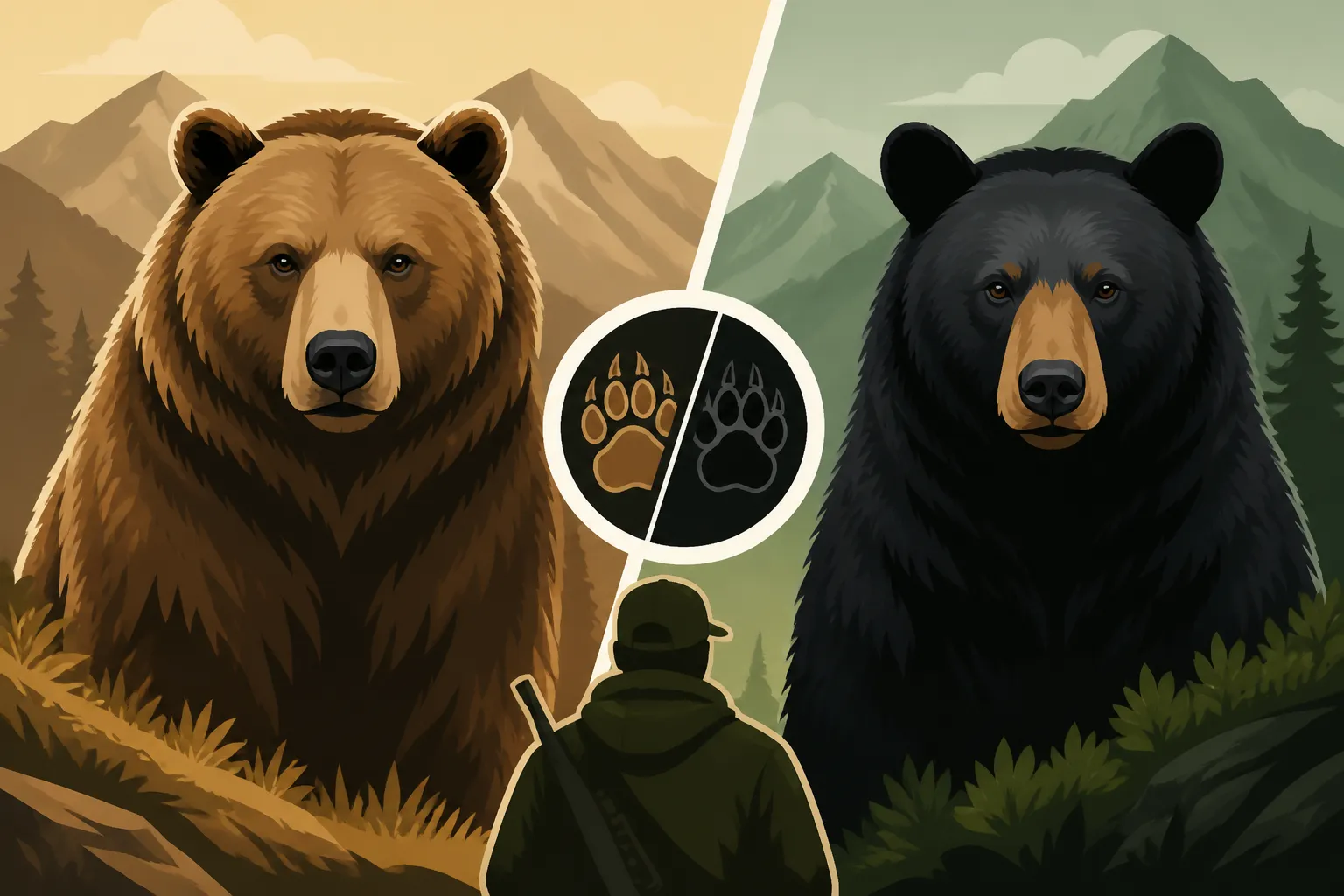
Alright, let’s get down to the brass tacks. While size and color can be incredibly deceptive – a small grizzly might be smaller than a large black bear, and both species come in a vast array of colors – there are five key physical characteristics that, when observed together, almost infallibly tell you whether you're looking at a grizzly or a black bear. You need to look for a combination of these features, not just one.
The Shoulder Hump: The Ultimate Indicator
Without a doubt, the most reliable field mark for a grizzly bear is the prominent shoulder hump. This isn't just a bit of extra fat; it's a massive concentration of muscle that grizzly bears use for digging. Imagine trying to rip apart a rotten log or excavate a ground squirrel den all day long – that's the kind of power that hump provides. It sits just above the shoulders, creating a distinct, high-shouldered profile.
When a grizzly walks, that hump is very noticeable, giving them a powerful, almost hulking appearance. It’s a literal mountain of muscle that allows them to be incredibly efficient excavators, which is a major part of their diet. Black bears, on the other hand, lack this hump entirely. Their backline from neck to tail tends to be relatively straight or even slightly sloped downward from the neck, giving them a more streamlined, less bulky appearance. If you see that unmistakable rise of muscle above the shoulders, you’re almost certainly looking at a grizzly.
Facial Profile: A Dish Versus a Straight Line
Another excellent indicator, especially if you can get a good look at the bear's head, is its facial profile. Grizzly bears typically have a more "dished" or concave profile from their forehead to the tip of their nose. Imagine a gentle scoop, almost like a shallow bowl, from just above their eyes down to their muzzle. Their forehead often appears quite high and rounded. This dished profile gives them a distinct, almost pug-nosed look.
Black bears, by contrast, usually have a straighter, more Roman-nosed profile. Their forehead and snout tend to form a relatively straight line, without that noticeable dip. It’s a less pronounced, often longer-looking snout in comparison. Take your time to observe this feature, as lighting and angle can sometimes play tricks on the eye, but a clear view will often reveal this crucial difference.
Ear Size and Shape
The ears can also provide a helpful clue, though it's one you might need a bit more practice to discern reliably. Grizzly bears tend to have shorter, more rounded ears that often appear quite small in proportion to their massive heads. They almost look like little nubs poking out from the fur.
Black bears generally have longer, more pointed ears that are usually quite prominent and proportional to their head size. They stand up more distinctly. While this isn't as foolproof as the hump, when combined with the other indicators, it adds another piece to your identification puzzle. It's especially useful when a bear is facing you, making the shoulder hump harder to see.
Claws: Long Diggers vs. Short Climbers
The length and curvature of a bear's claws offer a telling insight into their lifestyle and, therefore, their species. Grizzly bears possess long, relatively straight, and often lighter-colored claws. These claws are perfect for digging up roots, ground squirrels, and generally tearing into the earth. They're built for excavation, not for climbing trees. A grizzly's claws can be several inches long, and you might even see them protruding from their paws if they're walking on softer ground.
Black bears, on the other hand, have shorter, darker, and more sharply curved claws. These claws are designed for agility and grip, making them excellent tree climbers. When a black bear feels threatened, its first instinct is often to scramble up the nearest tree, something a grizzly typically cannot do with its long, blunt digging claws. If you're fortunate enough to see tracks, this difference in claw marks can be incredibly revealing.
Size and Color: The Deceptive Duo
This is where many people get tripped up. It’s a common misconception that black bears are always smaller and always black, while grizzlies are always large and always brown or "grizzled." The reality is far more complex, and relying solely on size or color is a recipe for misidentification.
Color Variations are Endless
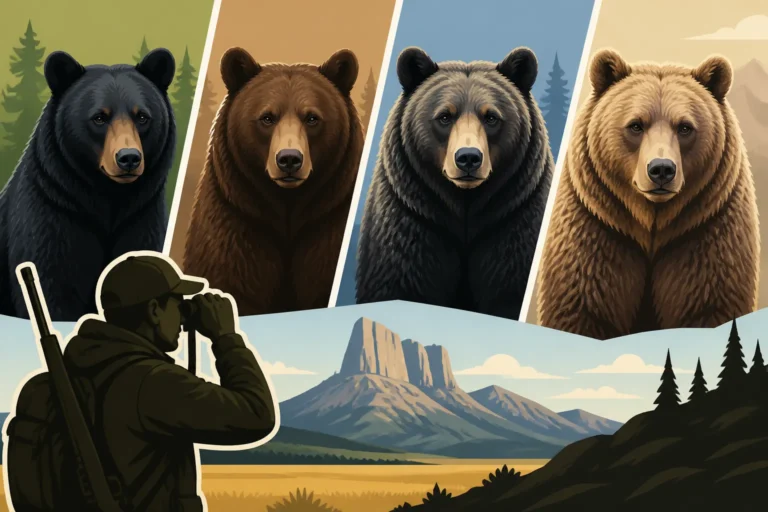
First, let's talk about color. While the name "black bear" implies a black coat, these bears can be various shades of brown, cinnamon, blonde, and even grayish. I've seen black bears in Wyoming that were a striking chocolate brown, and others that were a dusty blonde. Similarly, grizzly bears can range from very light blonde to dark brown, and yes, even black. The "grizzled" appearance that gives them their name comes from lighter-colored guard hairs on their shoulders and back, giving them a frosted look, but this isn't always present or easy to see. Don't let color be your primary guide. If you see a bear that's light brown, it could be either species. If you see a dark bear, it could still be either species. Identifying a Cinnamon Bear in the Field discusses some of these color variations specific to black bears.
Size Is Relative
Second, size. While adult grizzly bears are generally larger and heavier than black bears on average, there's significant overlap. A young grizzly might be considerably smaller than a mature, well-fed male black bear. A sow grizzly, especially if it's a smaller subspecies, could easily be mistaken for a large black bear if you're only judging by bulk. Plus, judging size accurately in the field, especially across varying terrain and distances, is notoriously difficult. A bear seen uphill or at a distance can appear much smaller than it truly is. Always consider size secondary to the other, more reliable physical features.
To help visualize these differences, here's a quick comparison:
| Feature | Grizzly Bear | Black Bear |
|---|---|---|
| Shoulder Hump | Prominent, muscular hump | No hump; straight or sloping backline |
| Facial Profile | Dished or concave; high forehead | Straight or Roman-nosed |
| Ears | Shorter, more rounded, proportional smaller | Longer, more pointed, proportional larger |
| Claws | Long, relatively straight, light-colored | Shorter, sharply curved, dark-colored |
| Size (Avg) | Generally larger and heavier | Generally smaller and lighter |
| Color | Highly variable (blonde to dark brown, often grizzled) | Highly variable (black, brown, cinnamon, blonde) |
Habitat and Behavioral Clues in Wyoming
While physical features are your best bet for identification, understanding the typical habitat and behavior of both grizzly and black bears in Wyoming can offer additional clues and context, helping you make a more informed decision.
Geographic Distribution: Knowing the Zones
In Wyoming, the distribution of grizzlies is more restricted than that of black bears. Grizzly bears are primarily found within the Greater Yellowstone Ecosystem, which includes Yellowstone and Grand Teton National Parks and extends into surrounding national forests like the Bridger-Teton, Shoshone, and parts of the Caribou-Targhee and Gallatin National Forests. The Wind River Range is also known grizzly country. These are areas with vast wilderness, high elevations, and typically less human development. If you're hunting in these areas, particularly north and west of the Continental Divide, assume you are in grizzly country. For a broader understanding of protected areas, you might look at maps related to Wyoming's Gray Wolf Trophy Game Area, as there can be some geographical overlap in protection zones.
Black bears, conversely, are found throughout much of Wyoming's forested areas, including many mountain ranges where grizzlies are less common or absent, such as the Bighorn Mountains, Medicine Bow-Routt National Forest, and areas east of the major grizzly strongholds. They are more adaptable to varied habitats, including denser timber and riparian zones, sometimes even close to human habitation. If you're hunting in the Black Hills National Forest in eastern Wyoming, for example, you're almost exclusively in black bear territory. Always check the specific regulations and bear distribution maps for your hunt area, which are often available from the Wyoming Game and Fish Department, or through detailed mapping services like GoHunt. This kind of research is crucial to understanding the potential for encountering either species.
Dietary Habits and Foraging Behavior
The physical differences in claws directly relate to diet and foraging. Grizzly bears are powerful excavators. They spend a lot of time digging for roots, tubers, bulbs, and small mammals like ground squirrels and marmots. If you see overturned rocks, dug-up meadows, or torn-apart rotten logs, these are classic signs of a grizzly bear at work. This heavy digging also leaves very distinctive tracks. They are true omnivores and will readily consume carrion, berries, grasses, and insects.
Black bears, while also omnivores, are generally more arboreal (tree-dwelling) and opportunistic foragers. Their diet heavily relies on berries, nuts, insects, and carrion, but they are particularly known for their ability to climb trees to access food sources or escape danger. If you see claw marks high up on trees, or a bear expertly climbing a snag for berries, it's highly indicative of a black bear. They also fish, hunt fawns, and will visit human-related food sources if available. Proper food storage in bear country is vital, especially Food Storage Rules in Grizzly Country, to avoid habituating either species.
Denning and Reproductive Behavior
Both species den for the winter, but their denning habits can differ slightly. Grizzlies often create dens by excavating into hillsides or under large rootwads, creating a secure, often deep chamber. They tend to have smaller litter sizes, typically 1-3 cubs, and mothers are fiercely protective. Grizzly cubs usually stay with their mother for 2-3 years, meaning you're more likely to encounter larger family groups.
Black bears also den, often in hollow logs, rock crevices, or brush piles. They tend to have larger litters, typically 2-4 cubs, and their cubs stay with them for about 1.5 years. If you spot a sow with cubs, observe the cubs closely for the identifying features of their species, as they will share the same characteristics as the mother. Regardless of species, encountering a sow with cubs is one of the most potentially dangerous situations, and giving them ample space is always the safest course of action.
When in Doubt: Safety First and Smart Decisions
You've got your optics up, your heart is thumping, and you've tried to piece together all the clues. But sometimes, despite your best efforts, you're just not 100% sure. Maybe the light is bad, the bear is partially obscured, or it's moving too quickly. In these moments, hesitation can be dangerous, both for you and for the bear.
Always Err on the Side of Caution
When you're faced with an ambiguous situation in Wyoming's bear country, the golden rule is simple: assume it's a grizzly. This mindset prioritizes your safety and the protection of a federally listed species. Treating an unknown bear as if it's the more potentially aggressive and legally protected species means you'll activate your most cautious safety protocols. This includes immediately retrieving your bear spray, making noise to make your presence known without being aggressive, and slowly backing away while keeping an eye on the animal.
Never approach an unidentified bear. Give it a wide berth, maintain respectful distance, and if you're hunting, do not draw your weapon unless it is in self-defense from an attacking animal and you are certain of the species. Remember, even if it turns out to be a black bear, practicing caution is never a bad thing in the backcountry.
Gear Up for Bear Country
Being prepared is more than just knowing how to identify bears; it’s about carrying the right tools for defense and navigation. No matter where you are in Wyoming's high country, especially in areas known for grizzly activity, bear spray is an absolute necessity. It should be easily accessible, not buried in your pack. Familiarize yourself with its deployment before you ever leave home.
Beyond bear spray, proper mapping tools are crucial. Services like GoHunt or other detailed mapping applications can show you not just property boundaries, but also overlay grizzly management areas, wilderness zones (where guides may be required, for example, under Wyoming's Wilderness Guide Law for Nonresidents), and even seasonal habitat closures. Knowing these geographical distinctions before you go can often tell you whether a bear encounter is likely to be with a black bear or a grizzly. Having reliable satellite communication, like a Garmin InReach, is also a smart move, allowing you to contact authorities if you have a dangerous encounter or witness an incident, especially in areas outside of cell service.
Reporting Sightings and Incidents
If you have an encounter with a bear, particularly a grizzly, or you witness something unusual or concerning (like a bear showing unusual aggression or a black bear that appears food-conditioned near a campsite), it’s important to report it to the Wyoming Game and Fish Department. They use this information to monitor bear populations, track movements, and manage potential human-wildlife conflicts. If you're a hunter, knowing the boundaries of grizzly management areas means you're already doing your part to avoid an illegal harvest. Your vigilance helps biologists better understand and protect these incredible animals. Remember, the goal is always to coexist with these magnificent creatures, and that starts with respect, knowledge, and preparedness.
Disclaimer
This article is for general informational purposes only and does not constitute professional advice. Laws, prices and regulations vary by location and change over time. Consult a qualified professional for guidance on your specific situation.