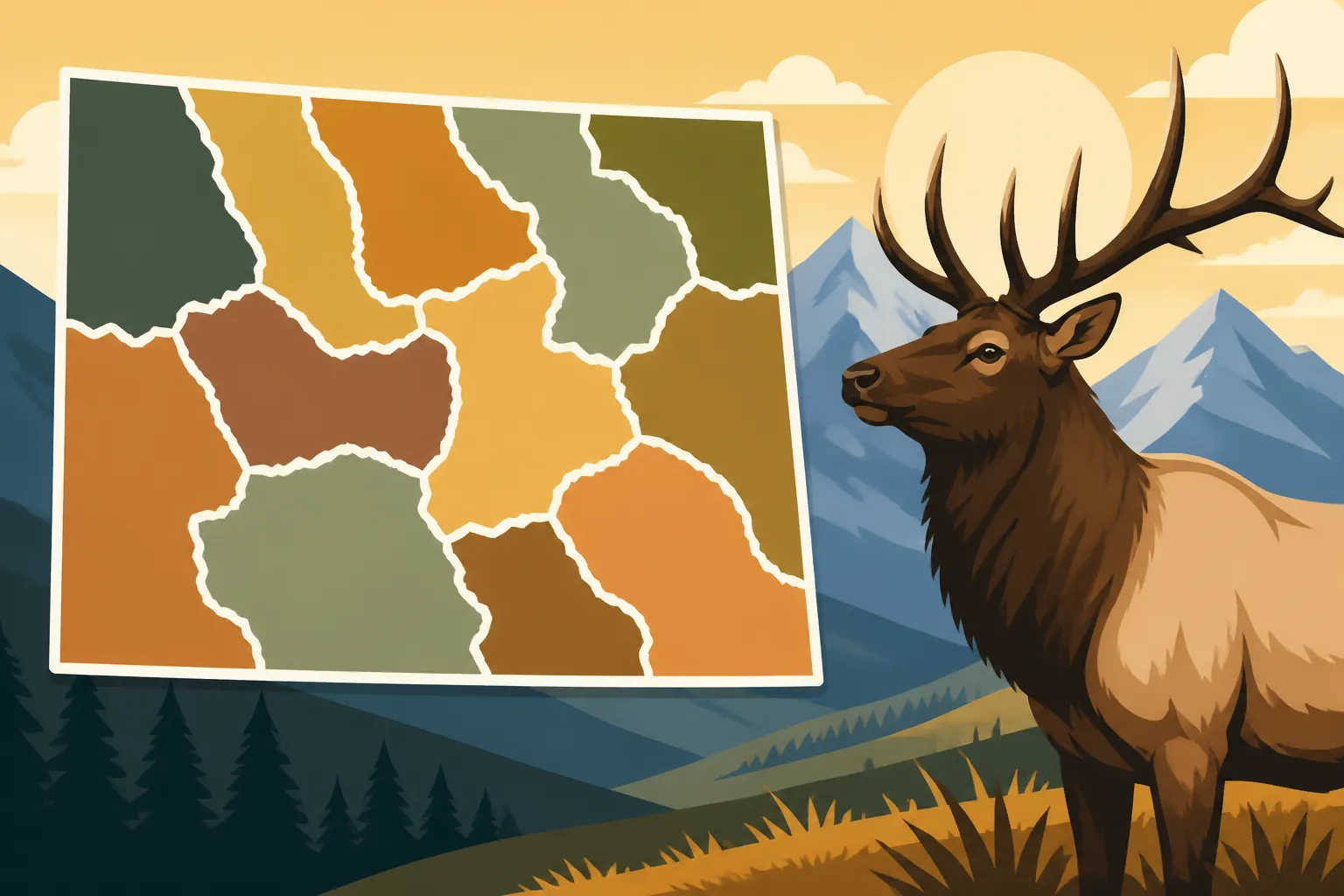
Wyoming’s Elk Units, E1 Through E10
Finding your way through Wyoming's complex elk hunting units can feel like trying to read a treasure map written in a foreign language. You stare at the regulations, seeing designations like "E1," "E3," or "E10," and wonder what in the world they actually mean for your hunt. It's frustrating to feel like you need a degree in cartography just to pick an area. This guide is here to break down the "E" units – those specific hunt areas spanning E1 through E10 – so you can understand their unique characteristics, navigate the regulations, and confidently plan your next Wyoming elk adventure.
Understanding Wyoming's Elk Unit System Beyond Just Numbers
When you first dive into Wyoming's hunting regulations, the numbers and letters can be overwhelming. It's not just a random sequence; there's a method to the madness, designed to help manage wildlife populations and hunting opportunities. For elk, the system uses "E" followed by a number, and understanding what these designations represent is your first step toward a successful hunt.
The Big Picture: Hunt Areas vs. Herd Units
One of the most common points of confusion for hunters, especially those new to Wyoming, is the distinction between a "hunt area" and a "herd unit." It's easy to assume they're the same, but they serve different purposes. A hunt area is a specific geographic boundary defined by the Wyoming Game and Fish Department (WGFD) for regulatory purposes. When you draw a tag, it's for a particular hunt area and license type, dictating where and when you can legally hunt. These boundaries are usually drawn along natural features like rivers, mountain ranges, or roads, making them identifiable on a map.
On the other hand, a herd unit refers to a biologically distinct population of animals that share common seasonal ranges, migration corridors, and breeding grounds. Biologists study herd units to understand population dynamics, health, and habitat use. While hunt areas are drawn with these herd units in mind, they don't always perfectly align. For instance, a single elk herd unit might span several different hunt areas, or a hunt area might encompass portions of multiple herd units. The WGFD sets hunt area boundaries to allow for targeted management, issuing licenses to achieve specific harvest objectives within those regulatory zones, which in turn influences the broader herd unit populations. This is why you need to pay close attention to the specific hunt area number (like E1, E3, etc.) on your license.
Why the "E" Designation?
The "E" preceding the numbers in "E1" through "E10" isn't just a random letter; it's a clear indicator that these specific hunt areas are designated primarily for elk. Wyoming uses different letter prefixes for various big game species to streamline its regulations and make it easier for hunters to identify which rules apply to which animal. For example, you'll see "D" for deer units, "A" for antelope, and so on. This system helps prevent misinterpretation and ensures that the specific season dates, weapon restrictions, and license types for elk are clearly understood to apply to that species within that defined geographic boundary.
Imagine trying to sort through regulations if every unit was just a number! The "E" helps you immediately narrow down your focus to the elk-specific information you need. It's a small detail, but it's crucial for navigating the sprawling Wyoming hunting regulations and avoiding any costly mistakes in the field.
The Regulatory Purpose of Unit Boundaries
The establishment of these specific unit boundaries, particularly the E1-E10 series, is far from arbitrary. They are carefully drawn by wildlife managers to serve critical regulatory functions. Firstly, these boundaries allow the WGFD to manage elk populations on a localized level. By setting specific harvest quotas and license types for each hunt area, they can direct hunting pressure where it's most needed to meet population objectives, reduce damage to private land, or maintain herd health.
For instance, if one area has an overpopulation of elk causing agricultural damage, the WGFD might offer more antlerless licenses in the corresponding "E" unit. Conversely, if an area is struggling to meet its bull-to-cow ratio objectives, they might offer fewer bull licenses or implement antler point restrictions within those specific "E" unit boundaries. These boundaries also help in distributing hunters across the landscape, preventing overwhelming pressure in one spot while leaving other areas under-hunted. The E-units, therefore, are a fundamental tool in Wyoming's adaptive wildlife management strategy, aiming to balance hunting opportunity with ecological sustainability.
Delving into the "E" Units: E1 Through E10
When people talk about Wyoming's most sought-after elk hunting, the discussion often turns to the "E" units, specifically those numbered E1 through E10. These units hold a special place in the minds of many hunters, often associated with rugged mountain landscapes, challenging hunts, and the possibility of encountering true trophy animals. But what exactly defines this particular block of units?
The Geographic Sweep of E1-E10
Generally speaking, the E1 through E10 units are concentrated in the western and northwestern portions of Wyoming. This region is renowned for its iconic mountain ranges, including the Grand Tetons, the Gros Ventre, the Wyoming Range, and parts of the Absaroka Mountains. This means you're typically looking at high-elevation, forested country, often interspersed with vast wilderness areas. These units encompass some of the most remote and physically demanding terrain in the state, drawing hunters who are prepared for a true backcountry experience.
Unlike the more accessible, rolling sagebrush country of eastern Wyoming, these western units are characterized by steep canyons, dense timber, alpine meadows, and heavy snow loads in the later seasons. This geography directly impacts elk behavior, access challenges, and the type of hunting strategies that prove most effective. Understanding this general geographic placement is key to visualizing the kind of hunt you'd be getting into with an E-unit tag.
Species Focus Within These Units
While the "E" designation explicitly marks these areas for elk, it doesn't mean elk are the only big game animals you'll find there. Many of these units overlap with prime habitat for other species, creating opportunities for combination hunts or simply encountering diverse wildlife. Mule deer are a common sight in the higher elevations and timber fringes, and in certain areas, you might also find moose. Bighorn sheep and mountain goat tags are exceptionally rare, but their habitat often overlaps with the rugged terrain of these elk units. Predators like black bear and mountain lion are also present, adding another layer of wilderness experience to the hunt.
It's crucial to remember that your elk tag is only for elk. If you encounter a legal mule deer buck while elk hunting, you'd need a separate, valid deer license for that specific unit to pursue it. The rich biodiversity of these western units means you'll rarely have a dull moment in the field, even if you're solely focused on elk.
Overarching Characteristics of the E-Units
Despite their individual differences, the E1-E10 units share several overarching characteristics that shape the hunting experience. First and foremost is the rugged terrain and high altitude. Hunters often face significant elevation gains and losses daily, requiring a high level of physical fitness. The weather is another major factor; conditions can change dramatically and rapidly, from warm autumn days to heavy snowstorms within hours. This makes packing appropriate gear and being prepared for anything absolutely essential.
Secondly, many of these units contain significant portions of wilderness areas, which come with their own set of rules and challenges. This often means no motorized vehicles, requiring horseback or foot access, and for nonresidents, potentially requiring a licensed Wyoming guide if you’re hunting specific species like elk, bighorn sheep, or moose. For more information, check out Wyoming's Wilderness Guide Law for Nonresidents. Elk in these areas are often less accustomed to human presence, but they are also incredibly adept at utilizing the vast, unforgiving landscape to their advantage. Finally, migration patterns are critical to understanding these units. Elk in western Wyoming often have distinct summer and winter ranges, moving between high mountain country and lower-elevation feedgrounds or wintering areas as snow deepens. Knowing these patterns can be the difference between finding elk and finding empty country.
Key Individual Elk Units: What Makes Them Unique?
While the E1-E10 units share common characteristics, each one possesses its own unique personality, offering distinct challenges and opportunities. Diving deeper into a few examples can illuminate the nuances you'll encounter as you study maps and regulations.
Unit E1: A Closer Look
Elk Unit E1, often referred to as simply "Unit 1," is one of those iconic western Wyoming units that immediately brings images of massive mountains and deep timber to mind. Geographically, it typically encompasses some incredibly rugged country, including portions of the Bridger-Teton National Forest and potentially parts of wilderness areas like the Gros Ventre. The terrain is a mix of steep, heavily timbered slopes, open alpine bowls, and dense willow bottoms along drainages. Access can be a real challenge here, with many areas requiring significant hiking or horseback travel to get away from roads. The elk in Unit 1 are known for being wary, especially after the initial rifle seasons begin. They utilize the thick timber and steep topography to evade hunters, often moving into the deepest, most inaccessible canyons at the first sign of pressure.
For hunters, success in Unit 1 often hinges on being physically prepared for long days of climbing and descending, as well as being proficient at still-hunting through timber. Understanding prevailing wind patterns and how elk use thermal drafts is absolutely critical. Additionally, knowing where elk might stage before pushing down to winter range, often influenced by early snows, can be a game-changer. For those considering this area, looking into The Pinedale Elk Herd Feedground Plan Explained might provide insights into broader herd dynamics, even if your hunt isn't directly on a feedground.
Unit E3: Navigating Its Specifics
Elk Unit E3 is another prime example of western Wyoming's diverse elk habitat, often associated with areas that experience significant elk migrations. This unit can encompass a mix of public lands, including national forest and BLM ground, and often interfaces with private ranch lands. The challenges here might be different from the strictly high-mountain units. While still rugged, some portions of E3 might have more varied terrain, from foothills to rolling sagebrush intermixed with timbered draws. One of the defining characteristics of Unit E3 is its proximity to significant elk populations, sometimes influenced by the dynamics of larger herds. For example, The Jackson Elk Herd Has Grown is a topic that can directly impact units in the region, influencing elk numbers and movements.
Hunting Unit E3 can involve a combination of strategies. Early season archery might focus on calling or spot-and-stalk tactics in timbered areas, while later rifle seasons might see elk migrating, requiring hunters to intercept animals moving between different elevation bands or even across vast expanses of sagebrush. Access can be a mixed bag; some areas are readily accessible by vehicle, while others require extensive foot travel. The key to E3 is often about understanding the specific movements of elk within its boundaries, which can change dramatically with weather and hunting pressure.
Unit E7: Understanding Its Draws and Difficulties
Elk Unit E7 typically represents some of the most remote and challenging elk hunting country in Wyoming, often characterized by vast wilderness areas and extremely difficult access. Think about areas where true pack-in hunts are not just an option, but often a necessity. The terrain in E7 is usually brutally steep, heavily timbered, and includes high alpine basins that can be snow-covered early in the season. Rivers and deep canyons often dissect the landscape, making travel slow and arduous. This unit is not for the faint of heart or the unprepared. The physical demands are immense, and the logistics of a hunt in E7 can be complex.
What E7 lacks in easy access, it often makes up for in the quality of the wilderness experience and the potential for unpressured elk. Bulls in these areas often have the opportunity to grow older and larger due to reduced human intrusion. Hunting strategies here lean heavily on self-sufficiency, navigation skills, and the ability to find and move elk in extremely dense cover or wide-open, high-altitude terrain. Understanding specific wilderness access points, like those detailed in Wind River and Teton Wilderness Access in Wyoming, becomes critical if this unit borders or includes such areas. Packing in with horses or mules is a common approach to cover ground and haul out an animal.
Unit E10: Opportunities and Obstacles
Unit E10, like its counterparts, offers a unique blend of hunting experiences that may differ from the classic high-mountain units. Depending on its exact boundaries, E10 could encompass areas that are a mix of national forest, BLM, and even some state trust lands, often with a significant interspersion of private ranches. This "patchwork" land ownership can present both opportunities and obstacles. On one hand, having a variety of land types can provide diverse habitats for elk. On the other, navigating private land boundaries and understanding access rules is paramount.
Hunting in E10 might involve a combination of timber hunting, glassing open hillsides, and potentially dealing with elk that move between public and private refuges. Public land access might be concentrated to specific routes or walk-in areas, requiring hunters to be strategic about their approach. The challenges can include higher hunting pressure in easily accessible public areas, and the need for diligent e-scouting with tools like onX Hunt to identify legal access points and public corridors. Elk behavior in E10 might be more influenced by human activity and nearby agricultural lands, requiring a different approach than purely wilderness-dwelling elk.
License Types and Draw Odds in the E-Units
Drawing an elk tag in Wyoming, especially for the coveted "E" units, is often a journey in itself, fraught with anticipation and the strategic accumulation of preference points. Understanding the different license types and the harsh realities of draw odds is critical before you even consider applying.
General vs. Limited Quota in E1-E10
Wyoming's elk licenses fall into two broad categories: General and Limited Quota. This distinction is incredibly important, as it dictates where and how widely your tag can be used.
General Licenses: A general license typically allows you to hunt in any open general elk hunt area in the state. While this sounds incredibly flexible, the E1-E10 units are not generally considered general areas. Most of these prime western units are managed under limited quota regulations to control harvest and manage specific herd objectives. If you hold a general elk license, you'll need to carefully check the regulations to ensure the specific E-unit you're targeting is open to general license holders for elk. Often, general elk hunting is confined to specific, less pressured units or only for antlerless animals in certain areas. It's a common misconception that a general tag grants access everywhere, and for the E-units, this is rarely the case for bull hunting. The benefit of general tags is that they are generally easier to draw, but they come with significant restrictions on where you can hunt. You can dive deeper into this concept with Wyoming General Licenses Against Limited Quota: Two Different Games.
Limited Quota Licenses: This is where the E1-E10 units shine, and where most serious elk hunters focus their efforts. A limited quota license is specific to a particular hunt area (like E1, E3, etc.) and a specific license type (e.g., Type 1, Type 6). The WGFD issues a fixed, predetermined number of these licenses each year. This means demand often far outstrips supply, making them much harder to draw. The advantage, however, is that drawing a limited quota tag grants you access to some of the best-managed and most desired elk hunting in the state, often in areas with better trophy potential or less hunting pressure (though "less" is relative in popular units). The draw process for limited quota tags is competitive and usually requires accumulating preference points over several years for most E-units, especially for desirable bull tags.
Understanding Specific License Types (e.g., Type 1, 6, 9)
Within the limited quota framework, Wyoming further refines hunting opportunities through various license types, designated by numbers (e.g., Type 1, Type 6, Type 9). Each type defines precisely what kind of elk you can harvest within your specific hunt area and during what season.
- Type 1 and Type 2: These are typically your prized "any elk" or "antlered elk" licenses. A Type 1 tag usually means you can harvest an antlered bull elk. In some units, it might also allow for antlerless elk. These are often the hardest to draw in the E-units due to their trophy potential. If you're hoping for a bull hunt in E1, E3, or E7, you're almost certainly looking at a Type 1 or Type 2 tag. More information can be found on What a Wyoming Type 1 Elk License Means.
- Type 6 and Type 7: These are generally "antlerless elk" or "cow/calf" licenses. They are issued to manage herd numbers, often in areas where elk populations are over objective or causing damage to private lands. While not for trophy bulls, these tags offer a fantastic opportunity to put meat in the freezer and experience an elk hunt. They are typically easier to draw than bull tags and can be a good option for new elk hunters or those focused on sustenance. You can learn more about these types via Which Animals a Type 6 Elk License Covers.
- Type 9: This is a very specific license type, often designated as "archery only" in areas that also have a rifle season. A Type 9 tag grants you access during an extended archery season, before the general rifle season opens. This provides a unique opportunity to hunt elk when they might be more vocal and less pressured, but it requires proficiency with a bow. Not all E-units offer a Type 9, so always check the specific unit regulations.
Always, always double-check the current year's regulations for the exact wording and allowances for each license type within your chosen E-unit. These details can change annually.
Navigating Draw Odds and Preference Points
The reality of drawing a coveted E-unit elk tag in Wyoming, especially for a bull, often comes down to preference points. For nonresidents, these points are crucial. Wyoming's draw system is split, where a significant portion of tags goes to the highest preference point holders, and a smaller percentage is allocated through a random draw. For many E-units, particularly Type 1 tags, it can take many years – sometimes a decade or more – to accumulate enough points to have a reasonable chance of drawing.
To effectively navigate this, you need to:
- Research Draw Odds: Utilize resources like GoHunt or the WGFD's own draw odds reports to see how many points it actually took to draw in recent years for your target E-unit and license type. This will give you a realistic expectation of the commitment involved. You might be shocked at How Many Points It Takes to Draw Wyoming Elk in some units.
- Purchase Preference Points Annually: If you're serious about hunting an E-unit bull, start buying preference points every year, even if you're not ready to apply for a tag. This is a long-term investment.
- Consider Different License Types: If your goal is simply to hunt elk in an E-unit, consider applying for Type 6 or 7 cow tags. These often require fewer points (sometimes even zero) and can provide valuable experience in the unit while you continue to build points for a bull tag.
- Be Flexible: Your dream E-unit might be a 15-point draw. Are there adjacent or similar units that are 5-point draws that could still offer an incredible experience? Flexibility in unit choice can greatly reduce your wait time.
The preference point system can be frustrating, but it's the gateway to hunting in Wyoming's premier E-units. Planning your application strategy years in advance is not just recommended, it's essential.
Accessing and Scouting Wyoming's E-Units
Hunting the "E" units often means venturing into vast, wild landscapes, where understanding land ownership and effective scouting methods are as crucial as your shooting skills. The challenge isn't just finding elk; it's finding them on accessible land and knowing how to reach them.
Public vs. Private Land Realities
Wyoming's land ownership can be a complex mosaic, especially in the western half of the state where many E-units reside. You'll encounter large swaths of public land – primarily managed by the Bureau of Land Management (BLM) and the U.S. Forest Service – interspersed with state trust lands and private ranches. This creates a "checkerboard" pattern in many areas, where public and private parcels alternate. This intermingling of ownership means that even if a map shows a large block of public land, actually accessing it legally can be a huge hurdle if it's surrounded by private property.
It's absolutely essential to know where you are at all times and to respect private property boundaries. Trespassing, even accidentally, can lead to fines, loss of hunting privileges, and damage to the reputation of all hunters. This is where modern mapping applications become invaluable. Services like onX Hunt provide detailed land ownership overlays on your phone or GPS device, showing public, private, state, and tribal lands in real-time, even when you're out of cell service. These tools help you identify legal access points, determine if a public parcel is landlocked, and navigate complex boundaries with confidence. For a broader understanding of land management, familiarize yourself with Wyoming's Federal Land Split: BLM and Forest Service.
The Role of Wilderness Areas
Many of Wyoming's "E" units, particularly those in the western mountain ranges, contain significant portions of designated wilderness areas. These areas are managed differently from other public lands, with specific regulations designed to preserve their pristine, undeveloped character. For hunters, this means:
- No Motorized Vehicles: Forget ATVs, e-bikes, or even chainsaws. Travel is restricted to foot or horseback only. This limits access and can make packing out an animal a monumental task, but it also means fewer people and potentially less pressured game.
- Guide Requirements for Nonresidents: This is a big one. For nonresidents, hunting elk, bighorn sheep, or moose within a designated wilderness area in Wyoming legally requires you to either employ a licensed Wyoming guide or be accompanied by a resident who holds a valid resident guide license and has filed a specific affidavit. This rule is in place to help manage wilderness use and ensure safety. This is a critical point that can surprise nonresident hunters; for a full rundown, see Wyoming's Wilderness Guide Law for Nonresidents.
- Campsite Restrictions: While dispersed camping is generally allowed, there might be specific rules regarding camp locations, fire rings, and waste disposal to minimize impact.
- Communication Challenges: Cell service is non-existent in most wilderness areas, making satellite communication devices (like satellite phones or two-way messengers) essential for emergencies.
Hunting in a wilderness area within an E-unit offers an unparalleled experience of solitude and raw nature, but it demands meticulous planning, robust gear, and an understanding of the specific rules. Understanding Motorized Limits Inside Wyoming Wilderness is crucial for planning your approach.
E-Scouting and On-the-Ground Reconnaissance
Modern technology has revolutionized the initial stages of scouting, but nothing beats putting boots on the ground.
E-Scouting: Before you ever leave home, leverage digital tools to become intimately familiar with your E-unit.
- Satellite Imagery: Use Google Earth or mapping apps like onX Hunt to identify potential elk habitat: north-facing slopes with dense timber for bedding, south-facing slopes for early season feeding, water sources, natural funnels, and potential migration routes. Look for open parks or meadows bordering thick timber.
- Topographic Maps: Study elevation changes, contour lines, and ridge systems. Identify likely travel corridors, natural basins where elk might congregate, and potential escape routes.
- Public Land Overlays: As mentioned, onX Hunt is invaluable for identifying public access points, private land boundaries, and potential landlocked public parcels. It can help you devise a legal entry and exit strategy. You can use these insights to plan your initial routes and areas to focus on during your actual scouting trip. Learn more about effective digital scouting with E-Scouting a Unit Before the Season Opens.
On-the-Ground Reconnaissance: Once you've done your digital homework, a pre-season scouting trip, if possible, is invaluable.
- Verify Access: Drive roads, walk trails, and confirm that your planned access points are indeed viable and open. Road closures for winter range or seasonal conditions can throw a wrench in your plans.
- Locate Water Sources: Check the reliability of springs, creeks, and stock tanks. Water can be a major draw for elk, especially in drier years.
- Look for Sign: Search for fresh elk tracks, droppings, rubs on trees, and wallows. This indicates current or recent elk presence. Identify feeding areas (often edges of meadows or clearings) and bedding areas (usually dense timber on north-facing slopes).
- Learn the Terrain: The scale of mountains on a map doesn't always convey the steepness or ruggedness. A scouting trip helps you understand the physical demands and identify realistic travel routes.
- Observe Elk Behavior (from a distance): If you spot elk, watch their movement patterns, how they use the terrain, and their reaction to different times of day. This can provide crucial insights for your hunt.
Combining meticulous e-scouting with boots-on-the-ground reconnaissance will give you the best possible advantage when hunting Wyoming's challenging E-units.
Hunting Strategies for Western Wyoming Elk
Hunting elk in Wyoming's E-units is an immersive experience that demands adaptability, physical endurance, and a deep understanding of elk behavior in rugged mountain environments. No single strategy guarantees success, but a combination of approaches tailored to the terrain and the season will increase your odds.
Understanding Elk Behavior in Mountainous Terrain
Elk in western Wyoming are creatures of habit, but their habits are profoundly shaped by their mountainous home. During the summer, they generally gravitate to high-elevation alpine meadows and timberlines, seeking lush forage and cooler temperatures. As hunting seasons open in early fall, particularly with the onset of archery seasons, bulls begin to gather and the rut approaches. This is when vocalizations become key, and bulls can be more aggressive and less cautious.
As rifle seasons progress and the weather cools, elk behavior shifts dramatically. They begin to move from their high summer ranges toward lower-elevation wintering grounds. This migration is often triggered by heavy snowfalls that cover high-country forage. Understanding these migration corridors – often subtle, well-worn paths through saddles, along ridge lines, or down drainages – is crucial. Elk will also utilize specific bedding areas, typically dense timber on north-facing slopes that offer cover and protection from the elements, especially during the heat of the day. They'll move to more open feeding areas during dawn and dusk. Being able to read fresh sign, interpret their movements, and predict where they might be at different times of day and season is paramount.
Calling vs. Spot and Stalk Tactics
For many E-unit hunters, the choice between calling and spot-and-stalk tactics depends heavily on the season, terrain, and prevailing elk behavior.
Calling: During the early archery and rifle seasons, especially throughout the peak of the rut (typically mid-September to early October), calling can be incredibly effective.
- Bugling: Bulls are vocal during the rut, challenging rivals and attracting cows. A well-executed bugle can elicit a response, help locate bulls, and even draw them in. Learning How to Bugle a Wyoming Bull Into Bow Range can be a game-changer. However, be mindful that on heavily pressured public land, too much calling can make elk wary.
- Cow Calls and Chirps: These are often more effective than aggressive bugles, especially when bulls are "hems up" with their cows. Soft cow mews and chirps can draw in curious bulls or bring in the herd. Successful calling often involves a two-person setup, with one caller and one shooter positioned ahead. Understanding Calling Elk on Pressured Wyoming Public Land is vital for nuanced approaches.
The key to calling is knowing when to be aggressive and when to be subtle, and always considering wind direction.
Spot and Stalk: This tactic is effective throughout the season, but becomes particularly important outside of the rut or in heavily pressured areas where elk are call-shy.
- Glassing: In open terrain, such as alpine basins, burnt areas, or sagebrush fringes, glassing is your primary tool. Using high-quality binoculars and a spotting scope from a vantage point, systematically scan hillsides and timber edges for elk. Look for shapes, colors, or movements that seem out of place. This requires patience and a good eye for detail.
- Strategic Movement: Once elk are spotted, the stalk begins. This demands stealth, utilizing terrain features (ridges, draws, timber) to conceal your approach, and meticulously playing the wind. Elk have an incredible sense of smell, and a shift in wind can instantly ruin a hunt.
- Still Hunting: In dense timber, still hunting is essentially a slow, deliberate stalk where you move only a few steps at a time, pausing for long periods to listen and scan. This requires immense patience and the ability to move silently through the forest.
Often, a successful hunt will incorporate elements of both. You might use locator bugles to find a bull, then switch to a silent stalk, or you might spot a herd from a distance and then use soft cow calls to pull a bull out of the timber.
Physical Demands and Preparation
Let's be blunt: hunting elk in Wyoming's E-units is not a casual stroll in the park. It is physically demanding, often pushing hunters to their absolute limits. The high altitudes (often 7,000 to 10,000+ feet), steep terrain, and vast distances mean you need to be in excellent physical condition.
- Altitude Sickness: For hunters coming from lower elevations, the thin air can cause headaches, nausea, and extreme fatigue. Acclimatization for a few days before your hunt is highly recommended.
- Cardiovascular Endurance: You'll be climbing steep slopes, sometimes with a heavy pack, for hours on end. Training with a weighted pack on inclines, running, and hiking are crucial.
- Strength and Stamina: Packing out an elk in rugged country is arguably the hardest part of the hunt. It requires core strength, leg strength, and incredible mental fortitude. Being able to quarter an animal and make multiple trips with 50-80 pound loads over rough terrain is a reality.
- Footwear: High-quality, broken-in hiking boots are non-negotiable. Blisters can quickly derail a hunt.
- Hydration and Nutrition: Proper hydration and caloric intake are essential to sustain your energy levels in the backcountry.
Neglecting physical preparation is a surefire way to shorten your hunt and diminish your chances of success. Start training months in advance to ensure you can meet the challenges these units present.
Challenges and Considerations for E-Unit Hunters
Even with careful planning and physical preparation, hunting the "E" units presents a unique set of challenges that require adaptability and a realistic mindset. These are wild places, and they demand respect.
Navigating Pressure and Other Hunters
Despite the vastness of Wyoming's public lands, popular E-units, especially those known for trophy potential or easier access, can experience significant hunting pressure. You might encounter other hunters on trails, at trailheads, or even hear distant shots or bugles. This can be disheartening if you're seeking solitude, but it's a reality of public land hunting.
- Go Deeper: The further you are willing and able to walk, the more you will get away from the crowds. Most hunters won't venture more than a mile or two from a road or trailhead.
- Hunt Mid-Week: If your schedule allows, hunting on weekdays often means fewer people in the woods compared to weekends.
- Focus on Less Obvious Areas: Don't just hunt the "honey holes" you read about online. Look for overlooked pockets of timber, steep canyons, or small, difficult-to-access public parcels that other hunters might avoid.
- Be Flexible and Adapt: If you arrive in a spot and find it crawling with hunters, don't be afraid to change your plans and move to a different area within your unit. Having a Plan B (and C and D) is crucial.
Patience and persistence are your greatest assets when dealing with hunting pressure. Sometimes, simply outlasting other hunters can put you in elk.
Weather and Seasonal Changes
Wyoming weather is famously unpredictable, and in the mountains of the "E" units, it can change from sunny and mild to a full-blown blizzard in a matter of hours, regardless of the calendar. This impacts not only your comfort and safety but also elk behavior.
- Early Season (September): Days can be warm, but nights are cold. Afternoon thunderstorms are common. Elk might be active early and late, bedding down in dense timber during the day.
- Mid-Season (October): This is often when the first significant snowfalls occur at higher elevations. These snows can trigger elk migrations to lower ground. Temperatures become consistently colder, and rain can quickly turn to snow.
- Late Season (November): Expect severe cold, deep snow, and potentially dangerous conditions. Elk are typically on their winter ranges, but access can be extremely limited, and hunting becomes a test of endurance against the elements.
Always pack for layers, and be prepared for worst-case scenarios. A sudden cold front or heavy snowfall can make travel impossible and create life-threatening conditions. Checking multiple weather forecasts (not just one source) for specific mountain ranges is a daily requirement.
Grizzly Bear Encounters
Many of Wyoming's "E" units, particularly those in the northwestern part of the state, overlap with active grizzly bear country. This is a non-negotiable consideration for every hunter. While a thrilling part of the wilderness experience, it also carries inherent risks that demand respect and preparation.
- Carry Bear Spray: This is your primary defense. Have it easily accessible (on your chest or hip), know how to use it, and ensure it's not expired.
- Make Noise: Especially when moving through dense timber or brush, make noise to avoid surprising a bear. Yell "Hey bear!" periodically.
- Store Food Properly: In camp, all food, cooking gear, and scented items must be stored in bear-resistant containers, hung from a tree, or in an electric fence enclosure. Never store food in your tent. For details, refer to Bear Safety Practices in an Outfitter Camp.
- Be Aware of Carcasses: A downed elk is a major attractant for bears. Work quickly and efficiently to quarter and pack out meat. If you must leave a carcass overnight, hang it well off the ground if possible, and leave something that smells strongly of humans (like a sweaty shirt) to deter bears, then approach cautiously the next day, making lots of noise.
- Travel in Groups: Bears are more likely to avoid larger groups of people.
Grizzly encounters are rare, but being prepared can be the difference between a minor incident and a serious one. Always prioritize bear safety when hunting in these units.
Ethical Hunting and Conservation in Wyoming
Hunting in Wyoming's "E" units, or anywhere in the state, comes with a profound responsibility: to uphold ethical hunting practices and contribute to the conservation of wildlife and their habitats. This isn't just about following rules; it's about being a steward of the land and the animals.
Carcass Care and Meat Salvage
After a successful harvest, proper carcass care and meat salvage are not just ethical obligations; they are legal requirements in Wyoming. Wanton waste, which is the failure to properly care for and remove edible portions of game meat, is strictly prohibited and carries severe penalties.
- Field Dressing: Immediately after harvesting an elk, field dress the animal to cool the meat and prevent spoilage. Remove all internal organs promptly.
- Quartering and Skinning: In warm weather or remote locations, quartering the animal and removing the hide quickly is essential for cooling. Separate the four quarters, backstraps, tenderloins, neck meat, and any other edible portions.
- Cleanliness: Keep the meat as clean as possible, wiping away dirt, hair, and blood. Use game bags to protect the meat from flies and debris during transport.
- Transport: Get the meat cooled and to a processor or refrigeration as quickly as possible. This might involve multiple trips back to your vehicle or camp.
Detailed information on these responsibilities can be found in The Meat Salvage Requirements for Big Game and Wanton Waste Rules Every Wyoming Hunter Should Know. These regulations ensure that the incredible resource of an elk is respected and utilized fully.
Understanding CWD and Brucellosis
Chronic Wasting Disease (CWD) and Brucellosis are two wildlife diseases present in Wyoming that hunters should be aware of, especially when hunting elk in certain units.
- Chronic Wasting Disease (CWD): CWD is a fatal neurological disease found in deer, elk, and moose. It's a prion disease, similar to Mad Cow Disease, and is always fatal to the infected animal. The WGFD conducts extensive surveillance for CWD, and hunters are often encouraged or required to submit samples from harvested animals, especially in CWD-positive areas. While there's no confirmed scientific evidence of CWD transmitting to humans, health agencies recommend against consuming meat from CWD-positive animals. For more context, read What CWD on the Feedgrounds Means for Hunters. Knowing the CWD status of your chosen E-unit and following testing guidelines is responsible hunting.
- Brucellosis: Brucellosis is a bacterial disease that causes abortions in elk, bison, and cattle. It is prevalent in some elk herds in western Wyoming, particularly those that utilize feedgrounds or co-mingle with infected bison. Humans can contract brucellosis, typically through contact with infected animal tissues or unpasteurized dairy products. Hunters should take precautions when field dressing, such as wearing gloves, especially if an animal shows signs of infection (e.g., enlarged joints, abscesses). Proper cooking of meat eliminates the risk.
The WGFD provides current information on these diseases, and being informed allows you to make responsible decisions for yourself and for wildlife management.
Contributing to Conservation Efforts
Every hunter in Wyoming is a de facto conservationist. The funds generated from hunting license sales and federal excise taxes on hunting equipment (through the Pittman-Robertson Act) are the primary drivers of wildlife management and habitat conservation efforts across the state. By purchasing your license and actively participating in the hunt, you are directly contributing to the health and sustainability of Wyoming's wildlife populations, including elk in the E-units.
Beyond monetary contributions, ethical hunting involves:
- Adhering to Regulations: Following season dates, bag limits, weapon restrictions, and tagging requirements is fundamental. These rules are in place for the long-term health of the resource.
- Reporting Violations: If you witness illegal activities, reporting them to the game warden is crucial.
- Respecting Land and Wildlife: Pack out everything you pack in (including spent shell casings). Leave no trace. Minimize disturbance to wildlife outside of hunting.
- Participating in Surveys: If asked by WGFD, participate in post-season harvest surveys, as this data is vital for future management decisions.
Hunting is a privilege, and with that privilege comes a responsibility to ensure that the opportunity to pursue elk in Wyoming's magnificent E-units continues for generations to come.
A Snapshot of Elk Hunting in E-Units
Here's a simplified look at what you might expect when comparing a few types of E-units. Remember, these are general characteristics and actual conditions will vary year to year and within specific sections of each unit. Always consult current WGFD regulations and draw odds.
| Feature / Unit Type | E1 (e.g., Deep Wilderness) | E3 (e.g., Migration Corridor/Mixed Land) | E7 (e.g., Extreme Remote Wilderness) | E10 (e.g., Foothills/Mixed Public-Private) |
|---|---|---|---|---|
| General Terrain | Very rugged, dense timber, high alpine. | Varied: mountains, foothills, sagebrush, timber. | Extremely rugged, high peaks, deep canyons, vast wilderness. | Rolling hills, timbered draws, sagebrush flats, agricultural interface. |
| Public Land Access | Primarily trailheads, foot/horse only, often remote. | Roads, some walk-ins, some private land access concerns. | Very limited road access, deep pack-in required. | Good road access to public parcels, but complex private land boundaries. |
| Typical License Types | High-demand Type 1 (bull), Type 9 (archery only). | Mix of Type 1, 6 (cow), 9, sometimes general elk. | Extremely high-demand Type 1, usually long point waits. | More accessible cow tags (Type 6, 7), some bull tags with lower points. |
| Draw Difficulty (Bull Tag) | Very High (many points) | High (multiple points) | Extremely High (long point commitment) | Moderate to High (some points needed) |
| Key Challenges | Physical demand, wilderness rules, weather, grizzly bears. | Navigating land ownership, migrating elk, hunting pressure, weather. | Extreme remoteness, physical endurance, logistics, grizzly bears. | Private land access, hunting pressure, elk moving between public/private. |
| Primary Strategies | Still-hunting, spot & stalk in open basins, calling during rut, horse pack-ins. | Spot & stalk, intercepting migration, calling (early season), e-scouting. | Backcountry packing, extreme endurance, finding unpressured elk. | Glassing, calling, understanding seasonal movements, public land access points. |
| Grizzly Presence | High probability | Moderate to High | Very High probability | Low to Moderate (depends on specific area) |
Disclaimer
This article is for general informational purposes only and does not constitute professional advice. Laws, prices and regulations vary by location and change over time. Consult a qualified professional for guidance on your specific situation.