Blue and Ruffed Grouse in Wyoming’s Mountains
There's nothing quite like the crisp mountain air, the scent of pine, and the sudden explosive flush of a wild grouse in Wyoming's high country. Many hunters focus solely on big game, and it's easy to overlook the fantastic opportunities for upland bird hunting right in the same rugged landscapes. If you've ever felt the itch for a different kind of mountain challenge, chasing blue and ruffed grouse through the timber can be incredibly rewarding, offering a unique blend of scenic beauty and thrilling action that will test your woodsmanship and quick reflexes. This guide will walk you through everything you need to know to pursue these elusive birds in Wyoming's stunning mountain ranges.
Understanding Wyoming's Mountain Grouse Species
Wyoming is home to several grouse species, but for the mountain hunter, the blue grouse (often called dusky grouse) and the ruffed grouse are the primary targets. While they share mountain habitats, their preferred niches and behaviors differ significantly, making them distinct and exciting challenges.
Blue Grouse (Dusky Grouse) Characteristics and Habitat
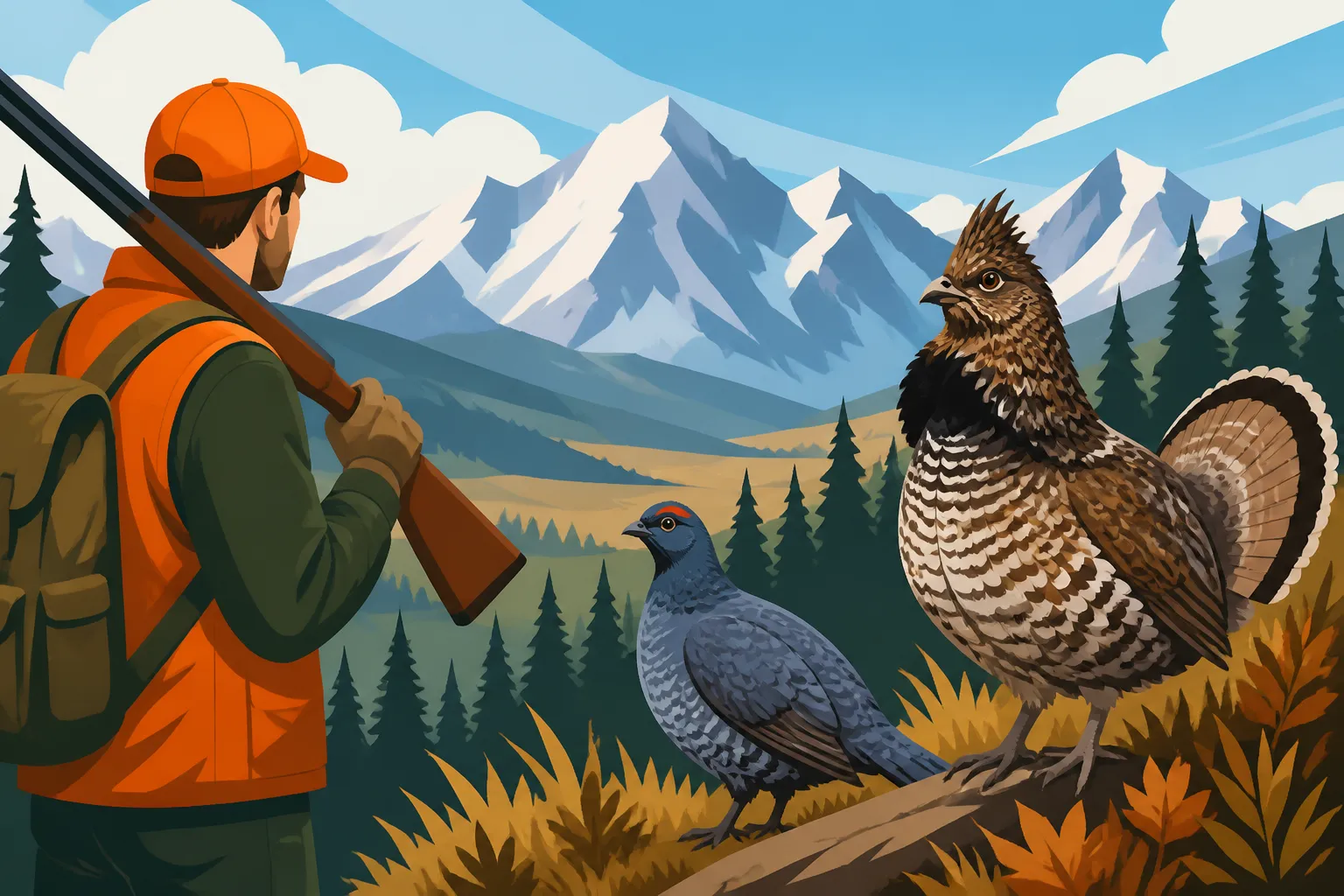
The blue grouse, formally known as the dusky grouse in our region, is a magnificent bird perfectly adapted to the higher elevations and conifer forests of Wyoming's mountains. They are typically larger than their ruffed counterparts, with males showing a prominent yellow-orange comb above the eye and a grayish-blue plumage that provides excellent camouflage against tree bark and shadows. When flushed, they often burst skyward or fly off to perch high in a pine or fir tree, making them notoriously difficult to spot once they've landed among the dense needles.
You'll find blue grouse primarily in mature conifer forests, especially those mixed with aspen groves, at elevations ranging from 7,000 to over 10,000 feet. Think steep, timbered slopes, canyon edges, and areas near mountain springs or small creeks. During the late summer and early fall, they often feed on berries, insects, and tender green vegetation in more open areas, sometimes even along logging roads or old clear-cuts. As the season progresses and snow begins to fall, they ascend to higher, denser timber, subsisting almost entirely on conifer needles for the winter. This seasonal movement, often called "altitudinal migration," means hunters need to adjust their search patterns as the fall progresses. Finding them later in the season usually means climbing higher into dark timber, scanning the branches for their distinctive, bulky silhouettes.
Ruffed Grouse Characteristics and Habitat
The ruffed grouse, on the other hand, is a master of camouflage and sudden explosive flight, preferring dense, often wetter cover at slightly lower to mid-elevations. These birds are known for their striking fan-shaped tail, which they display during their famous "drumming" ritual – a rapid wing beat used by males to attract mates. Their plumage is a beautiful mosaic of browns, grays, and black, allowing them to blend seamlessly into the underbrush, especially around fallen logs and thickets.
Ruffed grouse thrive in mixed forests, particularly those with a strong presence of aspen, willow, and other deciduous trees, often intertwined with conifers. They are strongly associated with riparian corridors, stream bottoms, and areas of dense shrubbery that offer both food and protection from predators. Unlike blue grouse that might tree, ruffed grouse almost always explode from the ground in a cacophony of beating wings, often putting multiple trees between you and them in a fraction of a second. This makes them incredibly challenging targets, requiring lightning-fast reactions and excellent shotgun skills. You might hear their distinct "drumming" sound echoing through the woods, a good indicator of their presence, but tracking them down requires patience and a keen eye for subtle signs of life in thick cover.
Where to Find Blue and Ruffed Grouse in Wyoming
Wyoming is a vast state, and while its mountains offer prime grouse habitat, knowing where to focus your efforts can save you a lot of boot leather. The key is understanding the specific types of terrain and vegetation these birds prefer within the broader mountain ecosystems.
Top Mountain Ranges for Blue Grouse
For blue grouse, you're going to want to head for the bigger mountain ranges with significant coniferous forests. Think high-elevation timber. The Bighorn Mountains are a fantastic choice, especially on the west slopes where you find extensive national forest lands. Areas with mixed conifer and aspen stands, particularly around old logging roads or clearings, can be productive. The Wind River Range, while incredibly rugged, also holds good numbers of blue grouse in its lower and mid-elevation timber fringes, though access can be challenging.
The Absaroka Range in northwest Wyoming, within the Shoshone National Forest Hunting in Wyoming, offers prime, often steep, blue grouse habitat. The Snowy Range and Medicine Bow National Forest in southeastern Wyoming are also excellent bets, with extensive lodgepole pine and spruce-fir forests. Look for north-facing slopes, benches, and ridges that hold mature timber and often retain moisture longer into the fall. You'll want to spend time walking slowly, pausing frequently, and glassing ahead, especially early in the season when birds might be on the edges of openings before moving into the denser canopy. Using a tool like GoHunt can help you identify public land boundaries and timber types that look promising for these birds, allowing you to scout from your kitchen table before you even hit the road.
Locating Ruffed Grouse Hotspots
Ruffed grouse are a different beast entirely. You won't find them necessarily on the highest, driest ridges. Instead, your focus should shift to areas with dense cover, water, and mixed deciduous growth. The riparian corridors within many of Wyoming's national forests are your best bet.
Consider the drainages and creek bottoms within the Bighorn National Forest (you'll want to explore the Access Into the Bighorn National Forest to understand where to get in) or the Shoshone National Forest. Look for areas where aspen groves meet conifer stands, especially near streams or springs. The Medicine Bow National Forest (Getting Into the Medicine Bow National Forest) also has pockets of excellent ruffed grouse habitat, particularly in its river and creek bottoms where dense willow and alders create the kind of thick cover these birds love. Old logging roads that have grown over, creating dense young growth, can also be productive. These birds are often so well hidden that you'll almost step on them before they flush, making slow, methodical movement and a keen ear for wing beats crucial. Pay attention to downed logs and brush piles; ruffed grouse love to hide among them.
Here's a quick comparison of what to look for when targeting each species:
| Characteristic | Blue Grouse (Dusky Grouse) | Ruffed Grouse |
|---|---|---|
| Primary Habitat | High-elevation conifer forests, steep timbered slopes, mixed with aspen. | Mid-elevation, dense riparian corridors, mixed deciduous/conifer forests, thickets. |
| Typical Elevation | 7,000 – 10,000+ feet | 6,000 – 8,500 feet |
| Behavior | Often "trees" when flushed, may walk or run; feeds on needles in winter. | Explosive flush from ground, flies into thick cover; "drums" to attract mates. |
| Food Sources | Berries, insects, greens (summer/fall); conifer needles (winter). | Buds, catkins, berries, leaves, insects. |
| Sound | Cooing calls (males during breeding), occasional clucking. | Distinctive "drumming" sound (male display), sharp wing beats when flushing. |
| Hunting Tactic | Slow still-hunting, glassing high branches, walking edges of clearings. | Slow walk-stop, working dense cover, listening for flushes. |
Hunting Strategies and Tactics for Mountain Grouse
Hunting blue and ruffed grouse requires patience, sharp senses, and a good understanding of their individual behaviors. It's not a high-volume shoot, but rather a rewarding experience of woodsmanship.
Approaching Blue Grouse in Steep Terrain
When hunting blue grouse, especially in the early season, start by exploring logging roads, old two-tracks, and the edges of clearings in mature timber. These birds will often be feeding on the ground. Walk slowly, scanning the ground ahead and the lower branches of trees. Blue grouse are notorious for freezing when they sense danger, blending almost perfectly with their surroundings. Then, when you get too close, they'll often flush with powerful wingbeats, either flying into a nearby tree or soaring down a canyon.
If a bird flushes and you don't get a shot, or if you spot one high in a tree, try to locate it with your binoculars. They can be incredibly hard to see once they've perched motionless among the dense needles. Sometimes, approaching from above or below, using the terrain to break up your silhouette, can offer a better angle. Remember, Reading Wind on an Open-Country Stalk isn't just for big game; subtle air currents can carry your scent or the sound of your approach, even in timber. A good pointing dog can be a game-changer for blue grouse, as they'll hold the bird until you arrive, often allowing for a standing shot. For the DIY hunter, still-hunting – moving slowly, stopping frequently to listen and observe – is your best tactic.
Flushing Ruffed Grouse in Dense Cover
Ruffed grouse are the ultimate challenge in dense cover. Their flushes are explosive, disorienting, and almost always unexpected. The "walk-stop" method is your best friend here. Walk for 15-30 seconds, then stop dead still for a similar amount of time. Grouse are often on edge and will hold tight, but the sudden silence might make them nervous enough to flush. Be ready to shoot immediately when they burst out. They will rarely fly far in open air, preferring to duck back into the thickest cover they can find.
Focus your efforts along creek bottoms, dense aspen thickets, and areas with plenty of downed logs and brush piles. These are their safe havens. A good flushing dog, like a Springer Spaniel or a well-trained Labrador, can be invaluable for pushing these birds out of the cover you might otherwise walk past. Without a dog, you'll need to work slowly and methodically, often weaving through dense brush. Shotguns that swing quickly and are open-choked are preferred, as your shots will almost always be fast and at close range. Don't get discouraged if you only get a few flushes an hour; that's just the nature of ruffed grouse hunting.
Gear and Preparation for Mountain Grouse Hunting
Hunting grouse in Wyoming's mountains, especially blue grouse, can be physically demanding. You'll be covering steep, uneven terrain, often at high altitudes. Being in shape is crucial, so consider dedicating time to Physical Conditioning for a Mountain Hunt before your trip. Also, if you're coming from lower elevations, remember to gradually acclimate yourself to the thin air; Preparing for Altitude on a Wyoming Hunt is a real consideration.
Essential Gear:
- Shotgun: A lightweight 12 or 20 gauge is common. For tighter cover and faster shots, an improved cylinder or skeet choke is often ideal. For more open timber or blue grouse that may tree, a modified choke can also work. Size 6 or 7.5 shot is standard for grouse. Keep in mind Wyoming has general rules for firearms, and shotguns are legal for birds. If you're also pursuing larger game, you'd need to consult the Wyoming Legal Firearm List for Big Game for specifics.
- Ammunition: Carry plenty of shells, as grouse flushes can be fleeting opportunities.
- Footwear: Sturdy, waterproof hiking boots with good ankle support are non-negotiable. You'll be on uneven ground, often steep and rocky.
- Clothing: Dress in layers. Mountain weather can change quickly. Moisture-wicking base layers, insulating mid-layers, and a waterproof/windproof outer shell are essential. Blaze orange is often a good idea for visibility, though not always legally required for upland birds, it increases safety.
- Day Pack: Carry water, snacks, a first-aid kit, a knife, a compass/GPS (or a mapping app like GoHunt), and game bags for your birds.
- Dog (Optional but highly recommended): If you have a well-trained bird dog, they will exponentially increase your success and enjoyment.
- Binoculars: Especially useful for spotting treed blue grouse. Optics power isn't as critical as for big game, but a compact 8x or 10x can be very helpful.
Seasons, Regulations, and Success Tips
Before you head out, always make sure you're up-to-date on the latest regulations. Seasons can vary slightly, and bag limits are strictly enforced.
Understanding Wyoming's Grouse Seasons and Limits
Wyoming's general grouse seasons typically open in early September and run through December. This long season offers flexibility for hunters. Often, the bag limits are combined for blue (dusky) and ruffed grouse. For instance, you might find a daily bag limit of four grouse, with a possession limit of eight. However, these details can change, so it's absolutely critical to consult the most current Wyoming Game and Fish Department regulations or check resources like GoHunt's summary of Wyoming Small Game Seasons at a Glance before each hunting season. You don't want to get caught unaware, and it's your responsibility as a hunter to know and follow the rules. Always carry your valid hunting license and conservation stamp.
Field Dressing and Care for Upland Birds
Once you've successfully harvested a grouse, proper field care is essential to ensure the meat is delicious. As soon as possible, field dress your birds. This usually involves removing the entrails to allow the carcass to cool down quickly, especially on warmer early-season days. Simply open the body cavity and pull out the organs.
You can often breast out the birds in the field if you prefer, leaving the rest of the carcass behind (check specific regulations on "evidence of sex" if that applies, though typically not for grouse). Otherwise, carry them whole in a game vest or day pack. Keep them out of direct sunlight and allow air to circulate to prevent spoilage. Once you're back at camp or home, clean them thoroughly and refrigerate or freeze the meat promptly. There's nothing quite like a meal of wild mountain grouse after a hard day's hunt.
Maximizing Your Mountain Grouse Experience
Beyond the technical aspects, hunting blue and ruffed grouse in Wyoming's mountains is about the experience itself. It's a fantastic way to explore some of the most beautiful, often overlooked, parts of the state. The solitude of the high timber, the challenge of pursuing these wily birds, and the satisfaction of a successful hunt make it truly special.
Consider combining a grouse hunt with a scouting trip for big game, as you'll often be in the same general areas. It's a great way to stay sharp and cover ground without the intense pressure of a big game tag. If you're planning a full season of hunting, remember to maintain your Online and Classroom Hunter Education Compared certification and always practice safe firearm handling. Whether you go with a buddy or prefer Hunting Solo Against Hiring a Guide for your upland adventures, every trip into Wyoming's mountains offers an opportunity to learn and connect with the wild. Embrace the challenge, enjoy the breathtaking scenery, and savor every flush.
Disclaimer
This article is for general informational purposes only and does not constitute professional advice. Laws, prices and regulations vary by location and change over time. Consult a qualified professional for guidance on your specific situation.