Elk Hunting the Wind River Wilderness
The call of the high country, the challenge of truly wild elk, and the immense solitude—that's what draws many hunters to the Wind River Wilderness in Wyoming. But the sheer scale and demands of this incredible mountain range can be intimidating, leaving many wondering where to even begin their planning. This guide will walk you through the essential considerations for an elk hunt in the Wind River Wilderness, from understanding the unique environment to planning your expedition for success.
The Lure and Challenge of the Wind River Wilderness
Hunting elk in the Wind River Wilderness isn't just a hunt; it's an expedition into one of the largest and most pristine wilderness areas in the lower 48 states. This isn't your average road-accessible hunt where you can drive to a trailhead, walk a mile, and expect to find game. This is a place that demands respect, preparation, and a deep understanding of what it means to be truly self-reliant in the backcountry. It's a land of towering granite peaks, alpine lakes, deep timber, and vast, open basins, all working together to create an unparalleled, yet incredibly challenging, hunting experience.
A Landscape Defined by Scale and Solitude
Imagine miles upon miles of untouched country, where the only sounds are the wind, the rustle of leaves, and perhaps the distant bugle of an elk. That's the Wind River Wilderness. Its rugged topography, with elevations often soaring above 10,000 feet, means every step is an effort, and every gain in elevation brings thinner air and more dramatic views. The lack of roads, trails that can be faint or disappear altogether, and unpredictable weather patterns mean that solitude is guaranteed, but so is a heightened sense of responsibility for your own well-being. This vastness, while appealing, means you need to think differently about how you scout, how you navigate, and how you approach elk. You won't just stumble upon them; you'll have to earn every encounter.
The immense size and remote nature of the Wind River Wilderness also mean that elk here behave differently than those in more pressured, easily accessible areas. They aren't constantly dodging vehicles or human scent from every direction. They have the space to follow their instincts, their migrations, and their breeding cycles largely undisturbed. This can be a double-edged sword: while they might be less "spooky" in some ways, finding them in such a massive landscape requires patience, keen observation, and a willingness to cover serious ground.
Elk Behavior in a Pristine Wilderness Setting
Elk in the Wind River Wilderness are true wild animals, often exhibiting more natural patterns than their counterparts in areas with more human presence. During the summer, they spread out across the high country, feeding on lush alpine vegetation and often seeking the cooler temperatures of higher elevations. As hunting season approaches, and especially during the rut, these animals will begin to congregate, but their movements are dictated by forage, water, and security, not necessarily by the nearest dirt road.
Understanding their seasonal movements and preferred habitats is critical. They might be in open basins one day, then disappear into dark timber the next. Look for benches and saddles that connect feeding and bedding areas, especially near water sources. Their migration corridors, though subtle, are often etched into the landscape and can be key travel routes as winter approaches. Without the pressure of human development, these elk often stick to deeper, thicker cover during the day and move into more open areas to feed during dawn and dusk. Learning to read these subtle signs and predict their movements is paramount, and it often means getting into their world, far from any easy escape route.
Navigating Access and Understanding Wilderness Regulations
Just getting into the Wind River Wilderness is an adventure in itself, and once you're there, a specific set of rules applies to ensure the preservation of its wild character. Understanding both access points and the limitations of wilderness travel is fundamental to planning a successful and legal hunt. This isn't a place where you can just drive in and set up camp wherever you please.
Entry Points and Non-Motorized Travel
The Wind River Wilderness is encircled by a number of trailheads, primarily accessible from towns like Dubois on the north, Pinedale on the west, and Lander on the east. Each entry point offers different challenges and opportunities, leading into distinct portions of the vast wilderness. For instance, trailheads on the western side often lead into higher alpine zones more quickly, while those on the east might involve more gradual ascents through forested canyons. Before you even pack your first piece of gear, thoroughly research the specific trailhead you plan to use, its access road conditions, and any potential seasonal closures.
Once you cross that wilderness boundary, your mode of travel is strictly non-motorized. This means no ATVs, no dirt bikes, no mountain bikes, and certainly no vehicles. You're moving either on foot or with the aid of horses and mules. For many, a true wilderness elk hunt means backpacking in, carrying everything you need on your back. This demands extreme efficiency in gear choices and a very high level of physical fitness. Others opt for horse or pack string outfits, which can get you and your gear much deeper into the country with less physical strain, though it comes with a different set of logistics and costs. Planning your route, including potential camps and water sources, becomes an intense exercise in map reading and careful navigation. For detailed information on reaching these areas, check out Access Points Into the Wind River Range.
Essential Wilderness Rules for Hunters
Hunting in a designated wilderness area comes with specific regulations designed to preserve its wild integrity. The most critical rule is the absolute prohibition of motorized and mechanized equipment. This includes e-bikes, game carts with wheels, and even drones for scouting or game recovery. This isn't just a suggestion; it's a strict mandate that protects the wilderness experience for everyone. Campsites should adhere to Leave No Trace principles, meaning you pack out everything you pack in, minimize fire impacts (if fires are even allowed), and camp away from water sources and trails.
Furthermore, hunters are often required to pack out all parts of the harvested animal that can be used, which, for an elk, means a significant amount of meat. This is a critical consideration for any wilderness hunt: how will you get a 500-700 pound animal out of the backcountry without mechanical aid? This is where proper planning for game recovery becomes as important as finding the elk itself. Always consult the current year's Wyoming Game and Fish Department regulations for any wilderness-specific rules or restrictions that might apply to your hunt area. For a broader understanding of wilderness regulations, you might find Wilderness Rules Every Wyoming Nonresident Should Know helpful. When in the field, tools like onX Hunt are invaluable for staying on public land and understanding terrain, but always carry a physical map and compass as a backup.
Permits, Licenses, and Draw Odds
Before you can even dream of setting foot in the Wind River Wilderness with a weapon, you need a valid Wyoming elk license. Wyoming utilizes a preference point system for its limited quota draw, and for coveted wilderness elk tags, drawing success can take many years for nonresidents. It's not uncommon for hunters to accumulate five, ten, or even more preference points before drawing a desirable tag in a specific unit that overlaps with the Wind River Wilderness.
The application period for nonresident elk tags typically closes in early February, so advanced planning is crucial. You'll need to research the specific hunt areas that encompass the Wind River Wilderness, understand their draw odds, and decide on a strategy for accumulating points or trying your luck in the random draw. Websites like GoHunt provide excellent tools for analyzing draw odds and unit statistics, helping you make informed decisions about where to apply. While every hunt area is different, managing your expectations regarding drawing a tag is key. For more insight into the draw process, take a look at How Many Points It Takes to Draw Wyoming Elk.
Strategies and Gear for a Successful Wilderness Hunt
Once you have your tag in hand and a general understanding of the Wind River Wilderness, the real work of planning your hunt begins. Success here hinges on smart hunting techniques, meticulously chosen gear, and a significant investment in your physical and mental preparation.
Hunting Techniques Tailored for Wilderness Elk
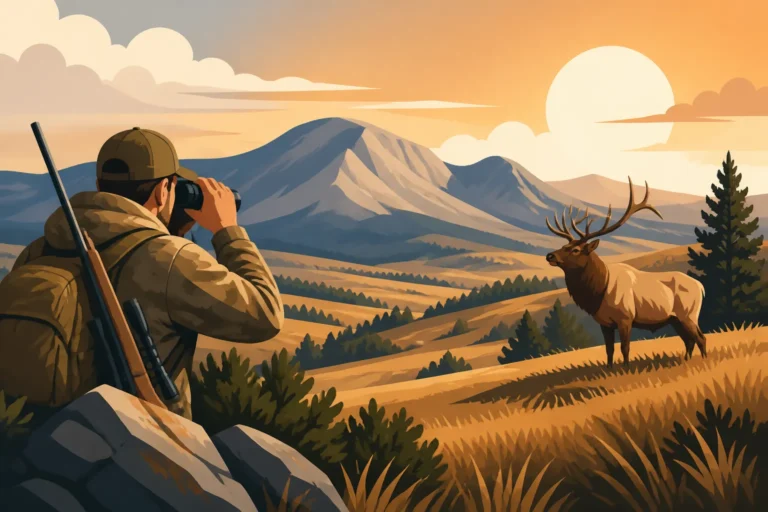
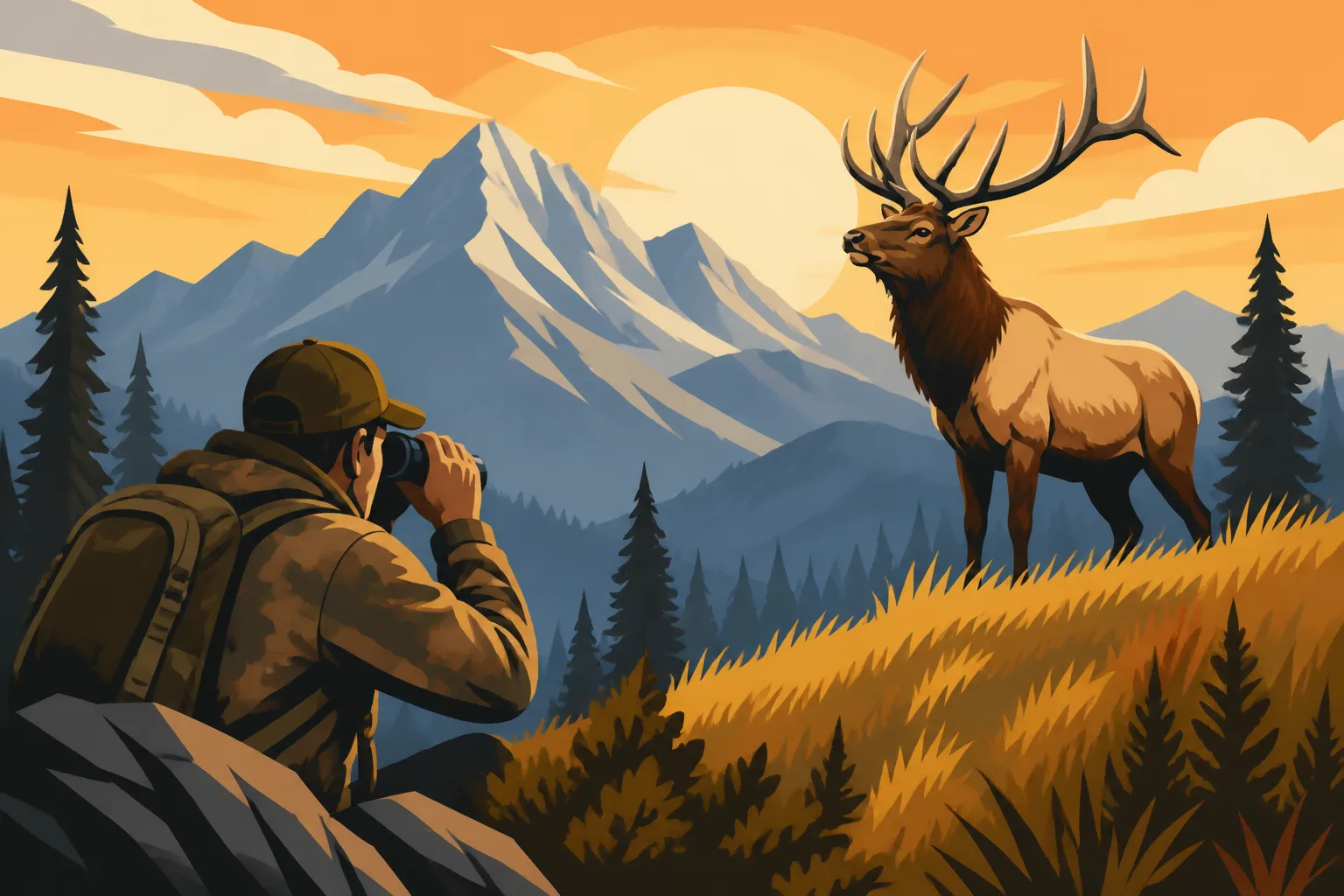
Elk hunting in the Wind River Wilderness is often a game of vast spaces and patient observation. Glassing is paramount. You'll spend hours, even days, perched on high points, systematically sweeping huge basins, open slopes, and timber edges with quality optics. A good spotting scope and binoculars are not luxuries; they are necessities for locating animals in this expansive terrain. Once an elk is spotted, the real challenge begins: planning an approach over incredibly rugged ground, often involving significant elevation changes, while playing the wind perfectly.
Still hunting through dense timber, especially during midday when elk are bedded, can also be productive. Moving slowly, paying attention to wind direction, and listening for the subtle sounds of feeding or bedding elk are key. During the rut, calling can be highly effective. Locator bugles can help pinpoint bulls at dawn or dusk, while cow calls and subtle chirps can draw in curious animals. Understanding how to use your calls effectively, and in conjunction with a partner, can significantly increase your chances. Don't forget to study resources like Locator Bugles for Finding Bulls at Dawn and Two-Hunter Calling Setups That Actually Work on Bulls to refine your calling approach.
Critical Gear Considerations
Every ounce matters when you're backpacking into the wilderness, but compromising on critical gear can lead to uncomfortable, unsafe, or unsuccessful hunts. Your pack itself needs to be capable of handling heavy loads, both on the way in with your camp and on the way out with meat. A quality sleeping system, appropriate for potentially freezing temperatures even in early fall, is non-negotiable. Layered clothing, including waterproof outer shells, is essential to adapt to the rapid weather changes common in the high mountains.
Optics, as mentioned, are vital. Invest in the best binoculars you can afford, ideally 10×42 or 12×50, and a spotting scope of at least 65mm or 80mm with a stable tripod. These will literally expand your hunting universe. Navigation is another area where you cannot cut corners. While onX Hunt on your phone is an incredible tool for showing public land boundaries, terrain, and your location, always carry a physical map, a compass, and know how to use them. A satellite communication device (like a Garmin inReach or Zoleo) is also critical for emergencies, as cell service is non-existent. For insights on optics, consider Binocular Size That Survives an All-Day Glassing Session and Optics Power for Wyoming's Long Sightlines. Finally, once you harvest an elk, the hard work of breaking it down and packing it out begins. Bring a sharp knife, game bags, and enough capacity in your pack (or plan for multiple trips) to carry out hundreds of pounds of meat.
Physical and Mental Fortitude
Elk hunting in the Wind River Wilderness is not for the faint of heart or the out of shape. You will be hiking miles each day over steep, uneven terrain, often at elevations where the air is thin. Pre-hunt conditioning is absolutely crucial. Start months in advance with a regimen that includes cardio, strength training, and, if possible, hiking with a loaded pack. Your lungs and legs need to be ready for the punishment.
Beyond the physical, mental fortitude is equally important. Wilderness hunts are inherently challenging. You'll face unpredictable weather, frustrating dry spells where elk seem non-existent, and the sheer discomfort of extended time in the backcountry. The ability to stay positive, adapt to changing conditions, and push through exhaustion is what separates successful wilderness hunters from those who give up. Understanding and preparing for altitude sickness is also a critical part of physical preparation; learning more from Preparing for Altitude on a Wyoming Hunt can be beneficial. Your mental game will be tested, perhaps more than your shooting ability.
Planning Your Expedition
A successful Wind River Wilderness elk hunt isn't just about showing up with a tag; it's about meticulous planning that starts long before you ever set foot on the trail. Every detail, from maps to emergency contacts, needs to be considered.
Maps, Scouting, and Information Gathering
Your preparation begins with comprehensive digital scouting. Utilize mapping applications like onX Hunt to study the topography, identify potential access routes, locate water sources, and understand public land boundaries. Look for historic elk ranges, migration corridors, and areas that offer a combination of feed, water, and security cover. While digital tools are powerful, they are complements, not replacements, for traditional map reading skills and a compass.
Beyond maps, immerse yourself in information. Research historical weather patterns for your hunt dates, read hunt reports from others who have hunted the specific area, and consult the Wyoming Game and Fish Department's harvest statistics and regulations for your chosen hunt area. Websites like GoHunt offer detailed unit breakdowns that can provide invaluable insights into elk populations, success rates, and potential challenges. The more you know about the unit and the specific terrain, the better equipped you'll be to make informed decisions in the field. To get started with your digital prep, check out E-Scouting a Unit Before the Season Opens.
Self-Guided vs. Outfitted Wilderness Hunts
Deciding whether to go self-guided or hire an outfitter is one of the biggest choices you'll make for a Wind River hunt. A self-guided hunt offers the ultimate freedom and a deeply personal experience. You control all the logistics, the pace, and the decisions. However, it demands an extremely high level of experience in backcountry travel, navigation, game retrieval, and wilderness survival. You're responsible for everything from packing in your food and gear to packing out hundreds of pounds of elk meat.
On the other hand, hiring a pack string outfitter or a fully guided outfitter can significantly reduce the logistical burden. Pack string outfits can get you and your gear, or even your entire camp (a "drop camp"), deep into the wilderness, often by horse or mule, leaving you to hunt independently. A fully guided hunt provides not only logistics and transportation but also experienced guides who know the country and the elk. While an outfitter means a substantial financial investment, it can be a safer, more efficient, and often more successful way for less experienced wilderness hunters or those with physical limitations to access remote areas. If considering a packed-in option, reading Pack String Outfitters Working in Wyoming can provide more detail.
Below is a table comparing the general characteristics of self-guided and outfitted hunts in the Wind River Wilderness:
| Feature | Self-Guided Hunt | Outfitted Hunt (Drop Camp or Fully Guided) |
|---|---|---|
| Cost | Generally lower (gear, food, license, travel) | Significantly higher (outfitter fees, tips, license) |
| Experience | Requires extensive backcountry and hunting experience | Less experience needed (guides provide expertise) |
| Logistics | All planning, packing, navigation, game retrieval by hunter | Outfitter handles transport, camp, food, game retrieval (guided) |
| Physical Demand | Very High (carrying heavy packs, multiple trips for meat) | High (still strenuous, but less pack-hauling) |
| Gear | Hunter provides all personal and camp gear | Outfitter provides camp gear, horses; hunter provides personal gear |
| Safety | High self-reliance; must be proficient in first aid, navigation | Higher level of support; outfitter handles most emergencies |
| Flexibility | Maximum flexibility in routes, camp spots, pace | Limited to outfitter's routes, schedule, and camp locations |
| Game Recovery | Hunter responsible for quartering and packing out meat | Outfitter provides horses/mules and assistance for game retrieval |
Essential Safety and Emergency Preparedness
Hunting in the Wind River Wilderness carries inherent risks. This is grizzly country, and understanding proper food storage, carrying bear spray, and knowing how to react to an encounter are vital. Bear Safety Practices in an Outfitter Camp offers good guidance. Beyond bears, severe weather can roll in quickly, bringing snow, lightning, or torrential rain, even in September. Always pack extra layers, a way to make fire, and a solid shelter.
Emergency communication is non-negotiable. Cell service is non-existent. A satellite messenger (like a Garmin inReach or Zoleo) is essential for sending texts, weather updates, and, most importantly, summoning help in a life-threatening emergency. Carry a comprehensive first-aid kit and know how to use it. Share your detailed hunt plan (route, dates, emergency contacts) with someone reliable back home, and stick to it as much as possible. Even if you're going with a guide, understanding these personal safety measures is paramount. For a broader look at the decision between hunting solo and hiring a guide, consider Hunting Solo Against Hiring a Guide.
Disclaimer
This article is for general informational purposes only and does not constitute professional advice. Laws, prices and regulations vary by location and change over time. Consult a qualified professional for guidance on your specific situation.