Retrieving Game From Private Land in Wyoming
There are few moments in hunting more gut-wrenching than watching an animal you’ve ethically shot run off, only to realize it's dropped just across a fence line onto private property. The elation of a successful shot turns instantly into a knot of anxiety, leaving you torn between your moral obligation to retrieve the animal and the legal boundaries of trespassing. This guide will walk you through the often-stressful process of retrieving downed game from private land in Wyoming, offering practical steps and realistic expectations.
The Frustration of a Downed Animal on Private Land
That feeling of dread when your deer or elk disappears over a ridge, and your binoculars confirm it's now lying dead or wounded on land you don't have permission to be on, is something every hunter hopes to avoid. It’s a moment where ethical responsibilities clash head-on with legal realities, leaving many hunters unsure of what to do next. The pressure to recover the animal you've pursued so diligently is immense, yet the thought of violating private property laws can be equally daunting.
The Ethical Imperative to Retrieve
As hunters, we hold a profound ethical responsibility to ensure a quick, clean kill and to retrieve every animal we shoot. This isn't just a feel-good sentiment; it's a cornerstone of responsible hunting and, in many cases, a legal requirement. In Wyoming, this obligation is codified in what are known as "wanton waste" rules. These regulations essentially state that once you harvest big game, game birds, or even furbearers, you must take reasonable steps to retrieve and utilize the edible portions of that animal. Failing to do so can lead to citations, fines, and even the loss of hunting privileges.
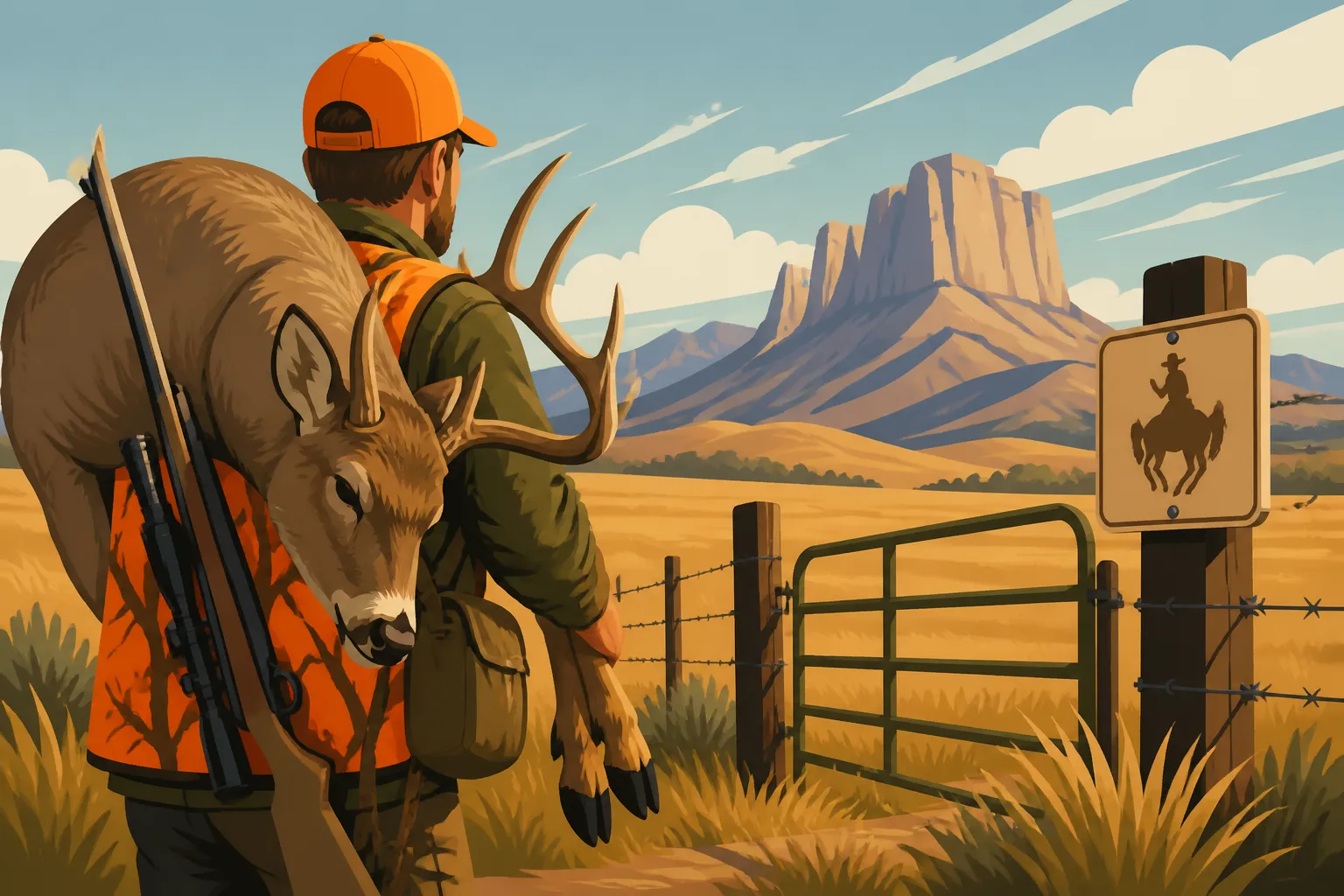
Imagine hitting a beautiful bull elk late in the evening. You follow the blood trail for a hundred yards, only for it to lead you right to a clearly posted fence line. The bull is lying motionless fifty yards into the pasture beyond. Your heart sinks. You know you must retrieve that animal. Leaving it there isn't just morally reprehensible; it's a violation of the very principles that guide ethical hunting. It casts a shadow on all hunters and can be reported as wanton waste if discovered.
The Legal Realities of Trespass
While the ethical imperative to retrieve is strong, it absolutely does not grant you the right to trespass onto private land. In Wyoming, as in most states, entering private property without permission is illegal, regardless of your intent. This means that even if you can see your trophy lying just inside a private pasture, you cannot simply cross that fence without explicit authorization from the landowner or their representative.
The consequences of trespassing can range from a verbal warning to criminal charges, fines, and even civil lawsuits. You could lose your hunting license, face court costs, and endure significant legal headaches. It’s a serious offense, and landowners have every right to protect their property. They might be concerned about liability, property damage, or simply don't want strangers on their land. Many working ranches depend on their privacy and control over their operations.
Think about a common scenario: you're hunting mule deer on public land that borders a large ranch. You make a great shot, but the buck bolts into a thicket that's clearly on the ranch. You wait a respectful amount of time, then approach the fence line only to see "No Trespassing" signs every few hundred feet. The buck is down, maybe 75 yards in. The urge to just hop the fence is powerful, but resisting it is crucial. Your next steps must be legal and respectful, even when time is of the essence for meat salvage.
Navigating Permission: Your First and Best Step
Okay, so you have an animal down on private land. The first, and most critical, step is to secure permission. This isn't always easy, especially in the heat of the moment or when you're far from civilization, but it's the only legal and respectful path forward.
Identifying the Landowner
Before you can ask for permission, you need to know who to ask. This can be surprisingly challenging, especially in vast Western landscapes where land ownership isn't always obvious. Start by using mapping tools. Modern hunting apps like GoHunt or onX Hunt are invaluable here. They overlay private and public land boundaries directly onto topographic maps and often provide landowner names and sometimes even contact information. Many counties also have online GIS (Geographic Information System) parcel viewers on their assessor's websites, which can show ownership details.
For example, if you're hunting near Buffalo, Wyoming, and your antelope drops onto a piece of ground you suspect is private, pull out your app. It might show "Smith Ranch" or "Johnson Family Trust" as the owner, along with an address. This gives you a starting point. If the app doesn't provide contact info, a quick online search for the ranch name or property owner in the local phone directory might yield results. You might also try calling the local sheriff's department or the Wyoming Game and Fish Department (WGFD) office. While they won't give out private contact details lightly, they might be able to act as an intermediary or confirm ownership.
How to Make the Ask: Best Practices
Once you've identified the landowner, it's time to make contact. This is where your approach can make all the difference.
- Be Polite and Respectful: This should go without saying, but landowners are often wary of hunters, especially those who show up unannounced. Start by introducing yourself calmly, stating your purpose clearly and concisely. "Hello, my name is [Your Name], and I'm hunting nearby. I believe an animal I shot just ran onto your property, and I'm calling to respectfully request permission to retrieve it."
- Be Honest and Transparent: Don't try to hide anything. Explain exactly where the animal is, how it happened, and what you intend to do. Offer to show them the location on a map.
- Offer to Meet Them: If possible, offer to meet the landowner at a convenient time and place to show them where the animal is. Many landowners appreciate being involved and knowing exactly who is on their land and why.
- Assure Them of Your Intentions: Make it clear you're only there to retrieve the animal and will leave no trace. Offer to field dress the animal on site if that's easier for them. Explain that you understand and respect their property rights.
- Be Prepared for "No": This is the tough part. A landowner is absolutely within their rights to deny you access, for any reason. If they say no, you must respect that decision. Pleading, arguing, or attempting to guilt-trip them will only make things worse and will certainly not get you permission.
- Consider Offering a "Trespass Fee" (Carefully): In some parts of Wyoming, particularly for high-value species like elk or mule deer, landowners might ask for a "trespass fee" or "retrieval fee." This is a tricky area. Some hunters are willing to pay, while others feel it's inappropriate. If you decide to offer, do so politely and be prepared for them to accept or decline. Never start by offering money; let them bring it up if they're inclined.
If you can't reach the landowner immediately (no answer, voicemail full, etc.), leave a clear message explaining the situation and your contact information. You might have to wait, which can be agonizing, especially if the weather is warm and meat spoilage is a concern. But waiting is still better than trespassing. In some cases, if the animal is very close to the fence and easily accessible, they might grant verbal permission over the phone. However, it's always best to get confirmation in person if possible. Always remember your legal obligations regarding How Soon You Must Tag a Downed Animal once it's retrieved.
When Permission is Denied or Unavailable
This is the scenario no hunter wants to face. You've done everything right—you made an ethical shot, you've identified the landowner, and you've made a polite request—but permission is denied, or you simply can't reach anyone in time. What then?
Contacting Wyoming Game and Fish Department
If you're denied permission or cannot reach the landowner, your next step should be to contact the Wyoming Game and Fish Department (WGFD). Call your local game warden or the regional WGFD office. Explain the situation fully, providing all the details: where you were hunting, where the animal is located, when you shot it, and your attempts to contact the landowner.
The WGFD's role here is primarily to enforce game laws and prevent Wanton Waste Rules Every Wyoming Hunter Should Know. They might be able to contact the landowner on your behalf, especially if they have an existing relationship with them. In very rare circumstances, and typically only if there's a strong public interest (e.g., an animal causing a road hazard, or a clear case of imminent waste that the landowner is unreasonably preventing), they might intervene. However, it's crucial to understand their limitations:
- They are not land access agents: A game warden cannot force a private landowner to grant you access. Their authority does not extend to private property rights or compelling landowners to allow retrieval.
- They might document the situation: Even if they can't secure access for you, reporting the incident to WGFD creates an official record. This can protect you from a wanton waste citation if the animal is later discovered and you can show you made every reasonable effort to retrieve it.
- They can offer advice: The local warden might have insight into the particular landowner or area and offer specific advice based on their experience.
Don't go into this conversation expecting the WGFD to solve your access problem by overriding private property rights. View them as a resource for documentation and potential mediation, not a guarantee of retrieval.
Legal Options and "Constructive Possession"
You might hear whispers about "constructive possession" or other legal arguments that could allow you to retrieve game from private land. In simple terms, constructive possession refers to having legal control over something, even if you don't physically possess it. However, applying this concept to retrieving downed game from private land without permission is incredibly complex and generally not a viable, practical solution for the average hunter.
This is not a matter for a quick phone call or a simple legal maneuver. It typically involves civil court action, which is costly, time-consuming, and almost certainly not worth it for a single animal retrieval. Furthermore, the legal landscape surrounding private property and game retrieval is often nuanced and varies. Unless you are a lawyer specializing in property law and prepared for a significant legal battle, pursuing this route is highly unrealistic and should be avoided.
If you find yourself in a truly exceptional and high-stakes scenario, seeking legal counsel before taking any action would be imperative. However, for 99.9% of situations, especially for non-guided hunts where you might be Hunting Solo Against Hiring a Guide, this is not a practical path. Document everything: photos of the downed animal from public land, dates and times of calls to the landowner, names of WGFD personnel you spoke with. This meticulous record-keeping is your best defense should any legal questions arise down the line.
The Unfortunate Reality: Leaving Game Behind
This is the hardest pill to swallow, but sometimes, despite your best efforts, you might have to make the heartbreaking decision to leave an animal behind on private property. If the landowner denies access, and the WGFD confirms they cannot assist, or if you simply cannot establish contact within a reasonable timeframe, you are legally obligated to respect the private property boundaries.
Walking away from a downed animal goes against every fiber of a responsible hunter's being. The feeling of failure, the waste of effort, and the knowledge that the animal will go unutilized can be incredibly tough to process. However, the alternative—trespassing—carries far greater risks, both legally and ethically, and can further sour landowner-hunter relations for everyone.
It's a stark reminder of the challenges of hunting in areas that mix public and private lands. This is why careful scouting, understanding land boundaries using tools like GoHunt or other apps, and knowing Where the Current Wyoming Regulations Are Posted are so crucial before you even pull the trigger. Sometimes, an ethical shot means passing on an animal that is too close to a private land boundary, even if it's within your legal shooting hours. This difficult choice is part of being a responsible hunter and helps preserve the privilege of hunting for future generations. Remember, if you do get the animal, proper Field Dressing and Carcass Transport Rules Explained are vital, as is the option of Donating Game Meat After a Wyoming Hunt if you have more than you can use.
Key Steps for Game Retrieval from Private Land
Navigating game retrieval on private land can be stressful, but following a clear process can help.
| Step | Description | Key Considerations |
|---|---|---|
| 1. Confirm Location | Use GPS, mapping apps (like GoHunt), or visual landmarks to accurately pinpoint the animal's location and confirm it's on private land. | Be absolutely sure it's private land before contacting; avoid mistakes. |
| 2. Identify Landowner | Use mapping apps, county assessor websites, or local resources to find the owner's name and contact information. | This can be the most time-consuming part. |
| 3. Attempt Contact | Call, text, or visit the landowner (if appropriate and safe). Be polite, explain the situation clearly, and request permission. | Be prepared for no answer or denial. Respect their decision. |
| 4. Respect Boundaries | Do not cross the fence line or enter private property without explicit permission, even if you can see the animal. | Trespassing carries legal penalties and damages hunter-landowner relations. |
| 5. Contact WGFD | If you can't reach the landowner or are denied permission, call your local game warden or regional Wyoming Game and Fish Department office. | They can document your efforts and may offer mediation, but cannot force access. |
| 6. Document Everything | Keep a detailed log of your efforts: who you called, when, what was said, names of WGFD personnel, photos from public land. | This protects you from potential wanton waste charges. |
| 7. Accept Reality | If all efforts fail and permission is not granted, you must ultimately respect the private property rights and leave the animal. | This is a difficult but necessary ethical and legal decision. |
| 8. Consider Prevention | In the future, actively scout Wyoming Hunt Areas That Limit Your Weapon Choice and boundaries. Use mapping tools like onX or GoHunt to avoid shooting near private land where retrieval is risky. | Proactive planning is key to preventing this difficult situation in the first place. |
Remember, being prepared with tools like a reliable mapping app, knowing The Rules on Hunting From a Vehicle for potentially spotting the animal from a public road, and understanding land access programs like How Wyoming's Access Yes Program Works (which might offer alternative access points) can prevent this situation. Ultimately, responsible hunting means respecting all laws and property rights, even when it leads to difficult outcomes.
Disclaimer
The information provided in this article is for general guidance and informational purposes only and does not constitute legal advice. Hunting regulations and private property laws can be complex and may change. Always consult the official Wyoming Game and Fish Department regulations and, if necessary, seek legal counsel regarding specific situations or legal questions related to land access and game retrieval.