The Logistics of a Horseback Drop Camp
Planning a remote hunting trip in Wyoming can feel like a monumental task, especially when you dream of getting deep into the backcountry, far from roads and crowds, but then reality hits: how on earth do you get all your gear and supplies in there, and more importantly, how do you get yourself and a potential harvest back out? This guide is going to walk you through the nitty-gritty logistics of a horseback drop camp, a fantastic option for self-sufficient hunters looking for that true wilderness experience without owning a string of horses.
What Exactly is a Horseback Drop Camp?
When you envision a classic Western hunt, you often picture rugged mountains, expansive sagebrush flats, and a deep sense of solitude. A horseback drop camp is designed to deliver exactly that, providing access to remote areas that are simply unreachable on foot with a heavy pack, or even with ATVs due to wilderness regulations or terrain. It’s an incredibly popular choice for hunters who want to immerse themselves in the hunt without the constant presence of a guide, while still leveraging the invaluable expertise and horsepower of a local outfitter.
The Core Concept of a Drop Camp
At its heart, a drop camp is a unique partnership. You, as the hunter, are responsible for the actual hunting, cooking, and daily camp management. The outfitter’s role is logistical: they provide the vital transportation to get you, your hunting partners, and all your provisions into a pre-scouted, established campsite deep in the wilderness. Once you’re there, they'll often help you get settled, give you a quick rundown of the immediate area, and then they depart, leaving you completely on your own until an agreed-upon pickup date. This self-reliance is a huge draw for many, as it offers a more intimate and challenging experience than a fully guided hunt.
Think of it as a middle ground between a full-service, all-inclusive guided hunt where someone is essentially holding your hand every step of the way, and a truly DIY backpack hunt where you carry everything on your back. With a drop camp, you get the benefit of being packed into prime hunting territory with significantly more gear and comfort than you could ever carry yourself, but all the decisions, effort, and sweat of the hunt are still squarely on your shoulders. It’s perfect for those who cherish their independence but recognize the physical and practical limits of human endurance when it comes to hauling hundreds of pounds of gear and, hopefully, meat.
This kind of setup means you’re truly responsible for your own success and safety once the horses turn back towards civilization. You’ll be navigating, making your own calls, and living by your wits and preparation. It’s an empowering way to hunt, and for many, it scratches that primal itch to be truly self-reliant in the wild. But that also means a higher level of preparedness and a solid understanding of backcountry skills are absolutely non-negotiable.
Key Elements Included in a Standard Drop Camp
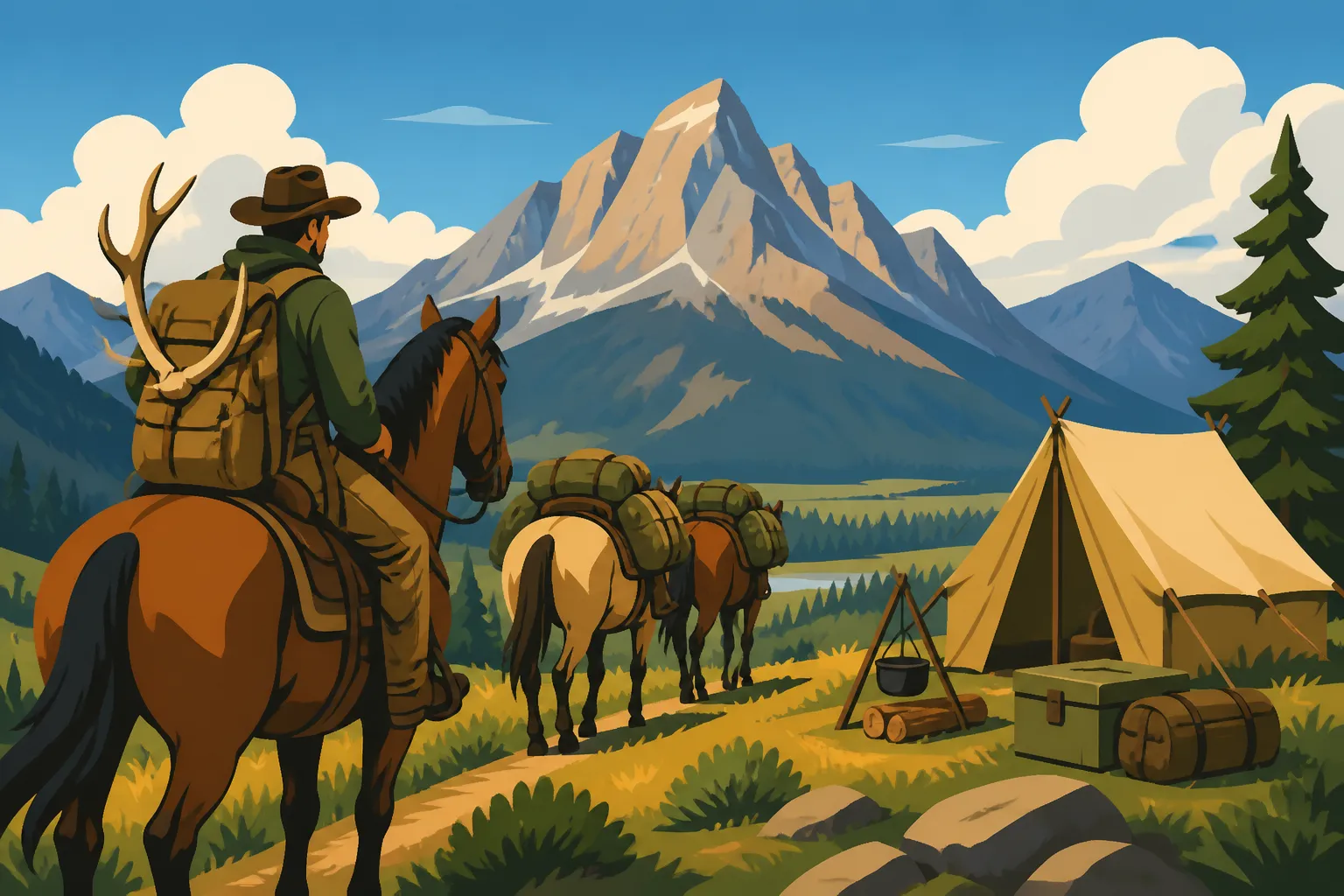
When you book a drop camp, you’re primarily paying for the pack services. This typically includes the use of horses or mules to transport you and your gear to the designated camp location. The outfitter will usually provide a basic camp setup, which often consists of a large wall tent or two, a wood-burning stove for heat, cots for sleeping, and perhaps a table and chairs. Some outfitters might include basic cooking gear like pots, pans, and utensils, but this varies wildly. It’s crucial to clarify these details upfront.
What’s generally not included is just as important to understand. Most drop camps do not provide food; you'll need to plan, purchase, and pack all your meals. You'll also be responsible for all your personal hunting gear, sleeping bags, and any specialized equipment you might need. Crucially, a guide is not part of a drop camp package. You're hunting completely unguided once the outfitter leaves. If you make a kill, packing the animal out is typically an additional service, or it's your responsibility to get the animal to an accessible point for the outfitter to retrieve. Always double-check your contract for these specifics to avoid any expensive or inconvenient surprises. Many outfitters also provide bear boxes or hanging systems for food storage in grizzly country, which is a significant safety consideration in many parts of Wyoming.
It’s easy to get excited about the idea of a drop camp and overlook the fine print, but a clear, detailed contract from your outfitter is your best friend. This document should outline exactly what gear and services are provided, the schedule for drop-off and pick-up, what happens in case of an early harvest, and any additional fees for game retrieval. Don't be shy about asking questions and making sure every detail is explicitly covered. The goal is to ensure you and the outfitter are on the exact same page, so there are no misunderstandings when you’re miles from the nearest road and completely reliant on that agreement.
Planning Your Horseback Drop Camp Adventure
Successfully pulling off a horseback drop camp hunt requires meticulous planning, often starting a year or more in advance. It's not just about showing up with a rifle; it's about making sure every piece of the puzzle fits together perfectly, from selecting the right outfitter to having the physical stamina for the backcountry. This is where your research and preparation truly pay off, transforming a potential nightmare into an unforgettable experience.
Choosing the Right Outfitter and Location
The outfitter you choose is the backbone of your drop camp experience. Their knowledge of the terrain, their horses' capabilities, and their reputation are paramount. Begin by researching outfitters licensed to operate in the specific Wyoming hunt areas you're interested in. You can check their licensing status with the Wyoming Board of Outfitters and Professional Guides. Don't just pick the first one you find; look for outfitters with a proven track record, especially with drop camps, as this service requires a different skill set than fully guided hunts. Reviews and references are your best friend here, but remember to take them with a grain of salt and focus on specifics.
Utilize resources like GoHunt or BookYourHunt to identify reputable outfitters, review available hunt units, and even scout potential camp locations. These platforms often provide a wealth of information that can help you cross-reference outfitter claims with actual hunt data. When you connect with an outfitter, discuss their experience in the chosen area, their success rates for drop camps – asking to see Outfitter Success Rates in Wyoming for prior years – and what species they primarily target. Some outfitters specialize in elk, others deer, and some have experience with multiple species. Make sure their expertise aligns with your hunting goals. Inquire about the specific camp locations they use; are they established camps with known water sources, or more ad-hoc setups? The more questions you ask upfront, the better prepared you'll be.
It’s also crucial to align the outfitter's hunting area with your tag. For example, if you've drawn an elk tag for a specific unit, confirm that the outfitter has permits to operate and experience in that very unit. Some areas are more rugged than others, and a good outfitter will be honest about the challenges and opportunities. Ask about the typical weather conditions for your hunt dates, the elevation of the camp, and the general topography of the surrounding hunting grounds. A great outfitter won't just sell you a service; they'll help you manage your expectations and prepare realistically for the conditions you'll face.
Gear, Food, and Personal Preparations
Once the outfitter is chosen, the real packing challenge begins. Remember, while the horses carry the bulk, there are strict weight limits per animal, usually around 100-150 pounds per pack horse. You’ll need to consolidate and prioritize your gear. Think waterproof duffel bags, reliable sleeping systems, and a comprehensive first-aid kit. Don't forget essentials like quality optics, navigation tools (GPS, paper maps, compass), and plenty of layers of clothing for Wyoming’s notoriously fickle mountain weather. Every item needs to earn its place in your pack.
Food planning is a significant undertaking for a drop camp. You’re on your own for meals, so focus on non-perishable, high-calorie, and relatively lightweight options. Freeze-dried meals are popular for their convenience, but also consider things like instant oatmeal, coffee, jerky, dried fruits, and shelf-stable tortillas. Don't forget snacks for in your pack during the day. Water sources are critical; know if you'll have a reliable stream near camp (and bring a good filter/purifier) or if you'll need to pack in all your drinking water. Overestimate your caloric needs; hunting in the mountains burns a tremendous amount of energy.
Beyond gear and food, your personal physical conditioning is paramount. Backcountry hunting, especially in Wyoming's mountains, is incredibly demanding. You'll be walking miles over uneven terrain, climbing steep hills, and potentially packing out heavy game. Start a rigorous fitness routine months in advance, focusing on cardio and leg strength. There's an excellent article on Physical Conditioning for a Mountain Hunt that can provide specific exercises and tips. Furthermore, if you're coming from a lower elevation, plan to arrive a day or two early to help your body acclimate to the higher altitudes you'll encounter. Read up on Preparing for Altitude on a Wyoming Hunt to understand the symptoms of altitude sickness and how to mitigate them. Finally, always have reliable emergency communication like a satellite phone or a two-way satellite messenger (Garmin inReach, Zoleo, etc.) for emergencies, as cell service will be non-existent in remote areas. This is covered more deeply in Satellite Communication From a Hunting Camp.
Understanding Your Contract and Responsibilities
Before you send any money, ensure you have a clear, written contract from your outfitter. This contract should meticulously detail all inclusions, exclusions, costs, and terms. Pay close attention to the deposit requirements and the payment schedule. A common question is Whether You Get a Refund If You Fail to Draw your desired tag; some outfitters offer partial refunds or allow you to roll your deposit over to the next year, while others don't. Knowing this upfront is critical for managing your financial risk.
Beyond the money, the contract should specify the exact drop-off and pick-up dates and times. What happens if you tag out early and want to be picked up sooner? Is there an extra charge? What's the protocol if bad weather delays the pick-up? These scenarios need to be addressed. It's also vital to understand the outfitter's policy on game retrieval. Will they pack out your animal if you get it back to camp, or only if you get it to a specific, more accessible point? Are there additional fees for game retrieval? These details can significantly impact your hunt strategy.
Lastly, clarify the outfitter's emergency procedures. While you hope for the best, it’s essential to know How Outfitters Plan Emergency Evacuations in case of a serious injury or medical emergency. Knowing the chain of command and the protocols can provide significant peace of mind. A reputable outfitter will have clear plans in place and be happy to discuss them. Don't hesitate to ask Questions Worth Asking Before You Book to ensure every potential scenario is covered in your contract. Booking well in advance is almost always necessary, especially for prime dates and units, so consider How Far Ahead to Book a Wyoming Hunt you need to plan.
Executing Your Drop Camp Hunt
All the planning in the world still needs to be put into action. The execution phase of a drop camp hunt is where you truly earn your stripes, from the exhilarating pack-in to the demanding days of hunting and, hopefully, the triumphant pack-out. This is where your preparedness, skills, and mental fortitude will be tested, resulting in a deep sense of accomplishment.
The Pack-In and Camp Setup
The adventure truly begins when you meet your outfitter at the trailhead. This is often an early morning affair, with you and your hunting partners transferring all your carefully packed gear from your vehicle to the outfitter’s horses or mules. The outfitter’s crew will meticulously weigh and arrange everything, ensuring balanced loads for their animals. This process highlights the importance of having everything in durable, waterproof bags, ready for the rugged journey.
Then comes the ride itself. Depending on the distance and terrain, the pack-in can take anywhere from a few hours to a full day. While you don’t need to be an expert equestrian, having some basic riding ability is definitely a plus. Horses are generally sure-footed, but you'll be navigating steep, rocky, and sometimes muddy trails, often with sheer drops. Being comfortable in the saddle and knowing how to communicate with your horse will make the journey much more enjoyable and safer. You might want to brush up on How Much Riding Ability a Horseback Hunt Needs if you’re a novice. Enjoy the scenery; these are views most people never get to experience.
Upon arrival at the camp, the outfitter's crew will help unload and orient you to your temporary wilderness home. They'll show you how to properly set up the tent (if not already erected), how to safely operate the wood stove, where the nearest water source is located, and most importantly, review critical bear safety protocols. This includes where to store your food (often in bear-resistant containers or hung high in trees) and how to manage camp waste to avoid attracting wildlife. This information is vital, particularly in areas with grizzlies, so pay close attention to Food Storage Rules in Grizzly Country. Once everything is set, the outfitter and their crew will leave, and the real self-sufficient hunting experience begins.
Hunting Independently and Self-Sufficiency
Once the horses disappear down the trail, you are truly on your own. This is the moment all your preparation converges. Your days will be a rhythm of hunting, navigating, cooking, and maintaining camp. Reliable navigation is critical; even with GPS, having a detailed paper map and compass and knowing how to use them is essential. Study the terrain, identify key landmarks, and always know your way back to camp. Wyoming’s vast landscapes can quickly become disorienting, especially in adverse weather or fading light.
When you're fortunate enough to make a kill, the real work of self-sufficiency kicks in. You'll be responsible for field dressing, quartering, and preparing the animal for potential pack-out. This can be an incredibly strenuous process, especially with a large animal like an elk, many miles from camp. Understanding Field Dressing and Carcass Transport Rules Explained is critical not just for legal compliance but for meat preservation. Cooling the meat quickly and effectively in the backcountry is paramount, which often means hanging quarters in game bags in the shade.
Beyond the hunt itself, you'll be managing your food and water supplies, dealing with daily camp chores like gathering firewood, and handling any unexpected challenges nature throws your way. This could be anything from a sudden snowstorm that drops feet of snow to a minor injury that requires careful management. Your emergency communication device is your lifeline, and knowing when and how to use it is critical. The beauty of the drop camp is this profound independence, but it comes with the weight of full responsibility. Embrace the challenge, learn from every situation, and make the most of every hunting day.
The Pack-Out: Game Retrieval and Departure
The final phase of your drop camp hunt involves coordinating with your outfitter for the pack-out, both of your gear and, hopefully, your harvested game. If you've been successful, you'll generally have a pre-arranged method of notifying your outfitter of a kill. This might be a satellite message, a pre-set signal, or simply waiting for the scheduled pickup. It’s crucial to have your game properly prepared for transport. This means the meat should be quartered, deboned (if required), and placed in game bags to keep it clean and allow it to cool. Understanding The Meat Salvage Requirements for Big Game is essential here; you don't want any part of your hard-earned animal to go to waste.
Once the outfitter arrives, their experienced crew will load your game and personal gear back onto the pack animals. This process is often a relief, knowing the heaviest lifting is over. Before you depart camp for the final ride out, it's your responsibility to leave the campsite in pristine condition. This means packing out all trash, burning any burnable waste completely, dismantling any temporary structures, and ensuring the area looks as if no one was ever there. The "Leave No Trace" principles are paramount in the backcountry.
The ride out, often with heavy loads of game, can be as demanding as the ride in. But this time, you’ll carry with you the memories, the challenges overcome, and perhaps the satisfaction of a successful hunt. The bond formed with your hunting partners and the sense of accomplishment from a truly independent wilderness experience are often the most valuable trophies of a drop camp hunt. When you finally reach the trailhead, tired but exhilarated, you’ll likely already be dreaming of your next backcountry adventure.
Drop Camp vs. Other Hunting Options
To help you decide if a horseback drop camp is the right fit for your next Wyoming hunting adventure, let's compare it to some other popular choices. Each option offers a different balance of independence, cost, and physical demand.
| Feature | Horseback Drop Camp | Fully Guided Hunt | DIY Backpack Hunt |
|---|---|---|---|
| Outfitter Role | Pack-in/out of gear and camp, initial setup | Provides guide, horses, camp, food, hunting strategy | None; entirely self-reliant |
| Hunter Role | Hunt independently, cook, manage camp, game care | Hunt under guide direction, minimal camp chores | Hunt, navigate, cook, set up camp, full game care |
| Cost | Moderate (pack services, camp gear) | High (all-inclusive professional service) | Low (personal gear, food, license) |
| Physical Demand | High (hunting, game care) | Moderate to High (hunting, less camp work) | Very High (everything carried, intense physical output) |
| Comfort Level | Moderate (large tent, stove, cot) | High (established camp, cook, comfortable amenities) | Low (lightweight tent, minimal comfort) |
| Gear Required | Extensive personal gear, food, sleeping system | Personal hunting gear, clothing | Lightweight backpacking gear, food, sleeping system |
| Access to Terrain | Deep backcountry access, remote areas | Often same as drop camps, but with guide knowledge | Limited by how much you can carry, typically less deep |
| Independence | Very High (hunting and camp management) | Low (guided every step) | Complete independence |
| Game Retrieval | Often extra service, or hunter moves to access | Included, guide helps with all aspects | Entirely hunter's responsibility |
This table highlights that a drop camp truly offers a "best of both worlds" scenario for many experienced hunters. It allows for a deeper penetration into prime habitat than most DIY backpack hunts, provides more comfort than ultralight camping, and retains the cherished independence that a fully guided hunt often lacks. However, it equally demands a high level of preparedness and competence from the hunter.
Disclaimer
This article is for general informational purposes only and does not constitute professional advice. Laws, prices and regulations vary by location and change over time. Consult a qualified professional for guidance on your specific situation.