Stalking Pronghorn Across Wyoming’s Open Sagebrush
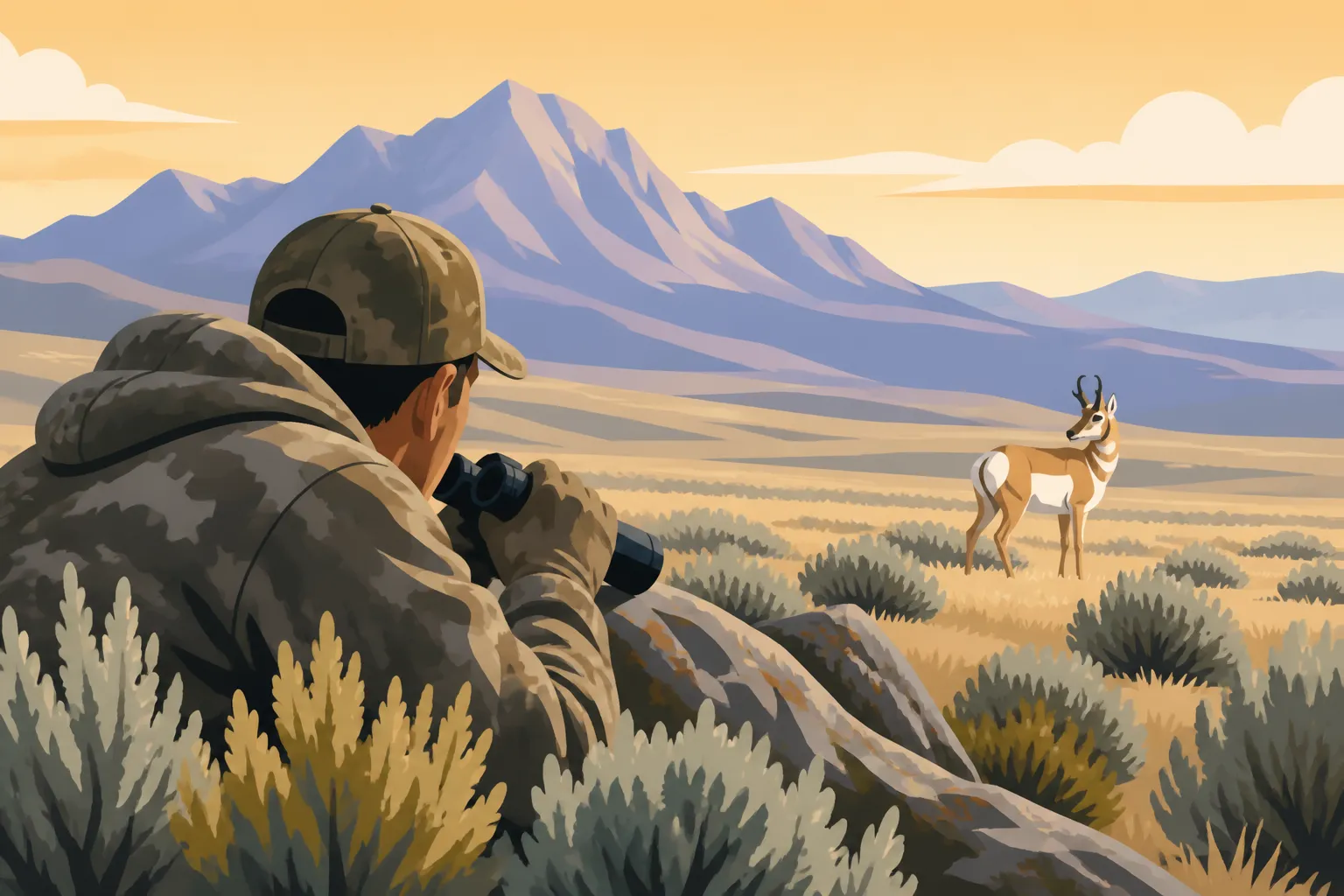
You know that feeling. You spot a magnificent pronghorn buck across what looks like a billiard table of sagebrush, your heart starts pounding, and you begin to meticulously plan your approach. Then, just as you think you're making progress, those incredible eyes lock onto you from a mile away, and the buck melts into the horizon. It's a frustrating, often humbling, experience every Western hunter has faced. This guide is dedicated to demystifying the art of stalking pronghorn across Wyoming's vast, open sagebrush, giving you the practical strategies and hard-won wisdom needed to consistently close the distance and fill your tag.
Understanding the Pronghorn's Unmatched Senses and Environment
Before you even take your first step on a stalk, you need to deeply understand the animal you're pursuing and the challenging environment it calls home. Pronghorn are often called "speed goats" for a reason – they're incredibly fast – but their speed is only one part of their survival strategy. Their senses are finely tuned to detect danger in an unforgivingly open landscape. Ignoring these aspects will almost guarantee a busted stalk.
Pronghorn Eyesight: The Unmatched Advantage
Let's be brutally honest: a pronghorn's eyesight is legendary for a reason. Imagine a pair of 8x binoculars permanently affixed to its head, capable of scanning a 300-degree field of view. These animals are built to spot predators from extreme distances across flat, unobstructed plains. Their large eyes, set on the sides of their heads, give them an almost panoramic view, making it nearly impossible to sneak up on them in broad daylight without using some serious cover. They excel at detecting movement, even subtle shifts in form or color against the monotony of the sage.
What does this mean for you, the hunter? It means that every single movement you make, every piece of exposed skin or gear, is a potential giveaway. It means you must, absolutely must, keep your profile as low as possible and use every shred of available cover. Thinking you can just "walk quietly" is a recipe for failure. Their ability to pick up on the slightest anomaly in their environment is truly staggering. For a deeper dive into how this impacts your approach, check out our article on Pronghorn Eyesight and the Stalking Distance It Forces. You'll quickly realize that what looks like a long shot for you is often just a casual glance for a pronghorn.
Reading Wind in Open Sagebrush
While their eyesight gets all the glory, a pronghorn's nose is nothing to scoff at either, especially when you consider how wind currents behave in open country. The wind can be your best friend or your worst enemy, and it shifts constantly in Wyoming. What feels like a steady breeze at your elevation might be swirling and gusting at ground level, carrying your scent directly to your quarry. Pronghorn are often grazing or bedded in groups, and if even one animal catches a whiff of human scent, the entire herd will be gone in a flash.
The challenge in sagebrush is that there aren't many physical features to block or funnel wind in predictable ways. You'll need to pay constant attention to wind direction indicators like grass movement, dust devils, or even specialized wind-checking powders. Always approach from downwind, or at the very least, crosswind, but be prepared for those unexpected shifts. I’ve seen hunters get within spitting distance only to have a sudden downdraft carry their scent into a bedded buck that hadn't seen them. This constant vigilance is critical, and you can learn more about anticipating these changes in Reading Wind on an Open-Country Stalk.
The Flat, Exposed Terrain of Wyoming
Wyoming's pronghorn country is characterized by its vastness and lack of significant vertical relief. You'll find rolling hills, subtle draws, and endless sagebrush flats. Unlike hunting in the mountains where you might have dense timber or steep canyons to hide your approach, here, cover is at a premium. A small cut bank, a sparse clump of taller sage, or even a slight rise in elevation can become your most valuable asset.
This terrain dictates a different kind of stalking strategy. You won't be silently slipping through thick woods. Instead, you'll be crawling, belly-crawling, or making long, circuitous routes to stay out of sight. Every little ripple in the landscape becomes a potential hiding spot. Understanding how to utilize these subtle features is paramount to getting close enough for a shot. Even if it feels like you're only gaining a few feet of concealment with each move, those feet add up, especially when combined with a proper understanding of Terrain That Hides an Approach. Remember, what looks flat to your standing eye might offer significant concealment when you're down on your hands and knees.
Gear Essentials for a Successful Pronghorn Stalk
Effective stalking isn't just about technique; it's also about having the right tools for the job. You wouldn't try to build a house with a butter knife, and you shouldn't attempt to stalk pronghorn in Wyoming without gear that's up to the task. The open country and the animal's senses demand specific considerations for optics, clothing, and footwear. Skimping here can negate even the best stalking efforts.
Optics for Long-Range Scouting and Stalking
In a landscape where you can see for miles, your optics are arguably your most important tool. Forget just a pair of cheap binoculars; you need quality glass with good magnification. I typically recommend at least 10x binoculars for scanning wide areas, and a spotting scope of 20-60x or even 25-75x for meticulously assessing bucks and planning your stalk. You'll spend hours behind glass, so clarity, light transmission, and eye relief are non-negotiable. Top brands like Maven, Vortex, or Swarovski are popular choices among serious Western hunters.
A good spotting scope allows you to not only identify a quality buck but also to study its behavior, the terrain around it, and potential routes of approach without getting anywhere near busting it. This is where you can spend crucial time looking for hidden draws, subtle rises, or even isolated clumps of brush that might provide cover. Using your optics to thoroughly "E-Scout a Unit Before the Season Opens" from a distance is crucial. This pre-scouting, often done from a vehicle or a high vantage point, saves countless busted stalks later. Remember, the less you move, the less likely you are to be seen. You can dive deeper into selecting the right glass for vast landscapes in our guide on Optics Power for Wyoming's Long Sightlines.
Camouflage and Concealment Strategies
When you're trying to disappear into a sagebrush flat, your clothing choices matter immensely. Pronghorn are highly attuned to shapes and contrasts. While "camo" is a broad term, for pronghorn, it's less about breaking up your outline against trees and more about blending into the muted browns, grays, and tans of the prairie. Earth tones, sage patterns, or even a good quality "digital" pattern designed for open country will serve you well. Avoid anything with stark contrasts or bright colors, even your backpack straps or scope covers.
Beyond just the pattern, the way you use your clothing for concealment is vital. When you're belly-crawling for hundreds of yards, your clothes will get dirty, thorny, and wet with dew. Choose durable, quiet fabrics that won't snag or rustle. More importantly, consider using additional concealment. A small ground blind or a "stalking shield" can offer crucial seconds of hidden movement in truly exposed areas. I've even seen resourceful hunters use large pieces of burlap or a sage-patterned umbrella for a mobile, low-profile screen. Remember that pronghorn are looking for any unnatural shape or color, so even covering your hands and face is a good idea.
Footwear and Clothing for Prairie Hunts
The reality of pronghorn hunting means you'll be doing a lot of walking, often across uneven, thorny, and dusty ground. Comfortable, durable footwear is non-negotiable. Look for boots with good ankle support, a stiff sole to protect against sharp rocks and cactus, and decent waterproofing for morning dew or unexpected showers. Lightweight hiking boots or even durable trail shoes can work, but make sure they're broken in to prevent blisters. There's nothing worse than a stalk cut short by foot pain.
For clothing, layering is key. Wyoming weather can be wildly unpredictable, swinging from frosty mornings to scorching afternoons. A good base layer, a fleece mid-layer, and a quiet, wind-resistant outer layer that can be shed or added as needed will keep you comfortable. Consider quick-drying fabrics, as you'll likely be sweating during long stalks. Don't forget a wide-brimmed hat for sun protection and quality gloves to protect your hands from thorns and keep them concealed. And pack plenty of water – dehydration is a real threat when you're exerting yourself in dry, exposed conditions. Staying hydrated and comfortable will significantly improve your focus and stamina during those critical moments.
Pre-Stalk Planning and Scouting
You wouldn't head into a chess match without a strategy, and stalking pronghorn is no different. The moments before you even start moving towards a buck are often the most crucial. Haphazardly running and gunning usually leads to busted animals and wasted effort. A methodical approach to scouting and planning will dramatically increase your odds of success.
E-Scouting for Stalking Opportunities
Before you ever set foot in the field, modern technology allows for incredible "e-scouting" opportunities. Tools like GoHunt's insider maps and other online mapping platforms are indispensable. Spend time poring over satellite imagery, identifying potential pronghorn hotspots, historical movement patterns, and crucial terrain features. Look for subtle draws, drainages, or lines of taller sage that could offer a concealed approach. Identify potential water sources, as pronghorn often congregate near them, and possible bedding areas on slight rises that offer expansive views.
Mark potential vantage points where you can glass from a distance without disturbing game. These digital reconnaissance missions allow you to develop a mental map of the area, understand its contours, and predict how a stalk might unfold. This pre-planning can save you miles of walking and countless hours of frustration. Knowing the lay of the land before you arrive is a significant advantage, and our article on E-Scouting a Unit Before the Season Opens can provide more in-depth strategies for this digital groundwork. Pay particular attention to public land boundaries and access points, as this can dictate where and how you can initiate a stalk.
Field Scouting and Locating Bucks
Once you're in the field, your e-scouting should guide your physical scouting. Drive perimeter roads, use high points, and spend extensive time glassing with your binoculars and spotting scope. Pronghorn are often found in herds, so look for groups, then systematically pick them apart to identify a mature buck. Don't just scan; use a grid-glassing technique, slowly sweeping your optics across a defined area to ensure you don't miss anything. Pronghorn can blend surprisingly well into the sage.
Once a target buck is located, don't rush. Study its behavior: Is it feeding? Bedded? Moving with the herd? How often does it lift its head to scan? What direction is the herd generally moving? This information is critical for timing your stalk and anticipating their next move. Observing the buck's pattern will also help you determine the best time to initiate your approach – often when they are feeding with their heads down, or bedded and less actively scanning. Being patient and letting the animals settle can make all the difference, giving you the time needed to thoroughly Field Judging a Pronghorn Buck From Distance and confirm it's the animal you want to pursue.
Developing a Stalking Plan
With a buck identified and its behavior understood, it's time to formulate your stalking plan. This isn't a rigid, step-by-step instruction manual, but rather a flexible blueprint that considers every variable. First, assess the wind. Is it steady, or is it swirling? How will it shift during your approach? Next, analyze the terrain between you and the buck. Can you use that low ridge? Will that dry creek bed offer enough cover? What is the longest continuous stretch of concealment?
Visualize your route, identifying key landmarks and potential points where you might need to adjust or reassess. Consider the sun's position – do you need to approach from a direction that keeps the sun in the pronghorn's eyes? Determine your "bailout" points – places where you can safely stop, re-evaluate, or even withdraw if the situation sours. It’s better to back out and try again later than to blow the whole herd. Finally, estimate the distance. How far do you need to get to be within your ethical shooting range? This distance will heavily influence the duration and difficulty of your stalk. Even a great mapping app like GoHunt can only do so much; the actual execution is up to you.
Executing the Stalk: Tactics and Techniques
Now comes the moment of truth: putting your plan into action. This is where patience, discipline, and a willingness to get dirty truly pay off. Stalking pronghorn in open country is often a slow, arduous process that tests your mental and physical fortitude.
Utilizing Terrain Features for Concealment
As discussed, significant cover is scarce in pronghorn country, so you have to become an expert at exploiting every minor dip, swell, and clump of vegetation. Think like a predator. Instead of walking directly towards your target, plan a circuitous route that keeps you constantly out of sight. That means using the backside of ridges, deep draws, or even the shadows cast by sparse trees or large boulders.
When you do have to move across exposed areas, use the "stop, look, and listen" method, but amplify it to "stop, glass, move low." Before breaking cover, glass the area thoroughly to ensure no other animals have moved into a position to spot you. When you move, do so slowly, deliberately, and with as low a profile as possible. Crawling on your hands and knees or even belly-crawling are not just options; they are often necessities. Remember that the goal is not just to be out of sight, but also to be quiet. A misplaced foot on a dry stick can send alarm bells ringing. The more effectively you can master Using Cutbanks and Draws to Close on Antelope, the higher your chances of success.
The Crawl: Getting Close When There's Nothing Else
Sometimes, no matter how much you e-scout or how carefully you plan, you'll find yourself on a relatively flat, open plain with a buck just outside your comfortable shooting range. This is where the crawl comes in. And I'm not talking about a casual crawl; I mean the full-on, elbows-and-knees, belly-to-the-dust, slow-motion crawl. This is physically demanding and can be incredibly uncomfortable, especially over long distances or through cactus patches. But it works.
To execute a proper crawl, reduce your profile as much as possible. Your backpack should be low, your rifle or bow held close to your body, and your head barely above the sage. Move in short bursts, using any available low vegetation or terrain undulation as momentary cover. Stop frequently, drop your binoculars, and glass ahead to ensure the buck hasn't moved or spotted you. Pay particular attention to their heads – if their head is up and they're looking in your direction, freeze. Wait until they go back to feeding or looking away. This can feel like an eternity, but rushing will only blow your cover. It's an exercise in patience and pain tolerance, but it's often the only way to cover those last, critical hundred yards when you're truly exposed.
Decoy Setups for Closing the Distance
Decoys can be an absolute game-changer for pronghorn, especially during the rut. Pronghorn bucks are fiercely territorial and highly responsive to intruders, particularly other bucks or does. A well-placed decoy can draw a buck right into your shooting lane, often mitigating the need for those grueling, exposed crawls. There are two main types of decoys: buck decoys and doe decoys, and sometimes combination decoys. Buck decoys appeal to a buck's territorial nature, inviting a challenge, while doe decoys can lure a buck looking for a mate.
The key to using a decoy successfully lies in its placement and your concealment. Set the decoy upwind of the buck, giving you an advantage if he commits and walks past it. Position yourself 20-50 yards behind and to the side of the decoy, ensuring you have a clear shooting lane when the buck approaches. Most pronghorn decoys are lightweight and collapsible, designed for easy carry and quick deployment. When a buck spots the decoy, he'll often approach cautiously at first, circle, and then commit. Be ready, as these encounters can unfold quickly. Remember, the effectiveness often hinges on The Decoy Distance That Actually Pulls Antelope Bucks and your ability to remain completely hidden as the buck focuses on the "intruder."
| Stalking Scenario | Primary Tactic | Key Considerations | Ideal Conditions |
|---|---|---|---|
| Long Distance (800+ yds) with varied terrain | Circuitous Route & Ridge Crawl | Utilize all available draws, ridges, and tall sage for maximum concealment. Keep wind advantage. | Rolling hills, moderate wind, buck actively feeding. |
| Moderate Distance (300-800 yds) with minimal cover | Belly Crawl & Micro-Terrain Exploitation | Slow, deliberate movement. Use every small dip, clump of sage. Patience is paramount. | Flat, open ground with very subtle undulations, steady wind. |
| Within 200-300 yds, buck visible | Decoy Setup & Ambush | Position decoy upwind, 20-50 yds from shooter. Remain perfectly still and hidden. | Buck in rut, clear shooting lane, steady wind. |
| Buck bedded, clear line of sight | Wait for Movement / Initiate Crawl (extreme patience) | Only move when buck's head is down or turned away. Prepare for very long, slow approach. | Mid-day rest period, minimal wind, ample time. |
| Herd with multiple eyes | Focus on lead animal, use the "herd" as cover | Stalk behind the herd, or target isolated individuals. Wait for entire herd to be looking away. | Large herd, some animals grazing, allowing for obscured movement. |
Overcoming Common Stalking Challenges
Stalking pronghorn isn't just about following a blueprint; it's about adapting to the ever-changing variables of the Western landscape and the animals themselves. Even the most seasoned hunters face curveballs, and how you react to them often determines success or failure.
Dealing with Changing Winds
One minute you have a perfect crosswind, the next it's swirling directly towards your target. The wind in Wyoming is notoriously fickle, and a sudden shift can unravel an hour's worth of meticulous stalking in an instant. This is a common and infuriating challenge. The best defense is constant awareness. Use a wind-check bottle or puff powder every few minutes, especially before breaking cover or moving into a more exposed area. Have a backup plan for what you'll do if the wind shifts unfavorably.
Sometimes, a complete wind shift means you have to abandon your current stalk and try a different approach from a new direction. It’s disheartening, but it's better than busting the animal. Other times, you might need to hunker down and wait for the wind to settle or shift back in your favor. This might mean laying in a thorny patch of sage for 20 minutes, completely still, until conditions improve. It's a test of patience, but a clean, ethical shot opportunity is paramount. Remember that knowing how to effectively Playing Wind Direction on an Open Sagebrush Stalk is an ongoing lesson in these vast landscapes.
Managing Multiple Eyes on a Group
Pronghorn rarely travel alone. More often than not, you'll find them in groups, sometimes herds of dozens. This means you're not just trying to fool one set of eyes, but many. This significantly complicates a stalk, as there's almost always one animal with its head up, scanning for danger. It's like trying to sneak past a dozen security cameras all pointed in different directions.
The strategy here involves extreme patience and timing. When glassing a group, identify which animals are most vigilant. Often, it's the dominant buck or an older doe. Try to position yourself so that you're hidden from the most active scanners. Only move when all or most of the heads are down, grazing, or when the animals are behind a piece of cover relative to your position. Sometimes, you can use the animals themselves as a "moving screen," stalking behind a group that is slowly moving away, using their bodies to obscure your approach from other members of the herd. This takes incredible discipline, moving in tiny increments, and being prepared to freeze for minutes at a time. Trying to decide How Close a Bowhunter Really Needs to Get is even more critical when multiple sets of eyes are involved.
The Heat and Dehydration Factor
Wyoming's open country, particularly during the early archery or rifle seasons, can be incredibly hot and dry. Long stalks under a relentless sun, especially when you're exerting yourself by crawling, can quickly lead to dehydration and heat exhaustion. This isn't just uncomfortable; it can be dangerous and certainly impairs your judgment and physical performance at the moment of truth.
Always carry more water than you think you'll need. Electrolyte packets can also be a lifesaver. Take regular breaks in the shade, even if it's just the meager shade of a tall sagebrush. Drink consistently, not just when you feel thirsty. Wear appropriate clothing that protects you from the sun and wicks away moisture. A wide-brimmed hat is non-negotiable. Staying properly hydrated and managing your body temperature will ensure you remain clear-headed and physically capable when that shot opportunity finally presents itself after a grueling stalk. Don't let your physical condition be the reason you miss an opportunity or, worse, make an unethical shot.
Shot Opportunity and Ethical Considerations
All the meticulous planning, grueling crawling, and patient waiting lead to this moment. But getting within range is only half the battle. Making an ethical shot and understanding when to back off are critical aspects of responsible hunting.
Knowing Your Effective Range
Before you ever leave the truck, you should have a precise understanding of your effective shooting range for both your weapon and your personal skill level. This isn't about what your buddy can do or what you saw on YouTube; it's about what you can consistently and confidently hit under field conditions, from various shooting positions. For rifle hunters, practice shooting from prone, kneeling, and sitting positions, as you rarely get a standing shot at a pronghorn. Understand how wind drift affects your bullet at different ranges.
Bowhunters face an even greater challenge. Their effective range is significantly shorter, typically 30-60 yards for most, but often closer for pronghorn, given their jumpy nature. Practice shooting from your knees or sitting, simulating the low-profile shots you'll likely encounter. Rangefinders are absolutely essential for both rifle and bow hunters to confirm distances accurately. It’s better to pass on a shot that's beyond your ethical range than to take a low-percentage shot that results in a wounded animal. You should always be able to hit a paper plate consistently at your chosen maximum range.
The Ethical Shot and Follow-Up
Once you've made the decision to take a shot, commit to it. Aim for the vitals (heart/lungs), which on a pronghorn means a shot just behind the shoulder, slightly low. Wait for the animal to present a broadside or slightly quartering-away shot. Never take a running shot at a pronghorn; they are too small and too fast, making an ethical shot nearly impossible. If the buck is facing directly towards or away from you, wait for it to turn.
After the shot, whether it looks good or not, immediately begin your follow-up. Watch the animal's reaction, mark the exact spot where it was standing, and track its direction of travel. Many pronghorn will run a short distance and then collapse, but some may run further or lie down. Give the animal time if you suspect a good hit, especially if it runs out of sight. Waiting 15-30 minutes can often prevent pushing a wounded animal further. If you lose sight, use landmarks or your GPS to get to the last known location and begin a systematic grid search for blood. Every ethical hunter knows their responsibility doesn't end until the animal is recovered.
Patience and When to Break Off a Stalk
Perhaps the hardest part of pronghorn hunting is knowing when to say "when." You've invested hours, sweat, and maybe even a few scraped knees into a stalk, only to realize the wind has changed permanently, or the herd has moved into impenetrable private land, or a rival hunter is now approaching from another direction. It's incredibly difficult to abandon a stalk, but it's a mark of a wise and ethical hunter.
Pushing a stalk when the odds are stacked against you often results in busting the animal, educating it, and ruining the opportunity for yourself or others later. Sometimes, the best move is to quietly retreat, regroup, and look for another opportunity or even another buck. There will always be more hunting days, but a wounded or lost animal is a tragedy. Don't let your desire for success override your good judgment. Learn to recognize the red flags that indicate a stalk is likely to fail, and have the discipline to walk away. This patience can lead to better opportunities later, reinforcing the understanding that there's always an element of luck in hunting, and sometimes, you just need to reset.
Post-Stalk Procedures and Lessons Learned
The hunt doesn't end with the shot. What happens immediately after, and how you reflect on the experience, are crucial for both animal welfare and your growth as a hunter.
Tagging and Field Dressing Your Pronghorn
Once you've recovered your pronghorn, the first and most critical step is to properly tag it according to Wyoming Game and Fish Department regulations. This usually involves physically attaching your license tag to the animal immediately after it's harvested. Ensure all required information is correctly filled out. Failure to properly tag your animal can lead to serious legal consequences.
Next comes field dressing. Pronghorn meat is delicious when handled correctly, but like all game, it needs to be cooled quickly. In the warm Wyoming sun, this means getting the guts out as soon as possible. Roll the animal onto its back, carefully open the body cavity, and remove all internal organs. This process helps the carcass cool down, preventing spoilage. If you’re far from your vehicle, consider skinning the animal in the field or at least splitting the hide down the back to further accelerate cooling. Transporting the carcass with enough evidence of sex and species as required by law is also important for checking into game processing facilities or for game wardens if you're stopped. For more information, our article on Field Dressing and Carcass Transport Rules Explained is a great resource.
Learning from Every Stalk
Every hunt, successful or not, is a learning opportunity. Take the time to reflect on what went right and what went wrong during your stalk. Did your e-scouting correctly predict the terrain? Was your choice of approach validated by the outcome? Did you misjudge the wind? Did you move too fast, or not fast enough? Did your gear perform as expected?
These post-mortem analyses are invaluable for improving your skills. Jot down notes in a hunting journal, or simply mentally review the sequence of events. The more you analyze your experiences, the better you'll become at reading animals, understanding terrain, and making critical decisions under pressure. Even a busted stalk provides lessons on what not to do next time. Over time, these lessons compound, building your intuition and increasing your proficiency as a pronghorn hunter. Think of each outing as a practice session, a chance to refine your craft, especially when considering complex aspects like Reading Fresh Elk Sign in Dark Timber which also requires keen observation.
Respecting the Resource and Landowners
Hunting in Wyoming, especially on public land, comes with the immense privilege of accessing vast and beautiful landscapes. With that privilege comes a deep responsibility to respect the land, the animals, and the landowners. Always leave no trace, packing out everything you pack in, and perhaps even picking up a piece of trash left by someone else. Respect private property boundaries, even if you’re certain you’re on public land. Accidental trespass is still trespass. If you're hunting near private ground, know who owns it and avoid making any assumptions about access.
If you encounter other hunters, be courteous and give them space. Communicate your intentions clearly to avoid conflicts or interfering with their hunts. Remember that we are all guests in these wild places. Upholding a strong ethical standard ensures that these hunting opportunities will remain available for future generations. This includes understanding and following all regulations, from proper tagging to adherence to Wyoming Legal Shooting Hours for Big Game and proper carcass care to prevent Wanton Waste Rules Every Wyoming Hunter Should Know. Your actions reflect on all hunters, so always strive to be a responsible ambassador for our sport.
Disclaimer
The information provided in this guide is for general informational purposes only and does not constitute legal advice. Hunting regulations in Wyoming are complex and subject to change. Always consult the official Wyoming Game and Fish Department regulations for the current year before planning or embarking on any hunt. It is the hunter's sole responsibility to know and obey all applicable laws and regulations.