Bugling Against Cow Calling Through September
The crisp September air in the Wyoming mountains brings with it that undeniable thrill for elk hunters, but it also brings a common dilemma: should you stick to bugling, or is it time to switch to the more subtle cow calls? It’s a question that can make or break a hunt, leaving many of us second-guessing our tactics as the elk rut heats up. This guide will dive deep into the nuances of elk vocalizations during September, helping you understand when and how to effectively use both bugles and cow calls to bring those elusive bulls into range.
Understanding Elk Vocalizations in September
September is a dynamic month in the elk woods. You're catching the tail end of pre-rut, the peak of the rut, and sometimes even the start of the post-rut, all within a few weeks. This means elk behavior, and therefore their vocalizations, are constantly shifting. Knowing what calls mean and when to deploy them is crucial for success.
The Peak of the Rut and Its Calls
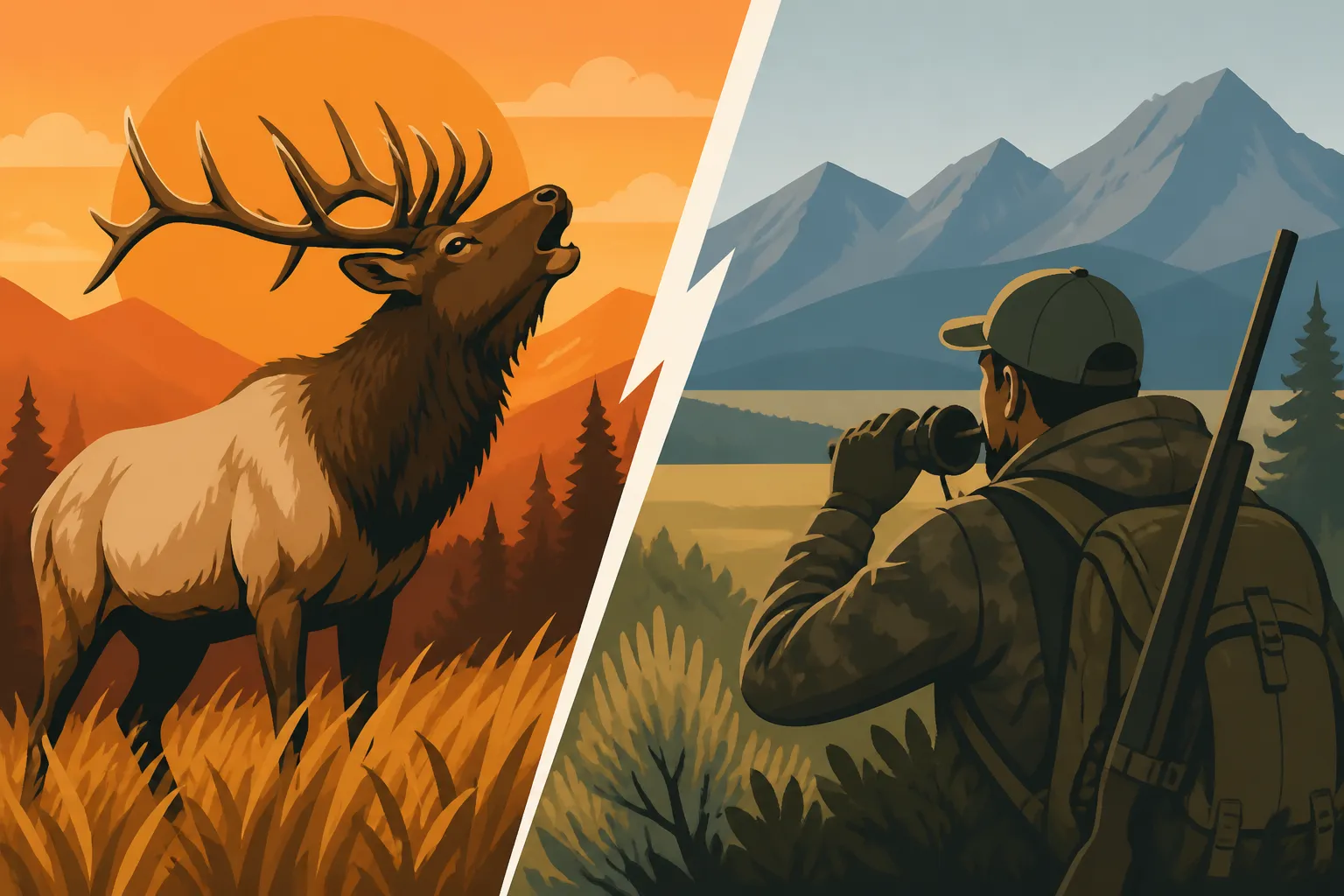
As September progresses, especially mid-month, the elk rut hits its peak. This is when bulls are most active, aggressive, and vocal, making it an exciting time to be in the field. You'll hear a cacophony of sounds:
- Challenge Bugles: These are the loud, screaming bugles that say, "I'm here, and this is my territory (and my cows)!" Dominant bulls use them to ward off rivals, and sometimes satellite bulls will issue them back, hoping to steal a cow or two. If you hear a bull hot and heavy with challenge bugles, he's likely got cows, and he's not afraid to defend them.
- Locator Bugles: Often shorter, less intense bugles, sometimes with a chuckle or grunt at the end. Bulls use these to announce their presence, try to locate other elk, or simply to figure out who's in the neighborhood. As hunters, these are our bread and butter for finding elk in vast landscapes. You can learn a lot about how to use these effectively by checking out specific techniques for Locator Bugles for Finding Bulls at Dawn.
- Herd Bull Bugles: These are often deeper, more guttural, and sometimes drawn out, signaling a mature, dominant bull with a herd of cows. They might not bugle as frequently as a satellite bull, but when they do, it's impressive.
- Estrus Buzz/Whine: This is a very specific cow call, often a long, drawn-out whine that signals a cow is in heat. It's incredibly enticing to bulls and can drive them absolutely wild, especially if they're close.
- Contact/Mew Calls: These are softer, shorter calls cows and calves use to communicate their location to each other, keep the herd together, or simply to express contentment. They are the backbone of elk communication and, when used correctly, can be incredibly persuasive.
Understanding When the Elk Rut Actually Peaks Out West will give you a better idea of what to expect in terms of vocal activity from both bulls and cows during your hunt.
When to Lean on Bugles
Bugling is exhilarating, and there are definite times it's your best bet.
- Early September: At the beginning of the month, bulls might be a bit more responsive to locator bugles as they start to gather cows and establish dominance. They're still feeling out the pecking order.
- Locating Elk: When you're trying to cover a lot of ground in large, open country, a good, strong bugle can help you pinpoint elk. Fire off a bugle, wait, and listen carefully. An answering bugle tells you exactly where to focus your efforts. This is a common tactic for How to Bugle a Wyoming Bull Into Bow Range.
- Challenging Dominant Bulls: If you've located a bull that's actively bugling, especially one with cows, a well-timed, confident challenge bugle can sometimes pull him in. You're mimicking another bull trying to cut into his herd, and his protective instincts can override his caution. This works best when you're sure of your setup and the wind is in your favor. Remember, you're looking for a fight, and sometimes they'll come looking for you.
- Aggressive Bulls: Sometimes, you'll encounter a bull that is simply hot and looking for a confrontation. He'll respond to almost any bugle with intensity, and in these cases, mirroring his aggression can be the ticket to bringing him in close. This is often the case during the peak of the rut.
The Power of Subtle Cow Calls
While bugles grab attention, cow calls often seal the deal, especially in certain situations.
- Pressured Elk: Elk get smart, and nothing makes them warier than a hunter who's constantly screaming bugles. In areas with high hunting pressure, aggressive bugling can send elk running for cover. Soft, seductive cow calls, however, can often draw them in without raising alarms. This is particularly true when you're Calling Elk on Pressured Wyoming Public Land.
- Drawing in Satellite Bulls: Smaller, satellite bulls are often too intimidated to challenge a dominant bull, but they are highly susceptible to cow calls. They're looking for an easy score, and a lonely cow mewing in the timber is just the ticket. You might not pull the herd bull, but a good-sized satellite bull is still a fantastic trophy.
- Calming Wary Animals: If a bull has hung up, or seems hesitant, a series of soft cow mews or even a little estrus whine can sometimes calm his nerves and convince him to take those final, crucial steps. You're portraying a vulnerable, available cow, which can be irresistible.
- Close-Quarters Hunting: When you're in thick timber, or very close to elk, loud bugles can give away your position. Soft cow calls are ideal for drawing elk in those last few yards, especially when you're trying to work an animal in tight for a bow shot.
- Post-Rut: Towards the end of September and into October, as bulls become less aggressive, cow calls tend to be more effective than bugles. The intense, challenging phase of the rut is winding down, and bulls are often more interested in finding any remaining receptive cows.
Reading the Elk and Adapting Your Strategy
The key to successful elk calling isn't just knowing how to make the calls, but knowing when to make them, and perhaps more importantly, how to interpret the elk's response. Elk don't always follow a script, and adapting on the fly is essential.
Interpreting Elk Responses to Calls
Every bugle or mew you make is a conversation. Are the elk answering? Are they moving? Are they staying silent? Their reactions tell you what to do next.
- Strong, Immediate Bugle Back: This is often a good sign! The bull is interested and acknowledges your presence. If he's a dominant bull, he might be challenging. If he's a satellite, he might be curious. Keep calling, but vary your intensity. If he's coming hard, get ready.
- Silence After Your Call: Don't despair. Silence can mean several things: he's listening intently, he's moving quietly to get a better look, or he's simply not interested. Give it time, then try a softer, more inquisitive cow call. Sometimes, a silent bull is the one that sneaks in.
- Moving Away: If his bugles sound fainter, or you hear branches breaking in the wrong direction, he's moving off. This could be due to pressure, a perceived threat, or simply heading to a different patch of timber. You might need to change your position or switch to more aggressive tactics if you're willing to pursue.
- Coming in Quietly: This is a classic elk maneuver. A smart bull, especially one that's been hunted before, might circle downwind or approach silently to scent-check the "cow" he heard. This is where a good setup and hyper-awareness are critical. Always anticipate that the elk will try to get downwind of you.
Combining Bugles and Cow Calls for Success
Often, the most effective strategy involves using both bugles and cow calls in concert. Think of it as a dynamic conversation.
- Bugle to Locate, Cow Call to Draw: This is a time-tested strategy. Start with a locator bugle to get a bull to respond. Once you've located him, switch to softer cow mews and chirps as you move into position. This can make him think a cow is heading his way, or a new cow has just joined the area.
- Two-Person Calling Setups: If you're hunting with a partner, this is an incredibly powerful tactic. One hunter, the "shooter," positions themselves 30-60 yards ahead of the "caller." The caller uses a mix of bugles and cow calls to draw the bull's attention past the shooter. The bull focuses on the sounds of the "rival bull" or "mewing cow" (the caller) and often presents a shot opportunity for the waiting hunter. This is a technique discussed in Two-Hunter Calling Setups That Actually Work on Bulls. This method can really help mitigate a bull trying to circle downwind.
- The "Harem" Effect: If you're working a dominant bull with cows, sometimes a subtle bugle followed by a flurry of excited cow mews can mimic new cows trying to join his harem, or a smaller bull trying to steal them. This can make him defensive and pull him in.
Pressure and Its Impact on Calling
Wyoming offers vast public lands, but even in remote areas, elk can become call-shy, especially after the first few days of the season.
- Ghosting Bulls: Heavily pressured bulls are masters of silence. They might hear your calls, but instead of bugling back, they'll often slip away or come in silently to investigate. This is why a keen eye for Reading Fresh Elk Sign in Dark Timber becomes even more important.
- Less is More: When hunting pressured elk, less calling is often more effective. Focus on very soft, infrequent cow mews. Sometimes, just one or two soft calls every 15-20 minutes is enough to pique curiosity without sending them into high alert.
- Silent Approaches: In these situations, pure still hunting or stalking after locating elk visually might yield better results than relying solely on calling. Use topographical maps, tools like GoHunt, and your optics to find elk and then plan a careful stalk.
Practical Tips for September Calling in Wyoming
Putting theory into practice requires careful planning and execution. Wyoming's diverse terrain, from the dense timber of the Bighorn National Forest to the open sagebrush of the Red Desert, demands adaptable strategies.
Locator Calls and Covering Ground
In the expansive landscapes of Wyoming, finding elk can be half the battle.
- Early Morning/Late Evening: These are prime times for locator bugles. Bulls are often more vocal at dawn and dusk. Head to a vantage point before first light and let out a bugle. Listen for responses from distant ridge lines or timber pockets.
- Patience is a Virtue: Don't bugle incessantly. Give a call, wait 15-20 minutes, and listen. Elk often take their time to respond, or they might move silently towards you before making a sound. If you don't hear a response, change locations before calling again.
- Glassing First: Before you even consider calling, always glass the area thoroughly. Sometimes, you'll spot elk visually, rendering calling unnecessary or allowing you to plan a precise approach. Remember that Optics Power for Wyoming's Long Sightlines can be a game-changer for covering vast areas.
Setting Up for the Shot
Once you've got an elk interested, your setup is paramount.
- Wind Direction: This is non-negotiable. Elk have an incredible sense of smell. Always set up so the wind is in your face or quartering to you, taking into account any thermals that might be shifting. If the wind swirls, relocate immediately.
- Cover and Lanes: Position yourself in an area with good cover to break up your outline, but also clear shooting lanes for when the bull appears. Anticipate where the elk will come from. They will often try to circle downwind, so having a shooting lane in that direction can be critical.
- Elevated Position: If possible, setting up slightly above where you expect the elk to come from can give you a better view and a more ethical shot opportunity.
- Natural Obstacles: Use natural features like fallen logs, rocks, or changes in elevation to hide your movement and funnel the elk into your desired shooting zone. Consider the surrounding terrain; understanding Terrain That Hides an Approach can give you a significant advantage.
The Importance of Scouting and Real-time Intel
Even the best calling won't help if you're not in elk country.
- E-Scouting: Before you even hit the road, use tools like GoHunt's mapping and data platforms to identify potential elk habitat, water sources, and bedding areas. This helps you narrow down your search and understand Wyoming Elk Herd Units and Winter Range. You can gain a lot of knowledge through E-Scouting a Unit Before the Season Opens.
- Pre-Season Recon: If possible, take a scouting trip before the season opens. Look for fresh sign, rubs, wallows, and trails. This helps confirm your e-scouting efforts and gives you real-time intel on elk movement. Knowing where the water is is key, so pay attention to Finding Water Sources in Dry Hunting Country.
- Adapt to Conditions: Weather, hunting pressure, and the stage of the rut can all impact elk behavior. Be flexible with your calling strategy. If bugles aren't working, try cow calls. If cow calls aren't working, go silent. Elk are always teaching us something new.
Here’s a quick guide to help you decide when to bugle and when to cow call in September:
| Situation | Primary Calling Strategy | Notes |
|---|---|---|
| Locating Distant Elk | Bugle (Locator) | Use sparingly; listen for immediate responses. |
| Challenging Dominant Bull | Bugle (Challenge) | Best for aggressive, vocal bulls with cows. Be ready for a quick approach. |
| Pulling Satellite Bulls | Cow Calls (Mews, Estrus) | Often more effective than bugles; less intimidating for smaller bulls. |
| Pressured Hunting Area | Cow Calls (Soft Mews) | Avoid aggressive bugling; focus on subtle, infrequent contact calls. Refer to Calling Elk on Pressured Wyoming Public Land. |
| Close-Range Draw-in | Cow Calls (Mews, Chirps, Estrus) | Keep calls soft and realistic; can calm wary elk. |
| Working a Hung-Up Bull | Cow Calls (Estrus Whine) | Can be irresistible and convince a hesitant bull to close the distance. |
| Hunting with a Partner | Both (Two-Person Setup) | Caller acts as another elk, drawing attention past the shooter. More details in Two-Hunter Calling Setups That Actually Work on Bulls. |
| Early September (Pre-rut) | Bugle (Locator/Challenge) | Bulls are starting to get active and responsive. |
| Mid-September (Peak Rut) | Both | Use bugles to locate and challenge, cow calls to draw in or seal the deal. This is the prime time for Bugle and Cow Call Timing Through the Rut. |
| Late September (Post-rut) | Cow Calls (Mews) | Bulls may be less aggressive, more interested in finding cows. |
Ultimately, the best elk callers are those who are patient, observant, and adaptable. Don't be afraid to experiment, but always pay close attention to what the elk are telling you. Whether it’s a roaring bugle echoing through a canyon in Park County, known for Why Park County Has a Reputation for Elk, or a soft mew in dense timber, understanding the language of elk will significantly increase your odds of success in the Wyoming mountains. Remember that Wyoming Elk Season Dates Are Set Hunt Area by Hunt Area, so always check your specific unit's regulations.
Disclaimer
Hunting is an inherently risky activity. Always prioritize safety, adhere to all local, state, and federal regulations, and be aware of your surroundings. This information is for educational purposes only and should not replace professional guidance or official hunting regulations.