Best Time of Day to Glass Mule Deer
If you've spent any time chasing mule deer across Wyoming's vast, open country, you know the frustration of looking at miles of seemingly empty sagebrush. It feels like they vanish into thin air sometimes, doesn't it? Finding those elusive bucks often boils down to knowing when to look, not just where. This guide will dive deep into the best times of day to glass for mule deer, helping you maximize your efforts and significantly increase your odds of spotting that trophy buck you've been dreaming of.
The Biological Clock of a Mule Deer: Why Timing is Everything
Mule deer, like most big game animals, operate on a fairly predictable schedule dictated by survival instincts, feeding patterns, and the constant need to avoid predators. Understanding this rhythm is the absolute cornerstone of successful glassing. It's not about being out there all day, every day; it's about being out there smart and observing during those peak activity windows.
Peak Movement Hours and Their Drivers
Mule deer are most active during the crepuscular hours – that magical time around dawn and dusk. This isn't just an old hunter's tale; it's deeply rooted in their biology. As the sun begins to peek over the horizon, or dips below it, the light levels are low, providing a natural camouflage against potential threats. This reduced visibility makes them feel safer moving between bedding and feeding areas.
Another major driver is forage. Mule deer are browsers, munching on a variety of plants, shrubs, and even cacti in the arid Wyoming landscape. They'll typically move from their secure bedding areas to feed in more open or accessible spots in the early morning and late evening. During these times, temperatures are also cooler, especially important in the often scorching late summer and early fall days in places like the Red Desert or parts of Carbon County. Imagine trying to move and eat with a heavy winter coat on in 80-degree heat – it's just not comfortable. This is why you'll often see deer up and feeding vigorously as soon as the sun dips behind a ridge or before it fully crests.
The Influence of Weather and Pressure
Beyond the standard dawn and dusk, weather plays a huge role in adjusting a mule deer's "schedule." A cool, overcast day, especially after a warm spell, can kick-start midday activity. Deer might stay up and feed longer in the morning or get up earlier in the afternoon if the temperatures remain mild. Conversely, a bright, hot, windless day will likely push them into the thickest cover or the deepest shade they can find, making them incredibly tough to spot.
Hunting pressure also forces deer to become more nocturnal or to seek out incredibly dense, steep, or remote bedding areas. If hunters are constantly bumping deer during legal shooting hours, those animals quickly learn to feed and move under the cover of darkness. This means you might need to adjust your approach, focusing on glassing bedding areas in the nastiest, hardest-to-reach spots, or being out even earlier/later, right at the edge of legal shooting light, to catch them transitioning. Understanding how deer react to pressure in specific areas, perhaps by checking resources like GoHunt for unit-specific data, can be incredibly valuable.
Mastering Morning Glassing: Capitalizing on First Light
The first hour or two of daylight is arguably the most crucial time for glassing mule deer. This is when they are often still actively feeding or moving back to their bedding areas, and the rising sun provides a spectacular, albeit challenging, advantage for spotting them.
The Golden Hour and Shadow Play
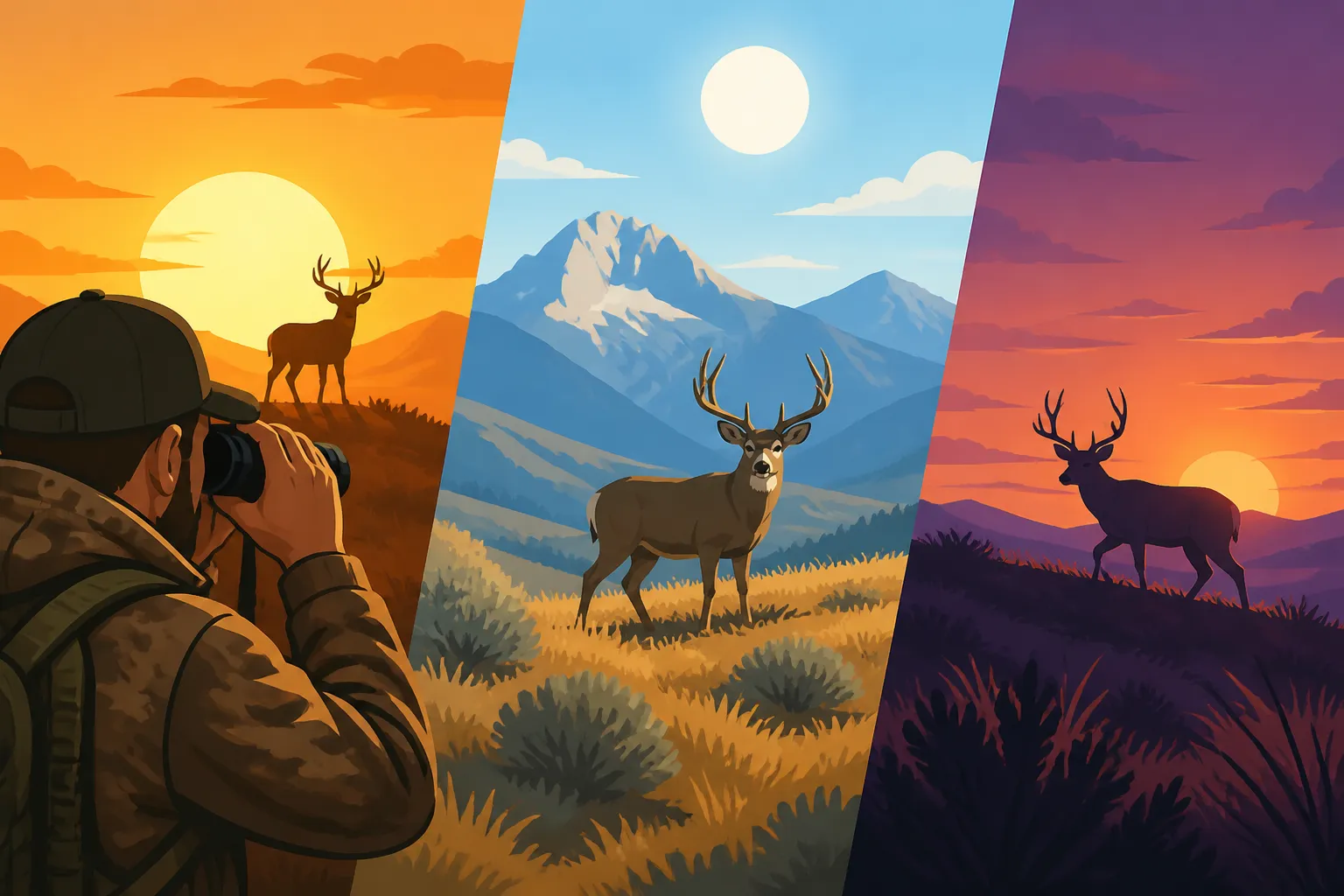
As the sun begins to paint the eastern sky, the "golden hour" arrives. The low angle of the sun creates long, dramatic shadows that can both hide and reveal deer. Your goal is to position yourself where the sun is at your back or side, illuminating the hillsides and draws you're glassing. This backlighting makes deer "pop" against the terrain, especially if they're moving. Look for their distinct shapes, the flash of an antler, or a change in texture on a hillside that indicates an animal, not just a rock or bush.
However, these long shadows also mean deep, dark pockets where deer can easily disappear. It's imperative to meticulously pick apart these shaded areas. Start at the edge of the shadows and work your way in, paying close attention to any movement. As the sun climbs higher, these shadows recede, constantly changing the landscape you're observing. This dynamic light means you can't just glance once; you need to constantly re-evaluate areas as the light shifts. This is where a good Tripod Setup for Glassing From a Vehicle or a comfortable sitting position can make all the difference, allowing you to maintain steady focus for extended periods.
Strategies for Effective Dawn Patrol
To make the most of your morning glassing, you need a plan. Ideally, you should be set up on your vantage point before legal shooting light, ready to glass as soon as the first hint of dawn appears. This often means a pre-dawn hike in the dark, using a headlamp, which can be a bit spooky but is absolutely worth it.
- High Vantage Point: Always seek out a spot that gives you a panoramic view of potential feeding and travel corridors. Ridgelines, prominent knobs, or even the top of a butte can be excellent.
- Systematic Grid Glassing: Don't just scan aimlessly. Use a systematic approach like the Grid Glassing a Basin Without Missing Bucks. Start at the closest terrain and work your way outwards, meticulously dissecting every square yard. You might spot a deer bedded just 200 yards away that you would have otherwise walked right past.
- Focus on Edges: Pay extra attention to the edges of different terrain features: where sagebrush meets timber, where a draw meets a flat, or where a south-facing slope transitions to a north-facing one. These are natural travel routes and bedding transitions.
- Patience is a Virtue: Deer will appear and disappear. They might feed for a few minutes, bed down, then get up again. Be patient, continue glassing, and trust the process. This isn't a quick scan; it's a dedicated search. A comfortable Binocular Size That Survives an All-Day Glassing Session can make this easier.
Evening Glassing Tactics: The Golden Hour Advantage Returns
Just as morning provides a prime opportunity, the evening offers another critical window. As the heat of the day subsides and the sun begins its descent, mule deer will once again stir from their midday beds to feed and move.
Catching Them on the Move to Feed
In the evening, deer are typically moving from their secure bedding areas toward feeding grounds. This often means they’re traveling down slopes, out of timber pockets, or across open flats. The light is again low, creating long shadows, but this time, the light is coming from the west. Position yourself on an east-facing slope, or anywhere that allows the setting sun to illuminate the areas you're watching.
Focus your attention on those transition zones – the edges of timber, the mouths of draws, and the bottoms of drainages where food sources are prevalent. They'll often pop out seemingly from nowhere, so continuous, careful glassing is essential. As the light fades, they'll become bolder, venturing into more open areas before finally settling into their nighttime feeding spots. This is a great time to catch a buck moving with purpose, giving you a chance to Field Judging a Mule Deer Buck Quickly before legal light runs out.
The Last Gasp of Daylight: Maximizing Opportunities
The last 30 minutes of legal shooting light can be absolutely electric. Deer that were hesitant all day might finally step out into the open. This is when your commitment to staying glued to your optics pays off.
- Pre-Determined Vantage Point: Just like in the morning, be in position well before sunset. You want to be comfortable and ready to observe without rushing.
- Scan, Rest, Scan: Your eyes will get tired. Periodically lower your binoculars, rest your eyes, and then go back to glassing. This helps reset your focus and allows you to pick up subtle movements you might have missed.
- Anticipate Movement: Think about where deer want to be. Is there a water source nearby? A lush patch of forage? A sheltered draw? Deer will often follow predictable routes, especially in areas with established game trails. This kind of predictive thinking is where tools like GoHunt's property and trail overlays can give you a serious edge, allowing you to identify likely travel corridors before you even step foot in the field.
- Stay Until Dark: Resist the urge to pack up early. Even after legal shooting light, continuing to glass for a few extra minutes can reveal where deer are headed for the night, providing invaluable information for your next morning's hunt. This "last gasp" can be crucial for identifying key Finding Water Sources in Dry Hunting Country or dense cover spots they'll move towards.
| Time of Day | Advantages for Glassing Mule Deer | Challenges | Best Strategy |
|---|---|---|---|
| Early Morning | Deer actively feeding/moving from beds; low light offers contrast; cooler temps. | Long shadows hide deer; rapidly changing light conditions; potentially foggy. | Be in position pre-dawn; sun at your back; systematic grid glassing; focus on edges. |
| Midday | Deer often bedded in secure cover; good for identifying bedding patterns if you know where to look. | Minimal movement; harsh, direct sunlight creates glare; deer often in deep shade. | Target known bedding areas from a distance; use shade to your advantage; look for ears/antlers. |
| Late Afternoon/Evening | Deer moving from beds to feeding grounds; low light provides contrast; cooler temps. | Fading light reduces visibility; shadows obscure features; race against legal shooting light. | Be in position well before sunset; sun illuminating hillsides; anticipate travel routes; stay until dark. |
Midday Glassing: When All Else Fails or for Specific Situations
While dawn and dusk are prime, there are times when midday glassing can be surprisingly effective, or at least productive in gathering intel. It’s certainly not for general seeking, but rather for targeted investigation.
Picking Apart Bedding Areas
During the harsh midday sun, mule deer are almost certainly bedded down, typically in thick cover, on shaded slopes, or in hidden draws. This is not the time to expect them to be out and about. Instead, midday glassing becomes a meticulous exercise in picking apart these known or suspected bedding areas.
Think of it as looking for a needle in a haystack, but you know which haystack to check. You're not looking for a whole deer, but rather a horizontal line that shouldn't be there, the glint of an antler tip, the flick of an ear, or an odd patch of color that stands out from the natural environment. Look for areas with dense conifers, steep north-facing slopes, or deep, shadowed canyons. Places like the Bighorn Mountains or the Shoshone National Forest offer plenty of such terrain. Often, they will bed with their back to a hillside, facing outwards to catch any approaching threats.
Adjusting for Heat and Pressure
On particularly hot days, deer will seek out the deepest shade they can find. This could be under a lone juniper on a south-facing slope, or nestled within a dense cluster of pines. They will minimize movement to conserve energy. This is a frustrating reality for hunters, but it’s part of the game. Using a high-quality spotting scope with ample Optics Power for Wyoming's Long Sightlines becomes indispensable here, allowing you to resolve fine details at extreme distances.
Similarly, if an area has been pressured heavily in the morning, deer will often move to the thickest, nastiest cover they can find and not move again until well after dark. In these scenarios, your midday glassing efforts should focus on those impenetrable spots that other hunters might overlook or deem too difficult to access. This can sometimes lead to finding a buck that feels safe enough to stay put, giving you a chance for a strategic stalk later in the day.
Gear and Environmental Considerations for Effective Glassing
No matter how well you understand mule deer behavior, without the right tools and an awareness of environmental factors, your efforts will fall short. Effective glassing is a combination of knowledge, patience, and good equipment.
The Essential Optics: Binoculars and Spotting Scopes
You simply cannot glass effectively for mule deer without quality optics. This is not an area to skimp.
- Binoculars: Your primary tool. A good pair of 10×42 or 12×50 binoculars are ideal for covering vast amounts of terrain quickly. They offer a wide field of view and are easier to use for prolonged periods. Brands like Vortex, Swarovski, and Leica are popular choices among serious hunters for their clarity and durability. Mount them on a tripod for maximum stability. Even the steadiest hands can’t beat a tripod for detail.
- Spotting Scope: This is your secondary, but equally important, tool for identifying and evaluating deer once you've spotted something with your binoculars. A 60-80mm objective lens with 20-60x magnification is a versatile choice. It allows you to zoom in on a distant animal to determine if it's a buck, assess antler size, and confirm legal shooting status. This is crucial for discerning a subtle horn tip against the landscape, helping you separate a branch from an antler. Without a good spotting scope, you might spot a deer at 2 miles, but you'll never know if it's the one you're looking for. When setting up, remember your Tripod Setup for Glassing From a Vehicle can be just as effective in the field from a backpack.
Environmental Factors and Stalking Considerations
Beyond the time of day, other factors significantly impact your glassing success and subsequent stalking opportunities.
- Wind Direction: This is non-negotiable for mule deer. They have an incredible sense of smell. Always know the wind direction and plan your glassing vantage points and any potential stalks accordingly. Being downwind or crosswind is paramount. Even when glassing, if you're too close and the wind swirls, you could bump deer you haven't even seen yet. Paying attention to Reading Wind on an Open-Country Stalk will be vital for your success.
- Sun Angle and Glare: As mentioned, the sun's position can be your friend or foe. Direct sunlight into your optics causes glare, making it nearly impossible to see. Always try to set up with the sun at your back or to your side, illuminating the areas you're watching. If you're forced to glass into the sun, use your hat brim or hand to create shade over your objective lenses. Polarized sunglasses can help reduce glare, but they can also sometimes reduce the perceived brightness through your optics.
- Heat Shimmer: On hot days, especially across large, flat basins or desert floors, heat shimmer (mirage) can distort images and make it incredibly difficult to judge distance or detail. This is most pronounced in the middle of the day. To combat this, try to glass earlier or later, or seek higher vantage points where you're looking down through less hot air. It's often impossible to tell if a buck has three points or four when the heat is making him dance like a mirage.
- Terrain and Cover: Mule deer love broken country – draws, coulees, rimrock, and scattered timber. These features provide security, shade, and escape routes. When glassing, focus your attention on these areas. Don't just scan the open flats. Deer are masters of using terrain to their advantage, often bedded in seemingly exposed areas that actually offer fantastic cover from aerial predators and ground-level threats alike. Even though you're glassing from a distance, understanding the lay of the land, perhaps through detailed maps from GoHunt, helps immensely in anticipating where deer might be.
- Scouting a Unit From Your Kitchen Table: Before you even hit the field, you can do a ton of research. E-Scouting a Unit Before the Season Opens using satellite imagery and topographic maps helps you identify potential glassing knobs, bedding areas, and feeding grounds. You can mark these waypoints, creating a plan of attack for your morning and evening glassing sessions. This also allows you to find those secluded spots where deer might hold up even with heavy pressure.
Ultimately, finding the best time to glass mule deer in Wyoming is about blending their natural behaviors with intelligent observation and patience. It's a game of chess, not checkers, and the more you understand their moves, the better your chances of a successful hunt.
Disclaimer
Hunting involves inherent risks, including but not limited to adverse weather conditions, dangerous terrain, and wildlife encounters. This guide is for informational purposes only and does not substitute for professional training, comprehensive research of current regulations, or common sense safety practices. Always prioritize safety, adhere to all Wyoming Game and Fish Department regulations, and obtain appropriate licenses and permits before heading into the field.